US wholesale inflation hits 6.5%, highest since 2022: what October's PPI shows
US producer prices rose 0.3% in October and 6.5% from a year earlier, the fastest annual pace since November 2022, as diesel, trucking and food costs worked through supply chains. The data strengthens expectations of a Federal Reserve rate rise on 8–9 December.
Prices charged by US producers rose 0.3% in October and were 6.5% higher than a year earlier, the steepest annual increase since November 2022, the Bureau of Labor Statistics (BLS) reported on Friday, 13 November 2026. The monthly rise was slightly below the 0.4% economists had expected, but the annual rate edged up from 6.3% in September, and the details showed high fuel and freight costs spreading into food, chemicals and transport services.
Coming three days after a hotter-than-expected consumer price report, the producer price index (PPI) adds to evidence that US inflation is broadening rather than fading. Financial markets are fully pricing in a quarter-point interest rate increase when the Federal Reserve meets on 8–9 December, with a small chance of a half-point move.
What did the October producer price report show?
The headline PPI for final demand measures the prices that US businesses receive for the goods and services they sell to final buyers. According to the BLS release:
- Overall: up 0.3% in October (seasonally adjusted), after 1.4% in September and 0.4% in August; up 6.5% over 12 months (unadjusted).
- Goods: up 0.5% on the month and 10.2% on the year, the largest 12-month increase since October 2022.
- Services: up 0.2%, the fifth consecutive monthly rise. About three-quarters of that came from a 2.0% increase in transportation and warehousing services.
- Food: up 1.3% on the month, though only 1.7% higher than a year earlier.
- Energy: down 0.1% on the month but still 37.0% higher than in October 2025.
- Underlying measure: the index excluding food, energy and trade services, which the BLS highlights as a steadier gauge, rose 0.5% for a second straight month and 4.9% over the year.
CNBC reported that core PPI, excluding food and energy, rose 0.3%, in line with forecasts. CNN and Haver Analytics put that measure's annual rate at 5.0%, matching the highest pace of recent years.
Why are wholesale prices rising so fast?
The main story is energy, and how it moves through the economy. CNN reported that the Iran war and the resulting energy supply shock have pushed petrol and diesel prices sharply higher in recent months. BLS data show wholesale gasoline prices up 75.9% and diesel up 115.2% over 12 months, even though diesel fell 7.9% in October and crude petroleum prices dropped 10.3%.
Those earlier increases are now showing up in other prices. More than 80% of October's rise in services prices came from truck freight transportation, which jumped 3.9% in a single month. CNN, citing BLS data, said trucking freight costs are up nearly 25% from a year earlier. Food that relies on trucks has been hit hard: wholesale prices for fresh and dry vegetables rose 26.7% in October after a 30.7% leap in September, and are 36.0% higher than a year ago.
Further back in the supply chain, prices are rising even faster. Processed goods sold to other businesses (intermediate demand) were 14.6% higher than a year earlier, the largest rise since July 2022, with basic organic chemicals up 3.9% in October alone. Services sold to businesses rose 6.8%, the most since November 2022. Haver Analytics economist Michael J. Moran called the upward trend in intermediate services prices "unsettling".
There is also a technology angle. CNN reported that prices for electronic components and accessories are up 31.7% from a year earlier, the highest annual rate in BLS records going back to December 1966, a rise linked to heavy investment in artificial intelligence hardware.
Will consumers pay more?
The PPI does not translate directly into the consumer price index (CPI), but it often signals where shop prices are heading. Matt Bush, a US economist at Guggenheim Investments, told CNN that some pass-through has already happened, for example in airfares, but that higher transport and input costs may not reach consumers for another six to eight months. He said many businesses reset prices at the start of the year, which could mean more increases in early 2027, with lingering tariff effects adding to the pressure.
Consumers are already feeling it. The BLS reported on 10 November that the CPI rose 0.4% in October after 0.6% in September, above forecasts, with core consumer prices up 0.3%. Reuters said it was the third month in a row of gains of 0.4% or more. Because the 2025 government shutdown prevented price collection in October 2025, the BLS did not publish an annual CPI rate this time. That makes the PPI's 12-month figures one of the clearer year-on-year readings available for October. Our earlier explainer on the October CPI is here: https://www.thedailycontext.com/article/us-cpi-october-2026-inflation-rises-0-4-percent-fed-rate-hike-december
Not everything rose. Wholesale prices for passenger cars, pork, system software and airline passenger services fell in October, and food prices, despite two sharp monthly rises, are up only modestly over the year.
What does this mean for the Federal Reserve?
The Fed held its benchmark rate at 3.75%–4.00% at its October meeting. After the CPI report, CNBC said traders were fully pricing in a quarter-point increase in December. Fed Governor Christopher Waller said in London on 10 November that "a 50 basis point hike in the policy rate should be considered at the December meeting", Benzinga reported.
Chicago Fed President Austan Goolsbee told CNBC on Friday that the breadth of inflation was the concern. Categories "not driven by oil prices and not driven by tariffs" were showing "stalled progress and in some cases going the wrong way", he said. Chris Zaccarelli of Northlight Asset Management told CNBC the PPI was unlikely to change the Fed's approach because CPI was "already outside their comfort zone". Nationwide senior economist Ben Ayers wrote that fuel-price effects could last into 2027 and justify further tightening.
For borrowers, that matters well beyond Wall Street. HousingWire reported that, according to a Realtor.com economist, rising Treasury yields could put upward pressure on mortgage rates again after they eased to 7.18%. Higher interest rates usually mean dearer loans and credit card balances, and better returns on savings.
Why does it matter outside the United States?
US inflation and Fed policy affect borrowing costs and currencies around the world. A higher US interest rate tends to strengthen the dollar, which raises the local cost of dollar-priced imports, including oil, for many countries. The pressures in this report, from expensive fuel and freight to costly chips for AI data centres, are not unique to the US, so other central banks will be watching whether the pass-through to consumers seen in US data repeats elsewhere.
What is uncertain, and what comes next?
Several things remain unclear. October's monthly rise was smaller than September's and energy prices dipped, and PNC economists expect some further easing in energy producer prices as oil prices retreat from around $100 a barrel. Against that, the underlying measures are still running near 5% a year. BLS figures for June to September were revised, and October's are preliminary and may change. Analysts also disagree over how quickly and how fully business costs will be passed to consumers.
The next markers are the Fed's 8–9 December decision and the November PPI, which the BLS has scheduled for Tuesday, 15 December 2026. This article explains published economic data and is not financial or investment advice.
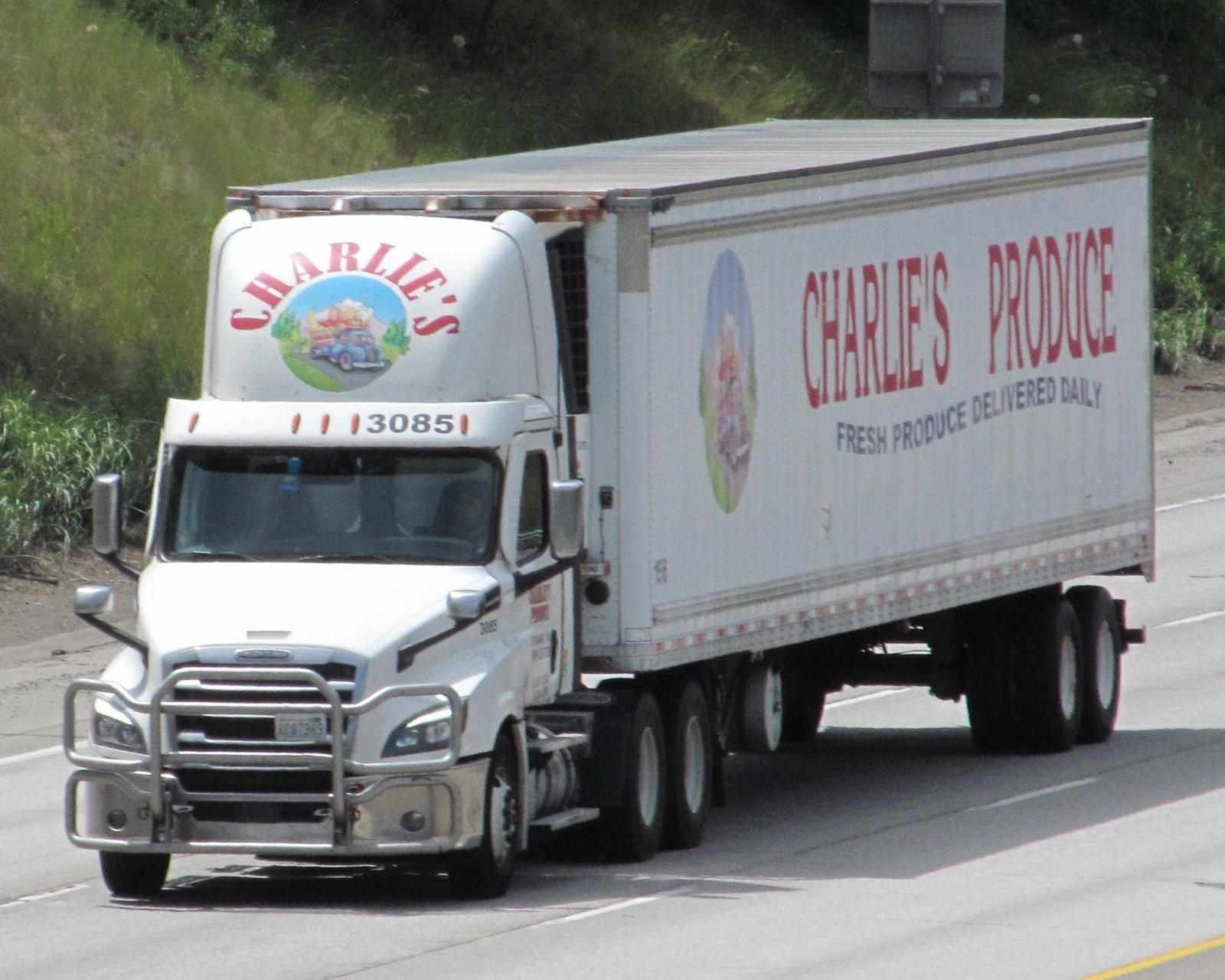
Image: Photo: Ewkada, CC BY 4.0 (https://creativecommons.org/licenses/by/4.0/), via Wikimedia Commons (https://commons.wikimedia.org/wiki/File:Charlie%27s_Produce_-_Freightliner_with_refrigerated_semi-trailer,_I-90_Spokane,_WA.jpg) — illustrative file photo of a refrigerated produce truck on Interstate 90 in Spokane, Washington (Commons lists it as taken in June 2024), resized. The company shown is not mentioned in the PPI report
About this article: prepared by The Daily Context editorial desk using automated, source-based reporting from the publications linked below. No reporter was on the ground.
Sources
- U.S. Bureau of Labor Statistics: Producer Price Indexes – October 2026 (USDL 26-1687), 13 November 2026 — https://www.bls.gov/news.release/archives/ppi_11132026.htm
- CNBC: Wholesale prices rose 0.3% in October, putting annual rate at 6.5%, the highest in nearly four years — https://www.cnbc.com/2026/11/13/ppi-inflation-report-october-2026.html
- CNN Business: Wholesale inflation rose in October to highest annual rate in nearly four years — https://www.cnn.com/2026/11/13/economy/us-wholesale-inflation-ppi-october
- Haver Analytics: Producer Prices in October: Better Than Expected, but Still Firmer Than Desired — https://www.haver.com/articles/producer-prices-in-october-better-than-expected-but-still-firmer-than-desired
- PNC Economics: PPI Inflation Moderated in October 2026, Up 6.5% Versus One Year Ago — https://www.pnc.com/content/dam/pnc-com/pdf/aboutpnc/EconomicReports/EconomicUpdates/2026/PNC_Economics_Research_PPI_13_November_2026.pdf
- Reuters: US consumer prices rise briskly for third straight month — https://www.reuters.com/5f374b32b07b/world/us/us-consumer-prices-rise-above-expectations-october-2026-11-10/
- CNBC: CPI inflation report: October 2026 — https://www.cnbc.com/2026/11/10/cpi-inflation-report-october-2026.html
- Benzinga: US Consumer Prices Rise 0.4% in October, Exceeding Forecasts as Fed Hike Looms — https://www.benzinga.com/markets/economic-data/26/11/63088120/us-cpi-october-consumer-prices-inflation-fed-rate-hike
- HousingWire: October CPI rises 0.4%, December Fed hike back in focus — https://www.housingwire.com/articles/october-cpi-fed-hike/
Kabeer Ahmad
Kabeer Ahmad is the founder and editor of The Daily Context. He oversees the site's source-based coverage of world affairs, technology, business, entertainment, lifestyle and sports, and is responsible for its editorial standards, sourcing and corrections.