US inflation rises 0.4% in October, hotter than expected, as Fed hike looms
US consumer prices rose 0.4% in October 2026, more than the 0.3% economists expected, with core prices up 0.3% for a third straight month, the Bureau of Labor Statistics said on 10 November. The BLS published no annual inflation rate because last year's government shutdown left no October 2025 data, but economists estimate it at about 3.9% to 4%, and the report has strengthened expectations of a Federal Reserve rate rise in December.
US consumer prices rose 0.4% in October 2026 after seasonal adjustment, the Bureau of Labor Statistics (BLS) reported on Tuesday, 10 November. That was slower than September's 0.6% jump but faster than the 0.3% most economists had forecast. Core prices, which strip out volatile food and energy, rose 0.3% for the third month in a row, also above expectations.
The report did not include the headline year-on-year inflation rate Americans are used to seeing. Because of the federal government shutdown in October 2025, the BLS never collected most of that month's prices, so it has nothing to compare October 2026 with. Economists who estimated the gap put annual inflation at roughly 3.9% to 4.0%, up from 3.7% in September, according to Reuters.
Financial markets read the data as all but locking in another interest rate rise from the Federal Reserve in December.
What did the October 2026 CPI report show?
The consumer price index (CPI) tracks the average change in prices that urban households pay for a fixed basket of goods and services, from groceries and petrol to rent and doctor visits. The BLS figures for October break down as follows, all seasonally adjusted month-on-month changes:
- All items: up 0.4%, after 0.6% in September and 0.4% in August.
- Core (excluding food and energy): up 0.3%, the same as in September and August.
- Shelter: up 0.3%, accounting for more than 30% of the overall rise.
- Food: up 0.5% after no change in September; groceries rose 0.4% and restaurant meals 0.5%.
- Energy: up 0.7% after a 5.2% surge in September; gasoline rose 1.0% and electricity 0.9%, while piped natural gas fell 0.8%.
- Used cars and trucks: down 1.2%, one of the few major categories to fall.
Before seasonal adjustment, the all-items index rose 0.2% in October to 337.511, the BLS said. Seasonal adjustment removes price swings that normally happen at the same time each year, which is why the adjusted and unadjusted numbers can differ.
Why is there no annual inflation rate this month?
The BLS said it "did not collect survey data for October 2025 because of a lapse in appropriations", meaning the government shutdown that ran from 1 October to 12 November last year. For most series it could not publish October 2025 index levels, so it cannot calculate 12-month changes for October 2026.
A few series do have year-earlier data. The BLS table shows gasoline prices 37.4% higher than in October 2025 before seasonal adjustment, new vehicles up 0.7% and used vehicles down 3.3% over the year.
Economists have filled the gap in different ways. Reuters reported that some averaged the September and November 2025 indexes, while others used interpolated figures from independent sources, producing estimates of 3.9% to 4.0% for headline inflation and about 2.8% for core, up from 2.6% in September. These are estimates, not official figures.
The missing data does not affect the Personal Consumption Expenditures (PCE) price index, the measure the Fed uses for its 2% target. Economists cited by Reuters estimated that core PCE rose 0.4% in October and about 3.3% over 12 months, though producer price data due on Friday, 13 November, could change those estimates.
What is driving US prices higher?
Economists pointed to four main pressures, according to CNBC and Reuters.
Energy and the Iran war. The US-Israeli war with Iran has pushed up oil prices and, with them, the cost of gasoline, diesel and jet fuel. Gasoline's 1.0% October rise was far smaller than September's 9.1%, but the BLS data shows diesel and other motor fuels up 2.7% after 11.9% the month before. Economists warned that diesel costs feed slowly into other prices because they raise transport costs. "It'll be an inflationary impetus for at least the next three to six months, I suspect," Thomas Ryan of Capital Economics told CNBC.
Food. Grocery prices rose 0.4%, with beef up 0.9%, snacks 1.0%, dairy 0.6% and fruit and vegetables 0.6%. Coffee fell 3.6%, a record monthly drop according to the BLS. Stephen Stanley of Santander US Capital Markets told Reuters the food rise "may finally be the beginning of a pass-through of higher transportation costs to grocery prices".
Tariffs. Goods affected by import tariffs rose again. Household furnishings and supplies climbed 0.7%, furniture and bedding 1.2% and toys 1.8%.
The AI boom. Demand from data centres has strained supplies of memory chips and other components, economists said. Smartphone prices rose 1.4%, which the BLS lists as the largest monthly rise on record for that index, and computers and peripherals rose 0.5%.
Housing remained the biggest single contributor. Owners' equivalent rent, an estimate of what homeowners would pay to rent their own homes, rose 0.3% and rent 0.2%. Moody's chief economist Mark Zandi told CNBC he did not expect shelter pressure to persist because it is out of step with market rents.
Who is affected by rising prices?
Households are feeling the squeeze in everyday spending. Restaurant meals, car insurance (up 0.7% in October), hospital services (0.8%) and dental care (0.8%) all rose faster than overall inflation. Reuters reported that inflation-adjusted average weekly earnings fell again in October, meaning pay is not keeping pace with prices for the typical worker.
Regional figures vary. Over the two months from August to October, the BLS index rose 1.1% in the Midwest and 0.9% in the Northeast, compared with 0.6% in the South and West. Local figures are based on smaller samples and are more volatile than the national number.
Some prices fell. Used cars and trucks dropped 1.2%, car and truck rental 5.7%, health insurance 1.8% and internet services 0.5%. Reuters noted that the health insurance drop followed a BLS data update.
Rising living costs also have political weight. Reuters reported that the cost of living contributed to heavy Republican losses in the midterm elections earlier this month.
What does it mean for Federal Reserve interest rates?
The Fed raised rates in September as inflation picked up, then held its benchmark rate in a 3.75% to 4.00% range in October. Tuesday's report has made a December increase look likely.
Fed Governor Christopher Waller said on 10 November that the Fed should raise rates next month and that "a stronger policy move may be needed", raising the possibility of a 0.5 percentage point increase, Reuters reported. CME Group's FedWatch tool showed markets pricing a roughly 89% chance of a 0.25 point rise in December and another increase expected in March.
"The Fed seems to be falling behind the curve on inflation, and the October hold is looking like a policy mistake," Stephen Juneau of Bank of America Securities told Reuters. Zandi described the reading as "uncomfortably high".
Higher Fed rates usually feed through to borrowing costs such as credit cards, car loans and some mortgages, although the effect depends on the product and lender. This article is not financial advice.
What happens next?
There are signs of some relief and some risk. Reuters reported that oil prices had fallen at least 10% so far in November, which could ease petrol costs, but economists warned that diesel, tariff and AI-related pressures were unlikely to fade quickly.
The next markers are the October producer price index on Friday, 13 November, the Fed's December policy meeting, and the November CPI report, which the BLS has scheduled for Thursday, 10 December 2026, at 8:30 a.m. Eastern time. With November 2025 data available, that report is expected to bring back an official annual inflation rate for most categories.
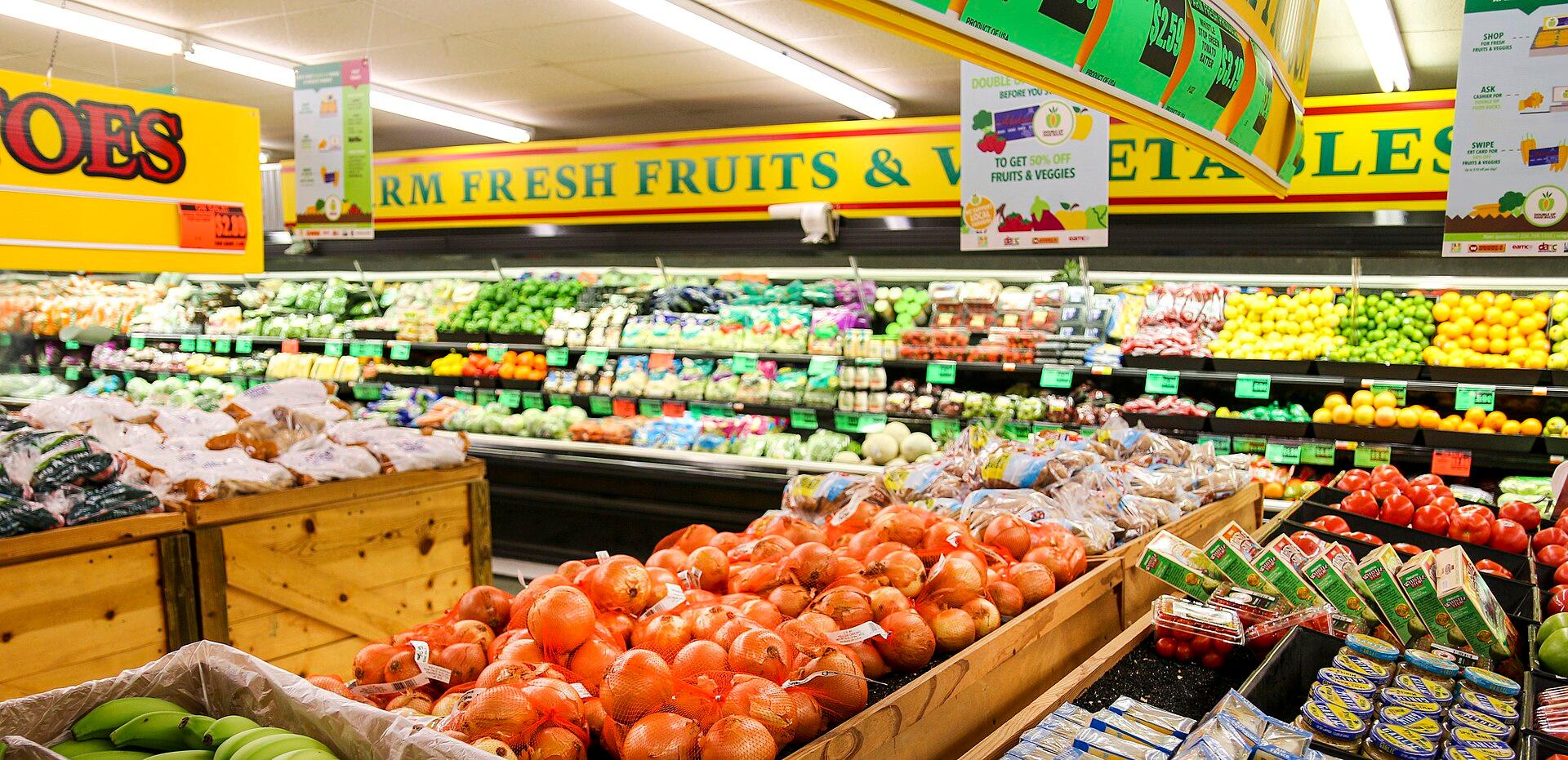
Image: Photo: Alabama Extension, CC0 public domain dedication, via Wikimedia Commons (https://commons.wikimedia.org/wiki/File:Fruit_section_of_a_grocery_store.jpg) — September 2022 file photo, illustrative; not connected to the October 2026 data
About this article: prepared by The Daily Context editorial desk using automated, source-based reporting from the publications linked below. No reporter was on the ground.
Sources
- U.S. Bureau of Labor Statistics: Consumer Price Index – October 2026 news release, 10 November 2026 https://www.bls.gov/news.release/archives/cpi_11102026.htm
- Reuters (Lucia Mutikani): US consumer prices rise briskly for third straight month, 10 November 2026 https://www.reuters.com/5f374b32b07b/world/us/us-consumer-prices-rise-above-expectations-october-2026-11-10/
- CNBC: CPI inflation report, October 2026, 10 November 2026 https://www.cnbc.com/2026/11/10/cpi-inflation-report-october-2026.html
- CNBC (Greg Iacurci): Here's the inflation breakdown for October 2026, 10 November 2026 https://www.cnbc.com/2026/11/10/october-2026-cpi-inflation-breakdown.html
- BBC News: US inflation higher than expected in October, 10 November 2026 https://www.bbc.co.uk/news/articles/cwy8lx3pg4k2o
Kabeer Ahmad
Kabeer Ahmad is the founder and editor of The Daily Context. He oversees the site's source-based coverage of world affairs, technology, business, entertainment, lifestyle and sports, and is responsible for its editorial standards, sourcing and corrections.