Anthropic sets IPO price range of $70 to $78 as roadshow begins
Anthropic has launched the roadshow for its Nasdaq listing, offering 825 million shares at $70 to $78 each alongside a $26bn private placement with chip and cloud partners. At the top of the range Reuters puts its fully diluted value at about $1.4tn, below the $2tn some investors had discussed.
Anthropic, the artificial intelligence company behind the Claude models, has started marketing its long-awaited stock market listing. In an amended registration statement filed with the US Securities and Exchange Commission on 10 November, it said it plans to sell 825 million Class A shares at between $70 and $78 each and has applied to list on the Nasdaq Global Select Market under the ticker "ANT".
At the top of that range, the share sale would raise up to about $64.4bn, according to Reuters and CNBC calculations. Reuters reported that this would value the company at roughly $1.4tn on a fully diluted basis, which counts stock options and restricted stock, or about $1tn excluding them. Anthropic is also selling $26bn of non-voting shares to a group of technology companies in a separate private placement.
What exactly is Anthropic offering?
Of the 825 million shares, 801,351,354 are being sold by Anthropic and 23,648,646 by existing shareholders, the company said in its roadshow announcement. Anthropic will not receive money from the shares sold by those existing holders. The underwriters, led by Goldman Sachs and Morgan Stanley, will have a 30-day option to buy up to 123.75 million more shares.
Alongside the listing, Advanced Micro Devices, Broadcom, Google, Micron, Microsoft, Nvidia and TSMC have agreed to buy a combined $26bn of Anthropic's Class N common stock at the IPO price, according to the filing. That placement depends on the IPO going ahead and is due to close immediately afterwards. The Class N shares will not be registered in the offering, have no voting rights in most circumstances and are not covered by the underwriters' lock-up agreements.
Anthropic estimates that, at the $74 midpoint of the range, it would receive about $84.6bn in net proceeds from the share sale and the private placement combined, or about $93.7bn if the underwriters take up their full option. Certain board members and related entities have indicated they may buy up to $303m of shares in the IPO, though those indications are not binding.
When could Anthropic shares start trading?
The company has not announced dates. CNBC, citing people familiar with the plans who were not authorised to speak publicly, reported that Anthropic intends to price the offering on 18 November and begin trading on 19 November. The same people said Anthropic is targeting a retail allocation of about 20%, well above the 5% to 10% typical for IPOs, and that the order book was already covered across the price range.
The registration statement has not yet become effective, and the shares cannot be sold until it does.
What does the filing show about revenue and losses?
Anthropic reported revenue of $33.2bn for the nine months to 30 September 2026, up from $2.5bn a year earlier, an increase of 1,206%. Full-year revenue was $4.6bn in 2025 and $386m in 2024. The company warns in the filing that it does not expect growth to continue at comparable rates.
It also reported a much faster measure it calls run-rate revenue: about $81bn as of 31 October, up $10bn from a month earlier. That figure annualises recent usage-based fees and monthly subscriptions. The filing says it is not a substitute for revenue under standard accounting rules or a forecast.
On the bottom line, Anthropic reported a net loss of $104.0bn for the nine months, compared with $25.1bn a year earlier. Most of that came from non-cash accounting charges: changes in the fair value of convertible notes, derivative liabilities and similar instruments totalled $94.3bn in the period, mainly because the company's own valuation rose. Its operating loss narrowed to $1.3bn from $5.2bn. On its own adjusted measure, which excludes items such as stock-based compensation, Anthropic reported operating income of $4.1bn.
The number of customers generating more than $100,000 in revenue over the previous 12 months rose from more than 950 to more than 11,900 in the year to 30 September, the filing says.
Why is the valuation lower than some expected?
Anthropic was valued at $965bn in a private funding round in May. Reuters reported that investors had previously discussed a valuation of as much as $2tn, but expectations have since come down because of the company's huge infrastructure commitments and recent volatility in AI-related shares. CNBC reported last week that even a $1.5tn valuation was in doubt, with one investor calling that figure a "stretch".
Reuters also reported that preliminary terms briefly sent to investment banks late on Monday showed the IPO raising as much as $69.3bn before they were withdrawn. The filing published on Tuesday set a lower range.
Jeff Zell, a senior research analyst at IPO Boutique, told Reuters that pricing below market expectations "allows investors to 'bid up' the IPO rather than facing a take-it-or-leave-it scenario". He added that "getting the pricing 'right' is crucial" while the sector remains volatile.
What are the biggest risks flagged in the prospectus?
The largest is the cost of computing power. Anthropic says that, as of and after 30 September, it had purchase commitments and leases worth about $900.9bn, substantially all related to compute and infrastructure. About $451.6bn is expected to be spent before the end of 2030, and about $70.7bn falls due in the 12 months after 30 September. Many of these agreements require payment regardless of how much capacity Anthropic uses.
The filing also describes an unusual governance structure. Anthropic is a public benefit corporation, legally required to weigh its stated purpose of "responsible development and maintenance of advanced AI for the long-term benefit of humanity" alongside shareholder returns. An independent body called the Long-Term Benefit Trust will elect directors who form a majority of the board. A separate class of stock held by a company owned by Anthropic's seven co-founders will carry 50.1% of the voting power on most shareholder matters. As a result, Anthropic will be a "controlled company" under Nasdaq rules, and buyers of Class A shares will have limited influence over how it is run.
Reuters noted that the prospectus also warns that rivals could develop models faster and that advances in AI could outpace the company's ability to put adequate safety and security measures in place.
What happens next?
Anthropic's executives will now present the offering to investors before the final price is set. The result will be closely watched as a test of demand for AI companies after months of debate about whether heavy spending on data centres and chips will pay off. Reuters reported that investors are also watching for clues about rival OpenAI, which is raising money privately ahead of a possible listing.
This article reports on a securities offering and is not investment advice.
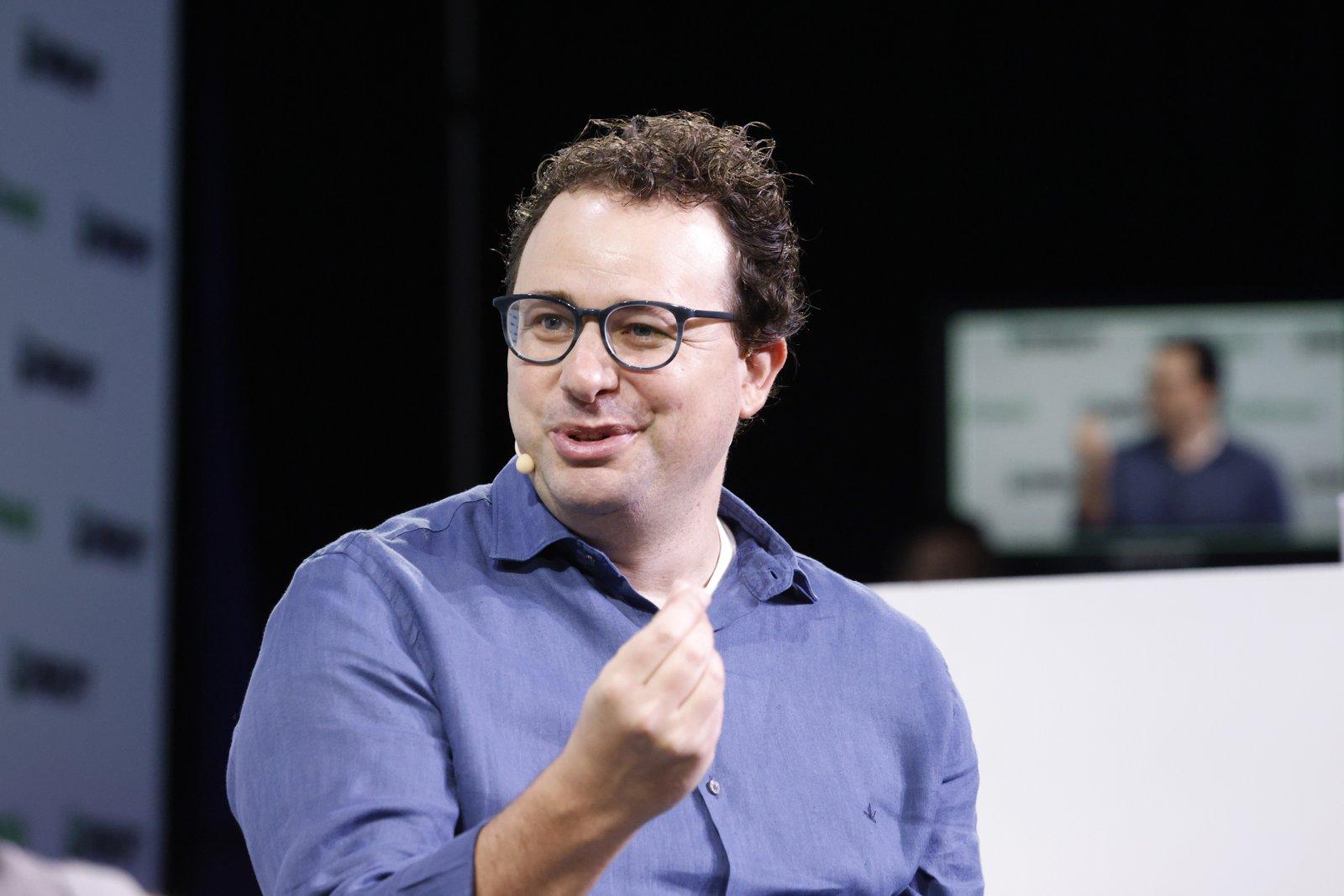
Image: Photo: TechCrunch, CC BY 2.0 (https://creativecommons.org/licenses/by/2.0/), via Wikimedia Commons (https://commons.wikimedia.org/wiki/File:Dario_Amodei_at_TechCrunch_Disrupt_2023_01.jpg) — September 2023 file photo of Anthropic CEO Dario Amodei at TechCrunch Disrupt; not taken during the IPO roadshow
About this article: prepared by The Daily Context editorial desk using automated, source-based reporting from the publications linked below. No reporter was on the ground.
Sources
- U.S. Securities and Exchange Commission (Anthropic amended Form S-1, 10 November): https://www.sec.gov/Archives/edgar/data/2130357/000162828026072484/anthropicpbc-sx1ax2.htm
- Anthropic (roadshow announcement, 10 November): https://www.anthropic.com/news/roadshow-launch
- CNBC: https://www.cnbc.com/2026/11/10/anthropic-sets-price-range-of-70-to-78-in-upcoming-ipo.html
- Reuters via The Korea Times: https://www.koreatimes.co.kr/world/20261111/anthropic-eyes-14-tril-ipo-valuation-in-test-of-wall-streets-ai-fervor
Kabeer Ahmad
Kabeer Ahmad is the founder and editor of The Daily Context. He oversees the site's source-based coverage of world affairs, technology, business, entertainment, lifestyle and sports, and is responsible for its editorial standards, sourcing and corrections.