Five EU states say UK must pay into cohesion funds to rejoin power market
Germany, the Netherlands, Belgium, Denmark and Luxembourg have urged EU leaders to link Britain's return to the EU's internal electricity market with a UK contribution to the bloc's cohesion funds, while pressing for the talks to be concluded quickly. UK ministers say they have not accepted the link but will discuss it after the EU-UK summit on 20 November.
Five EU governments around the North Sea want Britain to pay into the bloc's regional development funds as the price of rejoining the EU's internal electricity market. The leaders of Germany, the Netherlands, Belgium, Denmark and Luxembourg made the case in a letter to European Commission President Ursula von der Leyen and European Council President António Costa ahead of the EU-UK summit in Brussels on 20 November. They also urged both sides to finish the negotiations "swiftly".
The UK government says it has not accepted that electricity access should be tied to a payment, but it is willing to talk about it. "We have not accepted that principle," Hamish Falconer, the cabinet minister in charge of EU talks, told The Guardian in an interview published on 10 November. "I understand that that's what the European Union have asked for, but the UK government hasn't accepted. Again, this is something no doubt we will discuss."
What does the letter say?
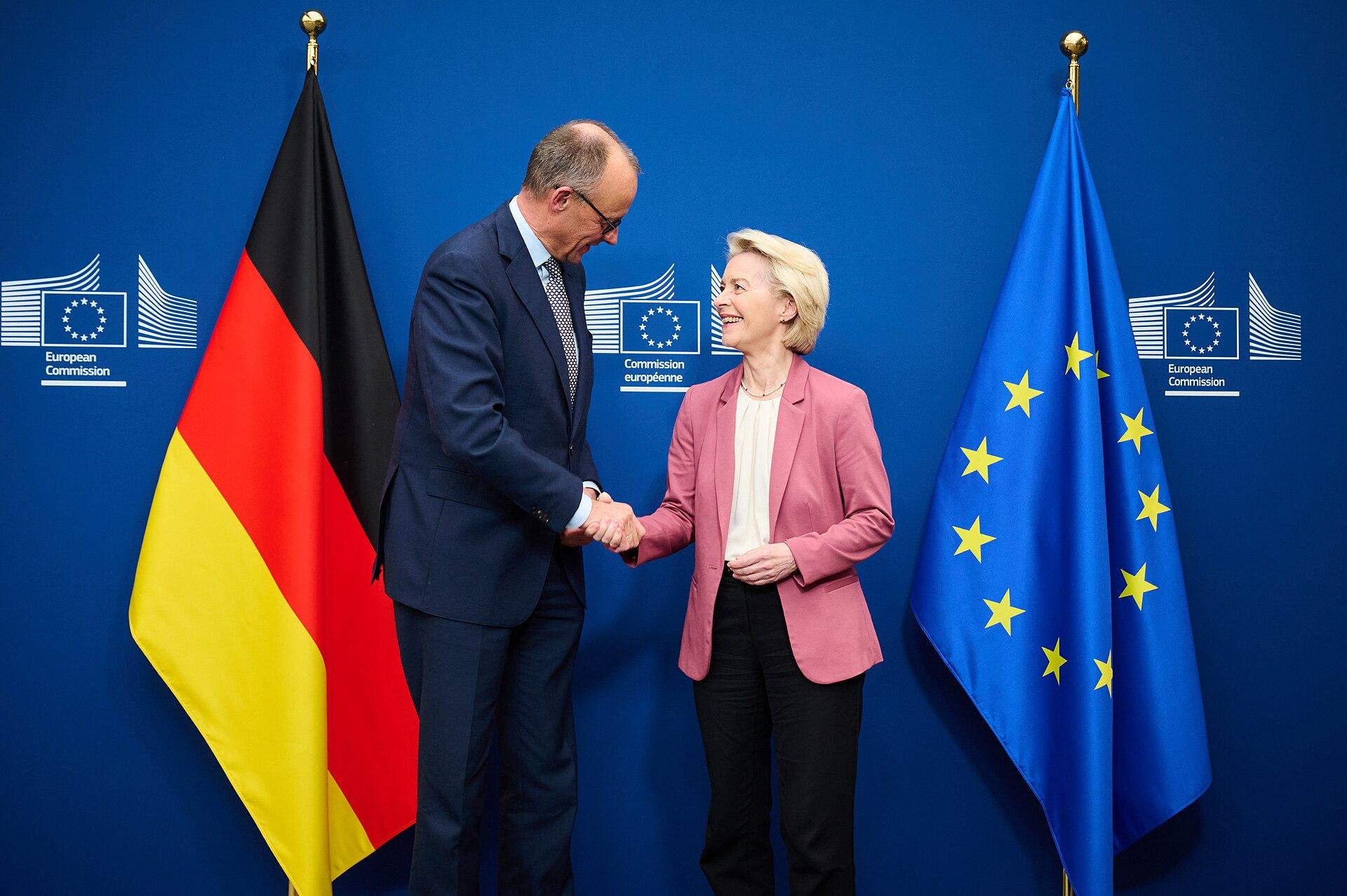
The letter is signed by German Chancellor Friedrich Merz, Dutch Prime Minister Rob Jetten, Belgian Prime Minister Bart De Wever, Danish Prime Minister Mette Frederiksen and Luxembourg Prime Minister Luc Frieden. It was first reported by Politico Europe on 6 November and later quoted by The Guardian, The Telegraph and Euronews.
Its central request is that the summit agree "a path towards the conclusion of these negotiations". The leaders call Britain a "close partner in the energy transition" and say a deal is "necessary to unlock the full potential of the North Sea area and transform it into the largest clean energy hub in the world". According to Euronews, the letter refers to ambitions for up to 100 gigawatts (GW) of joint projects and 300 GW of offshore wind in the region.
It also sets a condition. "An agreement on an appropriate financial contribution by the UK towards reducing economic, social and territorial disparities between the regions of the Union should be linked with the integration of the UK into the EU electricity market," the letter reads, as quoted by Euronews.
Euronews also reported that a draft joint EU-UK statement for the summit broadly supports the principle of a British contribution to cohesion funds, though the text could still change. Politico, citing an EU diplomat, reported that a group of member states wants the Commission to conclude the talks by the end of 2027. Negotiations are not expected to finish by the summit.
Why is Britain outside the EU electricity market?
Before Brexit, the UK was part of the EU's internal energy market, which links national power exchanges so that electricity flows automatically towards where it is most valuable. When the Brexit transition ended at the start of 2021, Britain left that system. Power still flows through the undersea cables, known as interconnectors, that link Britain with the continent, but trading arrangements are less integrated.
That matters because Britain trades a lot of power with its neighbours. The Telegraph reported that the EU has supplied between 5% and 10% of UK electricity in recent years. Energy UK, the industry's trade body, has said staying outside the market will create "additional costs of up to £10bn this Parliament through higher energy bills and lower Treasury revenues", Politico reported. That is the industry's estimate, not an official forecast.
At their summit in May 2025, the EU and UK agreed in a document called the Common Understanding to explore Britain's participation in the EU electricity market. Negotiations have since started but, by most accounts, moved slowly.
What are cohesion funds and how much might the UK pay?
Cohesion funding is EU money used to reduce economic gaps between richer and poorer regions, often by paying for infrastructure in central and eastern Europe. Paying into it is politically sensitive in Britain because UK taxpayers' money could end up supporting projects elsewhere in Europe, The Guardian noted.
No figure has been agreed. Martin McCluskey, a UK energy minister, has said Britain is still working to understand the EU's proposal and that any payment would have to deliver value for money, according to Euronews.
One possible comparison is Norway, which is outside the EU but participates in the single market through the European Economic Area. Norway contributes roughly €391m a year through grants for less prosperous European regions, according to the Norwegian Mission to the EU, as cited by Euronews. Norway's arrangement covers far more than electricity, so it is a reference point rather than a direct model.
There is also a recent warning from another set of talks. Last year Britain's bid to join the first round of the EU's €150bn Security Action for Europe (SAFE) defence loans scheme collapsed after EU officials suggested an entry fee of up to €6bn, much more than London expected, The Guardian reported. The Telegraph reported that the five signatory countries are trying to stop "maximalist" demands from derailing the electricity talks in the same way.
Who stands to gain from a deal?
Supporters argue that a more integrated market would cut costs for UK consumers. An EU diplomat from a country backing a quick agreement told Politico: "A larger electricity market will ultimately lead to lower electricity prices in the U.K. And of course, the U.K. is currently facing very high electricity prices." The diplomat described any contribution as "investing" in market access.
For investors, the main benefit would be clearer rules for jointly developed offshore wind and grid projects in the North Sea, where Britain, Belgium, the Netherlands, Germany and Denmark all have large plans. Lower power prices are a cost-of-living priority for Prime Minister Andy Burnham, according to Politico. How much bills might fall would depend on the final terms, and none of the sources has published an independent estimate.
What happens at the 20 November summit?
The summit is expected to sign off three agreements: on youth mobility, emissions trading and agri-food rules, Politico reported. Falconer said he hoped it would "go some real distance in undoing some of the harm that Brexit has done". A joint statement is expected to set out how the electricity talks will continue.
The cohesion-fund question is likely to be argued over in the months after the summit, not settled at it. Britain's response will show how far Burnham's government is willing to pay for closer ties with the EU, and the five North Sea states have signalled that they want a deal soon.
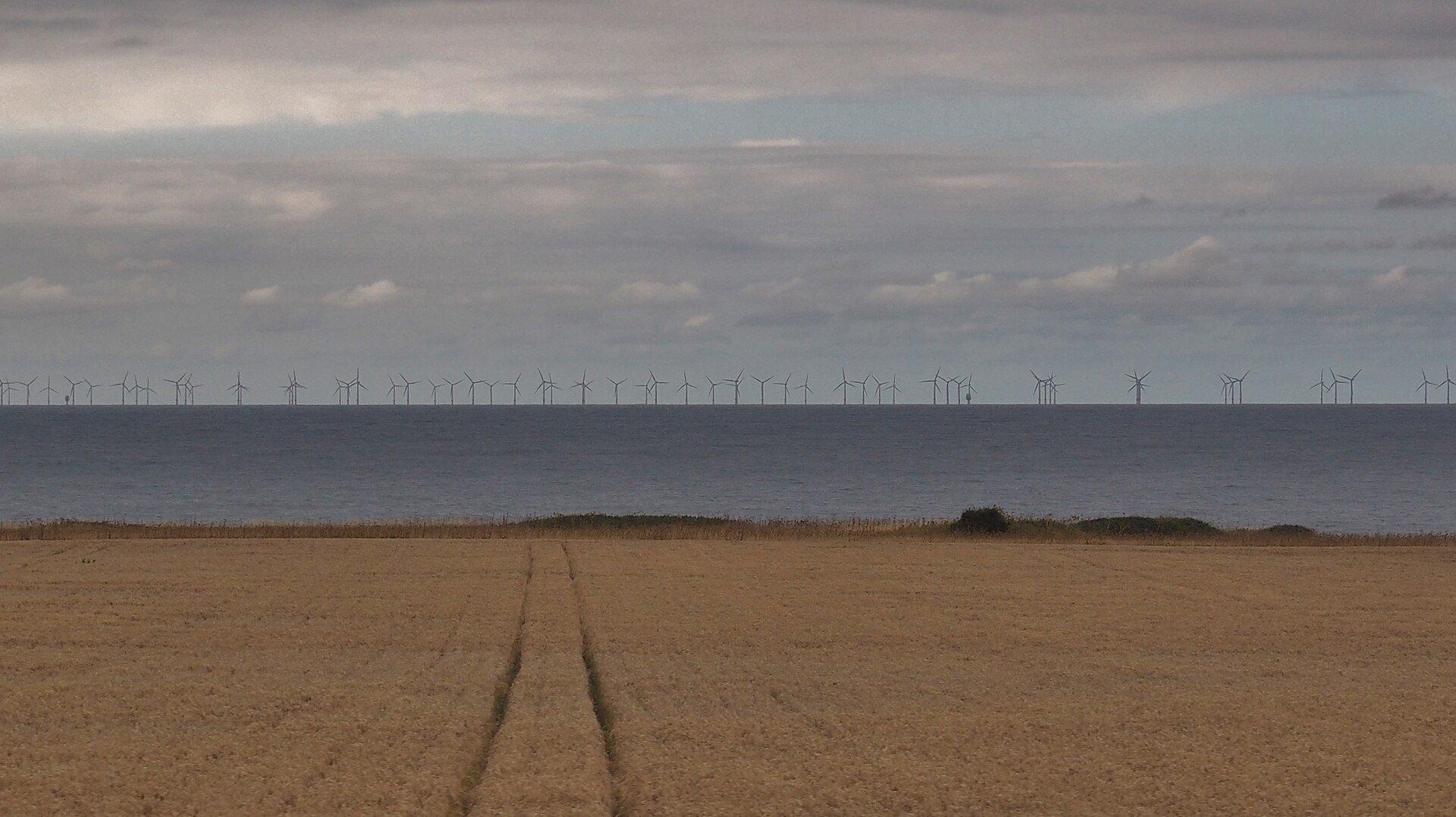
Image: Photo: johnkell, CC BY 2.0 (https://creativecommons.org/licenses/by/2.0/), via Wikimedia Commons (https://commons.wikimedia.org/wiki/File:Norfolk_coast,_offshore_wind_farm_UK_2015.jpg) — July 2015 file photo of an offshore wind farm off Norfolk; illustrative, not linked to the current talks
About this article: prepared by The Daily Context editorial desk using automated, source-based reporting from the publications linked below. No reporter was on the ground.
Sources
- Euronews: https://www.euronews.com/2026/11/10/five-eu-countries-demand-uk-pays-for-electricity-market-access
- Politico Europe: https://www.politico.eu/article/eu-capitals-urge-brussels-to-swiftly-sign-electricity-deal-with-uk/
- The Guardian (Falconer interview, 10 November): https://www.theguardian.com/politics/2026/nov/10/britain-eu-electricity-market-cohesion-fund-hamish-falconer
- The Guardian (letter, 7 November): https://www.theguardian.com/world/2026/nov/07/europe-leaders-call-closer-eu-uk-ties-brussels-summit
- The Telegraph: https://www.telegraph.co.uk/world-news/2026/11/09/eu-electricity-concession-brexit-reset-deal-brussels/
Kabeer Ahmad
Kabeer Ahmad is the founder and editor of The Daily Context. He oversees the site's source-based coverage of world affairs, technology, business, entertainment, lifestyle and sports, and is responsible for its editorial standards, sourcing and corrections.