Mercedes-Benz halts new investment in German plants and weighs closures
Mercedes-Benz's management board has stopped all further investment at its German sites and says it will now examine plant closures in concrete terms, after cost-cutting talks with the works council and IG Metall stalled. Executives want longer working hours without extra pay and cuts to bonuses; no plants have been named.
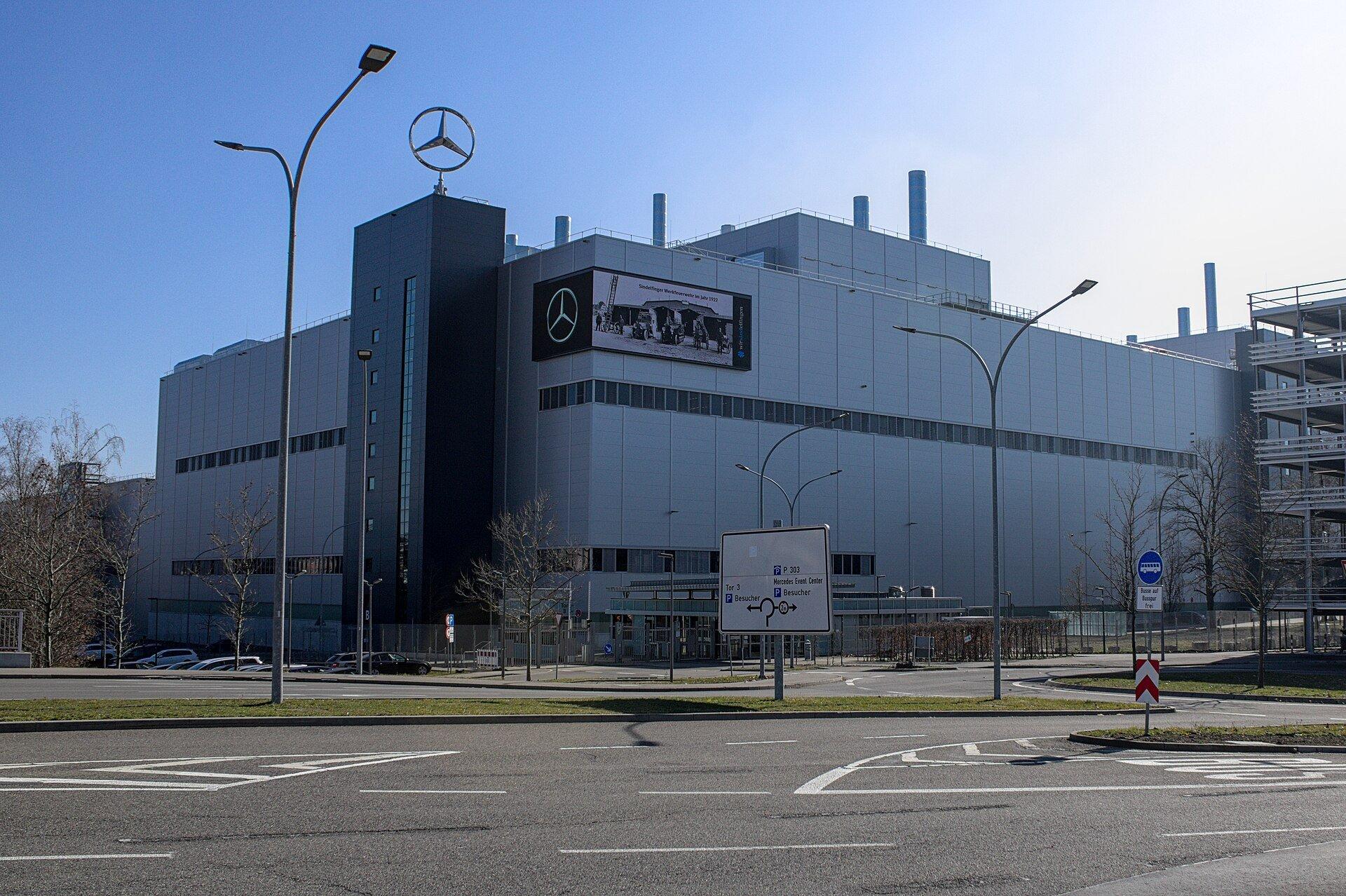
Mercedes-Benz has stopped all further investment at its German production sites and says it will now examine closing plants in "concrete and detailed terms". The decision, announced on Thursday, 12 November 2026, in interviews published on the carmaker's internal intranet, is a sharp escalation in months of stalled talks with its works council and the IG Metall union over cutting labour costs in Germany.
"The executive board has jointly decided to halt all further investments in German sites," chief production officer Michael Schiebe said, according to AFP, as reported by DW. He said that despite many intensive talks the company could not yet see a "corridor for a solution" and could not invest in Germany with today's cost structures, according to German public broadcaster tagesschau. No plants have been named for closure, and the company has not said how much planned spending is affected.
What exactly did Mercedes announce?
Two board members spoke in the internal interviews, which were first reported by German media including Handelsblatt, Bild and the Süddeutsche Zeitung. Schiebe announced the investment freeze. Human resources chief Britta Seeger said the company needed a decision from employee representatives on concessions, and that none was in sight. "We are now forced to examine, in concrete and detailed terms, which sites in Germany we can still afford to maintain," she said, according to DW. "We all want to avoid plant closures at all costs. Unfortunately, however, we must now pursue this option in more concrete terms."
Tagesschau reported that Schiebe also said new models would be built only abroad if no agreement is reached. El Mundo noted that the freeze applies to additional investment and does not mean halting production or necessarily cancelling projects already committed.
Why is Mercedes doing this?
The company's argument is cost. Schiebe said an hour of production labour in Germany can cost up to five times as much as at Mercedes sites in Eastern Europe, with a similar gap in administration, according to tagesschau and Euronews. He described an "extremely demanding environment shaped by tariffs, price pressure, weaker demand and intense competition, especially from China."
The financial background is a sharp fall in profitability in the passenger-car business. In its third-quarter results published on 28 October 2026, Mercedes-Benz Group reported revenue of €30.7 billion, down from €32.1 billion a year earlier, and adjusted Group EBIT (earnings before interest and taxes, excluding one-off items) of €1.78 billion, down 15%. Adjusted EBIT at the Mercedes-Benz Cars division roughly halved to €560 million, a return on sales of 2.5%. Car sales fell 8% to 407,232 vehicles, which the company attributed mainly to challenging conditions and intense competition in China, even as sales in Europe and the United States grew and battery-electric sales hit a quarterly record.
DW noted that China has historically accounted for around a third of Mercedes' passenger-car sales, and that US tariffs cost the company about €1 billion in profit last year. In the same October results, Mercedes said it had intensified productivity measures since June 2026 "with a particular focus on its German locations", on top of a roughly 25% cut in fixed costs since 2019, and would again offer voluntary severance for indirect, non-production roles in Germany from December 2026.
What is management asking workers to accept?
According to tagesschau, management wants employees to work longer without extra pay; a move from 35 to 40 hours a week has been discussed. For the works council and IG Metall that is a red line, because the 35-hour week is one of the union's central achievements. Seeger argued that the conditions under which shorter hours were agreed no longer exist and that more hours would raise productivity quickly without cutting pay rates.
Management is also seeking cuts to special payments, including profit sharing and collectively agreed holiday and Christmas bonuses, Euronews and tagesschau reported. Seeger said the board would also make financial sacrifices and that executives had already gone without increases in two pay rounds. The proposals have triggered protests among staff, Euronews said.
The dispute overlaps with industry-wide wage bargaining in Germany's metal and electrical sector, where IG Metall is demanding a 5% pay rise. Seeger said such an increase would push up labour costs that are "already far too high by international comparison", according to tagesschau.
Which plants could be affected?
That is not yet known. Schiebe said several weeks ago that if costs were not reduced, two German plants would have to close: one vehicle assembly plant and one powertrain plant, which makes components such as engines and drive systems, Euronews and tagesschau reported. Mercedes runs about a dozen production sites in Germany. Its assembly plants include Sindelfingen, Rastatt and Bremen; powertrain sites include Stuttgart-Untertürkheim, Affalterbach, Berlin, Hamburg, Kamenz in Saxony, and Kölleda and Arnstadt in Thuringia, according to Merkur and Euronews. The company has not identified any of them as a closure candidate.
Who is affected, and why does it matter beyond Mercedes?
The immediate uncertainty falls on employees at Mercedes' roughly dozen German sites and on the supplier networks around them, particularly in Baden-Württemberg, where the company is headquartered. Merkur wrote that thousands of employees now have reason to worry.
The move also adds to pressure on Germany's car industry as a whole. Volkswagen and its Audi subsidiary have announced large savings programmes and job cuts, and Euronews quoted automotive analyst Ferdinand Dudenhöffer, via Bild, as saying the developments reflect long-known competitiveness problems of Germany as a car-making location. Mercedes has long been seen as a symbol of German manufacturing, so a freeze on domestic investment is likely to feed the wider political debate in Germany about energy prices, labour costs and industrial policy.
It is worth separating threat from outcome. The announcement came in internal interviews during live negotiations, and several outlets, including tagesschau, described it as the company raising pressure on the employee side. Closures would require further decisions and, under German co-determination rules, consultation with employee representatives.
What happens next?
Talks between management and the works council on the company's so-called "productivity offensive" continue, alongside the sector-wide pay round. In the sources reviewed for this article, no detailed public response from the works council or IG Metall to Thursday's announcement had been published at the time of writing, though works council chief Ergun Lümali has previously said there is room for compromise while signalling readiness to fight. The key things to watch are whether employee representatives agree to a cost package, whether Mercedes names specific sites, and whether new model allocations move outside Germany.
Image: Photo: Alexander-93, CC BY-SA 4.0, via Wikimedia Commons (https://commons.wikimedia.org/wiki/File:Mercedes-Benz-Werk_Sindelfingen_IMG_3908.jpg) — February 2021 file photo of the Mercedes-Benz plant in Sindelfingen, resized; not taken on the day of the announcement
About this article: prepared by The Daily Context editorial desk using automated, source-based reporting from the publications linked below. No reporter was on the ground.
Sources
- tagesschau, Mercedes stoppt Investitionen in deutsche Standorte (12 Nov 2026, in German): https://www.tagesschau.de/wirtschaft/unternehmen/mercedes-stopp-investitionen-100.html
- DW, Mercedes-Benz halts all further investment at German facilities (12 Nov 2026): https://www.dw.com/en/mercedes-benz-germany-investment/a-79934509
- Euronews, Mercedes-Benz halts new investment in German plants, considers closures (12 Nov 2026): https://www.euronews.com/2026/11/12/mercedes-benz-halts-new-investment-in-german-plants-considers-closures
- Mercedes-Benz Group, 3rd Quarter Results 2026 (28 Oct 2026): https://group.mercedes-benz.com/investors/reports-news/interim-reports/q3-2026/
- Merkur, Mercedes droht mit Werksschließungen und stoppt Investitionen in Deutschland (12 Nov 2026, in German): https://www.merkur.de/wirtschaft/mercedes-droht-mit-werksschliessungen-und-stoppt-investitionen-in-deutschland-zr-94587928.html
- El Mundo, Mercedes-Benz congela sus inversiones en Alemania y amenaza con cerrar fábricas (12 Nov 2026, in Spanish): https://www.elmundo.es/economia/2026/11/12/6af5f8ade4d4d8e15d8b45bb.html
- WirtschaftsWoche, Mercedes droht mit Werksschließungen – Betriebsrat zeigt sich kampfbereit (9 Oct 2026, in German): https://www.wiwo.de/unternehmen/auto/mercedes-droht-mit-werksschliessungen-betriebsrat-wehrt-sich/100260677.html
Kabeer Ahmad
Kabeer Ahmad is the founder and editor of The Daily Context. He oversees the site's source-based coverage of world affairs, technology, business, entertainment, lifestyle and sports, and is responsible for its editorial standards, sourcing and corrections.