Trump threatens to double Mexico tariffs over migrant caravans
President Donald Trump said on 12 November 2026 that US tariffs on Mexico would be 'immediately doubled' unless Mexico stops migrant caravans moving north. Mexican President Claudia Sheinbaum replied that no caravan has reached the US border since he returned to office, and that one group has already shrunk to fewer than 100 people.
US President Donald Trump threatened on Thursday, 12 November 2026, to "immediately" double tariffs on goods from Mexico unless the Mexican government stops migrant caravans that he says are heading for the US border. Mexican President Claudia Sheinbaum answered the same day that "since President Trump came into government, no migrant caravan has reached the northern border", and said one of the two groups now moving through Mexico has already dwindled from several hundred people to fewer than 100. Trump gave no deadline, did not say which tariffs he meant and did not cite a legal basis, so for now this is a threat rather than a policy.
The warning matters well beyond migration. Mexico is the United States' largest trading partner, with two-way trade of $96.34 billion in September alone, according to the freight-industry publication FreightWaves, and the two governments are in the middle of difficult talks over tariffs and the future of their trade relationship.
What exactly did Trump say?
Trump made the threat in a post on his Truth Social platform. "Huge CARAVANS are forming and beginning their illegal march through Mexico," he wrote, according to Al Jazeera. "MEXICO MUST STOP THEM, NOW, and if they do not do so, the Tariffs on Mexico will be IMMEDIATELY DOUBLED," he added, followed by "There will be no leniency!", as quoted by Bloomberg and UPI.
He linked the caravans directly to last week's US midterm elections, in which his Republican Party lost control of both the House of Representatives and the Senate. "Here we go again! With the perceived loss by the Republicans in the Midterms - I WAS NOT ON THE BALLOT - the INVASION of our Country is taking place again," he wrote, according to UPI. He said Mexico, Texas's incoming governor and US border and immigration agencies had "been so informed". In Texas, Democrat Gina Hinojosa won the governorship from Republican Greg Abbott in the 3 November election, Bloomberg reported.
Trump offered no evidence for his claim that an "invasion" was under way again, BBC Mundo noted, and no formal tariff order had been reported by the time of writing.
How did Mexico respond?
Sheinbaum used her regular morning news conference on Thursday to push back. She said there are currently two caravans. One, in Arriaga in the southern state of Chiapas, had formed with about 500 to 600 people "and now fewer than 100 remain", according to Anadolu Agency and the Mexican business outlet Expansión. The second, which set out from Honduras, is receiving what she called "humanitarian assistance, treatment based on human rights".
She described Mexico's approach as persuasion rather than force. "We inform the people in the caravan that it is very difficult to get into the United States; that if their goal is to reach the United States, they will not be able to, because that possibility does not exist," she said, as quoted by Expansión. Migrants are helped to return home safely, she said, or may stay in Mexico "under certain conditions, in a specific place". The "vast majority" go back to their countries of origin once they understand they cannot cross, she added, according to BBC Mundo.
Sheinbaum told reporters Mexico would not use force to break up the caravans, public radio station KJZZ reported. She also warned that migrants are sometimes misled: "sometimes there are people who deceive migrants and tell them, for example, that immigration policy changed with the result of the US election, which is false," she said, according to BBC Mundo. When Bloomberg sought comment, Mexico's foreign and economy ministries did not immediately reply.
How big are the caravans?
Estimates differ, and none is official. The largest group, which calls itself "Dios con Nosotros" ("God With Us"), left the southern Mexican city of Tapachula, near the Guatemalan border, on Tuesday, 10 November. A Chiapas state government source estimated about 1,500 people were taking part, many of them families with small children, Reuters reported via Al Jazeera. The Spanish news agency EFE said the group initially numbered around 2,000, FreightWaves noted. Deseret News, citing AFP, said the caravan had set out from San Pedro Sula in Honduras on 3 November, US election day.
The migrants, mostly from Central America, say their first goal is Mexico City, more than 1,000 km away, a walk likely to take several weeks, where they plan to seek help and protection from the Mexican government. Some told reporters that the Democratic election wins had given them new hope. "There might be a light at the end of the tunnel, a way for us to get in," Cesar Sandoval, a 47-year-old Nicaraguan who was deported from the US a few months ago, told Reuters.
Mexican authorities have already acted against at least one group. On Tuesday, the National Guard, immigration officers and Chiapas police stopped about 100 Central Americans who had crossed the Suchiate River from Guatemala, and about 40 were detained, AFP reported. AFP said this is the third caravan to try to reach the US since September; the previous two were broken up in Chiapas and their members given temporary permits to stay.
Which tariffs could be doubled?
That is the central unanswered question. Trump did not specify which tariffs would rise, whether exemptions would survive or when any change would take effect, FreightWaves reported. According to its summary, current US tariffs on Mexican imports generally include:
- 25% on most goods that do not qualify for preferential treatment under the US-Mexico-Canada Agreement (USMCA)
- 0% on goods that do qualify under the USMCA
- 25% on Mexican-made cars, subject to adjustments and exemptions
- 50% on steel and aluminium
Doubling the 25% general rate would put non-USMCA goods at 50%, but doubling all categories would be a far larger shock to car, electronics and machinery supply chains, where parts often cross the border several times before a product is finished. It is also unclear what legal authority Trump would use: Bloomberg noted that a US Supreme Court decision earlier this year curtailed his tariff powers.
Markets reacted, though modestly. Mexico's peso slipped to its session low after Trump's post, Bloomberg reported.
What does this mean for US–Mexico trade talks?
The threat lands on negotiations that were already stuck. Trump declined this summer to extend the USMCA, the North American trade pact he signed in his first term, and the two countries have since been negotiating tariff reductions and wider trade arrangements. According to people familiar with the talks cited by Bloomberg, the sides appeared to be moving towards a deal earlier this autumn but hit an impasse over steel and aluminium tariffs, and talks cooled after Commerce Secretary Howard Lutnick tried to take over the negotiations and objected to Mexican demands for lower metals tariffs in October. Mexico has been pressing for lower tariffs on goods outside the trade pact and an end to higher levies on products such as steel, KJZZ reported.
Trump has used tariff threats against Mexico before to win concessions on migration and border security, sometimes following through and sometimes not. Last month the State Department also announced visa restrictions on more than 15 people it accused of organising or facilitating caravans, UPI and Deseret News reported.
What happens next?
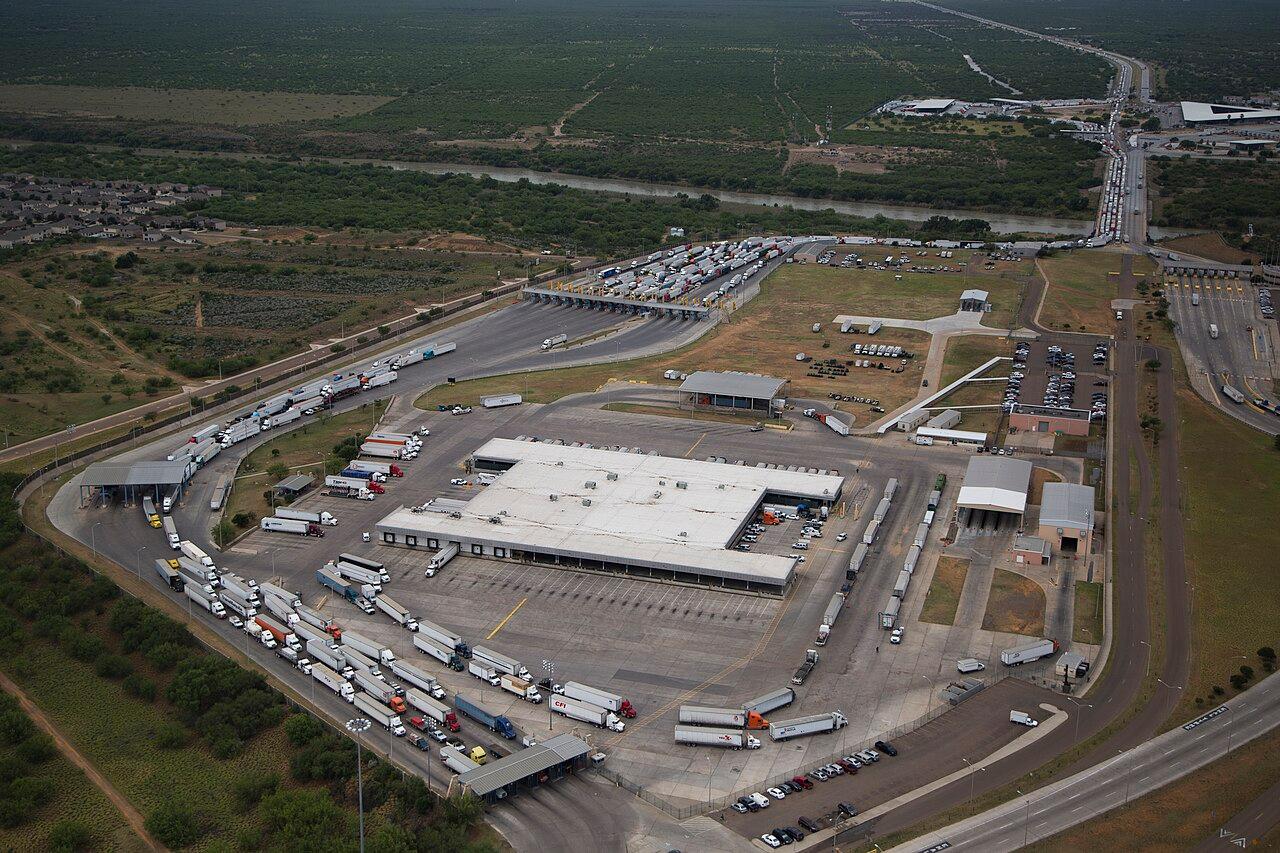
Several things are worth watching in the coming days: whether the White House turns the post into a formal order and names the tariffs and legal authority involved; whether Mexico's economy ministry, which leads the trade talks, responds publicly; and how far the Tapachula caravan gets as it heads towards Mexico City. Sheinbaum's government is betting that its record, with no caravan reaching the border since January 2025, will defuse the dispute. Businesses that trade across the border, particularly through gateways such as Laredo, Texas, which handled $38.9 billion of trade in September according to FreightWaves, face fresh uncertainty until Washington clarifies what, if anything, will change. This article does not offer financial or legal advice.
Image: Photo: U.S. Customs and Border Protection, public domain, via Wikimedia Commons (https://commons.wikimedia.org/wiki/File:World_Trade_Crossing_International_Bridge_in_Laredo,_Texas_(35147440934).jpg) — April 2017 file photo of trucks entering the US from Mexico at Laredo, Texas, resized; not taken this week
About this article: prepared by The Daily Context editorial desk using automated, source-based reporting from the publications linked below. No reporter was on the ground.
Sources
- Bloomberg via Transport Topics (12 Nov 2026): https://www.ttnews.com/articles/trump-double-tariffs-mexico
- FreightWaves (12 Nov 2026): https://www.freightwaves.com/news/trump-threatens-to-double-mexico-tariffs-over-alleged-migrant-influx
- Al Jazeera, with AFP and Reuters (12 Nov 2026): https://www.aljazeera.com/news/2026/11/12/migrant-caravan-sets-out-from-southern-mexico-bound-for-us-after-midterms
- Anadolu Agency (12 Nov 2026): https://www.aa.com.tr/en/americas/mexico-s-sheinbaum-says-no-migrant-caravan-has-reached-us-border-under-trump/4123422
- Expansión (12 Nov 2026, Spanish): https://politica.expansion.mx/presidencia/2026/11/12/sheinbaum-responde-trump-aranceles-caravanas-migrantes
- BBC News Mundo (12 Nov 2026, Spanish): https://www.bbc.com/mundo/articles/cj62pglgdwreo
- KJZZ Fronteras Desk (12 Nov 2026): https://www.kjzz.org/fronteras-desk/2026-11-12/sheinbaum-says-migrant-caravans-will-not-reach-u-s-mexico-border-as-trump-threatens-higher-tariffs
- UPI (12 Nov 2026): https://www.upi.com/Top_News/US/2026/11/12/latam-mexico-us-border-dispute-caravans-tariffs/6931794515458/
- Deseret News (12 Nov 2026): https://www.deseret.com/u-s-world/2026/11/12/new-migrant-caravans-revive-a-border-confrontation-with-mexico/
Kabeer Ahmad
Kabeer Ahmad is the founder and editor of The Daily Context. He oversees the site's source-based coverage of world affairs, technology, business, entertainment, lifestyle and sports, and is responsible for its editorial standards, sourcing and corrections.