Ukraine brings down road span of Russia's Crimean Bridge: what the Kerch strike means
A Ukrainian missile and drone operation overnight on 16–17 November 2026 brought down a road arch and span of the Crimean Bridge over the Kerch Strait, cutting the only direct road link between Russia and occupied Crimea. Rail traffic partly resumed, the Kremlin says the bridge will be rebuilt, and debris may be blocking the shipping channel to the Sea of Azov.
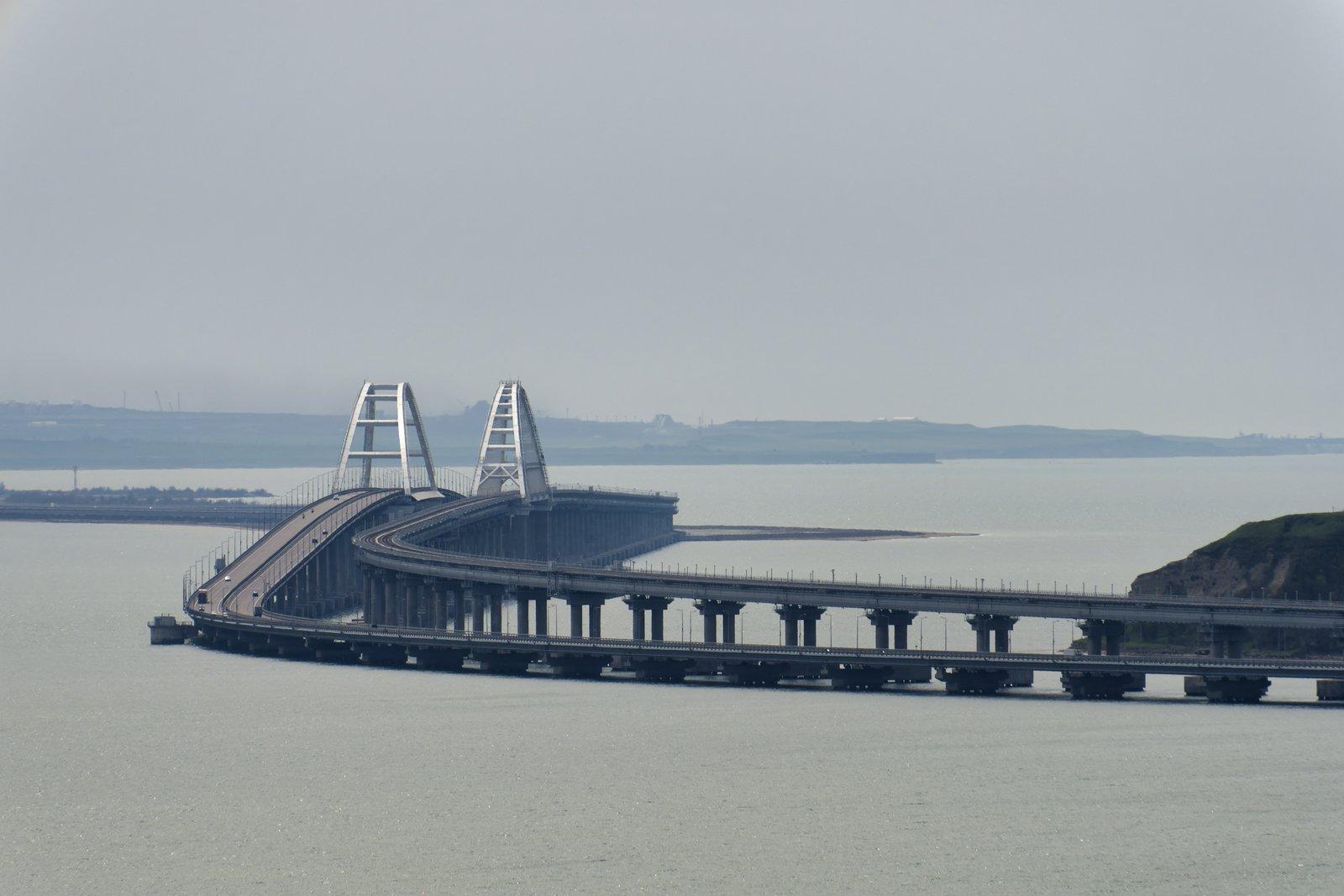
Ukraine has knocked out the road section of the Crimean Bridge, the 19km crossing over the Kerch Strait that links Russia with the Crimean peninsula it seized in 2014. Ukraine's General Staff said on Tuesday, 17 November 2026, that an arch and a span of the road bridge had collapsed after an overnight attack and that "no vehicle can cross it". The parallel railway bridge is still standing but its arch is damaged.
The Kremlin said President Vladimir Putin had been briefed and that the bridge would be rebuilt "even better than before". The strike came two days before Putin is due to meet US President Donald Trump and China's Xi Jinping in Shenzhen.
What happened to the bridge?
Ukraine's General Staff said in a Telegram statement, reported by Interfax-Ukraine, that powerful explosions were heard over the strait and that "the arch and span of the bridge's road section collapsed". It said the railway section was still standing, "but its arch has already been damaged".
Ukraine's security service, the SBU, said one of the bridge's metal arches and the road span beneath it had been "completely destroyed". It said its Alpha special forces hit the road section with Palianytsia missile-drones, after which it fell into the water.
Videos and images posted by President Volodymyr Zelensky and verified by Reuters show the main road arch collapsed into the sea, leaving a large gap. The Guardian reported that photos suggest a 227-metre road arch span fell into the strait. The Associated Press said it could not independently verify the footage.
Russia's account is shorter. The Investigative Committee said the bridge was attacked by drones on 16 and 17 November and suffered structural damage, and it opened a criminal case on terrorism charges. Sergei Aksyonov, the Russian-installed head of Crimea, said road traffic had been suspended and two people were killed, according to Reuters. Rail traffic partly resumed on Tuesday afternoon after a pause.
How did Ukraine carry out the attack?
Zelensky called it an "unprecedented" operation. He said it had seven stages, in which Ukrainian forces first wore down air defences, radars and electronic warfare systems on the route to the bridge.
According to Zelensky, Palianytsia drones struck the road section, while Neptune missiles, Ruta and FP-5 drones hit the railway section. He said the Flamingo cruise missile, made by the Ukrainian company Fire Point, delivered a precision strike. The SBU said the whole operation lasted about a month.
Ukraine's Unmanned Systems Forces said drone units helped overload Russian air defences and relayed signals for the final missile strike. The Guardian reported that a separate strike on Monday, 16 November, had already targeted an arch in the central section.
The attack came during a record wave of Ukrainian drones. Russia's defence ministry said it shot down 1,441 drones over 22 regions overnight, according to Reuters. That beat the record of 1,336 set the night before. These are Russian claims and have not been independently verified.
Why does the Crimean Bridge matter?
Russia built the bridge after it invaded and annexed Crimea in 2014. Most countries do not recognise the annexation, and Ukraine calls the bridge illegal. It cost about $3.6bn (£2.7bn), according to the BBC. Putin opened it in May 2018 by driving a lorry across it.
The bridge has military and symbolic value:
- Supplies: Ukraine's General Staff called it the main route for fuel, ammunition, equipment and troops going to Crimea and on to southern Ukraine.
- Symbolism: Both Russians and Ukrainians see it as Putin's personal project. Ukraine's military said: "The symbol of the occupation has cracked."
- Earlier attacks: Ukraine hit the bridge before. A truck bomb in October 2022 killed four people. In July 2023, a sea-drone attack destroyed a road section and killed a couple driving across, Reuters said. Both times Russia repaired it.
Russia now depends less on the bridge than it used to. Reuters reported that its forces mainly use a land corridor through occupied parts of southern Ukraine. The Guardian said Russia had largely stopped sending fuel trains across the bridge after the 2022 attack.
How will this affect Crimea and shipping?
Crimea can still be reached by land through occupied parts of Ukraine's Zaporizhzhia and Kherson regions, the BBC said. But Ukraine has been striking roads and crossings in northern Crimea and around Chonhar, which has already disrupted fuel and other deliveries. There is also a ferry across the Kerch Strait, but it carries much less and can also be attacked.
The strait connects the Black Sea with the Sea of Azov, and ships pass under the bridge. The Guardian reported that debris seems to be blocking the main channel under the bridge, which is 120 metres wide and 8.3 metres deep. Sunken steel could stop large ships until it is cleared. That matters for Russian-held ports on the Sea of Azov, including Mariupol and Berdiansk.
Andrey Sizov of the agricultural consultancy Sovecon told Reuters the collapse could "substantially delay any eventual resumption of shipping from the Sea of Azov", because the channel would need to be cleared first.
How has Russia responded?
The Kremlin said Deputy Prime Minister Marat Khusnullin briefed Putin after a meeting of the government commission handling the damage. A detailed repair plan and timetable are being drawn up. Kremlin spokesman Dmitry Peskov told the newspaper Izvestia that "there is no doubt that the bridge will be restored and will be even better than before". The BBC reported that Peskov did not rule out a link between the strikes and Putin's trip to China.
Some pro-war Russian commentators were less hopeful. The Guardian quoted the Rybar Telegram channel, which has close links to the defence ministry, as saying that "even installing a prefabricated arch under such conditions would be a formidable challenge". Rybar warned that Ukraine can now strike repair crews and floating cranes. Finnish military analyst Emil Kastehelmi posted that the road bridge "won't be repaired during this war", according to Reuters. That is a forecast, not a confirmed outcome.
On the same night, Russia struck the Northern and Southern bridges over the Dnipro River in Kyiv, Mayor Vitali Klitschko said. Water and power were cut in parts of the city. Zelensky said Ukraine's strike was "a response to Russian strikes on our infrastructure".
How have Western governments reacted?
The Guardian reported that Britain and Germany clashed with the United States over Ukraine's long-range strikes at a Nato meeting in Brussels after the attack. Elbridge Colby, the US under-secretary of defence, said such strikes were ineffective and counterproductive. He did not mention the bridge, but he cited attacks on Russian Wildberries warehouses.
German defence minister Boris Pistorius called that criticism "quite a stupid thing". UK defence secretary Wes Streeting said deep strikes had "helped to degrade Putin's war machine". Neither the Kremlin nor Washington has said whether the bridge attack will change the peace talks.
What happens next?
Putin, Trump and Xi are due to meet in Shenzhen on Thursday, 19 November, on the sidelines of the Apec summit. The war in Ukraine is expected to be discussed, Reuters reported. US-brokered talks in Abu Dhabi last week led to a prisoner exchange, as we reported earlier (https://www.thedailycontext.com/article/abu-dhabi-talks-end-prisoner-exchange-kushner-witkoff-putin-moscow-november-2026), but no breakthrough on territory.
Watch for:
- Russia's repair plan and timetable, and whether Ukraine tries to hit repair work
- Whether ships can get through the Kerch Strait channel, and the effect on Sea of Azov ports
- Any Russian retaliation against Ukrainian infrastructure
- Whether the strike comes up at the Shenzhen meeting
Many details, including the full extent of damage to the railway section and the casualty figures, are still based on statements from each side. Official assessments may change.
Image: Alexxx1979, CC BY-SA 4.0, via Wikimedia Commons (https://commons.wikimedia.org/wiki/File:Kerch._Crimean_Bridge_P5030811_2350.jpg) — May 2021 file photo of the Crimean Bridge seen from Kerch, taken before the war damage; it does not show the November 2026 strike
About this article: prepared by The Daily Context editorial desk using automated, source-based reporting from the publications linked below. No reporter was on the ground.
Sources
- Interfax-Ukraine: Kerch Strait Bridge road section destroyed, railway section damaged – General Staff (17 November 2026) https://en.interfax.com.ua/news/general/1237738.html
- Kremlin: The President received an update on the Crimean Bridge situation (17 November 2026) http://en.kremlin.ru/events/president/news/81276
- Reuters via HuffPost: Ukraine cripples Crimean Bridge in blow to Putin before meeting with Xi, Trump (17 November 2026) https://www.huffpost.com/entry/ukraine-crimea-bridge-destroyed-putin-kerch_n_6afc9f05e4b02da00c022679
- BBC News: Putin's Crimean Bridge partly collapses as Zelensky hails 'unprecedented' attack (17 November 2026) https://www.bbc.com/news/articles/cw772jk4rvmxo
- The Guardian: Ukraine critically damages Kerch bridge linking occupied Crimea with Russia (17 November 2026) https://www.theguardian.com/world/2026/nov/17/ukraine-strikes-critical-damage-russia-kerch-bridge-crimea
- Associated Press via PBS NewsHour: Ukraine destroys span of Kerch Bridge linking Russia with Crimea (17 November 2026) https://www.pbs.org/newshour/world/the-symbol-of-the-occupation-ukraine-destroys-span-of-kerch-bridge-linking-russia-with-crimea
- Kyiv Post: Crimean Bridge arch collapses into sea after fresh Ukrainian missile strike (17 November 2026) https://www.kyivpost.com/post/90298
- DW: Vladimir Putin briefed on Kerch bridge strike (17 November 2026) https://www.dw.com/en/vladimir-putin-briefed-on-kerch-bridge-strike-russian-media/liveblog-post-79967764
Kabeer Ahmad
Kabeer Ahmad is the founder and editor of The Daily Context. He oversees the site's source-based coverage of world affairs, technology, business, entertainment, lifestyle and sports, and is responsible for its editorial standards, sourcing and corrections.