Mongolia's President Khurelsukh asks to step down over railway bribery claims he denies; parliament to vote
Mongolian President Ukhnaagiin Khurelsukh has asked parliament to release him from office so that allegations linking him to a 2019 railway contract can be investigated. He denies them. A parliamentary committee endorsed his request on 18 November, and a plenary vote is expected on 19 November. If it passes, the speaker will act as head of state until an election within four months.
Update, 18 November 2026, afternoon (Pakistan time): Parliament's State Structure Standing Committee endorsed President Khurelsukh's request to leave office on Wednesday, with 77.8% of the members present voting in favour, according to the parliament's press service. The request now goes to a plenary session of the State Great Khural for a final decision. Details are in the section "How does parliament decide, and what happens if it agrees?" below.
Mongolia's President Ukhnaagiin Khurelsukh has formally asked parliament to release him from office, saying he wants allegations that he took a bribe over a state railway contract to be investigated and his name cleared. He denies the claims. It is the first time a Mongolian head of state has asked to leave office before the end of his term.
Khurelsukh announced the decision at the State Palace in Ulaanbaatar on Tuesday, 17 November 2026, and submitted his request to the State Great Khural, Mongolia's 126-seat parliament, the same day. The resignation does not take effect unless parliament approves it. Its State Structure Standing Committee endorsed the request on Wednesday, 18 November, and a plenary vote is expected on Thursday, 19 November.
What did President Khurelsukh say?
In a statement carried by the state news agency Montsame, Khurelsukh said that for more than a month "certain groups" had attacked the honour of the presidency. "The Democratic Party has said that I should step down from my duties so that the truth can be established. I agree with this. I will therefore hand over my duties as President of Mongolia. I will be investigated and will have my honor restored," he said.
He said he would take those he accused of defaming him "before the relevant authorities". He also argued that "an attack on the President's reputation is an attack on the reputation of the Mongol people" and on the country's foreign relations. He said he had "never lied, stole or deceived anyone" and had made "no policy mistakes" as head of state. DW, citing AP and AFP, reported that he said he was being "falsely accused and defamed" and that he had pledged to cooperate with investigators.
What is he accused of?
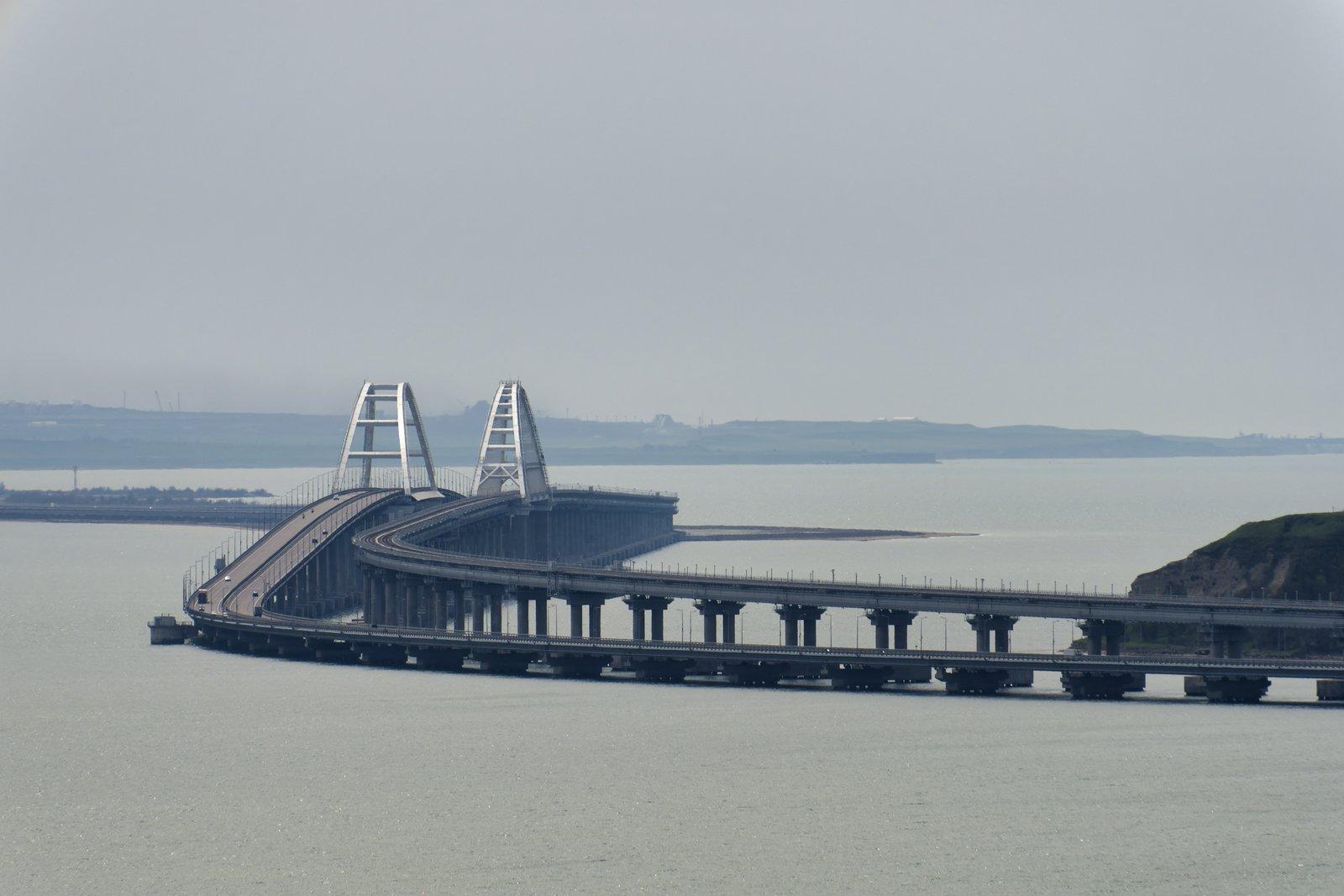
The allegations centre on the Tavantolgoi–Gashuunsukhait railway, which carries coal from the Tavan Tolgoi coal field in the Gobi desert to Gashuunsukhait on the Chinese border. Coal is Mongolia's biggest export earner, and the line, completed in 2022, cuts the cost of trucking coal to China, Mongolia Weekly reported.
On Saturday, 14 November, Khishgeegiin Nyambaatar, a former mayor of Ulaanbaatar and former justice minister, alleged that about $110 million linked to the railway had been paid to politicians as kickbacks, and that $25 million of it went to Khurelsukh. Nyambaatar belongs to a rival faction of the president's own ruling Mongolian People's Party (MPP), according to AP and DW. Khurelsukh was prime minister in 2019, when the contract was signed.
According to DW and The Independent, the allegation is that the construction contract was awarded in 2019 without a competitive tender to Bodi International, one of Mongolia's largest conglomerates, and that the company paid bribes. Bodi said on Monday that it had not paid any cash bribes to senior officials or civil servants. It called the allegations defamatory and said it had done nothing wrong. Mongolia Weekly reported that the country's anti-corruption agency said on 9 November that no cash payout had been established.
These are allegations. No court has found that any offence took place, and Khurelsukh, Bodi and others named have denied wrongdoing.
Why did he decide to go now?
The immediate trigger was a demand from the opposition Democratic Party (DP). On Monday, 16 November, its parliamentary caucus accused leaders of the ruling MPP of graft and cronyism. It demanded that officials linked to the alleged corruption be removed from their posts and investigated, Montsame reported. DP caucus chair Tuvshin Banzragch said all 42 members of the caucus had signed up to set up a temporary investigative committee. He said the party would also push for the publication of all offtake agreements linked to Erdenes Tavan Tolgoi, the state-owned coal company.
Khurelsukh's announcement came the following morning. Two officials also named in the allegations quickly said they would step down too. They were Enkhbayar Battumur, head of the Cabinet Secretariat, and Munkh-Erdene Dembereltseren, deputy minister of justice and home affairs, according to Montsame and The Independent.
Not everyone took the move at face value. Munkh-Erdene Gantulga, a lecturer at the National University of Mongolia, told The Independent the resignation could be a political manoeuvre that would play well with the public. "In the public face, he looks just and honest, and a good politician," he said.
How does parliament decide, and what happens if it agrees?
Under Mongolia's rules, a president's request to leave office is first examined by parliament's State Structure Standing Committee. The committee then reports to a plenary session, which decides by open vote, egov.mn reported, citing local media. A. Uilstuguldur, head of the Office of the President, said the committee was expected to discuss the request on Wednesday and the plenary to decide on Thursday. Mongolia Weekly said parliament is almost certain to accept it.
The committee met on Wednesday, 18 November. Its session opened at 13:46 Ulaanbaatar time (10:46 in Pakistan) with 56.3% of members present, according to a report from parliament's press service carried by Newswire.mn. Committee chair B. Javkhlan told members that the president had sent his request in writing to the Speaker, S. Byambatsogt, on 17 November. No member asked questions or spoke on the request, and 77.8% of the members taking part voted to support it. Xinhua also reported that the committee had endorsed the request and that the full parliament was expected to take it up at its next plenary session. The committee's backing is not the final step. The resignation takes effect only if the plenary approves it.
If parliament approves the request, the speaker, Sandagiin Byambatsogt, will exercise the powers of head of state until a new president is elected and sworn in, under Article 37 of the Constitution. A presidential election must then be held within four months. If parliament rejects the request, Khurelsukh keeps his powers.
The government itself is not directly affected. Prime Minister Nyam-Osoryn Uchral's cabinet remains in place, Mongolia Weekly noted, although a reshuffle is expected to fill vacant posts.
Who is Khurelsukh?
Khurelsukh, 58, served as prime minister before winning the presidency in 2021. He is the first Mongolian president elected under constitutional changes that limit the office to a single six-year term, egov.mn noted. That term would otherwise run until 2027. He belongs to the centre-left MPP, which has been divided by infighting. DW noted that the party has had three prime ministers in just nine months.
The crisis comes at a sensitive time for a country whose economy depends heavily on exports of coal, copper and gold, with China the main buyer of its coal. IBTimes Mongolia noted that corruption allegations at the top of government and questions about how strategic infrastructure contracts were awarded could affect foreign investors' confidence.
What happens next?
With the committee's endorsement in hand, the key moment is Thursday's plenary vote in the State Great Khural. If the request is approved, attention will turn to the timing of an early presidential election and to whether law-enforcement agencies open formal investigations into the railway contract. The DP's proposed investigative committee and its demand to publish Erdenes Tavan Tolgoi's coal offtake contracts could widen the scrutiny beyond the president. The Daily Context will update this report after parliament votes.
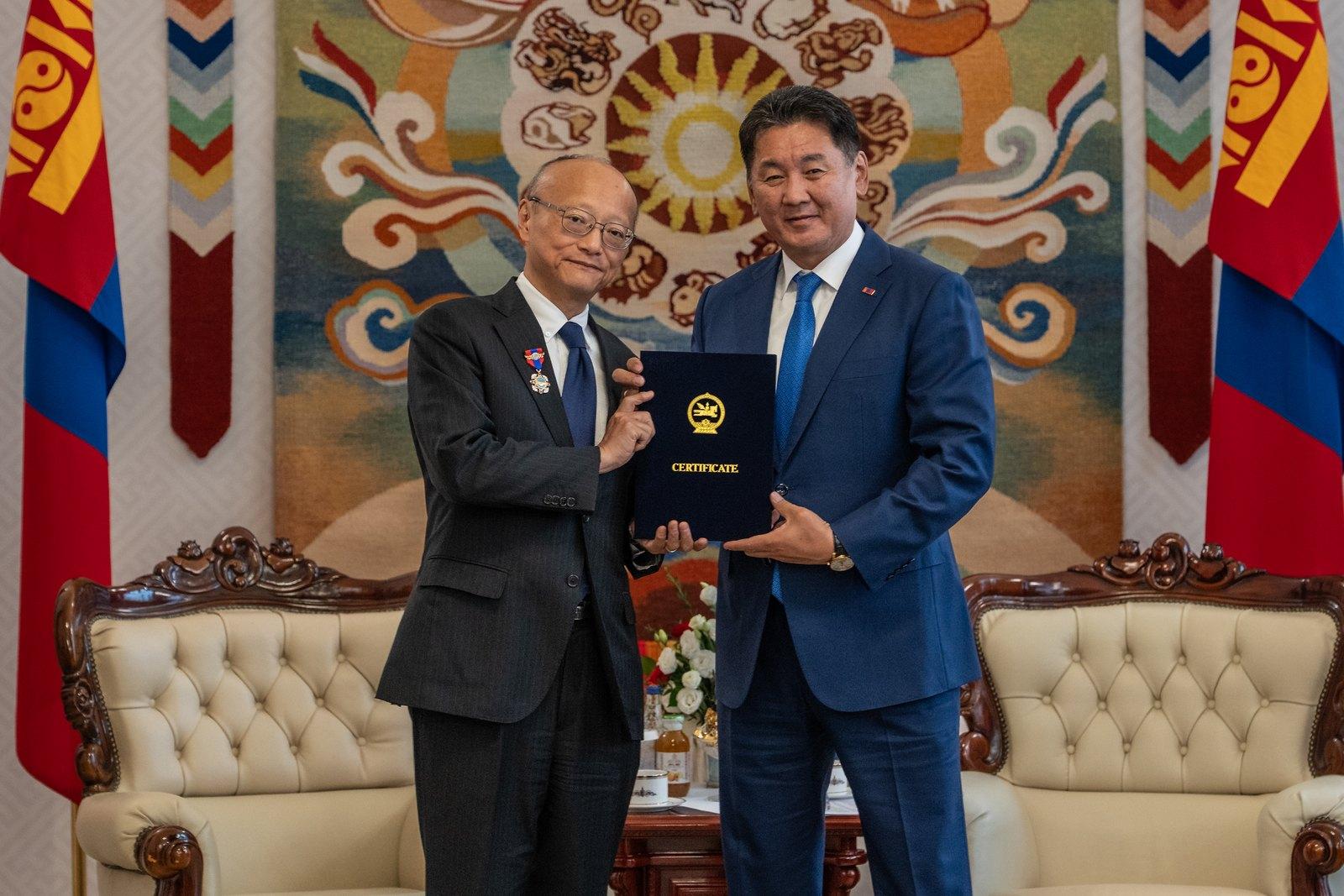
Image: Photo: Masato Kanda (Asian Development Bank president's Flickr), CC BY 4.0, via Wikimedia Commons (https://commons.wikimedia.org/wiki/File:President_Masato_Kanda_meets_Mongolian_President_Khurelsukh_Ukhnaa.jpg) — 1 October 2026 file photo of President Khurelsukh, right, with ADB President Masato Kanda; not taken during the current events; resized
About this article: prepared by The Daily Context editorial desk using automated, source-based reporting from the publications linked below. No reporter was on the ground.
Sources
- Newswire.mn / parliament press service, Mongolian (18 November 2026): https://www.newswire.mn/n/56458
- Xinhua, "Mongolian parliament committee backs president's resignation request" (18 November 2026): https://english.news.cn/20261118/d8f17fde367f449ab333f5e43c5e1f0c/c.html
- Montsame (17 Nov 2026), President Khurelsukh hands over duties: https://montsame.mn/en/article/breaking-president-khurelsukh-steps-down-from-his-position
- Montsame (17 Nov 2026), full statement: https://montsame.mn/en/article/president-khurelsukh-i-will-bring-those-who-are-defaming-me
- Associated Press (17 Nov 2026): https://apnews.com/article/mongolia-president-corruption-allegations-9542b2bf7536db6ae65b371aac07bbf4
- DW (17 Nov 2026): https://www.dw.com/en/mongolian-president-khurelsukh-to-resign-amid-corruption-allegations/a-79964717
- The Independent (17 Nov 2026): https://www.independent.co.uk/asia/east-asia/mongolia-president-khurelsukh-ukhnaa-resigns-b3086226.html
- CNA/Reuters (17 Nov 2026): https://www.channelnewsasia.com/asia/mongolian-president-announces-resignation-over-alleged-corruption-6558716
- Mongolia Weekly (17 Nov 2026): https://www.mongoliaweekly.org/post/mongolia-president-khurelsukh-resigns-over-tavan-tolgoi-railway-kickback-claim
- egov.mn (18 Nov 2026): https://www.egov.mn/en/article/parliament-committee-to-discuss-president-khurelsukhs-request-to-step-down-today
- IBTimes Mongolia (18 Nov 2026): https://mn.ibtimes.com/khurelsukh-early-resignation-request-1812618
Kabeer Ahmad
Kabeer Ahmad is the founder and editor of The Daily Context. He oversees the site's source-based coverage of world affairs, technology, business, entertainment, lifestyle and sports, and is responsible for its editorial standards, sourcing and corrections.