Privy Council strikes down Trinidad and Tobago's gay sex laws
The Judicial Committee of the Privy Council ruled unanimously on 10 November 2026 that Trinidad and Tobago's laws criminalising private, consensual sex between adults of the same sex are unconstitutional, ending activist Jason Jones's case that began in 2017. The decision is final, though the court has invited brief written submissions on the exact wording of the remedy.
Trinidad and Tobago can no longer criminalise private, consensual sex between adults of the same sex. On Tuesday 10 November 2026 the Judicial Committee of the Privy Council in London, the country's final court of appeal, unanimously allowed an appeal by gay rights activist Jason Jones and dismissed a cross-appeal by the Attorney General. The five justices held that sections 13 and 16 of the Sexual Offences Act 1986, which criminalise "buggery" and "serious indecency", infringe the constitutional right to respect for private and family life and must be read so that they do not apply to consenting adults in private.
The judgment, cited as [2026] UKPC 38, ends a legal fight that began when Jones filed his claim in February 2017. It is the first time the Privy Council has ruled on the constitutionality of laws criminalising consensual same-sex conduct, according to Human Rights Watch, and lawyers and activists across the Caribbean expect it to be cited in pending cases elsewhere in the region.
What did the Privy Council decide?
The panel of Lord Reed, Lord Sales, Lord Briggs, Lord Burrows and Lady Rose answered two main questions, in a judgment written by Lord Sales and Lord Burrows.
The first was whether the 1986 provisions were protected by the "savings clause" in section 6 of Trinidad and Tobago's 1976 Constitution. That clause shields "existing law", meaning laws already in force when the republican constitution took effect, from being struck down for breaching fundamental rights. Trinidad and Tobago's Court of Appeal had ruled by a majority in March 2025 that the 1986 Act merely re-enacted older offences from the Offences Against the Person Act 1925, a law passed under British colonial rule, and so was partly protected.
The Privy Council disagreed. It found that the 1986 Act "repealed and replaced" the colonial-era offences rather than re-enacting them with modifications, and therefore was not saved existing law. In the board's words, the majority of the Court of Appeal "was mistaken in law" on that point. The Trinidad Guardian reported the board describing the 1986 Act as "intended to be a fresh start in terms of the law on Sexual Offences".
The second question, raised by the Attorney General's cross-appeal, was whether the laws survived anyway because Parliament passed the 1986 Act using the special majority allowed by section 13 of the Constitution. That route protects a law only if it is "reasonably justifiable in a society that has a proper respect for the rights and freedoms of the individual". Every judge who had heard the case in Trinidad and Tobago found that the provisions failed that test, and the Privy Council agreed.
Why did the court reject the government's arguments?
The board said the Attorney General's case for keeping the provisions "was very weak". The government's counsel argued that they simply reflected "traditional laws of long standing". The justices replied that the mere survival of a repressive law from colonial times could not justify it, noting that many such laws reflected "the values of the United Kingdom from long ago, rather than values derived from local society".
The board left open the possibility that a law reflecting genuine, widely held social traditions could serve a legitimate purpose, but said that would require evidence. The Attorney General had produced none. The board also found Jones's evidence of almost daily harassment and abuse in Trinidad, which the state did not challenge, relevant to the harm the laws caused.
The justices relied in part on the European Court of Human Rights' 1981 decision in Dudgeon v United Kingdom, which found Northern Ireland's similar laws breached the right to private life, and on later Caribbean rulings from Belize, Antigua and Barbuda, St Kitts and Nevis and other jurisdictions. "The ability to form a deep connection with another person through an intimate and loving relationship is a vital interest for all human beings," the judgment says.
Who is Jason Jones and how did the case reach London?
Jones was born in 1964 and raised in Port of Spain. According to the judgment, he has been openly gay since he was 16, moved to England in 1996 after harassment and discrimination, lived in Trinidad again from 2010 to 2014 and has visited regularly since.
In April 2018, High Court judge Devindra Rampersad ruled that sections 13 and 16 were unconstitutional to the extent that they criminalised consensual sex between adults. In a September 2018 remedy judgment he rewrote the provisions so that buggery is an offence only without consent, and widened the private-conduct exemption to serious indecency. The government appealed. In March 2025 the Court of Appeal, by two judges to one, reinstated a version of the older offences under the savings clause, while agreeing the 1986 provisions were not reasonably justifiable. Jones then took the case to the Privy Council, which heard it on 8 July 2026.
The Attorney General, the Equal Opportunity Commission and the Trinidad and Tobago Council of Evangelical Churches were respondents. DW reported that the country's largest Hindu organisation, the Sanatan Dharma Maha Sabha, also contested the case in the lower courts. Five LGBTQ+ advocacy groups from Bermuda, Belize, the wider Caribbean and North America intervened in support of Jones.
Is the ruling final, and what still has to be settled?
Yes on the main question. The Privy Council is the highest court for Trinidad and Tobago, so there is no further appeal against its finding that the provisions cannot criminalise consenting adults in private.
One detail remains. Jones's lawyers, led by Anand Ramlogan SC, asked the board to strike out sections 13 and 16 altogether rather than adopt Justice Rampersad's narrower rewrite. The board said its "provisional view" is that Rampersad's order should be upheld, calling it "an elegant and appropriate resolution", but it will accept written submissions from both sides before making the final order. It also said that consolidating overlapping offences, such as buggery and rape, is a job for Parliament rather than the courts.
At the time of writing, the Attorney General's office and the Council of Evangelical Churches had not published a response, according to the Associated Press.
What does it mean for other Caribbean countries?
The Privy Council remains the final appeal court for several independent Commonwealth countries and for British Overseas Territories. Because its reasoning is persuasive, and in some cases binding, across those systems, campaigners expect it to influence pending litigation.
Courts have already struck down similar laws in Belize in 2016, Antigua and Barbuda in 2022, and St Kitts and Nevis, Barbados and Dominica in later rulings, while the Eastern Caribbean Supreme Court ruled against St Lucia's law in 2025. Not every court has gone the same way: in St Vincent and the Grenadines a High Court judge upheld that country's laws in 2024. Jeshua Bardoo, a lawyer and founder of a St Vincent equality group, told the Guardian that the Privy Council decision "will be very persuasive" in litigation there.
"This judgment will have a domino effect across every country that has the privy council as its supreme court," Jones said in a statement quoted by the Guardian. He also cautioned that legal change does not instantly change daily life: "What a judgment says in a courtroom and what happens in your home and workplace are two entirely different things."
What changes for people in Trinidad and Tobago?
The practical effect is that adults who have consensual sex in private can no longer be treated as criminals under these provisions because of the sex of their partner. The laws had rarely been enforced, but the courts accepted that their existence still caused harm by branding gay people as offenders and, as Justice Rampersad put it in 2018, validating hostility towards them.
The ruling does not create new anti-discrimination protections or recognise same-sex relationships in law. Pride TT welcomed the decision but said discrimination in employment, education, housing, healthcare and public services remains a reality. Human Rights Watch urged governments that still criminalise same-sex conduct to repeal those laws.
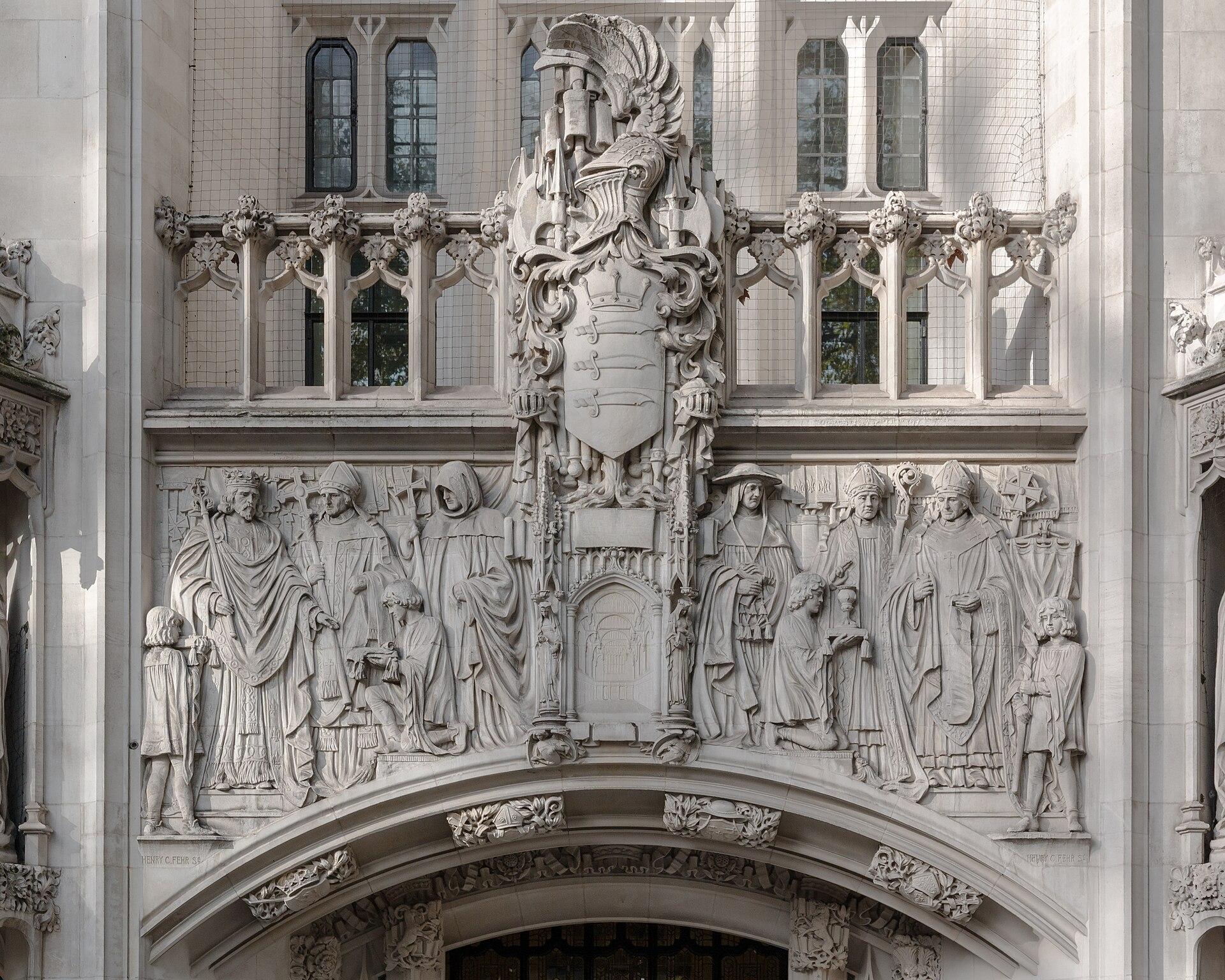
Image: Photo: Dietmar Rabich, CC BY-SA 4.0 (https://creativecommons.org/licenses/by-sa/4.0/), via Wikimedia Commons (https://commons.wikimedia.org/wiki/File:London,_The_Supreme_Court_--_2016_--_4812.jpg) — October 2016 file photo of the building where the Privy Council sits; not taken on the day of the ruling
About this article: prepared by The Daily Context editorial desk using automated, source-based reporting from the publications linked below. No reporter was on the ground.
Sources
- Judicial Committee of the Privy Council: The Attorney General of Trinidad and Tobago and others v Jason Jones, [2026] UKPC 38, judgment of 10 November 2026 https://jcpc.uk/cases/judgments/jcpc-2025-0095
- Trinidad Guardian: Privy Council rejects criminalisation of consensual gay sex https://www.guardian.co.tt/news/privy-council-rejects-criminalisation-of-consensual-gay-sex-6.2.2707402.a9fc687e7e
- The Guardian: Activist wins 10-year fight against homophobic Trinidad and Tobago laws https://www.theguardian.com/world/2026/nov/10/activist-jason-jones-wins-10-year-fight-against-homophobic-trinidad-tobago-laws
- Associated Press: Top UK appeals court rules gay sex not a crime in Trinidad and Tobago https://apnews.com/article/trinidad-gay-sex-privy-council-ruling-4ad477cea8ca4dd7455373e572a4e392
- DW: UK Privy Council overrules Trinidad and Tobago gay sex law https://www.dw.com/en/trinidad-gay-sex-laws-privy-council-lgbtq-rights-caribbean/a-79912163
- Human Rights Watch: Trinidad and Tobago: UK Court Overturns Same-Sex Conduct Laws https://www.hrw.org/news/2026/11/10/trinidad-and-tobago-uk-court-overturns-same-sex-conduct-laws
Kabeer Ahmad
Kabeer Ahmad is the founder and editor of The Daily Context. He oversees the site's source-based coverage of world affairs, technology, business, entertainment, lifestyle and sports, and is responsible for its editorial standards, sourcing and corrections.