Gulf states agree forward military command in Kuwait
Defence ministers of the six Gulf Cooperation Council states agreed on Tuesday 10 November 2026 to open a forward headquarters of the bloc's Unified Military Command in Kuwait and assign forces to it. The GCC has not said how many troops will be based there, what they will do, or when the post will open.
The six members of the Gulf Cooperation Council (GCC) have agreed to open a forward headquarters of their joint Unified Military Command in Kuwait and to assign "appropriate forces" to it. The decision was taken by the bloc's defence ministers in Manama, Bahrain, on Tuesday 10 November 2026, and announced by GCC Secretary-General Jasem Mohamed Albudaiwi.
The GCC has not said how many troops will be based at the new post, which countries will supply them, what their duties will be, where in Kuwait the headquarters will sit or when it will become operational. What is clear is the direction of travel: after a year in which Gulf states were hit by Iranian missiles and drones and Saudi Arabia faced repeated Houthi attacks, the six governments are building a more permanent joint military presence at the northern end of the Gulf.
What exactly did GCC defence ministers decide?
According to the GCC General Secretariat, the decision was one of several taken at the 23rd session of the GCC Joint Defence Council, chaired by Bahrain's Minister of Defence Affairs, Lieutenant General Abdullah bin Hassan Al Nuaimi, with the defence ministers of all six member states taking part: Bahrain, Kuwait, Oman, Qatar, Saudi Arabia and the United Arab Emirates.
The secretariat's statement says the ministers approved "the opening of an Advanced Command for the Unified Military Command in the State of Kuwait and the allocation of appropriate forces to it". Different outlets have translated the Arabic term as an "advanced", "forward" or "advanced headquarters" command. In military usage, a forward command is a headquarters placed closer to potential flashpoints than the main headquarters, so that forces can be coordinated and deployed more quickly.
The new post will sit under the existing Unified Military Command rather than replace it. That command was set up by the GCC in 2013 to plan and coordinate joint operations among the six armed forces, and its main headquarters opened in Riyadh, the Saudi capital, in 2021. The bloc also has a long-standing joint force, Peninsula Shield, which dates back decades.
Euronews, The National and Al Jazeera all reported that the announcement gave no troop numbers, force composition, responsibilities or opening date. Those gaps matter: until the details are published, it is not possible to say whether the post will be a small coordination cell or a substantial standing force.
Why Kuwait, and why now?
Kuwait sits at the very top of the Gulf. It borders Iraq to the north and Saudi Arabia to the south, and faces Iran across the water. That geography puts it close to two sources of threat Gulf governments have repeatedly cited: Iran itself, and Iran-aligned armed groups in Iraq that have launched drones towards Gulf states.
In his statement, Albudaiwi referred to "the rapid developments witnessed by the region, represented by the treacherous Iranian attacks" and praised cooperation among Gulf militaries in limiting their impact. He said the security of the GCC states is "a shared Gulf responsibility". The secretariat also linked the decision to directives issued by Gulf leaders at an extraordinary summit in Jeddah in April this year to strengthen joint military action. The National reported that the Jeddah summit had also called for "accelerated" completion of a joint missile warning system.
The wider backdrop is the war that began when the United States and Israel launched strikes on Iran on 28 February 2026. As Al Jazeera summarised, Gulf states, many of which host major US bases, then came under Iranian missile and drone attack; flights and shipping were disrupted, and shipping through the Strait of Hormuz has not returned to normal. A US naval blockade of Iran remains in place, even as Qatar and the White House have spoken this week of progress in diplomacy.
Saudi Arabia has separately faced attacks from Yemen's Houthi movement. Al Jazeera reported that a Houthi attack on Riyadh's King Khalid International Airport on 10 October killed 14 people and wounded more than 300. The GCC statement explicitly condemned Houthi attacks on the kingdom.
Does this mean less reliance on the United States?
Not necessarily, according to the analysts quoted so far. Muhanad Seloom, a nonresident fellow at the Middle East Council on Global Affairs, told Al Jazeera that the move amounts to establishing a permanent GCC presence at the top of the Gulf, and that it "sends a message to Iran and also Iraq". He described it as part of a longer-term deterrence strategy rather than a sign of an imminent Iranian strike, and as "a wake-up call for the GCC that they need to take matters into their own hands" rather than a response to US failure.
Albert Vidal, a Gulf and Middle East analyst at the International Institute for Strategic Studies, told Al Jazeera the announcement did not itself suggest a shift away from Washington, and argued that the US would like Gulf states to share more information and work more closely with each other directly.
The Kuwait post also adds to an increasingly crowded set of security arrangements. Saudi Arabia and Pakistan signed a mutual defence treaty in 2025, and in August 2026 Saudi Arabia, Pakistan and Türkiye signed what Al Jazeera described as the Mecca Joint Defence Agreement, under which an attack on one is treated as an attack on all three. The GCC command offers a separate framework in which only the six Gulf monarchies coordinate their own forces.
Who is affected?
Most directly, the decision affects the armed forces of the six member states, which will have to agree on contributions, command arrangements and funding for the new post. Kuwait, which has tried to maintain a relatively moderate posture towards Iran despite coming under attack, according to Seloom, will host a more visible joint Gulf military presence on its territory.
For residents and businesses in the region, the practical effect is likely to be limited in the short term, since no deployment timetable has been announced. Over time, closer integration of air defence and early-warning systems, which Gulf leaders have prioritised since the Jeddah summit, could matter more to civilians than troop numbers, because missiles and drones have been the main threat to cities, airports and energy facilities this year.
What happens next?
The key details still to come are the size and make-up of the forces assigned to Kuwait, the location of the headquarters, its exact chain of command relative to Riyadh, and the date it will open. Further GCC decisions on defence are typically endorsed at the bloc's annual leaders' summit, held towards the end of the year, which would be the next obvious point for more information.
Readers should treat early commentary about the post's purpose with some caution. The official text is brief, and analysts' interpretations, while informed, go beyond what the GCC has formally said. The Daily Context will update this article if the GCC publishes further details.
For related coverage, see our report on missile debris near Saudi Aramco facilities in Riyadh: https://www.thedailycontext.com/article/saudi-aramco-riyadh-missile-debris-november-2026
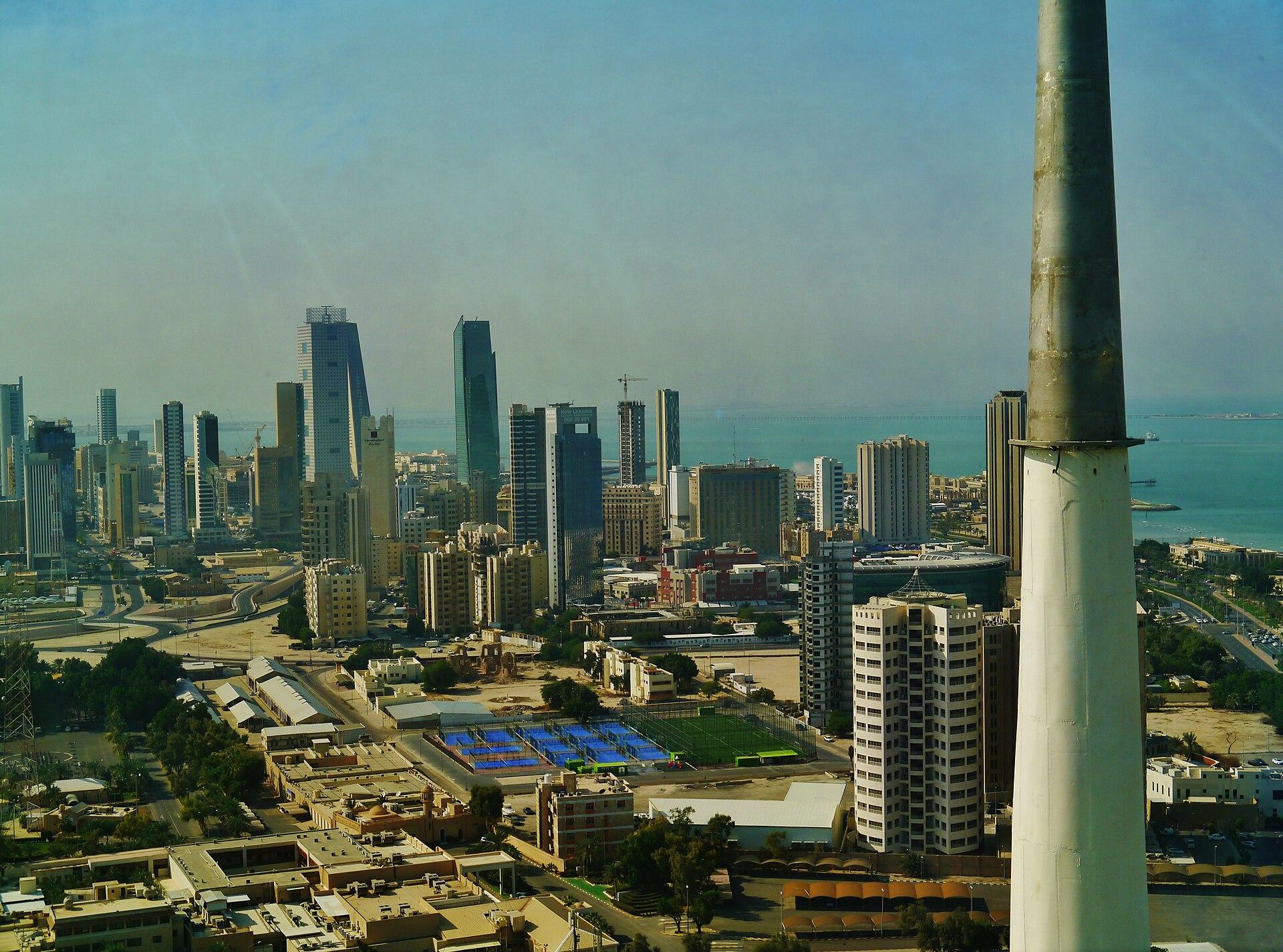
Image: Photo: Zairon, CC BY 4.0 (https://creativecommons.org/licenses/by/4.0/), via Wikimedia Commons (https://commons.wikimedia.org/wiki/File:Kuwait_City_Kuwait_Towers_Panoramic_View_1.jpg) — December 2022 file photo of Kuwait City from the Kuwait Towers; not a military site
About this article: prepared by The Daily Context editorial desk using automated, source-based reporting from the publications linked below. No reporter was on the ground.
Sources
- GCC General Secretariat: Defence ministers approve opening of an Advanced Command for the Unified Military Command in Kuwait (10 November 2026) https://www.gcc-sg.org/en/MediaCenter/News/Pages/news-2026-11-10-1.aspx
- Al Jazeera: Why the GCC is setting up an advanced military command base in Kuwait https://www.aljazeera.com/news/2026/11/10/gcc-agrees-to-set-up-advanced-military-command-headquarters-in-kuwait
- The National: GCC defence ministers approve new military command centre in Kuwait https://www.thenationalnews.com/news/gulf/2026/11/10/gcc-defence-ministers-approve-advanced-military-command-in-kuwait/
- Euronews: GCC members agree to station forces at new military command post in Kuwait https://www.euronews.com/2026/11/10/gcc-members-agree-to-station-forces-at-new-military-command-post-in-kuwait
- Arab News: Gulf states to base joint forces in Kuwait after Iranian attacks https://www.arabnews.com/middle-east/gulf-states-to-base-joint-forces-in-kuwait-after-iranian-attacks-3010924
Kabeer Ahmad
Kabeer Ahmad is the founder and editor of The Daily Context. He oversees the site's source-based coverage of world affairs, technology, business, entertainment, lifestyle and sports, and is responsible for its editorial standards, sourcing and corrections.