SAP weighs at least 10,000 job cuts in AI overhaul as it investigates a GitHub security incident
Europe's biggest software company is preparing to cut at least 10,000 jobs as it reorganises around AI, according to Bloomberg and Reuters sources. SAP says no decision has been made. Separately, it has confirmed 'suspicious activity' linked to its GitHub environment but says it has found no sign that customer business data was accessed.
SAP, the German company that makes software used to run the finances, supply chains and payrolls of many of the world's largest businesses, is preparing to cut at least 10,000 jobs as it reorganises around artificial intelligence. Bloomberg News first reported the plan late on Thursday 26 November, citing people familiar with the matter. Reuters said on Friday that two sources had told it SAP was preparing to cut "a sizeable number" of jobs.
SAP has not confirmed any figure. "No decisions have been made regarding any further measures. We do not comment on speculation," the company said. The reports came on the same evening that SAP confirmed it had detected "suspicious activity" in its IT systems, which German media linked to the GitHub environment it uses to build software. SAP says it has found no evidence that customer business data was accessed.
What has been reported about the job cuts?
According to Bloomberg, SAP is drawing up a plan to eliminate at least 10,000 positions, or at least 9% of its global workforce. All departments have been asked to identify possible cuts, with product, engineering and sales the main focus, and the final number could change after negotiations with employee representatives. SAP employs more than 110,000 people and had about 113,000 staff at the end of September, according to Investing.com.
Other German outlets have published their own reports. Handelsblatt, citing company circles, said the board under chief executive Christian Klein wants to cut more than 10,000 jobs. Tagesschau, the public broadcaster's news service, reported that one Handelsblatt source put the figure as high as 15,000. Reuters' sources said SAP's works council, the elected staff body that German companies must consult on major restructurings, had not yet been formally told.
On timing, Tagesschau said a decision and announcement were expected only in early 2027, after which the board would have to involve the works council and other co-determination bodies. Citing WirtschaftsWoche, it said the plans could be unveiled around SAP's full-year results at the end of January 2027.
What has SAP actually said?
SAP's statement, given to several outlets, does not deny that changes are coming. "The business environment in which we operate is changing rapidly through AI, and we are continuously reviewing how our organization and workforce need to evolve to remain successful," it told CNBC. "As part of this ongoing transformation, roles and functions will naturally change over time."
Reuters noted that Klein and chief financial officer Dominik Asam had signalled at recent investor events that the workforce would shrink. Tagesschau, citing WirtschaftsWoche, said Klein had told staff in an internal email in March that another major restructuring was unavoidable because AI development was moving fast and SAP had to keep pace.
Who would be affected?
That is not yet clear. The reports describe cuts across departments worldwide but give no country breakdown. In Germany, SAP's home market, any reduction is expected to rely mainly on voluntary departures: Handelsblatt reported that SAP agreed a new employment-security arrangement for German staff in early October that runs to the end of 2028.
It would not be SAP's first large reorganisation. In early 2024 it said about 8,000 roles would be affected by a restructuring. CNBC, citing Bloomberg, puts the eventual total at around 10,000, handled mostly through voluntary departures and retraining. Reuters and Bloomberg both note that the company's overall headcount then stayed roughly flat, as it hired for new roles to replace those lost in slower-growing businesses. Handelsblatt also noted that it is not certain the company will be smaller once this round is complete.
Why is SAP doing this, and why does it matter?
Software companies are under pressure to show that AI will make them more efficient, and investors are watching costs closely. CNBC listed recent AI-linked cuts at other software firms: WiseTech Global (about 2,000 jobs over two years, announced in February), Atlassian (about 1,600, in March) and Cloudflare (more than 1,100, in May). Outplacement firm Challenger, Gray & Christmas counted 121,401 announced US job cuts this year through October that employers attributed to AI, about 20% of the total.
SAP has spent heavily on AI this year. CNBC reported that it bought four companies (Reltio, Dremio, Prior Labs and TechWolf) and invested in others, including Parloa and n8n. JPMorgan analyst Toby Ogg estimated that cuts of this size could raise SAP's adjusted operating profit by about €750 million a year once fully in effect from 2028, Investing.com reported. That is an analyst's estimate, not company guidance.
SAP's shares closed 2.28% higher at €194.14 on Thursday, before the reports came out. They were down 0.79% at €192.61 in Frankfurt mid-morning on Friday. This article reports market moves and is not investment advice.
What happened in the security incident?
Der Spiegel reported on Thursday, citing an internal SAP memo, that the company had been hit by a cyberattack it was tracking under the code name "Project Granite". Insiders told the magazine that attackers stole SAP employees' authentication tokens (digital credentials that let a user stay logged in to a service) and used them to copy and alter source code stored on GitHub. They said AI tools may have been used. Those details come from unnamed sources and have not been confirmed by SAP.
SAP confirmed an incident in a statement to BleepingComputer and SecurityWeek: "SAP has identified suspicious activity and promptly implemented the necessary measures to protect its customers and preserve the security of its services. Based on our investigation to date, we have found no evidence of unauthorized access to customer business data." According to SecurityWeek, German news agency dpa saw internal communications placing the activity in GitHub. Handelsblatt reported that the emergency response included replacing signing keys, restricting GitHub access and pausing automated development processes.
SecurityWeek said none of the reports indicate that altered code reached software delivered to customers. SAP has not said which repositories were involved, whether proprietary code was taken, or whether customers need to do anything. Asked by BleepingComputer, a spokesperson declined to comment further. The incident comes a day after Germany's Federal Office for Information Security (BSI) warned organisations about agentic AI tools being used to power cyberattacks.
What happens next?
On jobs, the key dates are SAP's next formal statement and any consultation with the works council. If the reported timetable holds, details would come around the full-year results in late January 2027. Until then, the 10,000 figure is an unconfirmed report, and SAP calls it speculation. On security, customers and researchers will be looking for a fuller account of what was accessed and whether any published code needs checking.
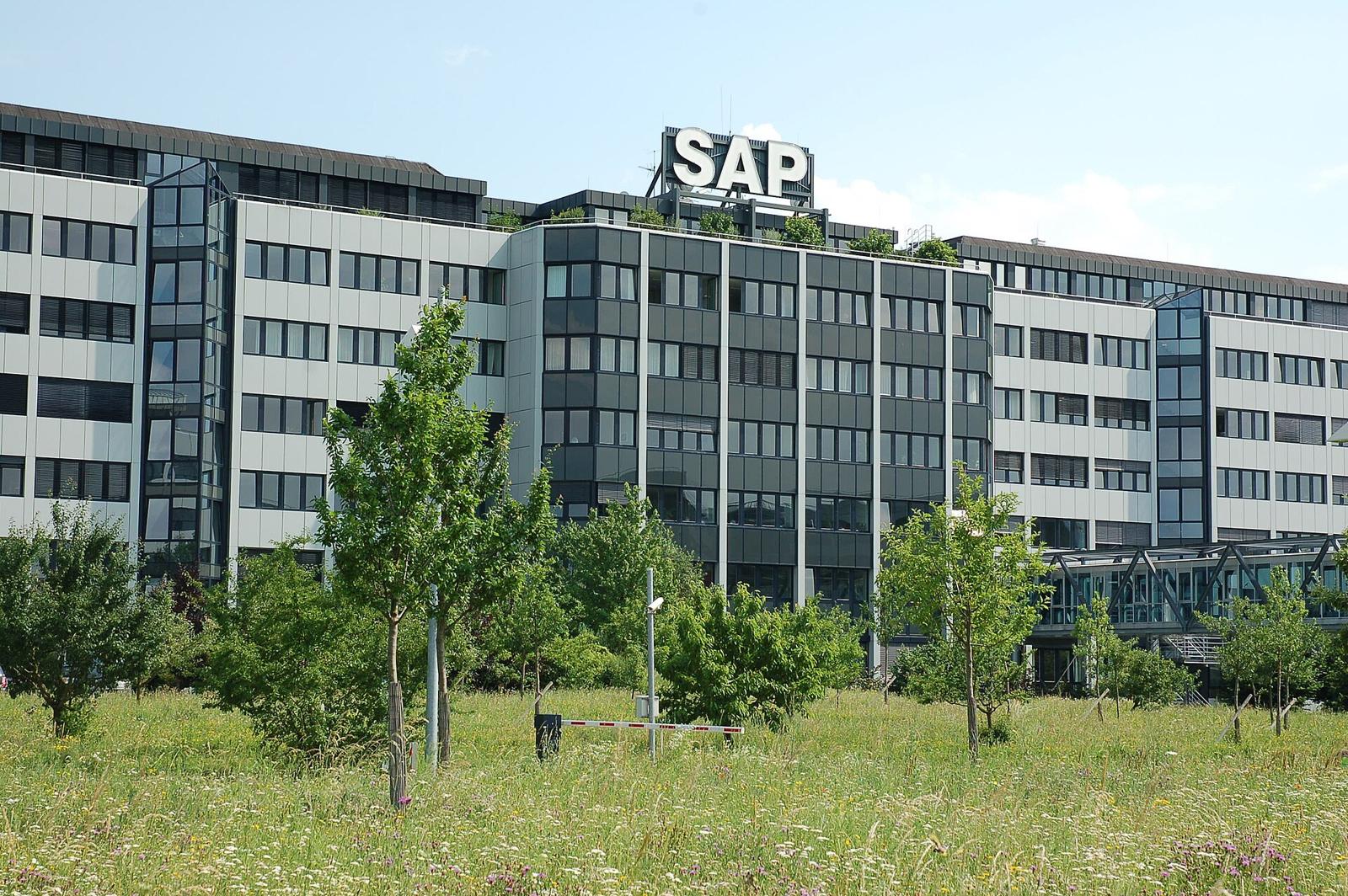
Image: File photo: SAP headquarters in Walldorf, Germany, June 2008. Photo: Vladislav Bezrukov, CC BY 2.0 (https://creativecommons.org/licenses/by/2.0/), via Wikimedia Commons (https://commons.wikimedia.org/wiki/File:SAP_AG_headquarter_Walldorf_building_1.jpg); resized
About this article: prepared by The Daily Context editorial desk using automated, source-based reporting from the publications linked below. No reporter was on the ground.
Sources
- Reuters via StreetInsider: SAP seeks to cut sizeable number of jobs, sources say (27 November 2026): https://www.streetinsider.com/Reuters/SAP+seeks+to+cut+sizeable+number+of+jobs%2C+sources+say/27405157.html
- Bloomberg: SAP weighs cutting at least 10,000 roles in AI restructure (26 November 2026): https://www.bloomberg.com/news/articles/2026-11-26/sap-weighs-cutting-at-least-10-000-positions-in-ai-restructuring
- CNBC: SAP weighs cutting at least 10,000 jobs in AI push (27 November 2026): https://www.cnbc.com/2026/11/27/sap-job-cuts-ai-restructuring.html
- MarketWatch: SAP says no decisions made on job cuts as AI reshapes landscape (27 November 2026): https://www.marketwatch.com/story/sap-says-no-decisions-made-on-job-cuts-as-ai-reshapes-landscape-a4258f50
- Tagesschau: SAP erwägt offenbar größeren Stellenabbau (27 November 2026, German): https://www.tagesschau.de/wirtschaft/unternehmen/sap-stellenabbau-geplant-100.html
- Handelsblatt: SAP: Dax-Konzern plant massiven Stellenabbau (26 November 2026, German): https://www.handelsblatt.com/technik/ki/sap-dax-konzern-plant-massiven-stellenabbau/100273115.html
- Investing.com Germany: Börse heute: DAX – SAP-Jobabbau und IT-Vorfall im Fokus (27 November 2026, German): https://de.investing.com/news/stock-market-news/borse-heute-dax--sapjobabbau-und-itvorfall-im-fokus-3788261
- BleepingComputer: SAP confirms security incident after suspicious GitHub activity (27 November 2026): https://www.bleepingcomputer.com/news/security/sap-confirms-security-incident-after-suspicious-github-activity/
- SecurityWeek: SAP confirms cyberattack, source code reportedly compromised (27 November 2026): https://www.securityweek.com/sap-confirms-cyberattack-source-code-reportedly-compromised/
Kabeer Ahmad
Kabeer Ahmad is the founder and editor of The Daily Context. He oversees the site's source-based coverage of world affairs, technology, business, entertainment, lifestyle and sports, and is responsible for its editorial standards, sourcing and corrections.