Nvidia halts AI server shipments to Malaysia, Singapore, Thailand and Indonesia, reports say
Nvidia has told server makers including Dell and Supermicro to stop shipping systems with its AI chips to buyers in four South-east Asian countries while it works out how to comply with new US export rules, according to the Financial Times and the Wall Street Journal. It is unclear how long the pause will last.
Nvidia has told the companies that build servers around its AI chips to stop shipping them to buyers in Malaysia, Singapore, Thailand and Indonesia, according to reports on Thursday 26 November by the Financial Times and the Wall Street Journal. The pause follows a new US export rule aimed at stopping Chinese companies from using advanced American chips through data centres in third countries.
According to the FT, which cited three people with knowledge of the matter, server makers such as Dell and Supermicro have told customers in the four countries that Nvidia will not allow their orders to be shipped. The Journal reported that the pause is for an unspecified period while Nvidia assesses whether its regional partners meet US export requirements. Neither paper said when shipments might resume. Nvidia declined to comment to the FT, and Dell and Supermicro did not respond to requests for comment.
Why has Nvidia stopped the shipments?
The halt comes about ten days after the US Commerce Department's Bureau of Industry and Security (BIS) issued an interim final rule on 16 November. As The Daily Context reported at the time (https://www.thedailycontext.com/article/us-remote-access-ai-chip-rule-malaysia-singapore-data-centres-november-2026), the rule requires a licence to export, re-export or transfer advanced AI chips to Indonesia, Malaysia, Singapore, Thailand and Brazil, which BIS considers to present "a higher-than-normal risk of diversion".
It also targets remote access. Until now, US controls governed where chips were physically shipped, not who used them. Chinese companies that could not legally buy top-end Nvidia processors could rent computing power on them from cloud providers elsewhere. Under the new rule, a licence is needed when advanced chips go to a data centre that supplies large amounts of computing power to companies headquartered in China and other restricted countries. Chips going to US-headquartered companies are exempt if reporting requirements are met.
The FT said it was unclear whether the halt was a temporary measure while Nvidia and its partners work out how to comply. Brazil, also covered by the rule, was not named in the reports.
How much does the region matter to Nvidia?
A great deal on paper. According to company accounts cited by the FT, Nvidia booked $104 billion of revenue through its Singapore subsidiary in 2025, up 72% in a year. That figure overstates sales to South-east Asia itself, because Nvidia also books some revenue from Taiwan and China through the Singapore unit.
The region has also become central to the AI data centre boom. Malaysia approved RM350.4 billion (about $85 billion) of investment in the first nine months of 2026, and data centre and cloud projects made up RM123.5 billion of that, more than a third, Lianhe Zaobao reported. The Wall Street Journal, citing the think tank Institute for Progress, said remote data centres like these supply about 24% of China's AI computing power.
Who is affected?
Cloud companies and data centre developers that planned to rent capacity to Chinese customers appear to be most exposed. The FT named Aolani, a Singapore-based cloud company that it said had planned to provide advanced computing power to TikTok owner ByteDance through leasing agreements. According to the paper, some banks that had agreed to finance the project stopped issuing credit worth about $500 million, and ByteDance could drop the deal. ByteDance and Aolani did not respond to the FT's requests for comment.
Operators also say they are unsure how to comply. The rule gives cloud providers 90 days to get a licence by showing that their end users do not include restricted entities. "There's this new rule but no guidance on execution," an unnamed cloud executive told the FT. "No one knows how to apply for this licence while the 90-day clock is ticking. It's causing sheer chaos in the region."
Washington has also acted against specific companies. Earlier this week the Commerce Department added Megaspeed, a Singapore-based cloud company under investigation over suspected diversion of Nvidia chips to China, and its Thai and Malaysian subsidiaries to its Entity List, Data Center Dynamics reported.
How have governments in the region responded?
Malaysia has tried to play down the damage. Speaking to Bloomberg Television on 25 November, before the shipment reports, Second Finance Minister Amir Hamzah Azizan said the trade ministry was in talks with the US and expected the two sides to reach an understanding. He said Malaysia would comply with the relevant rules and was "just tightening up controls", Lianhe Zaobao reported. He also pointed out that most large data centre operators in Malaysia are Western companies and that data centres support cloud and other business services, not only AI.
Even so, CIMB Bank has estimated that Malaysia could be the hardest-hit economy in the region. In its worst case, with data centre operations disrupted for six months and a quarter of projects under construction delayed, Malaysia's 2027 growth would be cut by 0.19 percentage points.
Singapore said when the rule was published that it was studying the details, talking to affected companies and discussing with US officials how to "facilitate trusted access for Singapore companies". No new statements from Singapore, Thailand or Indonesia on the shipment halt had been reported at the time of writing.
What happens next?
The key questions are how long the pause lasts and how quickly BIS starts granting licences. Data centres serving Western clouds and local businesses may be able to show compliance relatively quickly. Projects built mainly to serve Chinese AI developers face a much harder path.
For Nvidia, any long halt would hit a region that has driven much of its recent growth. For South-east Asian governments, the episode shows how closely their data centre ambitions now depend on decisions made in Washington.
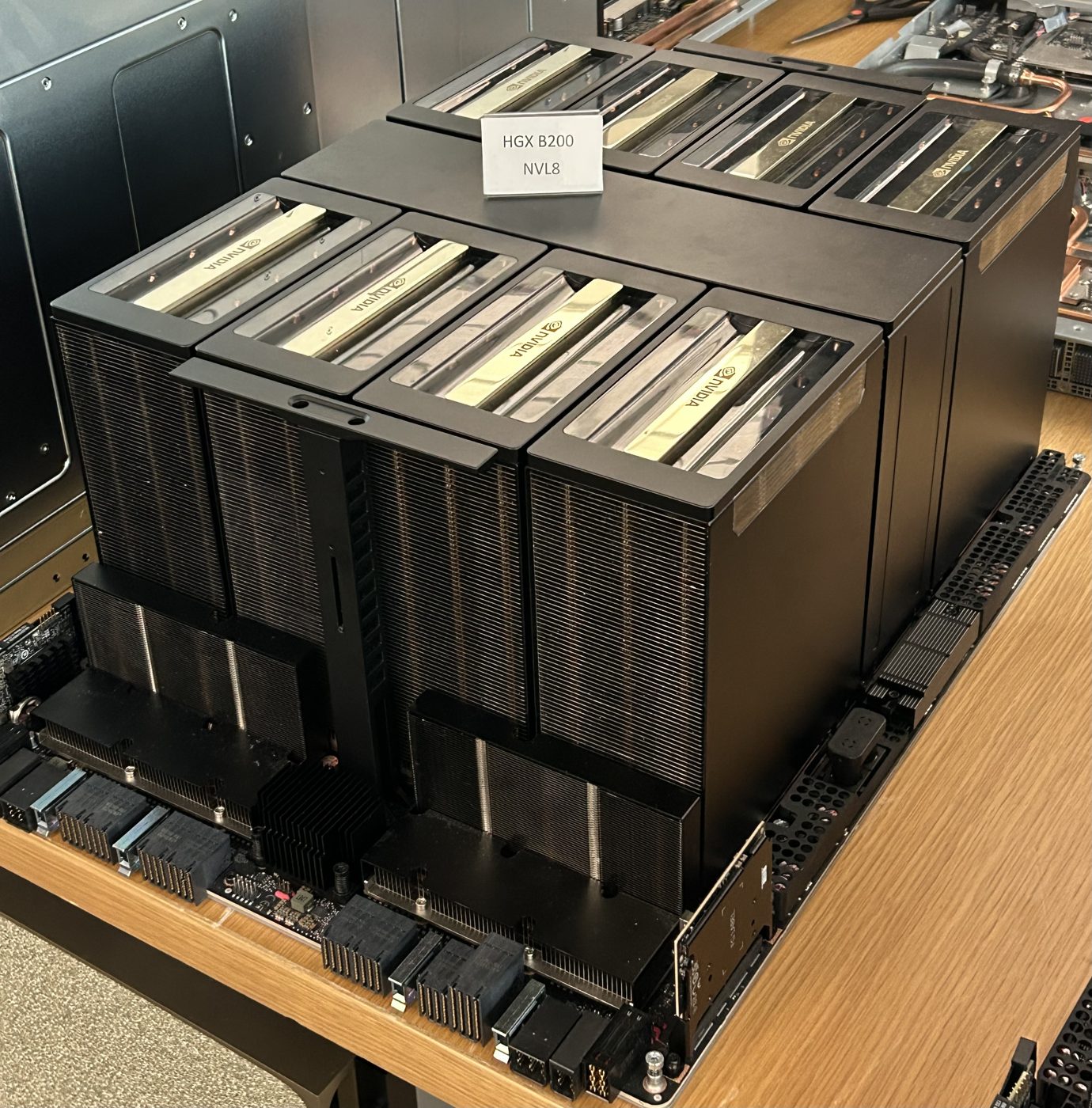
Image: File photo: Nvidia HGX B200 eight-GPU board on display, 7 September 2025; illustrative only, not connected to any shipment named in this report. Photo: Pokiiri, CC BY-SA 4.0 (https://creativecommons.org/licenses/by-sa/4.0/), via Wikimedia Commons (https://commons.wikimedia.org/wiki/File:Nvidia_DGX-B200-HGX.jpg); resized
About this article: prepared by The Daily Context editorial desk using automated, source-based reporting from the publications linked below. No reporter was on the ground.
Sources
- Financial Times via CNA: Nvidia halts chip shipments to Southeast Asia (26 November 2026): https://www.channelnewsasia.com/asia/nvidia-halts-chip-shipments-southeast-asia-6584351
- TechCrunch: Nvidia hits pause on chip shipments to Southeast Asia (26 November 2026), summarising the Wall Street Journal report: https://techcrunch.com/2026/11/26/nvidia-hits-pause-on-chip-shipments-to-southeast-asia/
- Reuters via Investing.com: Nvidia halts server shipments to four Southeast Asian countries, FT reports (26 November 2026): https://www.investing.com/news/stock-market-news/nvidia-halts-server-shipments-to-four-southeast-asian-countries-ft-reports-5052112
- Data Center Dynamics: Nvidia halts server shipments to Malaysia, Singapore, Thailand, and Indonesia (26 November 2026): https://www.datacenterdynamics.com/en/news/nvidia-halts-server-shipments-to-malaysia-singapore-thailand-and-indonesia-in-wake-of-new-dept-of-commerce-export-rule-report/
- Lianhe Zaobao: Malaysia plays down impact of new US chip curbs, stresses tighter oversight (25 November 2026): https://www.zaobao.com.sg/en/news/sea/malaysia-plays-down-impact-new-us-chip-curbs-stresses-tighter-oversight
- The Star / AFP: Nvidia stops shipping AI servers to four SE Asian nations (27 November 2026): https://www.thestar.com.my/aseanplus/aseanplus-news/2026/11/27/nvidia-stops-shipping-ai-servers-to-four-se-asian-nations
Kabeer Ahmad
Kabeer Ahmad is the founder and editor of The Daily Context. He oversees the site's source-based coverage of world affairs, technology, business, entertainment, lifestyle and sports, and is responsible for its editorial standards, sourcing and corrections.