Samsung Securities says hackers stole personal data of 8,241 customers from its feedback system
Samsung Securities said on 23 November 2026 that an intruder accessed its website's customer feedback system and took files uploaded by 8,241 customers, exposing up to 13 types of personal data including names, account numbers and driver's licence numbers. It is the latest in a wave of cyberattacks on South Korean banks, insurers and brokerages since late September.
Samsung Securities, one of South Korea's biggest brokerages, said on Monday 23 November 2026 that an outside intruder broke into the "Voice of Customer" (VOC) feedback system on its website and took files that customers had uploaded with their inquiries. The personal information of 8,241 people was leaked, the company said, covering up to 13 types of data, including names, account numbers, home addresses, phone numbers and driver's licence numbers.
The company said it found traces of the intrusion on Saturday 21 November. Customers who never submitted anything through the VOC system were not affected, it said. The breach is the latest in a run of cyberattacks on South Korean financial firms that regulators say had produced 40 breach reports from 37 companies between late September and early November.
What happened at Samsung Securities?
According to the company's statements, reported by Yonhap, SBS, Financial News and ChosunBiz, an unauthorised external party accessed the VOC submission service on the Samsung Securities website "by irregular means" and obtained some of the attachments that customers had uploaded when filing complaints or inquiries.
Customers often attach documents such as identification to support a request, which is why the leaked material includes items like driver's licence numbers. The company said the exact data exposed varies from person to person and that each affected customer will be told individually which of their details were taken.
On discovering the intrusion, Samsung Securities said it blocked the IP address involved, put in firewall blocks, suspended the affected service and reported the incident to the Financial Supervisory Service (FSS), South Korea's financial watchdog, and the Korea Internet & Security Agency (KISA). It said it is investigating how the leak happened and reviewing security across its other systems.
The company has not said who was behind the attack or how the attacker got in. There is no public indication so far that account passwords were taken or that money was stolen from customer accounts.
What has the company said to customers?
"We take this matter very seriously and are reviewing and strengthening our company-wide security systems," Samsung Securities said, according to Financial News. It added that "if the investigation confirms actual harm, we will carry out a responsible compensation process in accordance with relevant laws and internal standards".
Chief executive Park Jong-moon apologised, ChosunBiz reported, saying: "I once again apologize for the concern caused to our customers, and we will do our utmost to manage your valuable information more securely in the future."
The company has set up a dedicated counselling channel and urged customers to be wary of voice-phishing calls and spam emails that could exploit the leaked data, the Herald Business reported. It added that customers who can show losses from the breach can seek redress through South Korea's Personal Information Dispute Mediation Committee or through civil claims.
Why are so many South Korean financial firms being hacked?
Samsung Securities is far from alone. South Korea's financial authorities said at a meeting on 5 November that 37 financial companies had filed 40 security breach reports between the first confirmed hacking incident on 30 September and 3 November. About 473,000 pieces of information had leaked and about 1 billion won (roughly $740,000) had been siphoned off, SBS reported, citing the authorities. The leaked data was mainly employee information and customers' names, resident registration numbers and account numbers; leaks of account passwords that could lead directly to unauthorised payments had not been confirmed.
The wave has moved from banks and insurers into brokerages. Mirae Asset Securities, the country's largest brokerage, said attacks on 4 and 5 November exposed the account numbers of about 3,800 customers and personal details of about 35,255 current and former employees and contractors. Several other Mirae Asset group companies, including Mirae Asset Life Insurance, reported intrusions or attempted intrusions from late October, prompting the FSS to begin an urgent on-site inspection on 9 November, Financial News reported.
Before Samsung Securities, Daishin Securities disclosed a breach affecting 38,490 customers through a server linked to its non-face-to-face account opening service, and Hanyang Securities confirmed 31 cases of leaked information via an external groupware product, according to the Herald Business.
Officials have not publicly tied all of these incidents to a single attacker. The Financial Services Commission's 5 November meeting was framed around financial security "in the AI era", but Samsung Securities has not said how its system was breached or whether the attack is linked to the others.
What are regulators doing?
The authorities said they plan a comprehensive security inspection of about 580 companies across the financial sector by the end of the year, including virtual-asset businesses that had previously been outside financial security rules, SBS reported. They also plan to pilot an integrated hacking monitoring system in December before expanding it to the whole financial sector in the first quarter of 2027, and to monitor and block the distribution of leaked personal data on the dark web.
Some experts are sceptical. Kwak Jin, a professor of cyber security at Ajou University, told SBS that in the past "many cases ended with just a comprehensive inspection and a few investigations", and said security functions need to be checked regularly and re-verified.
Who is affected and what does it mean beyond Korea?
The direct impact is on the 8,241 people who uploaded files through Samsung Securities' feedback form. The combination of names, addresses, phone numbers, account numbers and identity-document numbers is the kind of information fraudsters use to make convincing impersonation calls or messages, which is why the company and regulators are warning about voice phishing.
The broader lesson applies well beyond South Korea. Customer-service channels such as complaint forms, chat uploads and support-ticket systems often collect copies of identity documents but may receive less security attention than core trading or banking systems. Recent incidents covered by The Daily Context, including large data leaks at France's La Poste subsidiary Maileva and Japan's Muji, have shown how peripheral systems can expose large amounts of personal data.
What happens next?
Samsung Securities says it will notify affected customers individually and continue investigating the cause. The FSS and KISA have been informed, and regulators could examine whether the firm met its data-protection obligations, as they are doing with Mirae Asset. Further details, including how the attacker gained access and whether the incident is linked to other recent attacks, have not been disclosed.
The figures in this article come from the company's statements and Korean media reports on 23 November and earlier regulatory briefings; they may change as investigations continue. This article is not financial or legal advice.
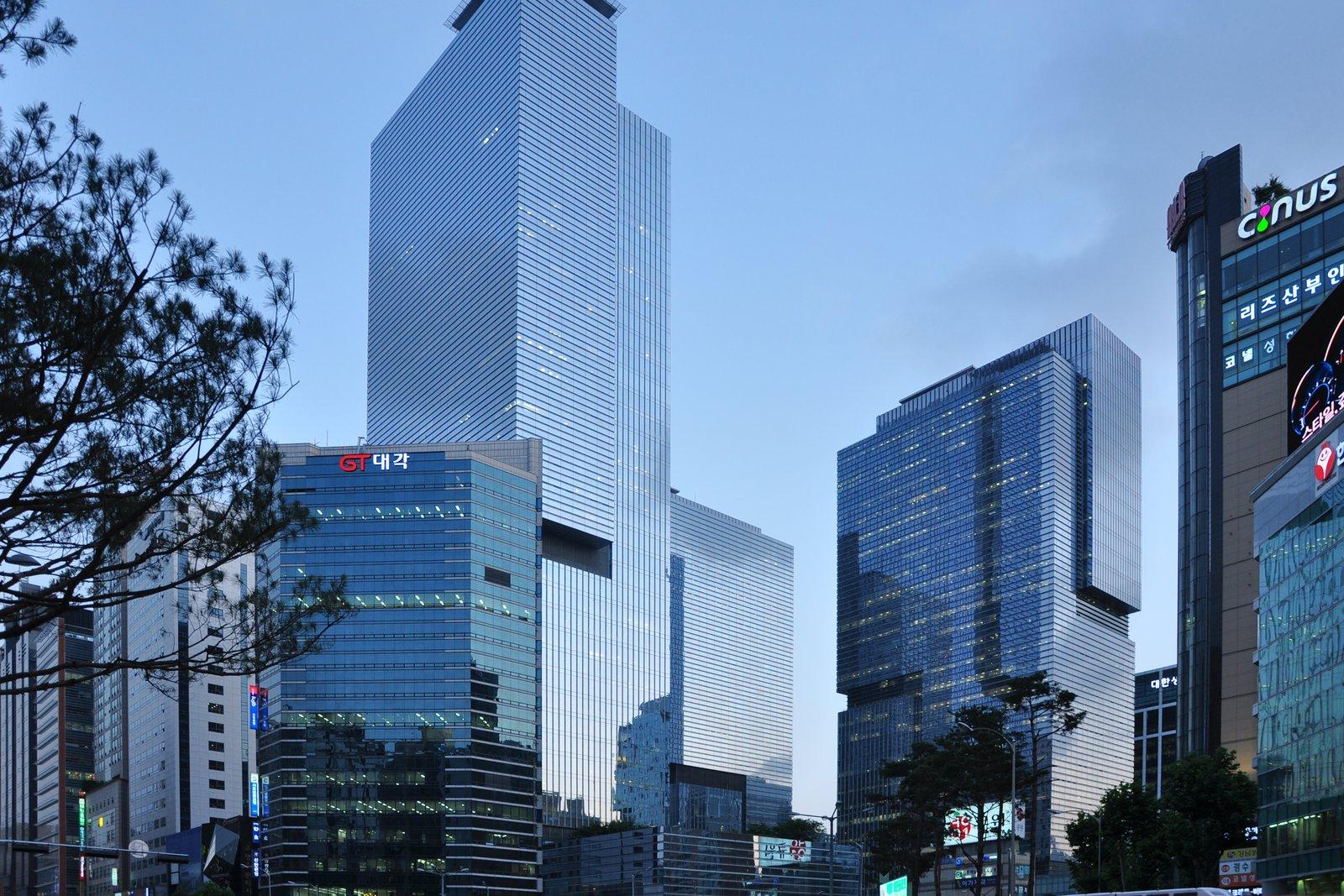
Image: File photo: Samsung Town office towers near Gangnam Station, Seoul, June 2009; illustrative of the Samsung group, not specific to Samsung Securities or the breach. Image: Oskar Alexanderson, CC BY-SA 2.0 (https://creativecommons.org/licenses/by-sa/2.0/), via Wikimedia Commons (https://commons.wikimedia.org/wiki/File:Samsung_headquarters.jpg); cropped and resized
About this article: prepared by The Daily Context editorial desk using automated, source-based reporting from the publications linked below. No reporter was on the ground.
Sources
- Yonhap News Agency: (LEAD) Personal information of more than 8,000 clients at Samsung Securities breached (23 November 2026): https://en.yna.co.kr/view/AEN20261123002951320
- SBS News: Samsung Securities Hit by Hack; Personal Info of Over 8,000 Users Leaked (23 November 2026): https://news.sbs.co.kr/english/article.do?news_id=N1008858523
- Financial News: Samsung Securities: Personal Data of 8,241 Customers Leaked in External Breach of 'Voice of the Customer' (23 November 2026): https://en.fnnews.com/news/202611231034062688
- ChosunBiz: Samsung Securities reports data breach affecting 8,241 people (23 November 2026): https://biz.chosun.com/en/en-finance/2026/11/23/GMUCMHD4EBGLDD3SXWMKBI7SPA/
- The Herald Business: Samsung Securities data breach exposes personal information of 8,241 customers (23 November 2026): https://biz.heraldcorp.com/article/10945791
- Aju Press: Samsung Securities Reports Data Breach Affecting 8,241 Customers (23 November 2026): https://www.ajupress.com/view/20261123102470377
- Yonhap (Korean): 삼성증권도 해킹 피해…8천여명 개인정보 유출 (23 November 2026): https://www.yna.co.kr/view/AKR20261123060700008
- SBS News: 473,000 Info Leaks Across 37 Financial Firms, 1 Billion Won Siphoned (5 November 2026): https://news.sbs.co.kr/english/article.do?news_id=N1008832294
- SBS News: Korea's Largest Brokerage Hit by Cyber Attack... Data of Some 39,000 Leaked (7 November 2026): https://news.sbs.co.kr/english/article.do?news_id=N1008835438
- Financial News: FSS launches on-site inspections after series of hacks at Mirae Asset (9 November 2026): https://en.fnnews.com/news/202611091034358181
Kabeer Ahmad
Kabeer Ahmad is the founder and editor of The Daily Context. He oversees the site's source-based coverage of world affairs, technology, business, entertainment, lifestyle and sports, and is responsible for its editorial standards, sourcing and corrections.