Mashaba returns as Johannesburg mayor as ANC-backed coalitions push DA into opposition in Gauteng
ActionSA leader Herman Mashaba was elected mayor of Johannesburg on 27 November, beating the DA's Helen Zille by 170 votes to 97 with ANC, EFF and MK Party support. The DA was the largest party in all three Gauteng metros but will sit in opposition in each of them.
Herman Mashaba, the leader of ActionSA, is mayor of Johannesburg again. Councillors in South Africa's biggest city elected him on Friday 27 November by 170 votes to 97 for the Democratic Alliance's Helen Zille, with two spoilt ballots, according to SABC News and Jacaranda FM. He was backed by a coalition built around the African National Congress (ANC), the Economic Freedom Fighters (EFF) and former president Jacob Zuma's uMkhonto weSizwe (MK) Party.
The vote capped two days in which coalitions involving the ANC took control of the country's three Gauteng metros, Johannesburg, Tshwane (Pretoria) and Ekurhuleni, even though the DA won the most seats in each of them in the 4 November local elections. Elsewhere, the MK Party took the mayoralty of eThekwini (Durban), while the DA returned to power in Nelson Mandela Bay and kept Cape Town.
Who won the mayoral votes?
Most of the country's big-city leadership votes were held on Thursday 26 and Friday 27 November, after several councils adjourned their first sittings to give parties more time to finish deals. The results reported by South African media are:
- Johannesburg: Herman Mashaba (ActionSA) beat Helen Zille (DA) 170–97 on 27 November. The ANC's Adolph Marema was elected speaker with 171 votes to 99 for the DA's Alex Christians, SABC reported.
- Tshwane (Pretoria): Nasiphi Moya (ActionSA) was re-elected on 26 November, beating the DA's Cilliers Brink 115–87. The EFF's Omphile Maotwe became deputy mayor and the ANC's Naeem Patel speaker, Daily Maverick reported.
- Ekurhuleni: the ANC's Mziyanda Mketsu won with 141 votes against the DA's Khathutshelo Rasilingwane, according to EWN. The ANC also took the chief whip post.
- eThekwini (Durban): the MK Party's Mxolisi Phakathi won with 139 votes to 75 for the DA's Hanif Hoosen, The Citizen reported, with ANC support.
- Nelson Mandela Bay: the DA's Retief Odendaal beat the Patriotic Alliance's Bradley Murray 63–55, The Herald reported, returning to a post he lost in 2023.
- Mangaung (Bloemfontein): the ANC's Vumile Nikelo was elected mayor, according to News24.
- Cape Town: the DA's Geordin Hill-Lewis was re-elected on 19 November. Cape Town is the only metro where a single party, the DA, won an outright majority.
How did the DA end up in opposition in Gauteng?
The arithmetic left every Gauteng metro hung. In Johannesburg's 270-seat council, where 136 votes are needed for a majority, the DA won 91 seats and 34.8% of the vote, according to BusinessTech and Daily Maverick. In Tshwane, the DA holds 74 of 214 seats against ActionSA's 48 and the ANC's 44. In Ekurhuleni it holds 66 of 224 seats, ahead of the ANC on 59 and ActionSA on 40.
That made the DA the largest party in all three, but not large enough. The ANC, ActionSA, the EFF and the MK Party together had the numbers, and Daily Maverick reported that the Johannesburg framework involved 18 parties in total, including the Inkatha Freedom Party, the Patriotic Alliance and Rise Mzansi. The DA, Freedom Front Plus and ACDP were left out.
The ANC made its preference clear before the votes. After the election, its National Executive Committee described the DA as a party of "last resort" for municipal deals. At a briefing in Johannesburg on 27 November, ANC secretary-general Fikile Mbalula said the ANC and DA together had enough seats to command majorities in 159 councils, but their formal governing agreement covers only 12 municipalities, none of them metros, The Citizen reported. "The ANC did not win this election, and it does not say that it did," Mbalula said, calling it the party's worst result in its history.
Zille had called the proposed Johannesburg coalition "chaotic" earlier in the week and said the DA would be "the best opposition it can be" in Gauteng. In Tshwane, Brink congratulated the new administration but asked for its coalition agreement to be made public.
What has Mashaba promised?
Mashaba, a businessman who built a haircare company, was Johannesburg's mayor from 2016 to 2019 as a DA member before leaving the party and later founding ActionSA. He succeeds the ANC's Dada Morero.
In his acceptance speech, reported live by News24, he said he would work "day and night to get the city working again" and asked residents to "judge me by what we do from this day forward". He said he would meet Johannesburg Water officials on Sunday morning about the city's water problems, saying "I want answers", and would meet City Power officials the same day. A recovery plan would start on Monday, he said, and a 100-day plan would be presented "next Friday", which would be 4 December.
He called corruption "public enemy number one". He also repeated his hard line on undocumented migrants. He said the city would set up facilities, after consulting the national government, to process people he described as "illegal foreigners", and warned that "life is about to become very difficult" for them and for criminals. Immigration enforcement is a national responsibility in South Africa, so how far a city can act on this is unclear.
Phakathi, Durban's new mayor, said water would be his main priority. He said residents were spending food money on water and promised improvements within 100 days.
Why does this matter beyond city hall?
Johannesburg is South Africa's economic centre, and residents have faced repeated water outages, power failures and crumbling infrastructure. The last council term saw many changes of mayor as coalitions collapsed, which made long-term repair work harder.
The results also put pressure on national politics. Since 2024 the ANC and DA have governed together nationally in the Government of National Unity. At local level, the ANC has now chosen the EFF and MK Party, both outside that national government, over the DA in the biggest cities. Mbalula said the EFF is part of ANC-negotiated arrangements in 107 councils and the MK Party in 34.
For ActionSA, which won 5.67% of the national vote, the deals are a big step up. The party now holds the mayoralties of both Johannesburg and the capital, Pretoria.
Will the new coalitions last?
That is the main question. On 26 November, Mashaba said the MK Party appeared to be pulling its support for the coalition, reportedly over Moya's re-election in Tshwane and demands for senior posts, Daily Maverick reported. MK still backed the arrangements in Johannesburg and eThekwini on Friday. Daily Maverick also reported divisions inside the ANC over ActionSA's growing influence in Gauteng and over who should lead Ekurhuleni.
The ANC has published a 2026–2031 Municipal Co-operation Accord to try to prevent collapses. According to Polity, it requires partners to agree on a service programme and a funded budget before sharing out posts. It also includes a "no-ambush" rule, written dispute-resolution procedures with time limits, public 100-day commitments, quarterly progress reports, and a rule that each council's public accounts committee be chaired by someone outside the executive. Parties have not yet published full coalition agreements for most metros.
What happens next?
Mayoral committees still have to be named, and budgets will test the deals. Mashaba says Johannesburg's 100-day plan is due on 4 December. The DA will lead the opposition in all three Gauteng metros, and in Durban MK will need the ANC's continued support to govern. Across the country, 139 of 213 councils were hung after the 4 November vote, so coalition deals will shape local government for the next five years.
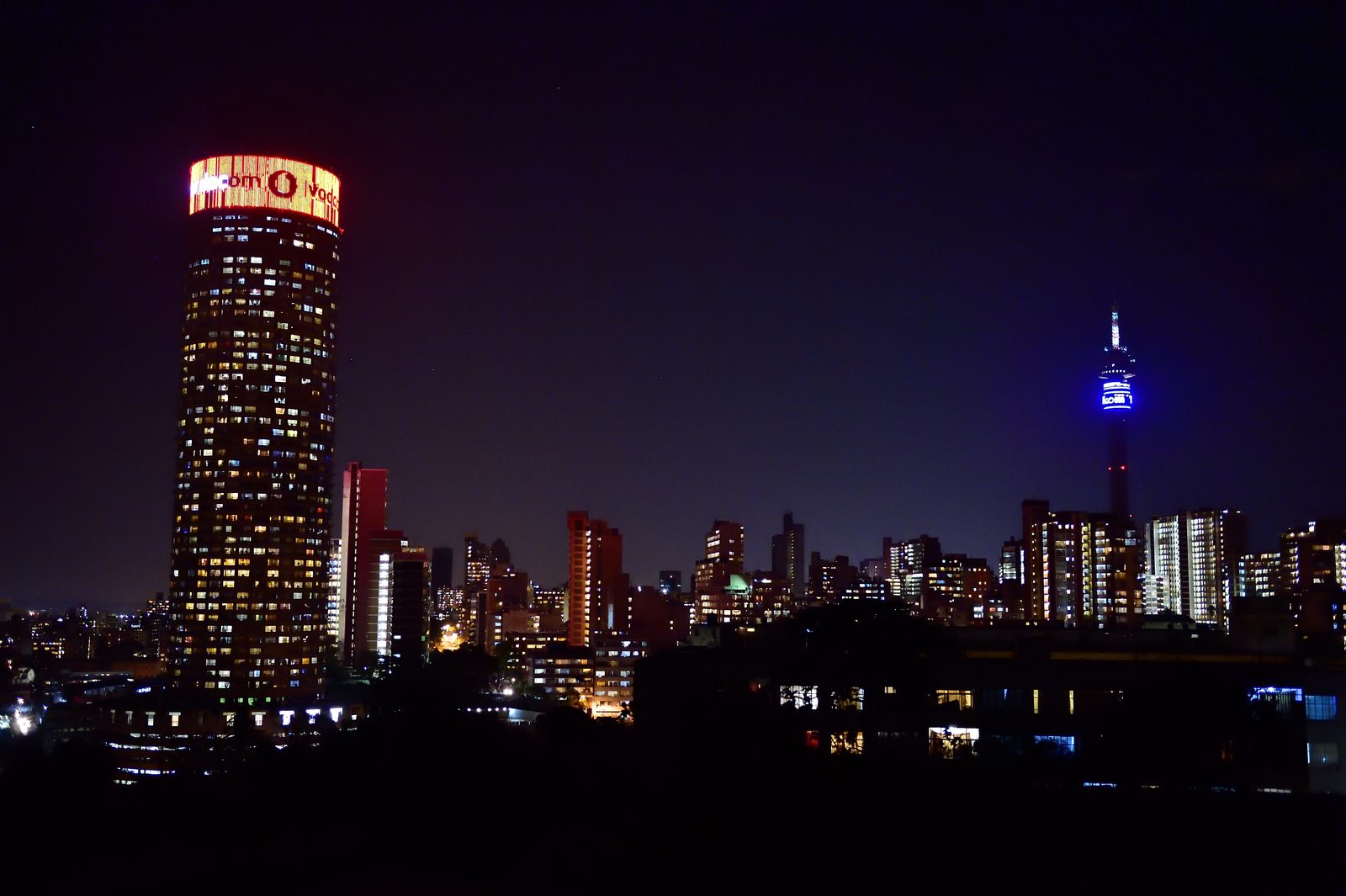
Image: File photo: Johannesburg skyline at night, May 2015 (not taken during the council vote). Photo: South African Tourism, CC BY 2.0 (https://creativecommons.org/licenses/by/2.0/), via Wikimedia Commons (https://commons.wikimedia.org/wiki/File:Cityscape,_Johannesburg,_Gauteng,_South_Africa.jpg); resized
About this article: prepared by The Daily Context editorial desk using automated, source-based reporting from the publications linked below. No reporter was on the ground.
Sources
- SABC News: ActionSA's Mashaba voted Johannesburg's new mayor (27 November 2026) https://www.sabcnews.com/sabcnews/herman-mashaba-elected-mayor-of-johannesburg/
- News24: Mashaba elected Joburg mayor, vows to get city working again (live report, 27 November 2026) https://www.news24.com/politics/live-city-of-joburg-holds-first-council-meeting-after-local-government-elections-20261123-0640
- Jacaranda FM: Mashaba returns as Johannesburg mayor nearly a decade after first stint (27 November 2026) https://www.jacarandafm.com/news/news/mashaba-returns-as-johannesburg-mayor/
- IOL: Herman Mashaba returns as Johannesburg Mayor after defeating Helen Zille (27 November 2026) https://iol.co.za/news/politics/2026-11-27-herman-mashaba-returns-as-johannesburg-mayor-after-defeating-helen-zille/
- BusinessTech: Herman Mashaba defeats Helen Zille to be elected mayor of Johannesburg (27 November 2026) https://businesstech.co.za/news/government/885687/herman-mashaba-defeats-helen-zille-to-be-elected-mayor-of-johannesburg/
- Daily Maverick: ActionSA takes Tshwane mayor as coalitions with ANC set to sweep GP metros (27 November 2026) https://www.dailymaverick.co.za/article/2026-11-26-actionsa-takes-tshwane-mayor-as-coalitions-with-anc-set-to-sweep-gp-metros/
- EWN: ANC's Mziyanda Mketsu elected Ekurhuleni mayor (27 November 2026) https://elections.ewn.co.za/articles/ancs-mziyanda-mketsu-elected-ekurhuleni-mayor
- The Citizen: MK Party's Mxolisi Phakathi elected mayor of eThekwini metro (27 November 2026) https://www.citizen.co.za/news/south-africa/elections/just-in-mk-partys-mxolisi-phakathi-elected-mayor-of-ethekwini-metro/
- The Herald: New mayor Odendaal vows to turn around city's fortunes (27 November 2026) https://theherald.co.za/politics/2026-11-27-new-mayor-odendaal-vows-to-turn-around-city-s-fortunes/
- The Citizen: 'ANC did not win this election', says Mbalula as party seals coalition agreements (27 November 2026) https://www.citizen.co.za/news/south-africa/politics/anc-election-mbalula-coalition-agreements/
- Polity: ANC unveils coalition co-operation accord to stabilise 139 hung councils (27 November 2026) https://www.polity.org.za/article/anc-unveils-coalition-co-operation-accord-to-stabilise-139-hung-councils-2026-11-27
- Daily Maverick: Hill-Lewis re-elected Cape Town mayor (19 November 2026) https://www.dailymaverick.co.za/article/2026-11-19-hill-lewis-re-elected-cape-town-mayor-after-pouring-cold-water-on-zille-swap-idea/
- IOL: Zille reacts to proposed Joburg 'chaotic' coalition (24 November 2026) https://iol.co.za/lge2026/2026-11-24-voters-should-have-backed-the-da-zille-reacts-to-proposed-joburg-chaotic-coalition/
- Jacaranda FM: Zille says DA will be 'best opposition it can be' in Gauteng (23 November 2026) https://www.jacarandafm.com/news/news/zille-da-will-be-best-opposition-it-can-be-in-gauteng/
- Newsday: Mbalula explains why the DA was the party of last resort for municipal coalition talks https://newsday.co.za/south-africa/43875/anc-secretary-general-fikile-mbalula-explains-why-the-da-was-the-party-of-last-resort-for-municipal-coalition-talks/
- The Daily Context: South Africa local elections 2026 results https://www.thedailycontext.com/article/south-africa-local-elections-2026-results-anc-da-mk-coalitions
Kabeer Ahmad
Kabeer Ahmad is the founder and editor of The Daily Context. He oversees the site's source-based coverage of world affairs, technology, business, entertainment, lifestyle and sports, and is responsible for its editorial standards, sourcing and corrections.