Eisenkot signs up Democrats, accuses Likud of stalling as Israel coalition deadline nears
Gadi Eisenkot's Yashar party has agreed coalition deals with the Democrats and Yisrael Beiteinu, but the three parties hold only 36 of the 120 Knesset seats. On Friday Eisenkot accused Netanyahu's Likud of stalling unity talks, and the Jerusalem Post reported that Netanyahu is considering serving second in a rotation.

Gadi Eisenkot, the former Israeli military chief trying to form Israel's next government, now has coalition deals with two parties: Yair Golan's left-leaning Democrats and Avigdor Liberman's right-wing Yisrael Beiteinu. Together with his own Yashar party, that makes 36 seats in the 120-seat Knesset, still well short of the 61 needed to govern. On Friday 27 November, Eisenkot accused Benjamin Netanyahu's Likud of stalling talks on a national unity government, while The Jerusalem Post reported that Netanyahu is considering offering to serve second in a rotation with Eisenkot.
Eisenkot has until 6 December to present a government. That deadline can be extended by 14 days. If neither he nor anyone else succeeds, Israel could face another election.
What did Eisenkot agree with the Democrats?
The two parties said in a joint statement that Eisenkot and Golan "have agreed to sign a coalition agreement". It was the second deal for Yashar, after Yisrael Beiteinu signed up on Tuesday. According to the Democrats, the party would get four ministries if a government is formed:
- an expanded national security ministry, the post held in Netanyahu's government by the far-right Itamar Ben-Gvir;
- the labour ministry;
- the communications ministry;
- the culture and sport ministry, which would include a new directorate for democracy.
Golan said the party would also chair key Knesset committees, including the Constitution, Law and Justice Committee, which he called "a guardian of Israeli democracy". He said the deal includes a commitment to repeal the judicial overhaul passed under Netanyahu, according to The Times of Israel. "We promised the people that we would replace Netanyahu and defend democracy. And that is what we will do," Golan wrote on X.
The deal came after a short freeze. Golan had paused negotiations in protest at Yashar's parallel talks with Likud, The Times of Israel reported.
Why is Eisenkot still far from a majority?
The 27 October election left neither bloc with a majority. Likud is the largest party with 27 seats, ahead of Yashar with 21 and Naftali Bennett's B'Yachad with 12, according to The Jerusalem Post. Netanyahu's bloc of right-wing and ultra-Orthodox parties won 53 seats. Eisenkot's bloc won 48, and the Arab-majority Joint List and Ra'am won a record 19 between them.
Eisenkot's camp is split over how to close the gap:
- Bennett has not yet signed a coalition deal. He said on Friday that "by far the best alternative" is a "Zionist unity government led by Eisenkot first", meaning a rotation deal with Likud. He has said he would consider "less desirable" options if that fails. A meeting with Eisenkot was reportedly postponed until Sunday over Bennett's demand for a detailed plan for military reservists.
- The Democrats have pushed Eisenkot to rely on the two Arab-majority lists and oppose any deal that keeps Netanyahu in power.
- Liberman refuses to sit in a government that depends on Arab-majority parties. He prefers an alliance with the ultra-Orthodox parties instead, despite the long dispute over military conscription of ultra-Orthodox men.
Other pieces are also moving. Ra'am leader Mansour Abbas is expected to say in a Channel 12 interview on Saturday night that he recognises Hamas as a terrorist organisation, according to Ynet and The Times of Israel. That could remove a major obstacle to his party joining an Eisenkot government. Abbas said on Thursday that such a government would include Ra'am and the ultra-Orthodox United Torah Judaism (UTJ), with the Joint List supporting it from outside, The Jerusalem Post reported. UTJ lawmakers have been seeking their rabbis' approval to open formal talks with Eisenkot's bloc.
What is happening with the unity talks with Likud?
Yashar and Likud negotiating teams have held several rounds of talks on a possible unity government, most recently on Wednesday, without an announced breakthrough. On Friday, Eisenkot put the blame on Likud.
"Two weeks and five meetings constitute a sufficient timeframe in which an agreement could have already been reached, had there been a genuine desire to do so," he said. "Unity is not a discussion about seats or who gets to go first; it is a discussion about substance and values." According to Al Jazeera, he said Likud had refused "to put a single concrete proposal on the table". He said its conduct "points to an effort to run down the clock until the mandate expires, split the Change bloc and drag Israel into another election under the outgoing government".
Eisenkot said serving "as a mere rubber stamp for another Netanyahu-led government" would be "a betrayal of a public that is demanding change". He added that "the door remains open" if Likud was willing to make "bold, leadership-driven decisions".
Likud accused Eisenkot of working to form a "dangerous left-wing government" but said it was still open to a unity government, Al Jazeera reported.
Would Netanyahu agree to serve second?
According to sources quoted by The Jerusalem Post, Netanyahu is considering announcing that he is willing to serve as second prime minister in a rotation with Eisenkot. He is expected to frame it as a decision taken "for the security of Israel", and one source said an announcement could come over the weekend. Netanyahu has not confirmed this. Earlier, a Likud source told Maariv that his position is that he should be prime minister, but that serving second "cannot be ruled out".
Netanyahu's critics are wary. Liberman warned on Thursday that Netanyahu would "drag out negotiations over a 'unity' government until the last moment, look for a pretext to blow them up". He said that even if such a government were formed, Netanyahu would "try to engineer a crisis within a few months to drag Israel back to elections".
The talks are also taking place after judges in Netanyahu's corruption trial recommended this week that the most serious case against him be dropped. Netanyahu has called for reconciliation and unity in response.
What happens next?
According to Maariv, as reported by The Jerusalem Post, Eisenkot's bloc aims to finalise, sign and submit all its coalition agreements to the Knesset by Tuesday 1 December, or Wednesday at the latest, including a deal with UTJ. The next few days are likely to turn on three things: whether Netanyahu formally offers to go second in a rotation, what Mansour Abbas says on Saturday night, and whether Bennett signs on when he meets Eisenkot on Sunday.
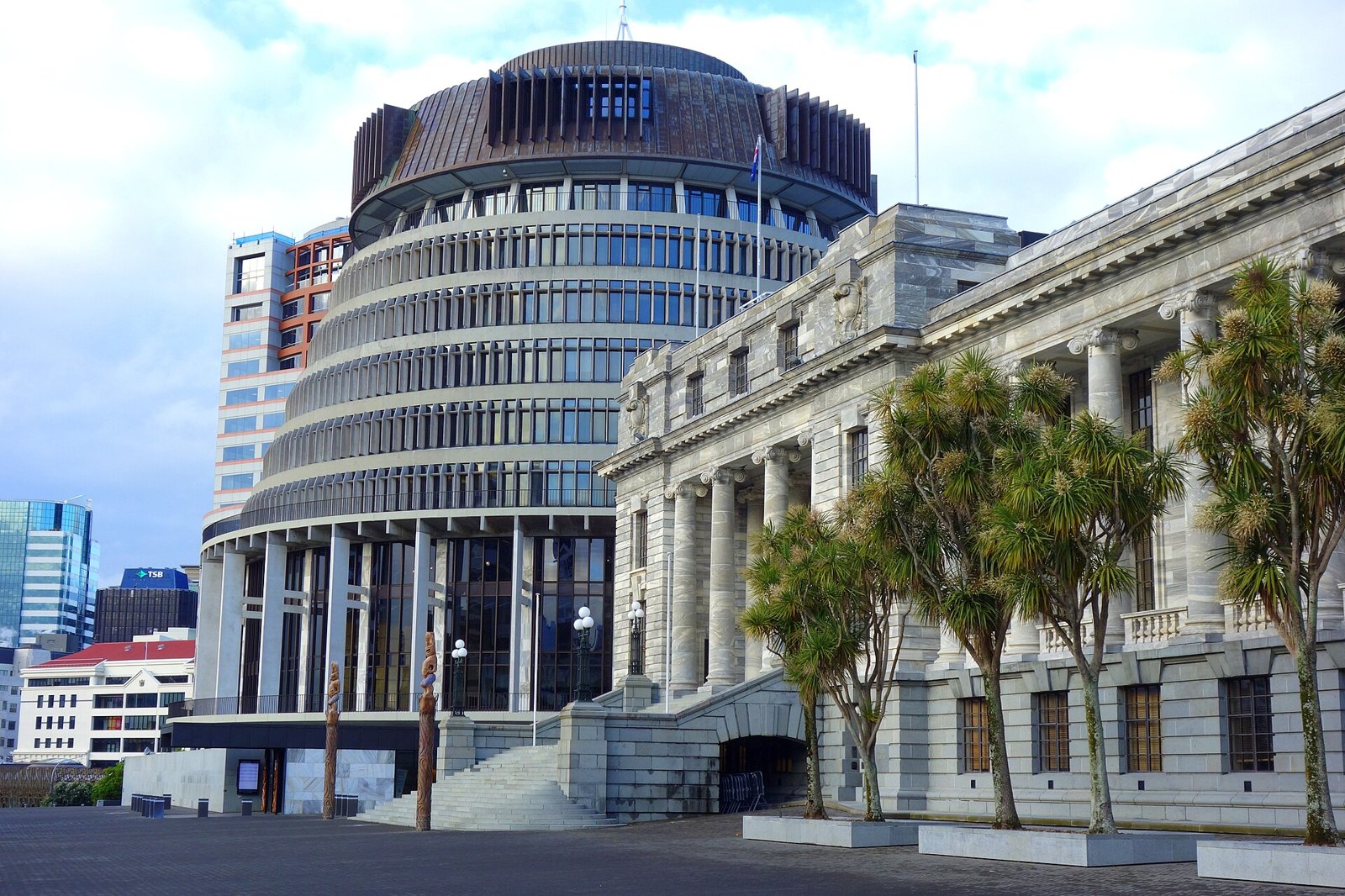
Image: File photo: the Knesset building in Jerusalem, 25 November 2018. Photo: Fallaner, CC BY-SA 4.0 (https://creativecommons.org/licenses/by-sa/4.0/), via Wikimedia Commons (https://commons.wikimedia.org/wiki/File:Holy_Land_2018_(2)_P146_Jerusalem_Knesset_building.jpg); resized
About this article: prepared by The Daily Context editorial desk using automated, source-based reporting from the publications linked below. No reporter was on the ground.
Sources
- France 24 (with AFP and Reuters): Israel's Eisenkot agrees to coalition deal with left-wing Democrats: https://www.france24.com/en/middle-east/20261127-israel-s-eisenkot-agrees-to-coalition-deal-with-left-wing-democrats
- Al Jazeera: Israel's Eisenkot accuses Netanyahu's party of stalling coalition talks: https://www.aljazeera.com/news/2026/11/27/israels-eisenkot-accuses-netanyahus-party-of-stalling-coalition-talks
- The Jerusalem Post: Netanyahu considers being second in rotation with Eisenkot to form unity gov't, sources tell 'Post': https://www.jpost.com/israel-news/politics-and-diplomacy/article-916326
- The Jerusalem Post: Election live updates, 27 November 2026: https://www.jpost.com/israel-election-2026/2026-11-27/live-updates-916307
- The Times of Israel: Golan touts Democrats' deal with Yashar, warns against unity with Likud: https://www.timesofisrael.com/liveblog_entry/golan-touts-democrats-deal-with-yashar-warns-against-unity-with-likud/
- Ynet: Mansour Abbas to declare Hamas terrorist organization in bid to join next government: https://www.ynetnews.com/article/sjwzf6lkxx
- The Jerusalem Post: Netanyahu could let Eisenkot serve as PM first under unity government rotation, Likud source says: https://www.jpost.com/israel-news/politics-and-diplomacy/article-915269
- The Jerusalem Post: Mansour Abbas says Eisenkot-led government to include Ra'am, UTJ: https://www.jpost.com/israel-news/politics-and-diplomacy/article-916254
Kabeer Ahmad
Kabeer Ahmad is the founder and editor of The Daily Context. He oversees the site's source-based coverage of world affairs, technology, business, entertainment, lifestyle and sports, and is responsible for its editorial standards, sourcing and corrections.