Japan's upper house rejects censure motion against education minister Seki by four votes
Japan's House of Councillors voted 124 to 120 on Friday to reject a censure motion against education minister Yoshihiro Seki over bureaucrats appearing at his fundraising parties, giving Prime Minister Sanae Takaichi a narrow reprieve as she tries to pass a food consumption-tax cut before the Diet session ends on 12 December.
Japan's upper house on Friday 27 November rejected a censure motion against education minister Yoshihiro Seki by 124 votes to 120. The result takes immediate pressure off Prime Minister Sanae Takaichi, whose coalition is a few seats short of a majority in the chamber. She is trying to get a bill cutting the consumption tax on food through parliament before the session ends on 12 December.
The motion had no legal force; Seki would not have been required to resign even if it had passed. But opposition parties had threatened to boycott debate in parliament if it passed and Seki stayed on. Their case was that he involved civil servants in fundraising events paid for by companies with business before their ministries, and then gave parliament an incomplete account of it. Kyodo News reported that, excluding the Senate president, who did not vote, the motion needed 123 votes to pass. It fell three short.
How close was the vote, and who decided it?
The House of Councillors has 248 seats, two of them currently vacant. Kyodo said the Liberal Democratic Party (LDP) and its junior partner, the Japan Innovation Party, hold 119 seats between them. That is four short of a majority of the 245 members eligible to vote, according to the Nikkei. The eight opposition groups that tabled the motion, plus the tech-focused party Team Mirai, which said it would back it, had about 118 votes. That left the outcome to two members of the small, right-wing Conservative Party of Japan and a handful of independents.
According to the Nikkei, both Conservative Party members voted against the motion, as did independents Kenichiro Saito, Sachiko Hirayama and Yoshio Mochizuki. The Nikkei noted that all three had voted for Takaichi when parliament chose the prime minister, and that the LDP had lobbied them. Independents Fusaho Izumi and Takako Nagae voted in favour, as did the chamber's vice-president, Tetsuro Fukuyama.
Seki bowed in the chamber after the result was read out. Before the vote, he told a news conference: "I will straighten up and give my all to fulfilling my duties". He declined to say what he would do if the motion passed, Kyodo reported.
What is Seki accused of?
Seki, an LDP member of the lower house from Hyogo prefecture, became education minister in a September cabinet reshuffle. The controversy is about political fundraising parties he held in 2024.
Jiji Press reported that at two parties, in March and June 2024, division chiefs from the economy and health ministries explained government policy to guests from biopharmaceutical companies, each of whom paid 90,000 yen (about $565) to attend. The Asahi Shimbun reported that at the June event, held in Seki's office in a Diet members' building, nine company representatives received a briefing on Japan's clinical trial system from a health ministry official. The ministry said it had not been told the gathering was a fundraiser. Seki has said there was "no legal problem" with the arrangement. He apologised that his office may not have explained the nature of the event properly.
Seki first told parliament that officials had attended only those two parties. On 20 November he revised that account, acknowledging three more 2024 events where officials, including some from the Japan Fair Trade Commission and the Cabinet Office, had been invited. The motion, tabled on 26 November, accused him of statements "contrary to the facts" and said involving officials in fundraising "undermines public trust in the neutrality of public administration".
The Asahi also noted that the June 2024 fundraiser came two months after the LDP reprimanded Seki over 8.36 million yen in unreported political funds connected to the party's slush-fund scandal. He was accused of breaking the Political Funds Control Law but was not indicted.
Why does the vote matter for Takaichi's government?
The government and senior officials have defended Seki. Takaichi said he had "fulfilled his responsibility to explain", and Chief Cabinet Secretary Minoru Kihara said there was nothing illegal about asking officials to give general briefings. Even so, Japanese ministers have often resigned or been moved out in a reshuffle after a censure motion passes, the Nikkei and the Asahi noted. A defeat would have forced Takaichi to choose between dropping a minister and facing a parliamentary standoff.
The timing matters. The lower house has already passed the government's plan to cut the consumption tax on food and drink for two years from April. The Japan Times described it as a cut from 8% to 1%, aimed at helping households with rising prices. Data released the same morning showed core consumer prices in Tokyo rose 2.9% from a year earlier in November, up from 2.6% in October, Kyodo reported. That is the third month in a row above the Bank of Japan's 2% target.
Opposition parties had refused to take part in debates until the censure vote was settled, which had stalled the tax bill in the upper house. Jiji Press said the ruling parties now plan to ask the opposition to resume debate on it quickly. The coalition also wants to pass a bill cutting 31 seats from the lower house during the 69-day extraordinary session.
Is the controversy over?
Probably not. Kyodo said the main opposition parties are expected to keep pressing Seki given how close the vote was. The episode has also shown how fragile Takaichi's position in the upper house is: a few independents decided the result. Within the coalition, a former leader of the Japan Innovation Party, Nobuyuki Baba, had said before the vote that Seki should consider his future himself, the Japan Times reported.
Censure motions rarely pass. Kyodo said the last one the upper house approved was in June 2013, against then-prime minister Shinzo Abe, when the ruling bloc lacked a majority in the chamber. He did not resign.
What happens next?
The 12 December end of the session is now the key date. The government needs the upper house to pass the food tax cut in time for an April start, and the lower-house seat-cut bill also has to clear both chambers. Opposition parties have signalled they will keep questioning Seki about the fundraising parties, and any further disclosures could revive calls for him to go. For now, he keeps his job.
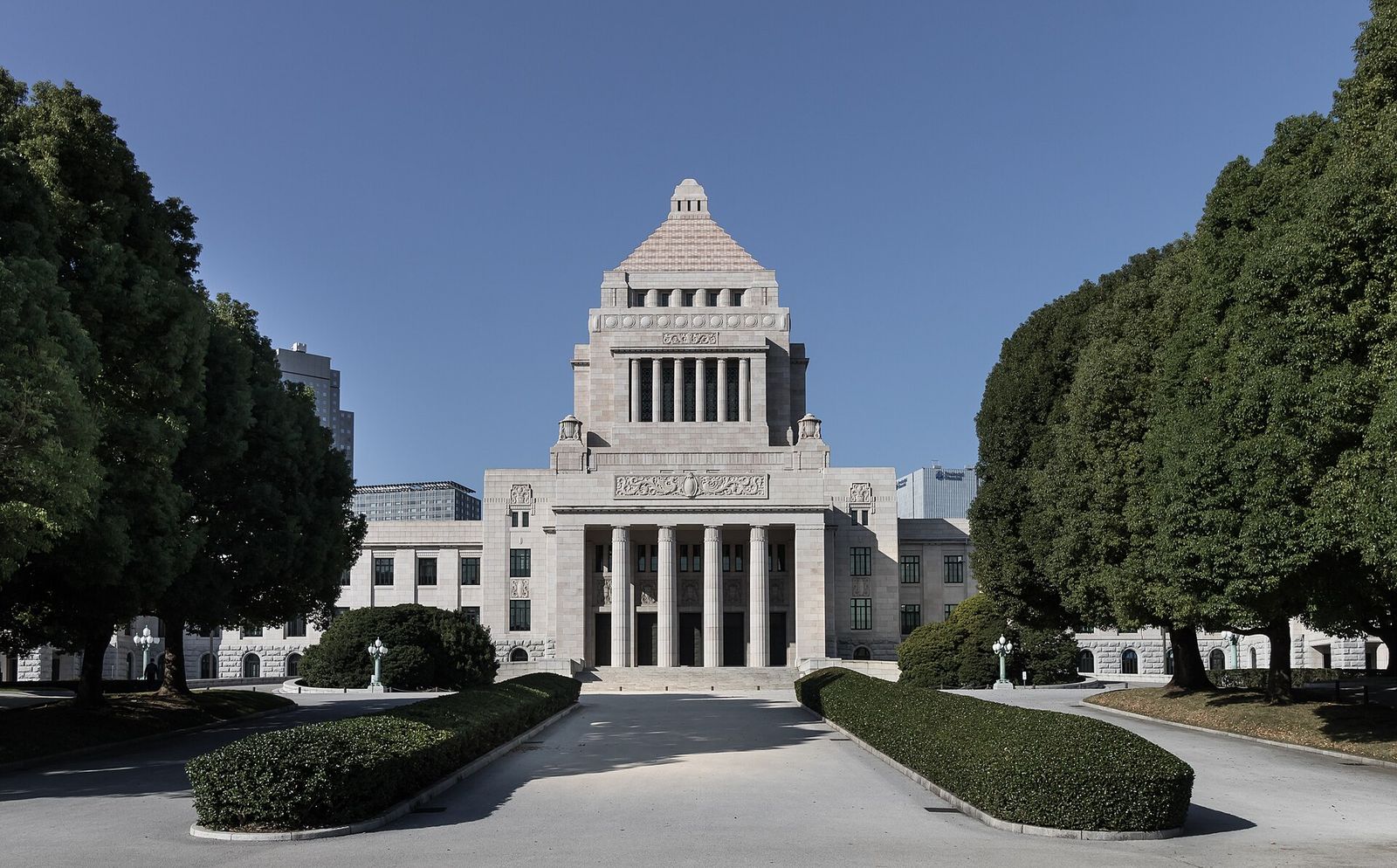
Image: File photo: the National Diet Building in Chiyoda, Tokyo, October 2018; not taken during Friday's vote. Photo: Kakidai, CC BY-SA 4.0 (https://creativecommons.org/licenses/by-sa/4.0/), via Wikimedia Commons (https://commons.wikimedia.org/wiki/File:National_Diet_Building.jpg); resized
About this article: prepared by The Daily Context editorial desk using automated, source-based reporting from the publications linked below. No reporter was on the ground.
Sources
- Kyodo News: Japan's Senate narrowly rejects censure motion against scandal-hit minister (27 November 2026): https://english.kyodonews.net/articles/-/92778
- Jiji Press: Japan's Upper House Rejects Censure Motion against Min. Seki (27 November 2026): https://jen.jiji.com/japan/politics/2026112700190/
- Nikkei (Japanese): 関芳弘文部科学相の問責決議案、4票差で否決 (27 November 2026): https://www.nikkei.com/article/DGXZQOUA270RH0X21C26A1000000/
- Jiji.com (Japanese): 参院、関文科相問責案を否決 与党、消費税審議再開要請へ (27 November 2026): https://www.jiji.com/jc/article?g=pol&k=2026112700415
- The Japan Times: Opposition parties submit censure motion against education minister to Senate (26 November 2026): https://www.japantimes.co.jp/news/2026/11/26/japan/politics/censure-motion-submission/
- The Asahi Shimbun: Minister defends pharmaceutical fundraiser amid resignation calls (17 November 2026): https://www.asahi.com/ajw/articles/17056738
- The Asahi Shimbun: LDP's Seki faces censure vote in Upper House over fundraisers (26 November 2026): https://www.asahi.com/ajw/articles/17082151
- Kyodo News Digest, 27 November 2026 (Tokyo CPI): https://english.kyodonews.net/articles/-/92765
Kabeer Ahmad
Kabeer Ahmad is the founder and editor of The Daily Context. He oversees the site's source-based coverage of world affairs, technology, business, entertainment, lifestyle and sports, and is responsible for its editorial standards, sourcing and corrections.