Netanyahu trial judges urge prosecutors to drop bribery case and rethink a second
Judges in Benjamin Netanyahu's corruption trial have told Israel's attorney general that a conviction in Case 4000, the only case with a bribery charge, is unlikely and should be reconsidered, and questioned whether Case 2000 describes a crime at all. The recommendations are not a verdict, and only prosecutors can withdraw charges.
The three judges hearing Benjamin Netanyahu's corruption trial have told Israel's attorney general that the most serious case against him is unlikely to end in a conviction and should be reconsidered. At a short hearing at the Jerusalem District Court on Wednesday 25 November, the panel also questioned whether a second case amounts to a criminal offence, and suggested the two sides find a way to conclude the third.
The recommendations are not a ruling. Under Israeli law the judges cannot drop charges themselves; that decision belongs to Attorney General Gali Baharav-Miara, who said her office would examine every proposal the court had made. Netanyahu, who denies all the charges, called for the trial to end "immediately".
What did the judges say?
The panel, presided over by Judge Rivka Friedman-Feldman with Judges Moshe Bar-Am and Oded Shaham, summoned Baharav-Miara to appear in person, which the Jerusalem Post reported was her first appearance before them. Friedman-Feldman said the judges had called the attorney general because the indictment had been filed by her predecessor, Avichai Mandelblit, and because the end of Netanyahu's own testimony made it necessary to decide how the cases should proceed. "In our view, the public interest requires a rethink," she said, according to the Jerusalem Post.
On Case 4000, the judges said: "Regarding this count, we assess that the prospects of conviction are low, to a degree that justifies reconsidering the matter." According to the Turkish news agency Anadolu, citing Israel's public broadcaster KAN, Friedman-Feldman summed up the panel's position as: "We propose dropping the charge in Case 4,000, reconsidering Case 2,000, and pursuing a plea deal in Case 1,000." KAN reported that the hearing lasted about 10 minutes.
The judges stressed that their comments reflected impressions so far rather than a verdict, and that they applied only to Netanyahu, because the court has not yet heard testimony from the other defendants.
What are the three cases?
Netanyahu was charged in November 2019, the indictment was filed in January 2020, and the trial opened in May 2020, making him Israel's first sitting prime minister to stand trial. He faces fraud and breach of trust charges in all three cases, and bribery in one.
Case 4000 is the only case involving a bribery charge. Prosecutors allege that Netanyahu advanced regulatory decisions benefiting the telecoms company Bezeq, worth around 1.8 billion shekels (about $500 million) according to Reuters, in exchange for favourable coverage of himself and his wife, Sara, on the Walla news website, then controlled by Bezeq's controlling shareholder Shaul Elovitch. Both men deny wrongdoing.
Case 2000 concerns talks between Netanyahu and Arnon Mozes, publisher of the newspaper Yedioth Ahronoth, about favourable coverage in return for steps to curb a rival paper, Israel Hayom. The deal never came to fruition, according to the Times of Israel.
Case 1000 alleges that Netanyahu accepted luxury gifts worth hundreds of thousands of shekels, including cigars and champagne, from Hollywood producer Arnon Milchan and Australian billionaire James Packer, and that he did favours for Milchan in return.
Why did the court doubt the bribery case?
According to the Jerusalem Post's account of the hearing, the judges found problems with both sides of the alleged exchange in Case 4000. The claim that Netanyahu told the then director-general of the Communications Ministry, Shlomo Filber, to act in Bezeq's favour rested largely on Filber's own testimony, they said, and they questioned whether factual findings could be based on it, citing the course of his questioning, changes in his account and objective information inconsistent with it.
They also expressed serious doubt that prosecutors had proved the alleged "unusual responsiveness" of Walla to coverage requests, and whether Netanyahu had been aware of such treatment at the time. Those doubts carried over to the conflict-of-interest allegation underlying the breach of trust charge.
This went further than before. The judges had previously urged prosecutors to reconsider the bribery count, in June 2023 and again in June 2026, but had not suggested dropping the case as a whole. They said withdrawing charges against Netanyahu would not automatically end the bribery prosecution of Shaul and Iris Elovitch, whose position would need separate consideration.
On Case 2000, the judges questioned whether the facts in the indictment supported the prosecution's legal conclusions, and said prosecutors should be allowed to present a structured legal argument before any decision. On Case 1000, they voiced no comparable doubts and instead asked for a procedural route towards a conclusion, subject to a pending request to take testimony from Packer abroad.
How did Netanyahu, his allies and the prosecution respond?
"Today, something momentous happened: The trial has collapsed," Netanyahu said in a televised statement, the Jerusalem Post reported. "This trial must end immediately." He told viewers the cases had brought "ten years of terrible suffering for me, my family, my son", according to the BBC, and repeated his claim that associates had been pressured into giving false testimony.
Ministers in his caretaker government went further, the Times of Israel reported. Defence Minister Israel Katz said it was time "to put an end to a trial born of sin", while Foreign Minister Gideon Sa'ar, a former justice minister, said the two ways to end it now were for prosecutors to withdraw charges or for the court to stay proceedings for abuse of process.
Baharav-Miara defended her prosecution team and said there were only two ways to conclude the case: a verdict, or "a plea agreement that is appropriate and accurately reflects the nature of the acts and crimes committed", Anadolu reported. She said her office had responded positively to earlier proposals for talks, including an initiative by President Isaac Herzog, but that "our outstretched hand has remained hanging in the air". Netanyahu's lawyer, Amit Hadad, proposed criminal mediation behind closed doors, according to the Jerusalem Post.
Barak Medina, a legal scholar at the Hebrew University of Jerusalem, told Al Jazeera the judges' intervention was "unprecedented in its nature" because they gave their views before the prosecution had presented its arguments.
Why does it matter for Israeli politics?
The hearing came during coalition negotiations after Israel's inconclusive 27 October election. Netanyahu's bloc won more seats than his rival's, but both fell short of a majority, and President Herzog gave former army chief Gadi Eisenkot the first chance to form a government, the BBC reported.
The trial has been one of the main reasons several opposition parties refuse to sit with Netanyahu. Analysts quoted by Al Jazeera doubted that the court's remarks would change that quickly: Roi Zur of the University of Essex argued that Netanyahu's record around the 7 October 2023 attack weighed more heavily on potential partners than the trial.
A plea deal would not necessarily settle Netanyahu's future either. The Jerusalem Post noted that a conviction based on an admission could raise the question of "moral turpitude", which can affect eligibility for public office in Israel.
What happens next?
The attorney general must now decide whether to withdraw or amend charges in Case 4000, how to respond on Case 2000 and whether a negotiated end to Case 1000 is possible. No timetable has been announced. Time is a factor: Friedman-Feldman is due to retire in March 2028, and defence testimony, closing arguments and the writing of a verdict still lie ahead, according to the Jerusalem Post.
Until prosecutors act, all charges formally stand and Netanyahu remains a defendant who has pleaded not guilty. Separately, he remains subject to an International Criminal Court arrest warrant over the conduct of the war in Gaza, which he also denies.
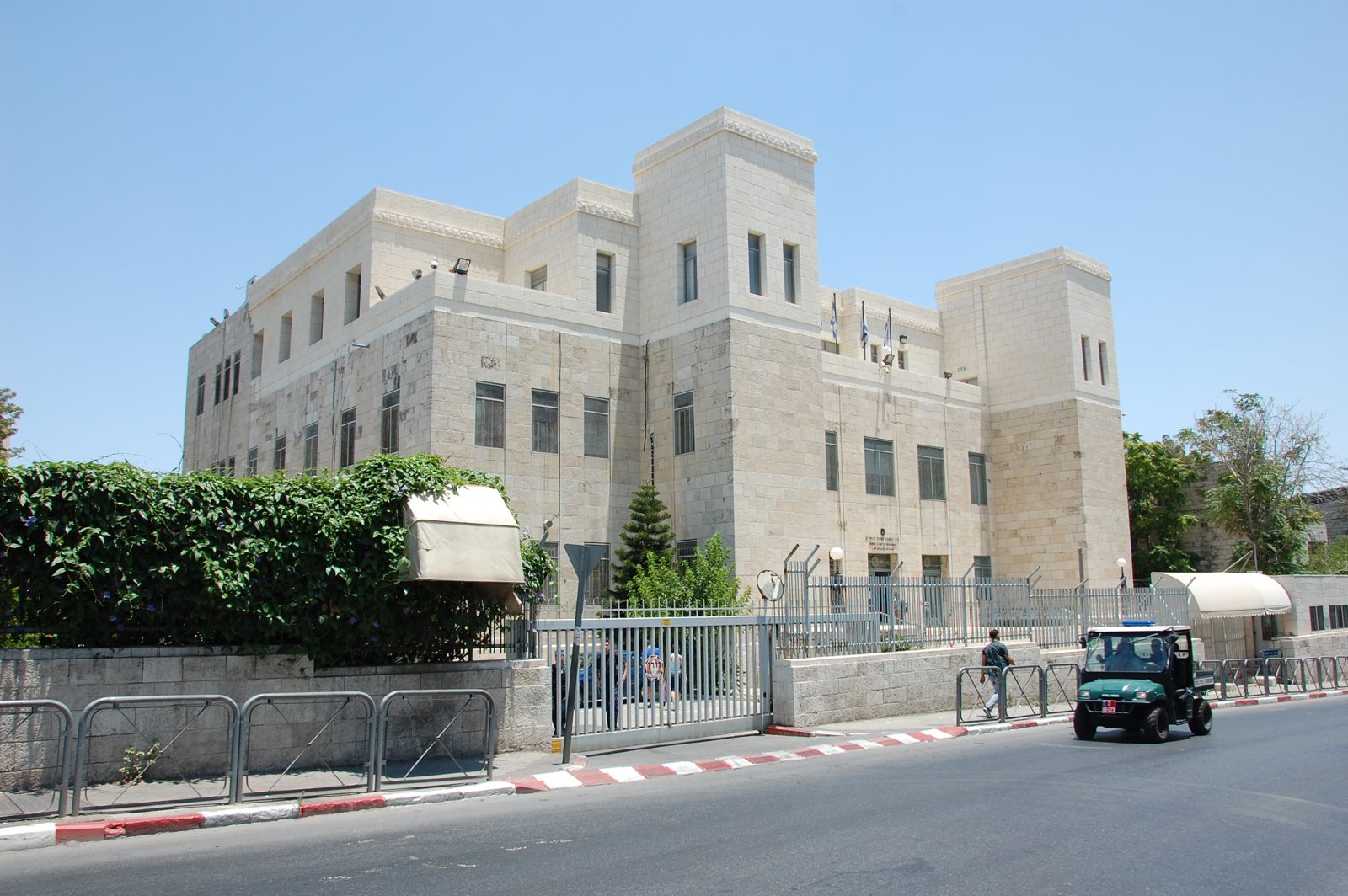
Image: File photo: the Jerusalem District Court building on Salah al-Din Street, 23 May 2007 (not taken during the hearing). Photo: Sir kiss, public domain, via Wikimedia Commons (https://commons.wikimedia.org/wiki/File:District_court_jer_1001.JPG)
About this article: prepared by The Daily Context editorial desk using automated, source-based reporting from the publications linked below. No reporter was on the ground.
Sources
- The Jerusalem Post: Netanyahu trial judges suggest dropping Case 4000, reconsider Case 2000 as A-G attends hearing (25 November 2026) https://www.jpost.com/israel-news/crime-in-israel/article-916054
- BBC News: Israeli judges recommend dropping most serious charges against Netanyahu (25 November 2026) https://www.bbc.com/news/articles/cxj05mv723r2o
- Reuters via Investing.com: Israeli judges recommend prosecutors drop one bribery case against Netanyahu (25 November 2026) https://www.investing.com/news/world-news/israeli-judges-recommend-prosecutors-drop-one-bribery-case-against-netanyahu-5051410
- Anadolu Agency: Israeli court proposes dropping bribery charge against Netanyahu (25 November 2026) https://www.aa.com.tr/en/middle-east/israeli-court-proposes-dropping-bribery-charge-against-netanyahu-/4137547
- The Times of Israel: Ministers demand end to Netanyahu trial after court's dramatic advice to drop most charges (25 November 2026) https://www.timesofisrael.com/ministers-demand-end-to-netanyahu-trial-after-courts-dramatic-advice-to-drop-most-charges/
- Al Jazeera: Netanyahu's corruption trial: Is it really all over? (26 November 2026) https://www.aljazeera.com/news/2026/11/26/netanyahus-corruption-trial-is-it-really-all-over
Kabeer Ahmad
Kabeer Ahmad is the founder and editor of The Daily Context. He oversees the site's source-based coverage of world affairs, technology, business, entertainment, lifestyle and sports, and is responsible for its editorial standards, sourcing and corrections.