Flooded illegal gold mine in West Java kills at least 16 as search continues
At least 16 miners have been confirmed dead and about 10 remain missing after a river overflowed into an unlicensed gold mine in Bogor, West Java, on Monday night. Rescuers are working in narrow, flooded shafts about 100 metres deep.
At least 16 people have died after floodwater poured into an unlicensed gold mine in Bogor regency, in Indonesia's West Java province, and rescuers were still searching on Thursday 26 November for about 10 miners believed to be trapped underground.
The disaster struck late on Monday 23 November in the Pongkor area of Nanggung district, south-west of Jakarta. Heavy rain swelled the Ciseureuh River, which overflowed and sent water mixed with mud into two vertical mine shafts roughly 100 metres deep. Death tolls have risen quickly as bodies are recovered, and official figures have varied between agencies and over the course of the search.
What happened at the mine?
According to Bogor police, heavy rain began falling around Mount Butak at about 6pm local time on Monday. Around five hours later, at about 11pm, the swollen river began seeping into two shafts being worked without a permit, a practice known in Indonesia as PETI, or unlicensed gold mining.
Witnesses told police that about 37 miners were inside the two shafts at the time. Eleven managed to climb out. The remaining 26 were reported missing by their families, police said. Bogor's police chief, Arfan Zulkan Sipayung, said most of the trapped men were in one shaft and seven were in the second, none of whom escaped.
Police said they were only alerted to trapped miners on Tuesday afternoon, around 15:30 local time, roughly 16 hours after the flooding began. Local officers and residents began pumping water out before national and regional rescue teams arrived.
How many people have died, and how many are missing?
The figures have climbed through the week. Indonesia's national search and rescue agency, Basarnas, said nine bodies had been recovered by 7pm on Wednesday, with 17 miners still unaccounted for. Early on Thursday, West Java police chief Hengki, who uses one name, said 13 bodies had been found and six identified by police disaster victim identification teams, with 13 people still missing.
Later on Thursday morning, West Java police spokesman Hendra Rochmawan told CNBC Indonesia that 16 bodies had been evacuated, all of them dead. The Associated Press likewise reported 16 bodies recovered and 10 miners still believed trapped. Some outlets were still quoting the earlier figure of 13 at the time of writing, and the final toll may change.
Identified victims named by police include men aged between 20 and 50 from villages in western Bogor regency. One local disaster official told the Indonesian outlet Detik earlier in the week that the true number of people underground was "still unclear", because no one had formally recorded who entered the shafts.
Why is the rescue so difficult?
Rescuers have been lowering themselves on ropes into narrow, dark and slippery shafts that continue to fill with water from below. "The depth of the shaft, narrow access and limited lighting are key considerations in determining the search strategy so that personnel can operate safely," Desiana Kartika Bahari, head of the Jakarta Search and Rescue Office, said on Wednesday.
Police said seepage triggered a landslide about 30 metres down the shaft in the early hours of Wednesday, which prevented fire service and disaster agency equipment from going further. The search was paused late on Wednesday night for safety reasons and resumed at 8am on Thursday, police said. The operation involves Basarnas, the regional disaster agency, police, the military, the Indonesian Red Cross and the state miner Antam.
West Java's police chief urged families not to search the area themselves because of continuing rain and the risk of further landslides. "Hopefully they can still hold on and survive," he said. "If not, at least the team can find the remaining ones."
Who owns the land, and why are illegal mines so common?
The shafts lie inside the mining concession of Aneka Tambang (Antam), the state-owned miner that operates the Pongkor gold business unit. Antam has said the flooded pits were not part of its operations and were being worked without its authorisation.
Small-scale gold mining without a permit is banned in Indonesia, but remains widespread across the archipelago. The BBC, citing multiple studies, reported that the illegal sector has grown over the past decade, often rising alongside gold prices, which hit record highs earlier in 2026. Mining-law analysts and a former deputy head of Indonesia's anti-corruption commission have told the BBC that enforcement has had limited effect and that illegal mines often have powerful local backers, claims that are difficult to verify independently.
For many people in rural areas, the pits offer income where few other jobs exist. But unregulated shafts are poorly built and prone to floods, landslides and toxic gases. The BBC reported that 11 illegal miners died earlier this year from a carbon monoxide leak in the same area, and that nine people were killed in May when a cliff collapsed at an illegal gold mine in West Sumatra. Because the activity is illegal, the overall number of deaths is not reliably known.
On Wednesday, West Java police separately said they had uncovered 24 cases of illegal mining across the province in October and November alone.
What are officials saying about accountability?
Indonesia's Ombudsman on Thursday urged a thorough investigation that looks beyond the miners themselves. "We must not allow only the miners in the field to be seen and prosecuted, while those who control the activities, provide capital and facilities, store, and market the mined products remain untouched," said Abdul Ghoffar, a member of the Ombudsman, according to the BBC.
Police have not yet announced charges. Indonesian media have reported the names of people alleged to have run the two shafts, but no one has been charged and those reports have not been tested in court.
What happens next?
The search will continue under Basarnas command for as long as conditions allow, and police identification teams are working to name the remaining victims so that bodies can be returned to families. With the rainy season under way in West Java, there is a continuing risk of further flooding at the site and at other informal mines in the hills of Bogor regency. Pressure is likely to grow on national and provincial authorities to explain how a mine of this size operated inside a state concession, and what will be done to close similar sites.
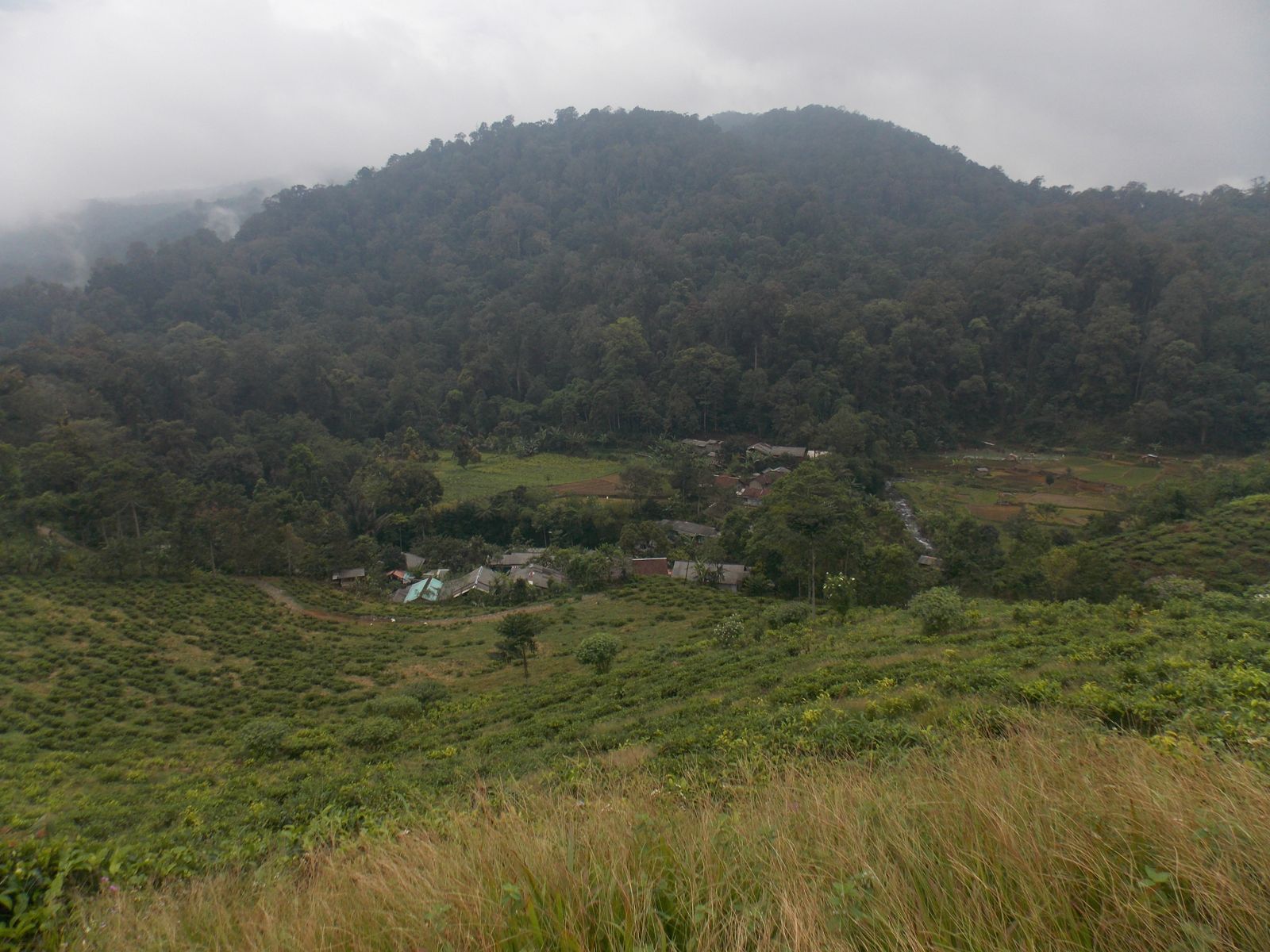
Image: File photo, not the mine site: the hamlet of Citalahab in Nanggung district, Bogor regency, West Java, 29 January 2024. Photo: RXerself, Creutzen, CC BY-SA 4.0 (https://creativecommons.org/licenses/by-sa/4.0/), via Wikimedia Commons (https://commons.wikimedia.org/wiki/File:Citalahab,_Nanggung,_Bogor.jpg); resized
About this article: prepared by The Daily Context editorial desk using automated, source-based reporting from the publications linked below. No reporter was on the ground.
Sources
- BBC News: Thirteen dead as mine disaster highlights illegal hunt for gold (26 November 2026): https://www.bbc.com/news/articles/cmde1zr0nlyro
- Associated Press: Rescuers battle wet, dark conditions in flooded Indonesian mine where 16 died and 10 are missing (26 November 2026): https://apnews.com/article/indonesia-illegal-gold-miners-flood-beb990b9d2e82b0732ec97bf27434d6d
- CNBC Indonesia: Terkubur banjir di tambang emas ilegal Bogor, 16 orang meninggal dunia (26 November 2026): https://www.cnbcindonesia.com/news/20261126075930-4-788565/terkubur-banjir-di-tambang-emas-ilegal-bogor-16-orang-meninggal-dunia
- ANTARA: Tim SAR lanjutkan pencarian 13 penambang ilegal di Pongkor (26 November 2026): https://www.antaranews.com/berita/5879287/tim-sar-lanjutkan-pencarian-13-penambang-ilegal-di-pongkor
- Detik: Detik-detik puluhan gurandil terjebak di tambang Pongkor (26 November 2026): https://news.detik.com/berita/d-8770493/detik-detik-puluhan-gurandil-terjebak-di-tambang-pongkor-sebagian-selamat
- CNA/Reuters: Indonesia mine flooding death toll rises to 13, 13 still missing (26 November 2026): https://www.channelnewsasia.com/asia/indonesia-mine-flooding-death-toll-missing-6583801
Kabeer Ahmad
Kabeer Ahmad is the founder and editor of The Daily Context. He oversees the site's source-based coverage of world affairs, technology, business, entertainment, lifestyle and sports, and is responsible for its editorial standards, sourcing and corrections.