EU leaders cut budget summit short with no deal on 2028–2034 spending plan
A special EU summit on the bloc's next seven-year budget broke up a day early on Thursday night without agreement, after seven net-contributor 'frugal' countries boycotted Council President António Costa's small-group talks. Leaders now aim for a deal at the 17–18 December European Council, with France insisting it must be done by 31 December.
European Union leaders broke off a special summit on the bloc's next long-term budget late on Thursday 26 November 2026 without reaching a deal, cutting a meeting planned to run over two days to a single long evening. The talks on the 2028–2034 Multiannual Financial Framework (MFF), the EU's seven-year spending plan, stalled after seven net-contributor countries refused to keep taking part in the small-group format designed by European Council President António Costa.
Leaders said the negotiation now moves to the regular European Council summit that opens on 17 December. Several of them openly doubted that even that meeting will produce agreement.
What happened at the summit?
Costa had organised Thursday's talks as a series of meetings with small, geographically mixed groups of leaders, intended to push each camp towards concessions on the size and shape of the budget, according to Euronews' live coverage. After the first rounds, the so-called "frugal" group, which Euronews lists as Austria, Belgium, Denmark, Finland, Germany, the Netherlands and Sweden, closed ranks. A diplomat told Euronews the group had concluded further sessions would not bring leaders closer to a compromise, and the frugals conveyed that position to Costa and Commission President Ursula von der Leyen.
The boycott was visible in the schedule. Rapporteur, a Brussels news outlet, reported that Belgium, Denmark, Sweden and Austria declined to attend sessions with Costa, and that Danish Prime Minister Mette Frederiksen did not show up for a planned meeting with Hungary, Greece, Croatia and Luxembourg. Euronews reported that Austria skipped the final group meeting with the leaders of Lithuania, Malta, Bulgaria and Slovenia.
By late evening Costa had decided to end the summit after a single plenary session of all 27 leaders starting around midnight Brussels time, instead of reconvening on Friday as planned, Euronews and DW reported. German Chancellor Friedrich Merz told reporters the leaders would hold a final round of discussions around midnight and close the meeting.
Why couldn't leaders agree?
The core dispute is the overall size of the budget and how it is split. Costa tabled a compromise on 21 November that Euronews put at about €1.78 trillion over seven years, roughly 10% below the European Commission's original proposal. Merz described it as €204 billion less than the Commission's plan, and said the cuts "will not stop at €204bn".
Two camps are pulling in opposite directions. The frugal countries want deeper cuts, especially to traditional spending on regional "cohesion" funds and farm subsidies, so that money can be focused on defence, innovation and green energy. Dutch Prime Minister Rob Jetten said before the meeting that the budget "needs to be modernised and needs to be downsized if we want to strike a deal," Reuters reported. Frederiksen said Denmark would not accept the plan on the table, citing estimates that it could raise her country's contribution by about 12 billion Danish kroner (around €1.6 billion) a year.
On the other side, the 17-member "Friends of Cohesion" group, represented in the talks by Italy's Giorgia Meloni and Romania's President Nicușor Dan, wants more money for poorer regions and farmers. Poland's Donald Tusk warned against a small budget, and Greek Prime Minister Kyriakos Mitsotakis argued that cuts would undermine the competitiveness agenda set out by former ECB president Mario Draghi.
France sits somewhere in between but has its own red line. President Emmanuel Macron said "not a single euro" of the €66.25 billion France currently receives under the Common Agricultural Policy should be missing from the draft, and called the roughly €200 billion of cuts in the latest proposal a "strategic mistake".
What did leaders say as the talks collapsed?
The tone was blunt. Swedish Prime Minister Ulf Kristersson said "we will not be making any decisions or reaching any sort of agreement here today," adding that "everyone has put forward their best arguments in favour of completely different approaches," according to Rapporteur. Finland's Petteri Orpo said leaders were "still very far from finding solutions" and that the decisions "will go to the December European Council."
Meloni said the sides were "light years away" from a solution. Hungarian Prime Minister Péter Magyar wrote on X that the chance of agreement on Thursday was "virtually zero" and that a deal around Christmas also looked unlikely, DW reported.
Merz was slightly more upbeat. Asked whether leaders were any further ahead, he said "yes and no", and that there was "definitely movement" towards further reducing Costa's negotiating box. Macron offered to act as a broker between the two camps, describing France's position as "middle-ground", but Merz rebuffed him, saying the French president "like everyone else including me, looks after his country's interests."
Why does France's 31 December deadline matter?
Macron set a hard deadline at a mid-summit press conference. "It will not be possible to reopen or conclude negotiations on the budget after 31st December," he said, as reported by Euronews, adding that he would not sign "an unbalanced agreement" in December if the conditions for a good deal were not met.
His reasoning is domestic. France holds a presidential election in April and May 2027, and Macron argued he would lack the political legitimacy to negotiate during the campaign. If no deal is reached in December, he said, talks would resume only in the second half of 2027 "under much more pressure." The far-right Rassemblement National's Marine Le Pen has called for a €10 billion cut in France's contribution to the EU budget, Euronews noted.
Not everyone accepts the timetable. Jetten said "there's no need to hurry" and that he was "ready for the marathon", while Meloni has also said she does not feel bound by a deadline.
How is Ukraine funding tied up in the budget fight?
Ukraine's financing needs for 2027 were also on the agenda, and Germany has linked the two issues. Merz said Berlin would not support the next budget unless all 27 member states back Ukraine financially, refusing to repeat last year's compromise in which some countries opted out of the EU's €90 billion loan for Kyiv. DW reported that the Czech Republic, Hungary and Slovakia did not take part in that loan; Czech Prime Minister Andrej Babiš rejected any link between cohesion funding and Ukraine financing, according to Euronews.
Merz also argued that interest payments of more than €150 billion on existing joint EU debt, from the NextGenerationEU recovery fund and Ukraine aid, will weigh on the next budget, and said Europe "needs solid finances, not new debts." Macron, defending continued support for Kyiv, said "there is no room for naivety" and that helping Ukraine is in Europe's own interest.
What does the European Parliament say?
Any deal needs unanimity among the 27 governments and then the consent of an absolute majority of the European Parliament, at least 361 of 720 MEPs. Parliament has already rejected the size of Costa's plan. According to Parliament's lead negotiators, it amounts to 0.97% of EU gross national income, excluding NextGenerationEU repayment costs, below the 1.11% agreed for the current budget in 2020, whereas Parliament's own position is 1.27%.
Parliament President Roberta Metsola told leaders on Thursday that Parliament "is not a rubber stamp." Budget Commissioner Piotr Serafin told MEPs on 25 November that, once inflation is counted, "less really is less, less value for money, less competitiveness and less security."
What happens next?
The budget now returns to the European Council meeting starting on 17 December, the last scheduled summit of 2026. Costa and Paris want agreement there; the frugals want a smaller budget first, and the cohesion group wants the opposite. If governments do agree, they must then negotiate with Parliament, whose negotiators want those talks to start in early 2027. The new budget is due to take effect on 1 January 2028.
The summit did produce one decision on another file: euro-area leaders backed Spain's Pablo Hernández de Cos to succeed Christine Lagarde as president of the European Central Bank, with his formal appointment still pending.
What did Costa say when the summit ended?
Update, 27 November 2026 (around 6:30am Pakistan time): The summit's final session has now ended, also without agreement. At his closing press conference in the early hours of Friday, Brussels time, Costa presented the meeting as an early stage in the talks rather than a failure. "This meeting was a necessary step in the process. This is a negotiation process. It is normal that the different parties are starting to underline and mark their starting points," he said, according to Euronews. "Everybody knows that we cannot fail Europe, and we need to have a new budget from the 1st of January 2028."
Euronews reported that Costa's announcement early on Thursday that talks would not continue into Friday had lowered expectations among national delegations. One diplomat described the day as "a lot of political theatre" with no detailed negotiations, but argued that "you need to have a bad European Council to have a good one". The outlet also reported that a planned discussion of a €45 billion support loan for Ukraine was effectively crowded out by the budget dispute. Leaders are next due to take up the budget at the European Council that opens on 17 December.
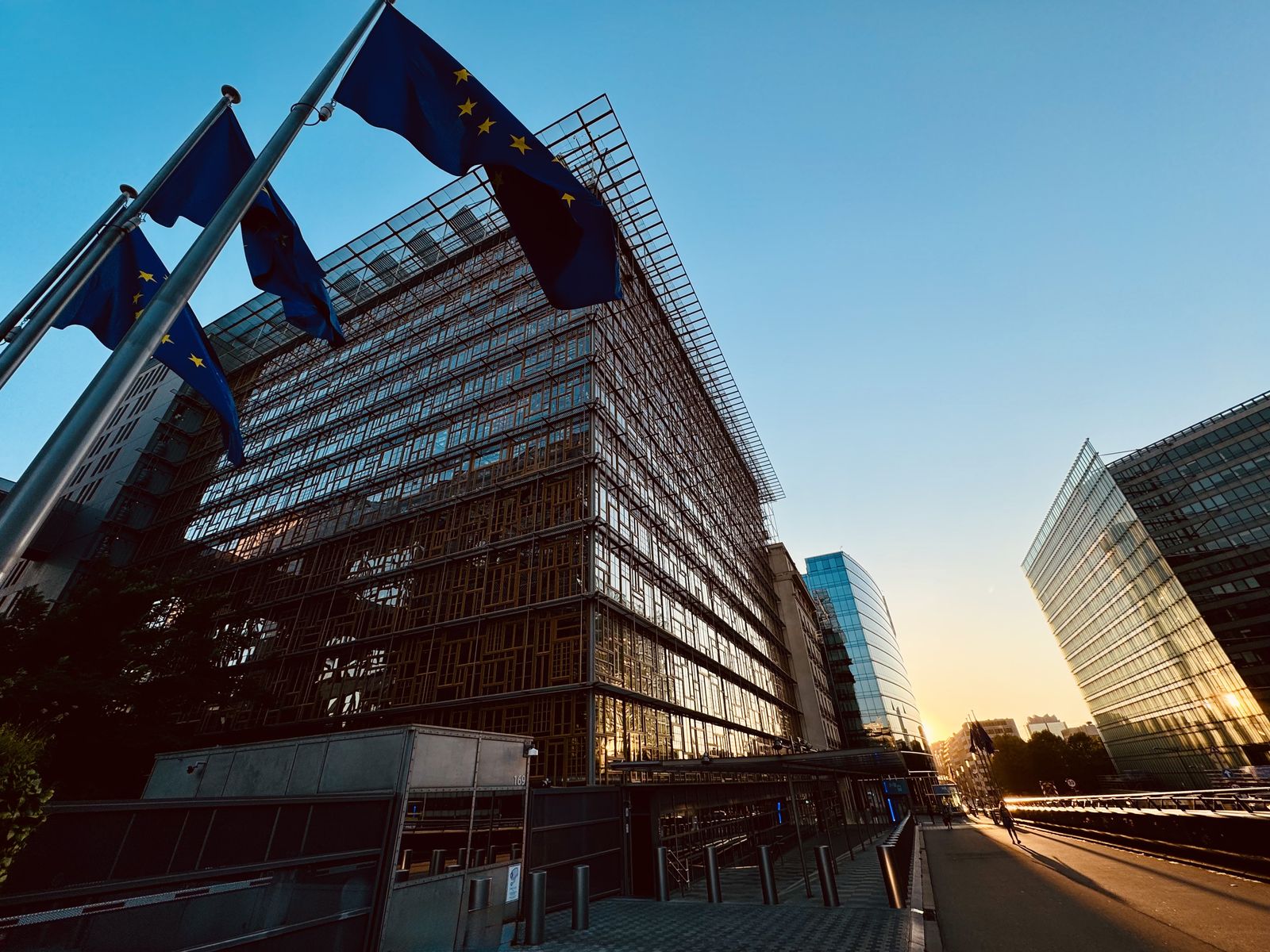
Image: File photo: the Europa building, home of the European Council, Brussels, 11 August 2024; not taken at this summit. Photo: Cbliu, CC BY-SA 4.0, via Wikimedia Commons (https://commons.wikimedia.org/wiki/File:Europa_building_2024.jpg)
About this article: prepared by The Daily Context editorial desk using automated, source-based reporting from the publications linked below. No reporter was on the ground.
Sources
- Euronews live blog: EU summit talks in chaos as 'frugal' leaders boycott Costa's format (26 November 2026): https://www.euronews.com/2026/11/26/eu-summit-leaders-ready-to-spar-over-new-budget-and-ukraine-aid
- Rapporteur: Costa's special EU budget summit fails (26 November 2026): https://www.rapporteur.com/news/euco-costas-special-eu-budget-summit-fails/
- DW live coverage: At odds over budget, EU leaders break off summit early (26 November 2026): https://www.dw.com/en/at-odds-over-the-eu-budget-european-leaders-cut-summit-short-dw-has-more/live-80056415
- Reuters: EU's Costa aims to bring leaders closer to budget deal, as objections remain (26 November 2026): https://www.reuters.com/3fec1b0a85a0/world/eus-costa-aims-bring-leaders-closer-budget-deal-objections-remain-2026-11-26/
- Lovguiden: EU summit on 2028–2034 budget, Parliament rejects Costa's 0.97% proposal (26 November 2026): https://www.lovguiden.dk/en/det-offentlige/europa-parlamentet/2026-11-26-eu-summit-on-2028-2034-budget-parliament-rejects-costas-0-97-proposal
- Euronews: 'A lot of political theatre': EU summit ends in disarray as leaders cling to red lines (27 November 2026): https://www.euronews.com/2026/11/27/a-lot-of-political-theatre-eu-summit-ends-in-disarray-as-leaders-cling-to-red-lines
Kabeer Ahmad
Kabeer Ahmad is the founder and editor of The Daily Context. He oversees the site's source-based coverage of world affairs, technology, business, entertainment, lifestyle and sports, and is responsible for its editorial standards, sourcing and corrections.