Houthi strike on Saudi Aramco's Jazan refinery kills worker as oil heads for first weekly gain this month
A projectile hit Saudi Aramco's 400,000-barrel-a-day Jazan refinery on Thursday, killing a Nepali worker and halting some operations, a day after the Houthis claimed a strike on Ras Tanura. Brent crude rose above $97 on Friday and is on course for its first weekly gain in November.
A "hostile aerial projectile" hit Saudi Aramco's Jazan refinery in south-west Saudi Arabia on Thursday 26 November, killing a Nepali worker, injuring several others and temporarily halting some operations, Saudi Arabia's Energy Ministry said. The Saudi-led military coalition fighting in Yemen blamed the Houthis and said it struck back, destroying what it described as 50 military targets in Yemen.
The attack came a day after the Houthis said they had struck Ras Tanura, the kingdom's largest refinery, on the Gulf coast. Together with continuing attacks on tankers near the Strait of Hormuz, it has pushed oil higher. Brent crude, the international benchmark, traded at $97.30 a barrel at 09:35 GMT on Friday (2:35pm in Pakistan), its highest level since 9 November, Reuters reported. It is on course for its first weekly gain this month.
What happened at Jazan?
In a statement carried by the Saudi Press Agency, the Energy Ministry said the projectile set off a fire that was later brought under control and that some operations were temporarily suspended. It said the injured workers were of different nationalities and were receiving medical care. Emergency and technical teams were assessing the damage and checking the safety of the facilities. The ministry did not say how long the affected units would be offline or name the attacker.
The coalition's spokesman, Major General Turki al-Maliki, said the Houthis had targeted the refinery and warned that "targeting civilians and civilian infrastructure would be met with a firm military response". The coalition later said it had destroyed a ballistic missile launch platform in Yemen's Hodeidah province that it said had been used in the attack, and that it had destroyed 50 "legitimate military targets" in the Sanaa, Hodeidah and Saada governorates. It gave no details of the targets. The Houthis had made no immediate statement about the Jazan strike, Al Jazeera reported.
The refinery, close to the Yemeni border on the Red Sea coast, is designed to process up to 400,000 barrels of crude oil a day.
What else has been hit this week?
The Jazan strike is the latest in a run of attacks on Saudi targets since Yemen's civil war reignited in July. Reuters describes that escalation as a spillover from the US-Iran war.
- Ras Tanura, Wednesday 25 November. Houthi military spokesman Yahya Saree said the group attacked the refinery, which has capacity of about 550,000 barrels a day and sits next to a major crude export terminal. Satellite images from NASA and Planet Labs showed thick black smoke over the site, Reuters reported. The coalition said it intercepted four drones over Ras Tanura but did not say whether the refinery was hit. The Saudi government and Aramco did not immediately respond to Reuters' requests for comment.
- Jazan port and Jeddah, Wednesday. The coalition said a Houthi projectile fell at Jazan port, causing minor damage and no injuries, and that it intercepted a drone near Jeddah Islamic Port.
- Riyadh, Tuesday 24 November. Saudi civil defence said 11 people were injured in a strike on the tower in the King Abdullah Financial District that houses the headquarters of the Public Investment Fund, the kingdom's sovereign wealth fund.
Earlier attacks have disrupted some Aramco operations, led to the cancellation of most international flights to Riyadh and forced Saudi Arabia to postpone or cancel events including football's AFC Asian Cup and the FII investment conference, Reuters reported. The Houthis say their aim is to pressure Saudi Arabia into lifting its blockade of Yemen.
How have oil prices reacted?
Brent settled at $96.57 a barrel on Thursday, according to Daniel Richards, senior economist at Emirates NBD, who said its three-session gain was roughly 8%. On Friday, Brent was up 73 cents, or 0.8%, at $97.30 by 09:35 GMT, Reuters reported. US West Texas Intermediate (WTI) was at $85.85, up 2.6% from Wednesday's close. There was no WTI settlement on Thursday because of the US Thanksgiving holiday. The National reported that Brent was on track for a weekly gain of about 7%, its first weekly rise this month, after three straight weekly losses.
The refinery attacks are only part of the picture. The National, citing Kpler data, said tanker traffic clearing the Strait of Hormuz averaged 9.25 million barrels a day in the seven days to 24 November. That is about 54% of the pre-war level of 17.14 million. A projectile exploded near a tanker about 93km west of Dubai on Thursday. In Kuwait, two Italian technicians were killed in a drone attack that Kuwait blames on Iran, which Tehran denies.
What is a refinery outage's effect on prices? A refinery turns crude oil into fuels such as petrol, diesel and jet fuel. A refinery outage mainly tightens fuel markets. Attacks near export terminals such as Ras Tanura matter more for crude prices because they threaten oil leaving the region. Jazan's partial halt is, on what has been disclosed so far, a smaller supply event than a disruption to exports. Its main effect on markets is that it adds to fears over Saudi infrastructure.
What are analysts saying?
The comments below are analysts' views, not forecasts by The Daily Context.
"We think Brent can still push above $100 a barrel without another major escalation in the Middle East, but that increasingly requires evidence of constrained deliverable supply," ANZ analysts Brian Martin and Daniel Hynes wrote in a note quoted by Reuters.
Bjarne Schieldrop of SEB said prices in the Gulf of Oman suggested ample supply for now, but that assuming this would last was "probably a faulty assumption". He pointed to the Houthis' attacks on Saudi Arabia and their partial control of the Bab el-Mandeb Strait, the southern entrance to the Red Sea: "you may not want to sit short oil, to put it mildly."
Prices had slipped in previous weeks partly because investors were relieved that President Donald Trump did not step up military action against Iran after the US midterm elections, Reuters said. On Thursday Trump told US service members that victory over Iran was "at hand" while urging Tehran to make a deal, Anadolu Agency reported.
What is the human cost in Yemen?
The World Health Organization reported that, as of Monday 23 November, 2,361 people had been killed and 10,982 injured since fighting in Yemen escalated in August, Al Jazeera reported. The UN says more than 360,000 people have fled their homes since the start of August. On Thursday, Saudi-backed Yemeni government forces said they carried out 767 strikes on Houthi positions. Those figures come from one side of the conflict and have not been independently verified.
What happens next?
OPEC+, the group of oil producers that includes Saudi Arabia and Russia, meets on Sunday 29 November. Three people familiar with the talks told Reuters there was an agreement in principle to keep output targets unchanged for at least the first quarter of 2027. Emirates NBD's Richards said "supply risks dominate" ahead of the meeting. Markets will also watch for any Saudi or Aramco update on when Jazan's halted units restart and on whether Ras Tanura was damaged, and for a Houthi response to the coalition's strikes.
Limitations. Saudi Arabia has not published damage assessments for Jazan or Ras Tanura, and the Houthis' and coalition's battlefield claims cannot be independently checked. Oil prices can move sharply on new attacks or on diplomatic news. This article is for information only and is not investment advice.
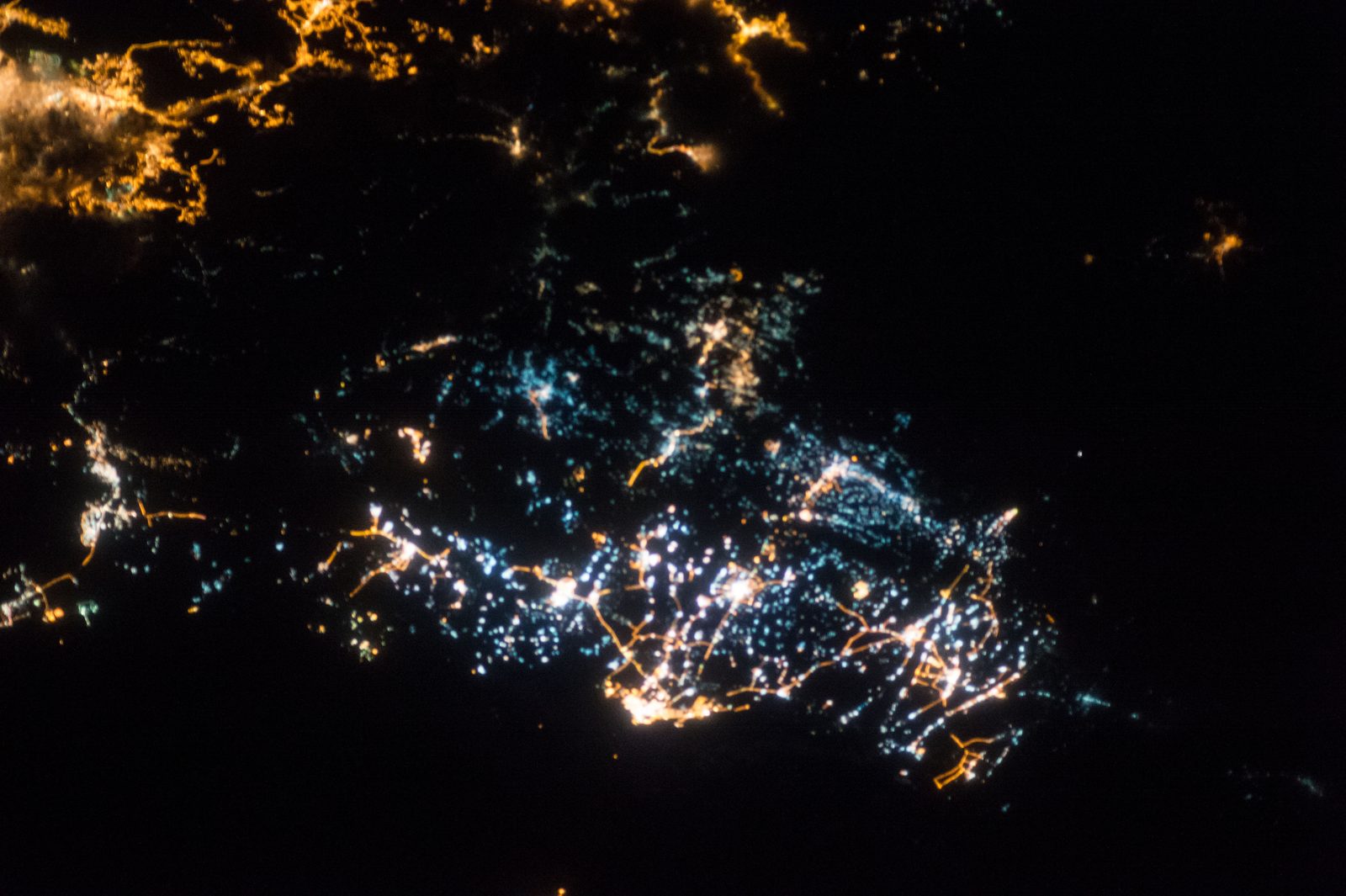
Image: File photo: the Jazan region of south-west Saudi Arabia at night, photographed from the International Space Station on 20 January 2015. It does not show Thursday's attack. Photo: NASA (ISS Expedition 42), public domain, via Wikimedia Commons (https://commons.wikimedia.org/wiki/File:ISS-42_Jazan_Region_at_night.jpg); resized
About this article: prepared by The Daily Context editorial desk using automated, source-based reporting from the publications linked below. No reporter was on the ground.
Sources
- Reuters via Investing.com: Oil on track to snap three-week losing streak over supply fears (27 November 2026): https://www.investing.com/news/commodities-news/brent-trades-near-months-high-as-mideast-conflict-threatens-supply-5052810
- Reuters via NBC News: Attack on Saudi Aramco's Jazan refinery kills worker, halts some operations (26 November 2026): https://www.nbcnews.com/world/saudi-arabia/attack-saudi-aramcos-jazan-refinery-kills-worker-halts-operations-rcna611484
- Al Jazeera / Reuters: Attack on Saudi's Jazan refinery kills one person, disrupts operations (26 November 2026): https://www.aljazeera.com/news/2026/11/26/attack-on-saudi-aramcos-jazan-refinery-kills-worker-disrupts-operations
- Saudi Gazette: Nepali national killed, several wounded in Houthi attack on Jazan refinery (27 November 2026): https://saudigazette.com.sa/article/666574/world/nepali-national-killed-several-wounded-in-houthi-attack-on-jazan-refinery
- Saudi Gazette: Coalition destroys 50 Houthi military targets and ballistic missile launcher in Yemen (27 November 2026): https://saudigazette.com.sa/article/666569/saudi-arabia/coalition-destroys-50-houthi-military-targets-and-ballistic-missile-launcher-in-yemen
- Reuters via CBC News: Yemen's Houthis claim attack on major Saudi oil refinery (25 November 2026): https://www.cbc.ca/news/world/yemen-houthi-saudi-arabia-strikes-9.7435269
- The National: Oil set to post weekly gain as Middle East attacks stoke supply concerns (27 November 2026): https://www.thenationalnews.com/business/energy/2026/11/27/oil-set-to-post-weekly-gain-as-middle-east-attacks-stoke-supply-concerns/
- Anadolu Agency: Morning Briefing, 27 November 2026: https://www.aa.com.tr/en/world/morning-briefing-nov-27-2026/4139900
Kabeer Ahmad
Kabeer Ahmad is the founder and editor of The Daily Context. He oversees the site's source-based coverage of world affairs, technology, business, entertainment, lifestyle and sports, and is responsible for its editorial standards, sourcing and corrections.