Australia passes law making LNG exporters reserve up to 20% of gas for home market
Australia's parliament has passed a domestic gas reservation scheme that will require liquefied natural gas exporters to set aside up to 20% of their production for local buyers from 1 January 2028. Western Australia is exempt, so the rules will mainly hit the three east coast LNG projects run by Origin Energy, Shell and Santos in Queensland.
Australia will require its liquefied natural gas (LNG) exporters to keep up to 20% of their production for the domestic market from 1 January 2028, after parliament passed the Albanese government's gas reservation scheme on Friday 27 November. The government says the law will put downward pressure on gas prices for households and manufacturers. Gas producers say it will discourage the investment needed for new supply.
The Senate passed the package late on Thursday after the opposition Liberal-National Coalition said it would not block it. The House of Representatives, which had to sit for an extra day, agreed to the Senate's amendments on Friday morning. That sent the Domestic Gas Reservation Bill 2026 and two related bills into law, according to the parliamentary record and the Department of Industry, Science and Resources.
"Gas heats Australian homes, it firms renewable energy, it is essential to manufacturing... and we will now have for the first time legislation preserving Australian gas for Australians," Prime Minister Anthony Albanese told reporters after the vote, Reuters reported. He did not say how much prices would fall.
What does the new law actually require?
From 1 January 2028, anyone exporting LNG from Australia will need an export licence. Licence holders will carry a "domestic supply obligation", meaning they must make a share of their gas available to Australian buyers. The share is capped at 20% of exports. The Australian Energy Regulator (AER) will run the scheme and set how much gas is needed each year, based on forecasts of local supply and demand.
The scheme is deliberately designed to put more gas on the local market than buyers are expected to need. The AER's calculation targets about 10% more gas than forecast demand, which the government argues will push prices down. Exporters that fall short do not escape the obligation: unmet volumes can be carried into later years. Producers can defer up to 10% of their obligation, the ABC reported.
The Senate agreed to 39 government amendments to the main bill before it passed, according to Parliament's bill tracker. A separate levy bill, which funds the scheme, passed without changes.
The department said the package responds to the government's 2025 Gas Market Review and is part of its "Future Made in Australia" industrial policy.
Who will be affected?
In practice, the law is aimed at Australia's east coast. Western Australia, which supplies about two-thirds of the country's LNG exports, has had its own 15% gas reservation policy for about two decades and is not connected to the east coast pipeline network. The federal government agreed last week to exempt the state, which cleared the way for the Coalition's support.
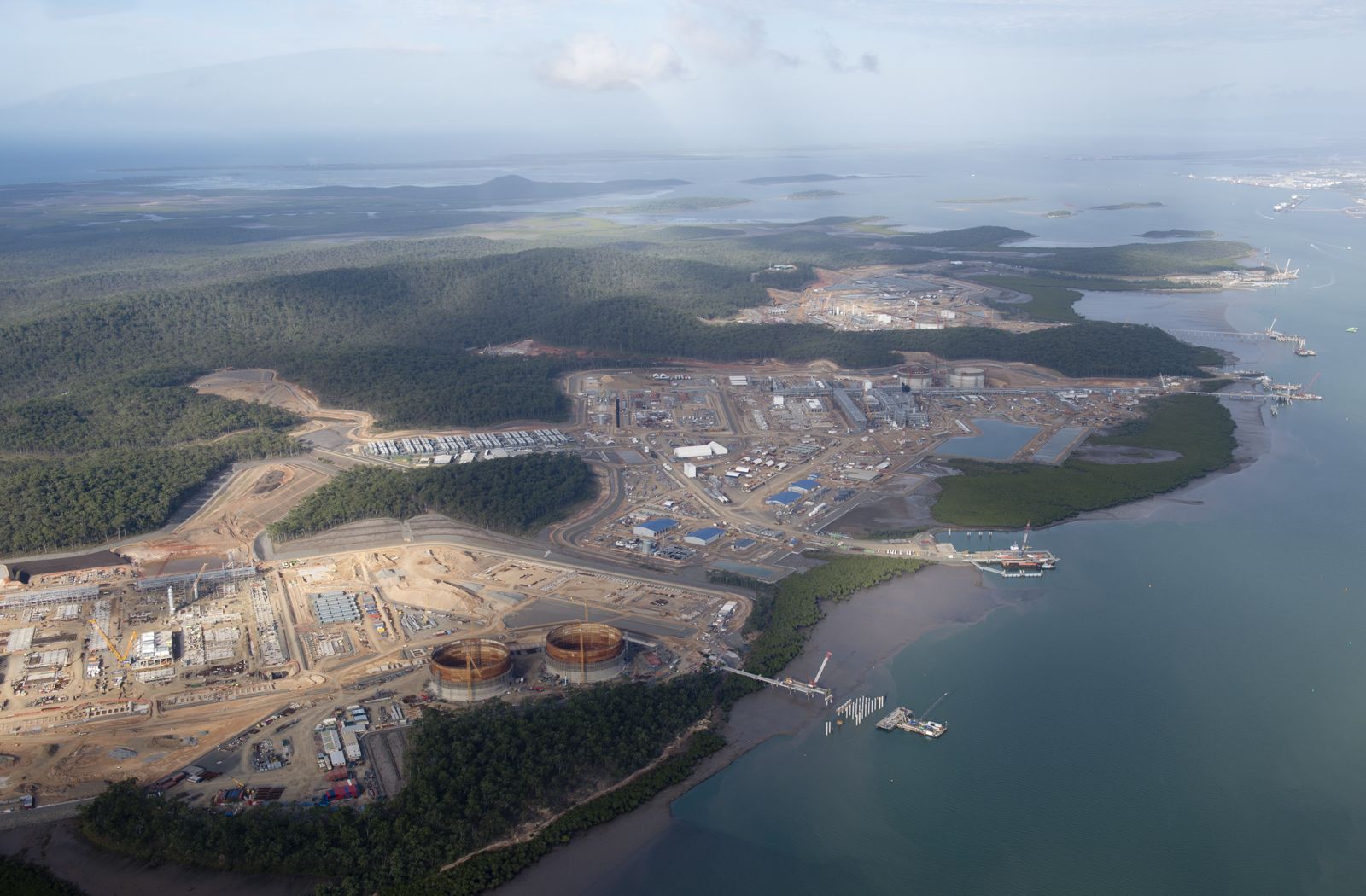
That leaves three LNG export projects, all on Curtis Island near Gladstone in Queensland and operated by Origin Energy, Shell and Santos, Reuters reported. They mainly ship gas to China, Japan, South Korea and Malaysia. Bloomberg described the law as an upset to LNG exporters.
Why did the government want it?
East coast gas prices rose sharply after Queensland began exporting LNG in 2015. A 2021 Reserve Bank of Australia analysis found wholesale prices outside Western Australia roughly doubled after the exports began, the ABC reported. The gap has stayed. Western Australia recorded an average domestic price of A$7.45 a gigajoule in 2024–25, while east coast buyers were signing long-term contracts at around A$12 to A$13, according to Australian Competition and Consumer Commission figures cited by the ABC.
Supply has also tightened as older gas fields off Victoria, long the east coast's main source, run down. Some exporters have bought gas from the domestic market to meet their export contracts. Gas costs were cited as a factor in the closure of the plastics maker Qenos and Incitec Pivot's Gibson Island fertiliser plant in Brisbane.
Resources Minister Madeleine King said the scheme would create a permanent buffer between international prices and the local market. It would bring "to an end over a decade of crisis-driven ad hoc market interventions", she said. On Friday she declined to name a target price. "The experience with price caps when you name a figure is that it also becomes the floor," she said, according to Region Canberra.
Why does the gas industry object?
Australian Energy Producers, the industry's main lobby group, said the government had "missed a critical opportunity to fix fundamental flaws" in the law. Chief executive Samantha McCulloch said keeping the "must sell" rule and the 10% oversupply target would "destroy investment signals for new gas supply" and crowd out producers that sell only to the domestic market. She also argued that intervention was not needed because domestic prices were currently "low and stable" despite high international prices. The group welcomed the Western Australia carve-out.
The Business Council of Australia was more cautious. Chief executive Bran Black said the policy should be judged on whether it supports investment, lowers energy costs and protects Australia's "reputation as a reliable trading partner", adding that "getting the implementation right will therefore be critical."
The opposition backed the bill but pushed for changes. Shadow resources minister Susan McDonald said the Coalition would not oppose it "because we want reliable and affordable gas for Australians". She said the opposition still worried it could deter investment in new gas projects. The Coalition had sought more flexibility over the 10% oversupply target and a larger share of obligations that could be deferred.
The Greens argued that the major parties had settled for the wrong policy. Their leader, David Shoebridge, said the country needed a tax on gas exports and that a 25% minimum would raise A$17 billion.
What does it mean for Asian LNG buyers?
The law takes effect in 2028 and caps reserved volumes at 20% of exports. The exact amount set aside in any year will depend on the regulator's forecasts, so the impact on overseas customers is not yet clear. Buyers in Japan, South Korea and China that rely on Queensland cargoes will be watching how the AER sets the first obligations. Western Australia's larger export projects are outside the national scheme.
What happens next?
The scheme will not start for two years. Much of the detail, including how the AER will calculate each exporter's obligation and how compliance will be enforced, still has to be worked out. Australian Energy Producers said there was "significant detail still to be developed" before 2028, and the government "must now take responsibility for delivering a workable reservation policy".
For households, any effect on bills will depend on how much extra gas reaches the east coast market and how quickly. With the scheme starting in 2028, short-term prices will not change because of it. This article is for information only and is not investment advice.
Image: File photo: LNG plants under construction on Curtis Island, near Gladstone, Queensland, June 2013; not taken this week. Photo: Lock the Gate Alliance, CC BY 2.0 (https://creativecommons.org/licenses/by/2.0/), via Wikimedia Commons (https://commons.wikimedia.org/wiki/File:Curtis_Island.jpg); resized
About this article: prepared by The Daily Context editorial desk using automated, source-based reporting from the publications linked below. No reporter was on the ground.
Sources
- Department of Industry, Science and Resources: New national framework for energy security and affordable gas (27 November 2026): https://www.industry.gov.au/news/new-national-framework-energy-security-and-affordable-gas
- Parliament of Australia (ParlInfo): Domestic Gas Reservation Bill 2026, bill progress: https://parlinfo.aph.gov.au/parlInfo/search/display/displayPrint.w3p;query=Id%3A%22legislation%2Fbillhome%2Fr7559%22;rec=0
- Reuters via The Straits Times: Australia clears law requiring LNG exporters to keep 20% for domestic use (27 November 2026): https://www.straitstimes.com/asia/australianz/australian-parliament-passes-government-plan-to-reserve-20-of-lng-for-domestic-market
- ABC News: Australia's domestic gas reservation scheme passes parliament with Coalition backing (26 November 2026): https://www.abc.net.au/news/2026-11-26/gas-reservation-scheme-set-to-pass-parliament/107430804
- Australian Energy Producers: Statement on the domestic gas reservation legislation passing the Senate (26 November 2026): https://energyproducers.au/news/statement-on-the-domestic-gas-reservation-legislation-passing-the-senate
- Region Canberra: Parliament extended to allow MPs to pass Labor's gas reservation scheme (27 November 2026): https://region.com.au/parliament-extended-to-allow-mps-to-pass-labors-gas-reservation-scheme/1019109/
- Bloomberg: Australia Passes Gas Reserve Law in Upset to LNG Exporters (26 November 2026): https://www.bloomberg.com/news/articles/2026-11-26/australia-set-to-pass-gas-reserve-law-in-upset-to-lng-exporters
Kabeer Ahmad
Kabeer Ahmad is the founder and editor of The Daily Context. He oversees the site's source-based coverage of world affairs, technology, business, entertainment, lifestyle and sports, and is responsible for its editorial standards, sourcing and corrections.