Netflix buys Hollywood's Radford Studio Center for $380m at a deep discount
Netflix has bought the 98-year-old Radford Studio Center in Los Angeles for $380 million, about a fifth of the $1.85 billion its previous owner paid in 2021. It is the streamer's first owned studio lot in the LA area.
Netflix has bought Radford Studio Center, one of Hollywood's oldest working studio lots, for $380 million. The streamer announced the purchase on Tuesday 24 November, after the lenders who had taken control of the 55-acre site in Studio City, Los Angeles, sold it directly to Netflix instead of to a bidder at a foreclosure auction.
The price is a fraction of the $1.85 billion the previous owner, Hackman Capital Partners, paid with Square Mile Capital Management in 2021, near the peak of the streaming-era production boom. It is the first time Netflix has owned a studio lot in the Los Angeles area; until now it has mostly leased its production space.
What exactly has Netflix bought?
Radford opened in 1928, founded by the silent-film producer Mack Sennett, and was later known as Republic Studios and then CBS Studio Center. Netflix's announcement lists Gunsmoke, Gilligan's Island, The Mary Tyler Moore Show, Seinfeld and That '70s Show among the programmes made there; the Los Angeles Times adds Leave It to Beaver and Will & Grace, and notes the lot's old nickname, "Hit City".
The site covers about 1.14 million square feet. According to its published specifications, cited by Deadline, it has 22 stages, 210,000 square feet of office space and 172,737 square feet of support space; the Los Angeles Times reports 18 office buildings and 20 bungalows.
On top of the $380 million price, Netflix paid Los Angeles's Measure ULA transfer tax, a 5.5% levy on property sales above about $10.9 million, according to Variety and TheWrap. That takes the total cost to roughly $400 million.
Why was it so cheap?
Hackman bought the lot from what was then ViacomCBS at a time when streaming services were spending heavily on original content and soundstage space in Los Angeles was scarce. That market turned. Production volumes fell after the 2023 writers' and actors' strikes, as studios cut spending and more shoots moved to cheaper locations, while higher interest rates made property debt more expensive.
Hackman defaulted on its $1.1 billion loan in January, according to the Los Angeles Times, and the property passed to a group of lenders led by Goldman Sachs. The lenders formally took it back at a foreclosure auction on 24 November, the final step before the sale to Netflix could close. Hackman had proposed a $1 billion renovation of the ageing lot in 2023 but never completed its upgrades.
In a statement quoted by the Los Angeles Times, Hackman said it was "disappointed" to lose Radford but welcomed "the prospect of the property continuing as a working production campus under new ownership". David Smith, interim dean of Pepperdine University's Graziadio Business School, told the paper Netflix was "stepping at the bottom of the cycle" and that, given the cost of building 22 soundstages, "this is a good deal for them".
What has Netflix said it will do with the lot?
The company said its goal is "to maintain operational continuity, retain the existing studio team and strengthen Radford's position as a premier production destination". It has hired ZVantage, the entertainment advisory arm of Zello, to run the transition through its Backlot Studio Services platform, with Cinelease supplying production equipment. Productions currently filming on the lot will continue as normal in the near term, according to people familiar with the deal quoted by Deadline and the Los Angeles Times.
Netflix said more than 45 of its shows and films are confirmed to shoot across Los Angeles this year. "There's still a long way to go, but we are hopeful that with the partnership of the State of California and the City of Los Angeles, this will be the start of a meaningful new investment in California's film industry," it said.
Variety reports that Netflix is expected to continue the planning-approval process Hackman began with the city, keeping redevelopment options open. The company has no immediate plans to move its Hollywood office headquarters, where several years remain on its leases.
Why does it matter for Los Angeles?
The purchase comes as the city's production industry struggles to recover. FilmLA, which issues location permits, reported on 21 October that on-location shooting in Greater Los Angeles totalled 4,171 shoot days in July–September 2026, down 4.8% from a year earlier. California raised its film and television tax credit from $330 million to $750 million a year in 2025; FilmLA says incentivised projects made up 40.3% of scripted on-location filming in the quarter, almost double their share a year before, but overall activity has kept falling.
Todd Holmes, an associate professor of entertainment media management at California State University, Northridge, told the Los Angeles Times he expected Netflix to consolidate productions at Radford to cut the cost of renting stages across the region, and that the deal would "signal to other companies that it's a good idea to do more things in L.A."
Netflix has also invested in production hubs outside California: it owns a studio complex in Albuquerque, New Mexico, and last year began building a roughly $1 billion campus at the former Fort Monmouth army base in New Jersey, both states with generous incentives.
What else is going on at Netflix?
The deal lands during an unsettled period for the company. The Los Angeles Times and Deadline report that Netflix recently laid off about 1,000 employees and made senior management changes. In an October shareholder letter, Netflix cut its 2026 free cash flow forecast from $12.5 billion to $12 billion "due primarily to the expected closing of a real estate transaction" in the fourth quarter, the Los Angeles Times reported — an apparent reference to Radford.
What happens next?
In the near term little should change for the crews and tenants on the lot. The longer-term questions are how much Netflix invests in modernising a near-century-old facility, how much stage space it keeps for its own shows versus renting to others, and whether the purchase is followed by more production returning to Los Angeles. This article is for information only and is not investment advice.
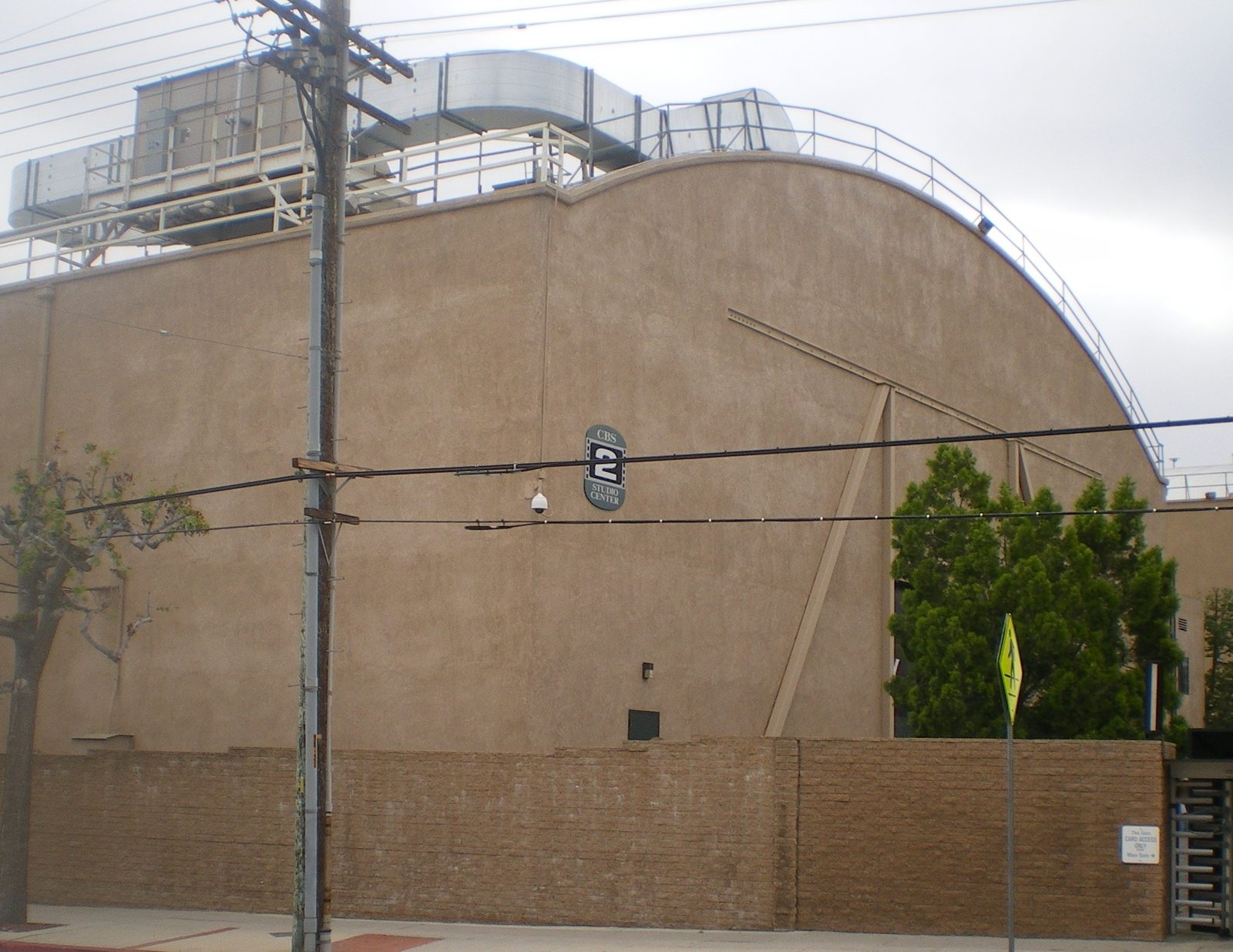
Image: File photo: Soundstage 2 at the lot then branded CBS Studio Center (now Radford Studio Center), Radford Avenue, Studio City, 7 January 2012. Photo: Cbl62, CC BY-SA 3.0 (https://creativecommons.org/licenses/by-sa/3.0/), via Wikimedia Commons (https://commons.wikimedia.org/wiki/File:CBS_Studio_Center,_Soundstage_2.JPG)
About this article: prepared by The Daily Context editorial desk using automated, source-based reporting from the publications linked below. No reporter was on the ground.
Sources
- Netflix: Deepening Our Commitment to Los Angeles: Netflix Purchases Radford Studio Center (24 November 2026): https://about.netflix.com/en/news/netflix-purchases-radford-studio-center
- Los Angeles Times: Netflix to buy Radford Studio Center in $380-million deal (24 November 2026): https://www.latimes.com/entertainment-arts/business/story/2026-11-24/netflix-to-buy-radford-studio-center-in-380-million-deal
- Variety: Netflix Closes $380 Million Acquisition of Radford Studio Center (24 November 2026): https://variety.com/2026/film/news/netflix-closes-380-million-radford-studio-center-1236957311/
- Deadline: Netflix Buys Radford Studios For Almost $400M (24 November 2026): https://deadline.com/2026/11/netflix-buys-radford-studios-1237232812/
- TheWrap: Netflix Acquires Radford Studio Lot for $380 Million (24 November 2026): https://www.thewrap.com/industry-news/business/netflix-radford-studio-lot-380-million-acquistion/
- FilmLA: Q3 2026 research update (21 October 2026): https://filmla.com/wp-content/uploads/FilmLA_News_Release_Q3_2026_Research_Update.pdf
Kabeer Ahmad
Kabeer Ahmad is the founder and editor of The Daily Context. He oversees the site's source-based coverage of world affairs, technology, business, entertainment, lifestyle and sports, and is responsible for its editorial standards, sourcing and corrections.