US proposes new tariffs on 14 economies over industrial overcapacity, including China, EU and India
The US trade representative has found that 14 economies, including China, the European Union, Japan and India, contribute to global industrial overcapacity in ways that hurt US commerce, and has proposed tariffs of up to 15% to 35% depending on the economy. Most proposed rates match caps in existing trade deals, China's would rise, and none is expected to take effect for at least a couple of months.
The United States has proposed a new round of tariffs on 14 trading partners, including China, the European Union, Japan and India, after concluding that their industrial policies feed global manufacturing overcapacity and harm US commerce. US Trade Representative Jamieson Greer announced the determinations on Wednesday 25 November 2026, at the end of investigations opened in March under Section 301 of the Trade Act of 1974.
The proposed rates are mostly between 15% and 20%. For most economies they are set at or below caps already agreed in trade deals with Washington, so the practical increase for many would be small. China is the main exception: officials said its overall tariff burden would go up. Greer told CNBC that none of the new duties was likely to take effect "earlier than a couple months from now".
Which economies are covered, and at what rates?
The determinations cover China, the EU, Japan, South Korea, Taiwan, India, Vietnam, Singapore, Switzerland, Indonesia, Malaysia, Thailand, Cambodia and Bangladesh. Mexico and Norway were also investigated, but USTR said it had not made determinations for them yet.
According to USTR's release, the proposed tariffs are:
- EU, Japan, South Korea, Taiwan and Switzerland: up to 15%, including existing most-favoured-nation duties, in line with the framework deals each has reached with Washington.
- Indonesia, Malaysia, Thailand, Cambodia and Bangladesh: up to 18%.
- China: up to 20% on most goods and up to 10% on goods in a separate annex, with exemptions for some products. USTR said this reflects the 20% rate agreed in the Kuala Lumpur arrangement between Donald Trump and Xi Jinping on 30 October 2025.
- India: up to 25%, falling to 17% if India reaches a reciprocal trade agreement with the US.
- Vietnam: up to 35%, or 20% with an agreement.
- Singapore: up to 20%, or 10% with an agreement or other satisfactory negotiations.
Each proposal includes product exemptions listed in annexes to the Federal Register notices.
Will tariffs actually go up?
For most partners, only slightly. Greer told CNBC that the rates are "not really additive" and that, in effect, "it'll look more like a top up... When it all nets out, it really will just top up a few percentage points." A senior US official told Politico Europe that, for the EU, the higher of this rate and the existing 10% duty from a separate forced-labour investigation would apply, rather than both added together.
China's burden will rise more. A senior official told reporters that the new 20% rate would come on top of tariffs of roughly 25% imposed during Mr Trump's first term over technology transfer. According to CNBC, the official said that would take US tariffs on Chinese goods to about 45%, varying by product. Reuters reported that the rate is designed to stay within a US-China trade truce that expires on 10 January.
Why is Washington doing this now?
The overcapacity cases are one of two Section 301 tracks the administration started in March, weeks after the US Supreme Court struck down Mr Trump's sweeping tariffs under the International Emergency Economic Powers Act. The other track, on forced labour, led to tariffs of 10% to 12.5% on dozens of countries, CNBC reported. Critics say the administration is using new legal authorities to rebuild the tariffs the court struck down. A lawsuit argues the forced-labour rationale is a pretext.
In its release, USTR said the 14 economies relied on practices such as industrial targeting, subsidies, weak labour protections and "financial repression" that "tilt the trade balance in their favor while eroding America's manufacturing base". Greer said that years of G7, G20 and WTO statements on overcapacity had "not resulted in change".
The announcement came despite Republican losses in the 3 November midterm elections. Bernd Lange, who chairs the European Parliament's trade committee, said: "Anyone who expected calmer waters after the midterm elections was mistaken."
How have China and the EU responded?
China rejected the premise before the reports were released. Foreign Ministry spokesman Guo Jiakun said on Wednesday that "the so-called issue of overcapacity does not really exist" and should not be used for "political manipulation". He added that trade wars serve no one's interests, according to China Daily.
The European Commission said it would study the findings but "strongly reject[s] the premise that Europe is a source of structural overcapacity", according to deputy chief spokesperson Olof Gill, quoted by Politico Europe. "To the contrary, Europe is among those most exposed to overcapacity," he said. Reuters reported that the Commission expects any US measures to respect the 15% ceiling agreed in 2025. Lange called USTR's conclusions "absurd".
What else did USTR announce?
In a separate move, USTR proposed changes to its July 2026 Section 301 action against Brazil, Reuters reported. The changes include a 10% tariff on Brazilian finished aircraft, which had been exempt and which a senior official called Brazil's fourth-largest export to the US, as well as higher charges on out-of-quota sugar. The aircraft duty could hit Embraer, and Brazilian outlet G1 reported that Embraer's shares fell about 7%. Brazil's foreign ministry said it would assess the impact.
The announcements came on a weak day for markets, already hit by a renewed sell-off in artificial-intelligence stocks. Reuters reported that the Nasdaq Composite opened down more than 3%.
What happens next?
These are proposals, not final duties. USTR has invited written comments and requests to appear at hearings by 5 January 2027, with public hearings starting on 25 January 2027. Final rates could still change, especially for India, Vietnam and Singapore, where the proposals depend on whether trade agreements are reached. Greer is expected to join EU trade ministers by video next Monday, according to Politico Europe, where the proposals and remaining US steel duties are likely to be discussed.
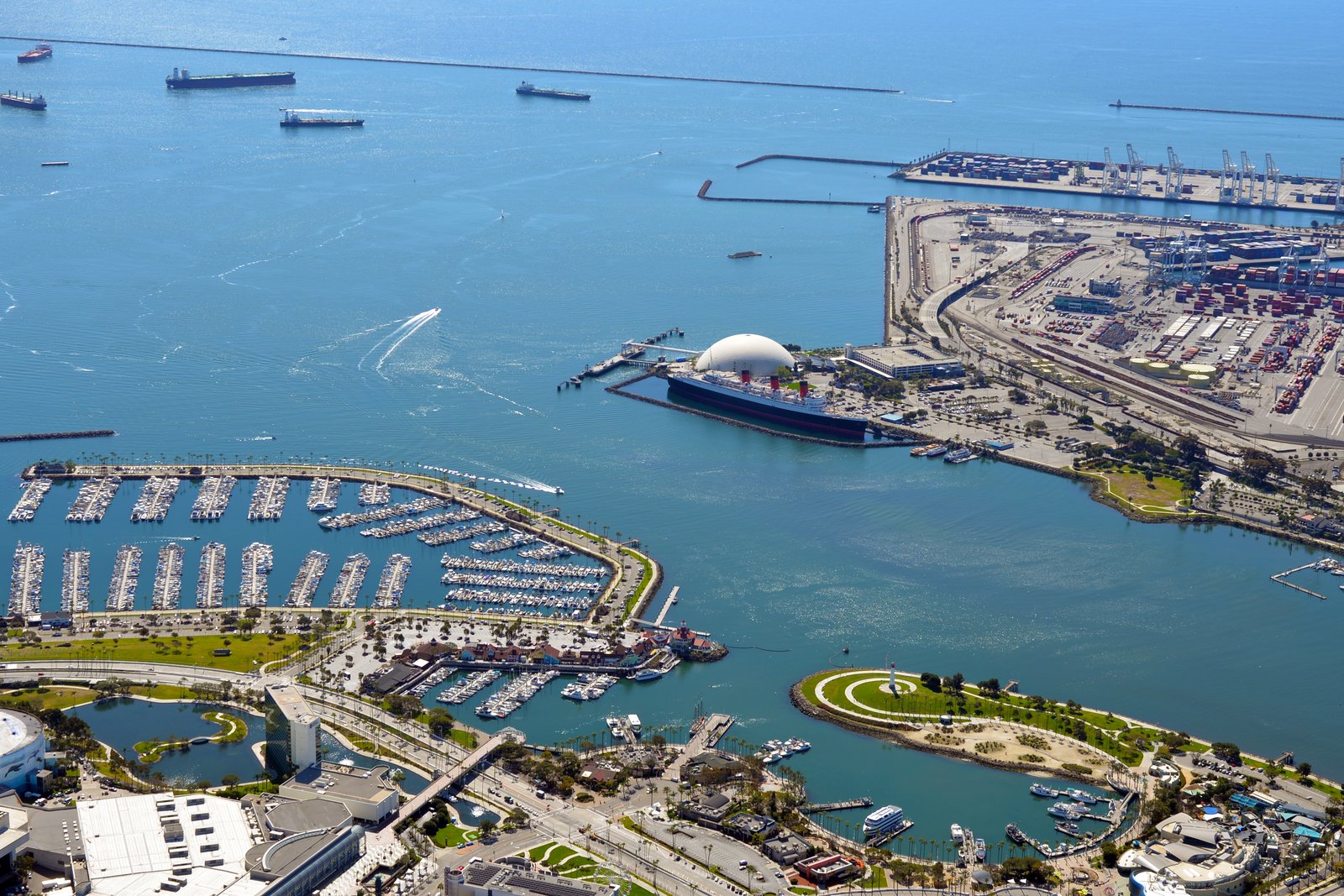
Image: File photo: the Port of Long Beach, California, one of the busiest US container ports, photographed in March 2020. Image: Don Ramey Logan, CC BY-SA 4.0 (https://creativecommons.org/licenses/by-sa/4.0/), via Wikimedia Commons (https://commons.wikimedia.org/wiki/File:Port_of_Long_Beach_aerial_by_Don_Ramey_Logan.jpg); cropped and resized
About this article: prepared by The Daily Context editorial desk using automated, source-based reporting from the publications linked below. No reporter was on the ground.
Sources
- Office of the US Trade Representative: USTR makes determinations and proposes actions in 14 Section 301 investigations relating to structural excess capacity (25 November 2026): https://ustr.gov/about/policy-offices/press-office/press-releases/2026/november/ustr-makes-determinations-and-proposes-actions-14-section-301-investigations-relating-structural
- Office of the US Trade Representative: USTR invites public comment on proposed modifications of the Section 301 action regarding Brazil (25 November 2026): https://ustr.gov/about/policy-offices/press-office/press-releases/2026/november/ustr-invites-public-comment-proposed-modifications-section-301-action-regarding-brazils-unreasonable
- Reuters: Trump unveils new tariffs to fight excess factory capacity, undeterred by midterms defeat (25 November 2026): https://www.reuters.com/3fec1b0a85a0/world/china/us-proposes-new-tariffs-14-trading-partners-fight-excess-factory-capacity-2026-11-25/
- CNBC: U.S. proposes new tariffs on 14 trading partners, including China and the EU (25 November 2026): https://www.cnbc.com/2026/11/25/us-tariffs-trump-section-301.html
- Politico Europe: EU rejects Trump's case for new tariffs (25 November 2026): https://www.politico.eu/article/eu-rejects-donald-trump-case-for-new-tariffs/
- China Daily: China warns against tariff war, rejects overcapacity narrative (25 November 2026): https://www.chinadaily.com.cn/a/202611/25/WS6b06a88ee4b03ebf8519ea08.html
- Business Recorder/Reuters: US must respect 15% tariff ceiling for EU, European Commission says (25 November 2026): https://www.brecorder.com/news/40450714
- Reuters via Investing.com: US proposes higher tariffs on Brazil imports, including 10% duty on aircraft (25 November 2026): https://www.investing.com/news/commodities-news/us-proposes-higher-tariffs-on-brazil-imports-including-10-duty-on-aircraft-5050713
- G1: Ações da Embraer caem 7% após EUA proporem tarifa de 10% (25 November 2026): https://g1.globo.com/economia/noticia/2026/11/25/acoes-embraer-eua.ghtml
Kabeer Ahmad
Kabeer Ahmad is the founder and editor of The Daily Context. He oversees the site's source-based coverage of world affairs, technology, business, entertainment, lifestyle and sports, and is responsible for its editorial standards, sourcing and corrections.