Poundland collapses into administration with up to 11,000 jobs at risk before Christmas
Poundland, the UK and Ireland discount chain with about 600 stores, has entered administration with AlixPartners appointed after its US owner Gordon Brothers rejected rescue bids. Shops stay open for now, but the business is expected to be broken up, putting 10,000 to 11,000 jobs at risk.
Poundland has collapsed into administration, putting between 10,000 and 11,000 jobs at risk across about 600 stores in the UK and Ireland just weeks before Christmas. The retailer's directors appointed AlixPartners as administrators on Wednesday 25 November after its US owner, the investment firm Gordon Brothers, rejected last-minute offers to buy the business as a going concern.
All shops and distribution centres remain open and trading for now. But AlixPartners said a sale process "did not identify a viable solvent solution for the business as a whole", and the chain is widely expected to be broken up, with rival retailers taking parcels of stores and many others likely to close.
Why did Poundland collapse?
Poundland, founded with a single store in Burton upon Trent in 1990 and the UK's first nationwide single-price retailer, has struggled for years with rising costs and heavy competition from B&M, Home Bargains, Savers, online sellers and the big supermarkets, the Guardian reported.
Gordon Brothers bought the chain for a nominal £1 from European retail group Pepco in 2025 and backed a restructuring that closed more than 100 shops, according to RTE. It launched a sale process in September, saying the business remained "challenged and vulnerable" despite improvements.
In a note to staff, managing director Barry Williams said Gordon Brothers had removed "all borrowing facilities and access to our bank accounts" on 27 October and that adequate funds had not been released since, the BBC reported. "Under these circumstances, it is impossible for the board of directors to see how Poundland can continue to operate as a going concern," he wrote. Without enough money to restock, shelves had begun to empty during the peak Christmas trading period, the Guardian said.
Gordon Brothers said it had "explored every avenue to secure a sale of the whole company", that it had lent the business £85m over a year, and that Poundland was "still vulnerable to inflationary pressures or any downturn in sales and margin". It said it had stepped in during 2025 "when no one else was willing to finance the business".
Who tried to buy it, and why did the bids fail?
A central sticking point was a shareholder loan of about £30m that Gordon Brothers inherited when it bought the chain: £22.5m owed to Gordon Brothers and £7.5m to Pepco, according to the BBC. Bidders offered to repay only part of it up front.
Northern Ireland-based Martin Property Group, which had worked with Poundland's management for about two months, offered to repay £5m immediately and defer the rest to 2030, the BBC said. London-based Xyra Group offered £12.5m up front but ran out of time, and Germany's Zachert Private Equity made a late offer. All were rejected. The Guardian reported that Gordon Brothers believed it could raise more from a break-up, selling stock and groups of stores to rivals, than from the solvent bids.
Tesco held talks about buying up to 150 shops, and Poundstretcher owner Fortress showed interest in as many as 250, while Iceland, Lidl and B&M were also understood to be interested in some sites, RTE reported.
What happens to stores, staff and customers now?
Shops, warehouses and Poundland's Dealz stores in Ireland will keep trading while the administrators pursue "all options including sales of the business and its assets, either in whole or part", AlixPartners said. It invited anyone interested in buying the business, and UK retailers with job vacancies, to contact it.
Estimates of the workforce vary slightly: AlixPartners said Poundland employs more than 10,000 people, while the BBC and RTE put the figure at about 11,000. In Ireland, Dealz employs 1,150 people across around 40 stores, according to RTE. The Guardian said as many as 30,000 jobs could ultimately be affected across stores, the supply chain and suppliers, and that about 2,000 suppliers stand to lose significant business and millions of pounds in payments for stock already delivered.
Bally Auluk, national officer for the shopworkers' union Usdaw, called it "devastating news" for members who had recently been praised for helping turn the business round, and criticised Gordon Brothers for "failing to engage" with the union. Kelvin Blake, 62, who has worked for Poundland for 25 years, told the BBC: "My income's gone."
How have politicians responded?
Prime Minister Andy Burnham said Poundland was "part of the fabric of high streets" and that the news just weeks before Christmas would be "deeply concerning for workers and their families". He added that administration "does give other potential buyers the opportunity to engage" and that the government would work to secure the best possible outcome.
Liam Byrne, the Labour MP who chairs the Commons business and trade committee, said he would recall Gordon Brothers to give evidence. He has accused the firm of taking millions of pounds out of Poundland "when the business was on a knife-edge"; documents provided to MPs showed close to £20m in interest and fees, the Guardian reported. Gordon Brothers has denied running the chain down for profit. Gordon Brothers' UK director Mark Newton-Jones met Business Secretary Jonathan Reynolds on Monday.
What comes next?
The immediate questions are how many stores can be sold to other retailers, how quickly, and whether any buyer emerges for a larger part of the business. Store closures and redundancies are likely once the administrators have tested demand, but no closure list has been published. Customers can keep shopping in the meantime, and the select committee hearing with Gordon Brothers is the next political flashpoint.
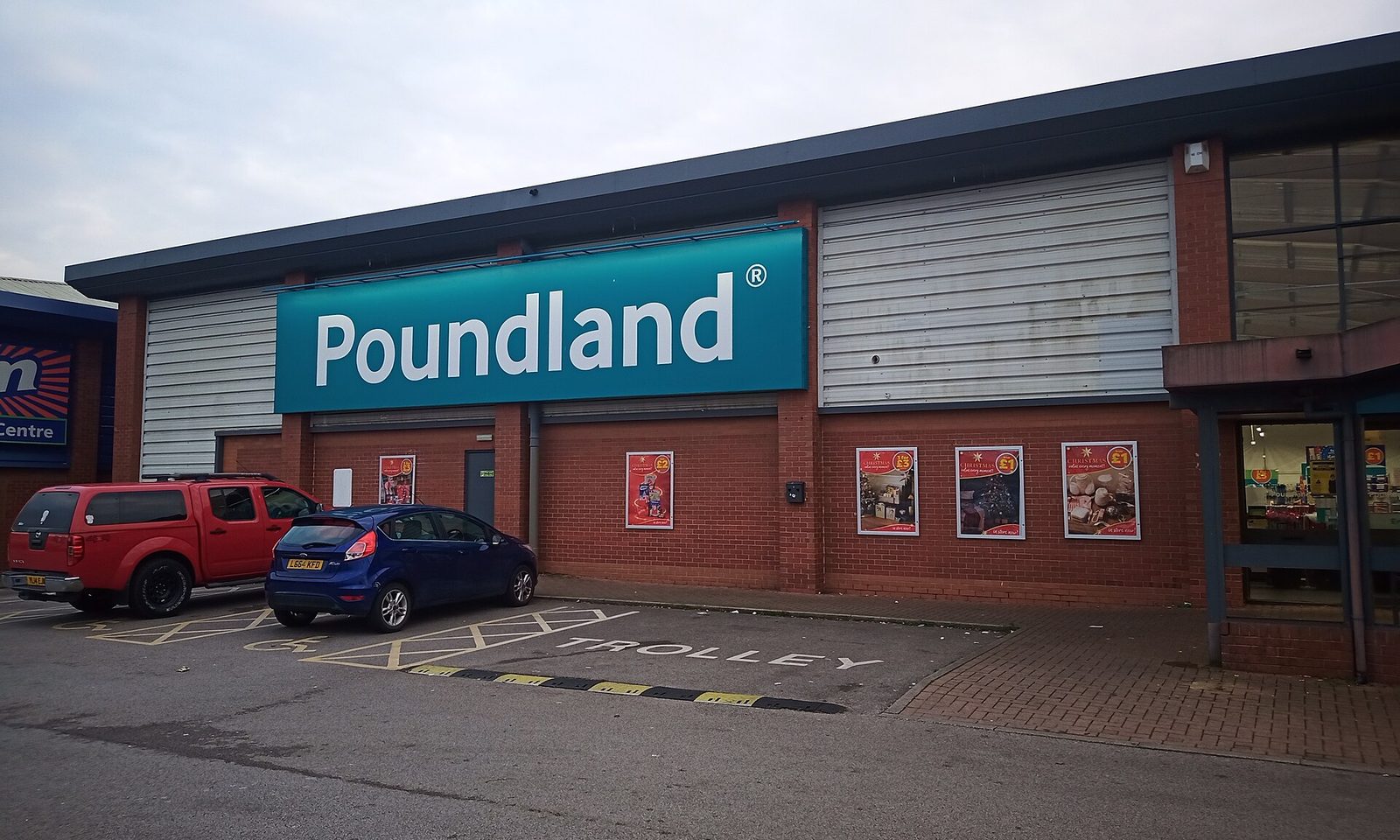
Image: File photo: Poundland store at South Baileygate retail park, Pontefract, photographed on 8 November 2026. Image: Mtaylor848, CC BY-SA 3.0 (https://creativecommons.org/licenses/by-sa/3.0/), via Wikimedia Commons (https://commons.wikimedia.org/wiki/File:Poundland,_South_Baileygate_retail_park,_Pontefract_(8th_November_2026)_001.jpg); resized
About this article: prepared by The Daily Context editorial desk using automated, source-based reporting from the publications linked below. No reporter was on the ground.
Sources
- The Guardian: Poundland collapses, putting more than 10,000 jobs at risk (25 November 2026): https://www.theguardian.com/business/2026/nov/25/poundland-administration-jobs-at-risk-gordon-brothers
- BBC News: Poundland collapses putting 11,000 jobs at risk (25 November 2026): https://www.bbc.co.uk/news/articles/cm3vgdn037z4o
- RTE News: Why has Poundland collapsed and what happens next? (25 November 2026): https://www.rte.ie/news/ireland/2026/1125/1600679-poundland-collapse-explainer/
- Retail Week: Poundland collapses into administration putting 11,000 jobs at risk (25 November 2026): https://www.retail-week.com/poundland-collapses-into-administration-putting-11000-jobs-at-risk/7052728.article
- BusinessDay / Reuters: UK discounter Poundland enters administration, putting 10,000 jobs at risk (25 November 2026): https://www.businessday.co.za/world/international-companies/2026-11-25-uk-discounter-poundland-enters-administration-putting-10000-jobs-at-risk/
Kabeer Ahmad
Kabeer Ahmad is the founder and editor of The Daily Context. He oversees the site's source-based coverage of world affairs, technology, business, entertainment, lifestyle and sports, and is responsible for its editorial standards, sourcing and corrections.