Hoax bomb threats hit thousands of schools in Italy, Scotland and Ireland
Emailed bomb threats reached about 6,300 state schools in Italy and hundreds more in Scotland, Northern Ireland and the Republic of Ireland on Wednesday, 11 November 2026, prompting precautionary evacuations. Police in every country involved said the threats were not credible, no explosives were found, and investigators are trying to trace the sender.
Thousands of schools in Italy and hundreds in Scotland, Northern Ireland and the Republic of Ireland received emailed bomb threats on Wednesday, 11 November 2026, in what police in all four jurisdictions described as a hoax. Italy's education ministry said a single message reached about 6,300 of the country's 7,476 state schools, and hundreds of buildings were evacuated as a precaution. No explosives or suspicious devices were reported found.
Italian Prime Minister Giorgia Meloni said checks had found no "concrete danger" and that the messages appeared to be part of "a strategy aimed at generating alarm and concern". The threats are the latest in a run of hoaxes and disruptive incidents across Europe in recent weeks, including fake bomb warnings that forced the diversion of more than 20 commercial flights on 5 November.
What happened in Italy?
According to Italian officials quoted by the BBC, one email arrived in the inboxes of about 6,300 state schools on Wednesday morning; private schools were not affected. Schools in Rome, Milan, Naples, Palermo, Bologna and other cities suspended lessons and evacuated pupils while police, bomb-disposal specialists and Italy's Postal Police, which handles online crime, carried out checks, CBS News reported.
The email, published by Italian media, began: "We have come to annihilate you." It claimed that a "powerful explosive device" with a remote detonator had been left in each building, and it also claimed a bomb had been placed in the Prime Minister's car. It was signed "Mikhail Andropov, leader of the Vilayat of Misoginistan".
Many schools quickly lifted their alerts. One Milan head teacher, Massimo Nunzio Barrella, told the Adnkronos news agency that he recognised the message as spam when it arrived at 08:59, chose not to evacuate and reassured parents who called, according to the BBC. Another, Anna Bertato, said she had checked the sender's address online and found it had already been flagged as spam.
Education Minister Giuseppe Valditara called the incident probably "a cyber-attack, not a genuine risk" and said there appeared to be a clear strategy behind the wave of threats. Meloni met her cabinet, intelligence services and cybersecurity experts later in the day. "Whoever is sending them wants our fear, lost days, suspicion and chaos," she said afterwards in a video message, the Associated Press reported.
This was the third wave of threats against Italian schools in about a month, after messages on 19 October and 2 November, when about 280 schools were targeted, according to Italian media cited by CBS News.
What happened in Scotland, Northern Ireland and Ireland?
Police Scotland said about 1,000 schools, from Dumfries and Galloway in the south to Aberdeenshire and Orkney in the north, received threatening emails, The Guardian reported; an earlier estimate had put the figure at 470. At least 300 schools in Northern Ireland were affected. The BBC, citing local authorities, put the combined Scottish and Northern Irish total at more than 700 earlier in the day.
Police Scotland said it had "immediately assessed" the messages as hoaxes. "Our advice is that there is no requirement to evacuate schools or keep children away from education based solely on the content of the emails," the force said. Some councils had already acted: Edinburgh said its schools were "briefly evacuated as a precaution", and Dumfries and Galloway council said children were sent home after most of its schools received messages. Glasgow told parents the threats were a hoax and that schools should not be evacuated.
Scotland's education secretary, Mairi McAllan, said there was no risk to the public and that specialist cyber-crime officers were working to identify the source. The BBC said the email sent to Scottish schools used similar wording to the Italian one and also referred to the name Mikhail Andropov, though as leader of a "Red Owl" project.
In Northern Ireland, education officials told schools to stay open unless advised otherwise by the Police Service of Northern Ireland (PSNI). Assistant Chief Constable Anthony McNally said the risk to the public was considered low, and police said the emails appeared to have originated outside the UK.
In the Republic of Ireland, the Garda Síochána said it was aware of a "generic communication" sent to a number of schools, had assessed it as "not credible" and was not advising any evacuations.
Who is behind the bomb threats?
No one has been identified or charged, and authorities have not formally attributed the threats. It is not yet confirmed that the Italian and British-Irish messages came from the same sender, although the BBC said they used similar wording and the same name.
The signature refers to a Russian misogynistic extremist group that, according to CBS News, was banned by Russian authorities several years ago. CBS News said a message using the same name was sent to airport authorities in Rome about two flights affected by the 5 November hoaxes. The BBC noted that the group later denied any link to false warnings. A name in an email is not evidence of who sent it, and investigators have not said whether it is genuine or used to mislead.
Northern Ireland's education minister, Paul Givan, said hoaxes sent to schools last month appeared to be "Islamist" and were signed "Allahu Akbar", but there has been no public confirmation of their origin, The Guardian reported.
Are the threats linked to wider hybrid attacks in Europe?
Officials have not established a link, but the school threats fit into a pattern that worries European governments. "Hybrid" threats are hostile actions that fall short of open military attack, such as sabotage, cyberattacks, disinformation and hoaxes designed to cause disruption and fear.
In recent weeks Europe has seen fake bomb warnings against commercial flights, threats to broadcasters, and cyberattacks on supermarket refrigeration systems and French blood banks, CBS News reported. We covered the French supermarket incidents here: https://www.thedailycontext.com/article/france-iran-supermarket-fridge-cyberattack-shahid-kaveh-november-2026
In October, the head of Britain's MI5, Sir Ken McCallum, said Russia remained "aggressor number one" and was escalating hybrid warfare while staying below the threshold that would trigger NATO's collective-defence clause, and that Iran had made a "major shift" in its efforts against the UK. Those are general assessments; neither government has been publicly blamed for Wednesday's emails.
What should parents and schools do?
Police in Scotland, Northern Ireland and Ireland all said the 11 November emails were not credible and that pupils did not need to be kept at home because of them. Police Scotland's guidance was that the content of the emails alone did not require evacuation. Schools are still advised to follow their own emergency procedures, stay alert and report anything suspicious on site to police. Parents should rely on updates from their school, local council or police rather than forwarded messages on social media.
What happens next?
Italy's Postal Police and Police Scotland's cyber and fraud unit are working with security and law-enforcement agencies in the UK and abroad to trace the source. Antonello Giannelli, president of Italy's national association of head teachers, said he hoped those responsible would be identified quickly. Mass emails of this kind are often routed through foreign or anonymised services, so tracing them can take time, and further waves cannot be ruled out.
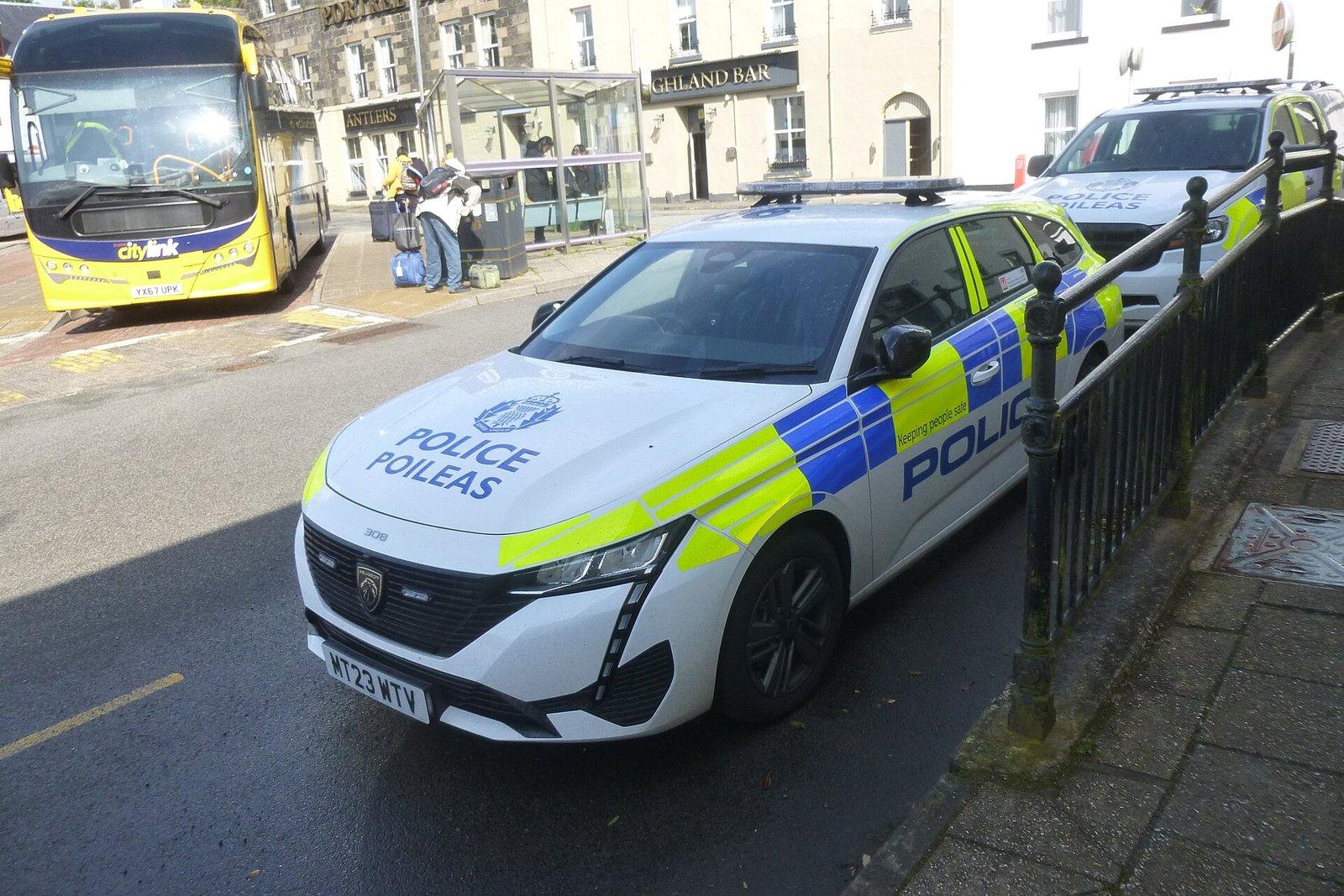
Image: Photo: JarroNevsbaru, CC BY 4.0 (https://creativecommons.org/licenses/by/4.0/), via Wikimedia Commons (https://commons.wikimedia.org/wiki/File:Scottish_Police_Car_Peugeot_308.jpg) — June 2024 file photo of a Police Scotland car in Portree, not connected to the 11 November threats
About this article: prepared by The Daily Context editorial desk using automated, source-based reporting from the publications linked below. No reporter was on the ground.
Sources
- BBC News (Paul Kirby): Schools in Italy, Scotland and Northern Ireland hit by threats in suspected bomb hoax, 11 November 2026 https://www.bbc.com/news/articles/cwz0k79pr8z2o
- The Guardian (Severin Carrell and Angela Giuffrida): Hoax bomb threats made to schools in Scotland, Northern Ireland and Italy, 11 November 2026 https://www.theguardian.com/education/2026/nov/11/bomb-threats-hoax-schools-scotland-northern-ireland
- CBS News (Anna Matranga and Mariia Kashchenko): Schools in Italy, U.K. and Ireland get hoax bomb threats amid concern over hybrid warfare targeting Europe, 11 November 2026 https://www.cbsnews.com/news/bomb-threat-schools-europe-italy-uk-ireland-hoaxes-hybrid-warfare-iran-russia/
- Associated Press: Italy's Meloni says cyberthreats are intended to spread fear after schools hit by bomb threat, 11 November 2026 https://apnews.com/article/italy-bomb-threats-schools-meloni-evacuation-0f312fda4ee2e9cdcebd0d6e1a40d9e8
- Euronews: Schools in Italy, Ireland and UK evacuated after hoax bomb threats that also target Meloni, 11 November 2026 https://www.euronews.com/2026/11/11/at-least-300-schools-in-italy-evacuated-after-emailed-bomb-threats
Kabeer Ahmad
Kabeer Ahmad is the founder and editor of The Daily Context. He oversees the site's source-based coverage of world affairs, technology, business, entertainment, lifestyle and sports, and is responsible for its editorial standards, sourcing and corrections.