Estonia to close Russia road border crossings after drone factory sabotage attempt
Estonia says it will close its three road border crossings with Russia, at Narva, Luhamaa and Koidula, to pedestrians and vehicles from 1 December 2026. The move follows a foiled attempt on 14 November to set fire to the drone maker Threod Systems near Tallinn, which Estonia's security service says was ordered by Russian military intelligence. Moscow denies involvement.
Estonia plans to close all three of its road border crossings with Russia, at Narva, Luhamaa and Koidula, to both pedestrians and vehicles from 1 December 2026. The government announced the step on Sunday, 15 November, a day after eight people were detained during an attempt to set fire to the premises of Threod Systems, an Estonian drone maker in Viimsi just north of Tallinn. Estonia's Internal Security Service (KAPO) says the attack was ordered by Russia's military intelligence agency, the GRU. The Kremlin has called the accusation baseless.
Nobody was hurt and, according to the Estonian government, the company's production and deliveries were not affected. The government is expected to formally decide the details of the closure, including whether it is temporary or indefinite, later this week.
What happened at Threod Systems?
According to Estonian officials, the attack began at about 3am on Saturday, 14 November. Suspects tried to break windows at the company's building and pour flammable liquid inside, with the aim, in KAPO's words, "of causing an explosion and setting the building on fire". Threod's own security staff intervened, and KAPO and the Police and Border Guard Board detained eight suspects.
Threod Systems makes long-range reconnaissance and attack drones. The BBC reported that its website lists Ukraine and Nato member states among its customers.
KAPO director general Margo Palloson said counter-intelligence work had established that Russia was behind the operation and that the GRU had coordinated it. That is the Estonian security service's assessment; it has not yet been tested in court. Prosecutor General Astrid Asi said investigators believe the suspects travelled to Estonia specifically to carry out the attack, and are examining each person's role and any links to others. Prosecutors asked a court to remand five of the eight in custody.
The suspects all live in Latvia. Accounts of their status differ slightly: Latvia's State Security Service (VDD) called them Latvian nationals, while the Latvian government was reported as saying four are Latvian citizens and four are not. Latvia has a separate legal status for some long-term residents who do not hold citizenship.
How was the attack stopped?
The Estonian government says defence companies had been warned about the threat and given security advice, and that Threod had followed it. "We do not warn about these threats without reason. Preparedness matters, and this time it clearly paid off," Prime Minister Kristen Michal said.
Latvia's VDD said it passed risk information about possible sabotage plans in Estonia to KAPO on 13 and 14 November, after which the two services launched a coordinated operation. On 14 November the VDD searched nine places in Latvia linked to the suspects and said it seized explosive devices, pyrotechnics, ammunition, and a large number of mobile phones and data storage devices.
The VDD also said that in 2026 Russian intelligence services have increasingly recruited citizens of other countries to carry out sabotage in Europe, which it believes is intended to make it harder to trace attacks back to Russia.
Which border crossings will close, and who is affected?
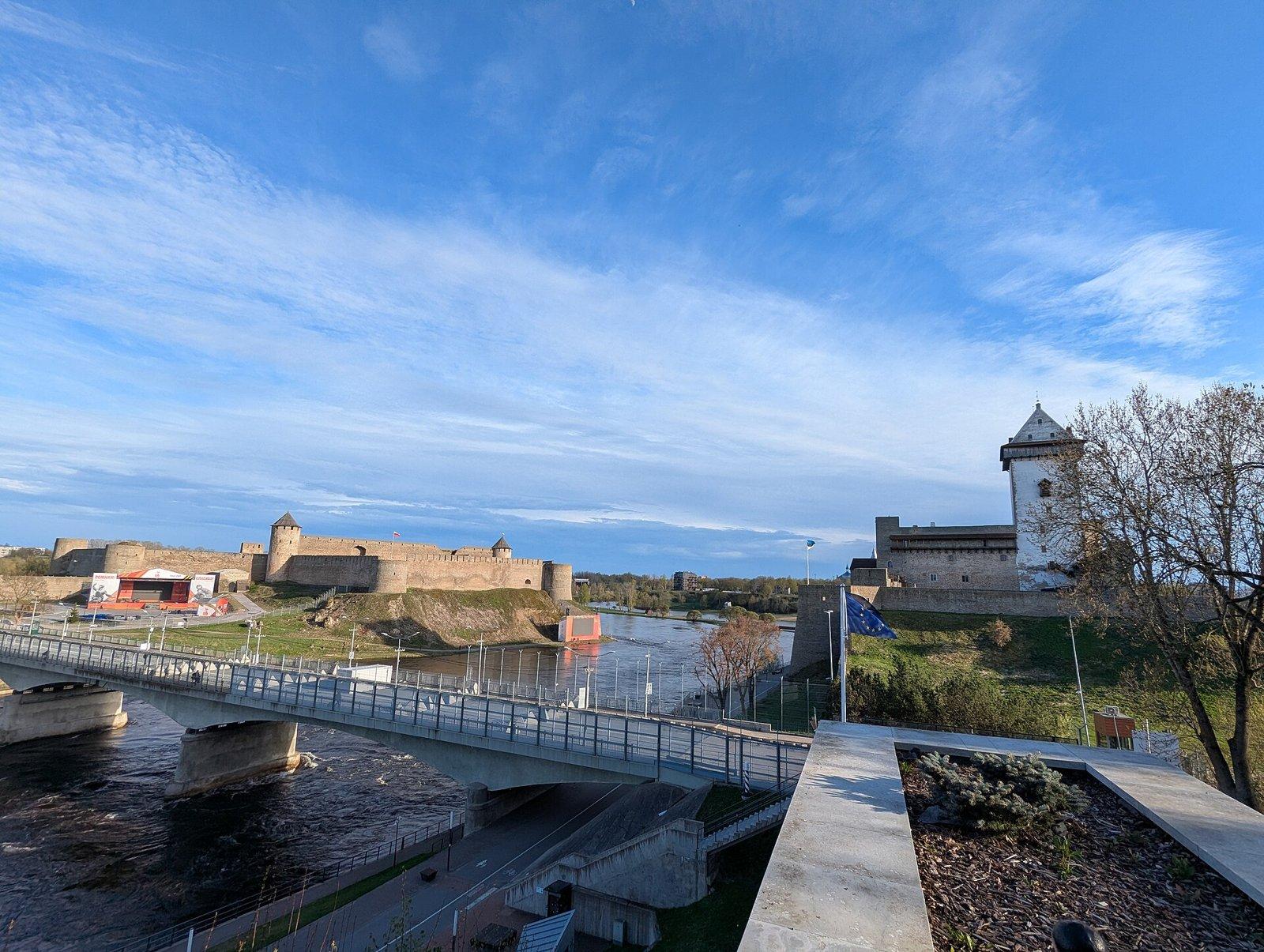
Estonia currently has three road crossings with Russia: Narva in the north-east, and Luhamaa and Koidula in the south-east. They already operate under restrictions, open 12 hours a day from 7am to 7pm, and admit pedestrians and freight, according to ERR, Estonia's public broadcaster. Narva, Estonia's third-largest city, sits on the west bank of the Narva River, directly across from the Russian town of Ivangorod.
Interior Minister Igor Taro said the crossings would close "to both pedestrians and vehicles". He said Estonian residents and lorry drivers who are in Russia have about two weeks to return before the journey home "could become long and complicated". He advised anyone who has bought tickets or made longer-term plans to visit Russia to change them. After the closure, buses will not run through the crossings and crossing on foot will no longer be possible.
Taro argued that relatively few people will be directly affected, because traffic is already far below the levels seen before Russia's full-scale invasion of Ukraine in 2022. He acknowledged a significant effect on businesses that carry people to the border or sell places in the Narva queue, and on people who regularly carry consumer goods across the border in their luggage. The BBC noted that the closure will also complicate life for families with relatives on both sides.
The Narva crossing is one of the few land routes between the EU and Russia still open to travellers, and ERR says queues there can reach 12 hours at holiday times. Estonia also has railway crossings at Narva and Koidula. Taro said the Narva rail crossing will initially stay open on the Estonian side because strategically important raw materials enter Europe through it. No passenger trains run on that route.
Why is Estonia doing this?
Foreign Minister Margus Tsahkna said that closing the crossings would reduce Russia's ability to carry out hostile activities in Estonia and help limit sanctions circumvention. "The more aggressively Russia behaves, the narrower its room for manoeuvre becomes," he said. He said he had informed his counterparts in Finland, Latvia and Lithuania, as well as EU colleagues.
Michal linked the attack to Estonia's support for Ukraine. "Russia's aim is to make us afraid, make us hesitate and weaken our support for Ukraine," he said, adding that Estonia's response would be to strengthen security, work more closely with businesses and allies, and keep supporting Ukraine. He has also said that Russian intelligence services use border crossings to influence people.
This is the second attempted arson attack on an Estonian defence company that the authorities have blamed on Russia. In August, Milrem Robotics, a Tallinn-based maker of military robotic vehicles, was targeted. KAPO later called that "a deliberate and pre-planned attack carried out on behalf of Russian special services", which Moscow also denied.
How has Russia responded?
Kremlin spokesman Dmitry Peskov said on Monday that the accusation was "baseless" and that "Estonia is building a wall", adding that, historically, walls had "brought nothing good to those who erect such walls". Russian foreign ministry spokesperson Maria Zakharova told the state news agency TASS that, if the closure goes ahead, it would fit "yet another bout of aggressive and unrestrained Russophobia".
Several European governments, including those of France, Germany, the UK and Poland, have accused Russia of organising sabotage on their territory since 2022. Russia has consistently denied such accusations.
What happens next?
The government is due to discuss the closure at the end of the week, once the prime minister is back in Estonia, and to decide whether it will be temporary or indefinite. Taro said the border could be closed at short notice, but a longer-term closure needs a government decision. The court process for the suspects is continuing in Estonia, and the related criminal proceedings are continuing in Latvia.
Image: Image: Андрей Романенко, CC BY-SA 4.0 (https://creativecommons.org/licenses/by-sa/4.0/), via Wikimedia Commons (https://commons.wikimedia.org/wiki/File:Narva_Bridge_and_Narva_and_Ivangorod_fortresses.jpg) — May 2025 file photo of the Narva bridge crossing, Hermann Castle and Ivangorod Fortress; not taken during the events described; resized
About this article: prepared by The Daily Context editorial desk using automated, source-based reporting from the publications linked below. No reporter was on the ground.
Sources
- Government of Estonia, "Prime Minister Michal: Preparedness and cooperation stopped another sabotage attempt by Russian intelligence services" (15 November 2026): https://www.valitsus.ee/en/news/prime-minister-michal-preparedness-and-cooperation-stopped-another-sabotage-attempt-russian
- Estonian Ministry of Foreign Affairs, "Foreign Minister Tsahkna: Estonia to close road border crossings with Russia" (15 November 2026): https://www.vm.ee/en/news/foreign-minister-tsahkna-estonia-close-road-border-crossings-russia
- Latvian State Security Service (VDD), "VDD provides support to KAPO in preventing a sabotage act in Estonia" (15 November 2026): https://vdd.gov.lv/en/news/press-releases/vdd-provided-support-to-kapo-in-preventing-sabotage-in-estonia
- ERR News, "Estonia to close border crossings with Russia after GRU-linked sabotage attacks" (15 November 2026): https://news.err.ee/1610196794/estonia-to-close-border-crossings-with-russia-after-gru-linked-sabotage-attacks
- ERR News, "Minister: Closing the border with Russia directly affects few people" (16 November 2026): https://news.err.ee/1610197565/minister-closing-the-border-with-russia-directly-affects-few-people
- BBC News, "Estonia to close Russia border crossings after attempted drone factory arson attack" (16 November 2026): https://www.bbc.com/news/articles/cqp83nk673reo
- The Guardian, "Estonia to close all border crossings with Russia after attack on drone maker" (15 November 2026): https://www.theguardian.com/world/2026/nov/15/estonia-to-close-all-border-crossings-with-russia-after-attack-on-drone-maker
- Verkkouutiset, "Sabotage attack foiled in Estonia – Russian border crossings to close" (November 2026): https://www.verkkouutiset.fi/a/en/sabotage-attack-foiled-in-estonia-russian-border-crossings-to-close/
Kabeer Ahmad
Kabeer Ahmad is the founder and editor of The Daily Context. He oversees the site's source-based coverage of world affairs, technology, business, entertainment, lifestyle and sports, and is responsible for its editorial standards, sourcing and corrections.