Canary Islands record: nearly 1,600 migrants land in a single day as El Hierro strains
Spain's Canary Islands recorded their busiest day of sea arrivals since records began on Saturday 14 November 2026, with about 1,500 to 1,580 people rescued from West African boats, most landing on the small island of El Hierro. Arrivals continued through Sunday and Monday, reception space is overwhelmed, and Spain's interministerial immigration commission is due to meet again on Tuesday.
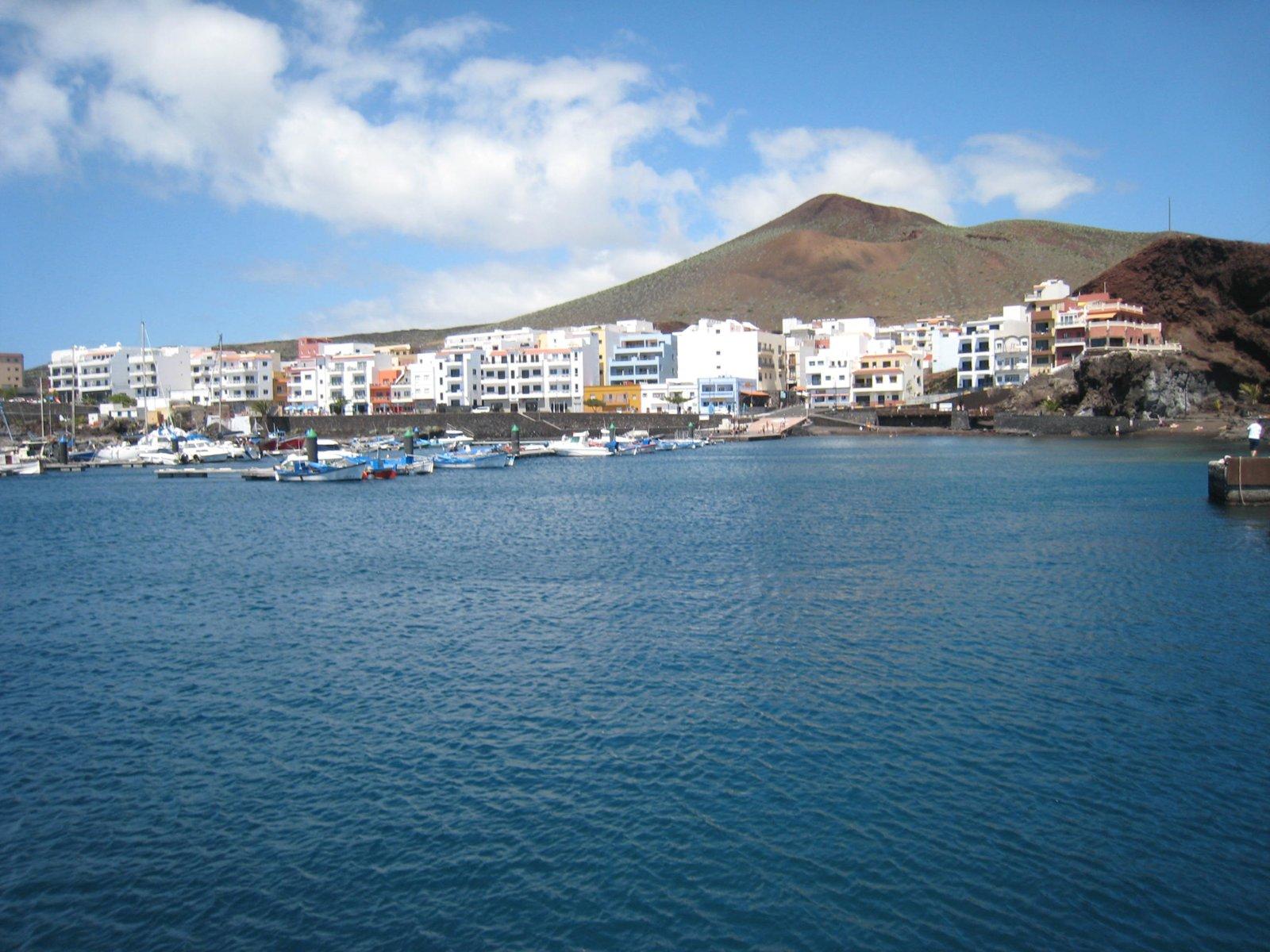
Spain's Canary Islands recorded the largest number of people arriving by sea in a single day since figures began to be kept on the Atlantic route about 32 years ago. On Saturday, 14 November 2026, Spanish maritime rescue crews and the Civil Guard brought ashore roughly 1,500 to 1,580 people from around 15 wooden boats, most of them at La Restinga, the fishing port at the southern tip of El Hierro, the smallest inhabited island in the archipelago. Boats kept arriving on Sunday and Monday, and aid groups say reception facilities on the island are overwhelmed.
The previous one-day record, 1,461 people, was set on 7 November 2020, when Arguineguín on Gran Canaria was the main landing point.
How many people arrived, and why do the numbers differ?
Two slightly different counts are circulating. Reuters and AP, citing Spain's Maritime Rescue Service (Salvamento Marítimo), reported 1,488 people rescued from 14 boats on Saturday. A running tally compiled by the Spanish news agency EFE from Salvamento Marítimo and quayside services, which included a boat with 92 people that reached El Hierro at 11:07pm, reached 1,580 people on 15 boats. EFE's breakdown put 13 boats with 1,327 people on El Hierro, one with 203 on Gran Canaria and one with 50 on Tenerife, including at least 120 women and 173 minors, figures it described as provisional.
Either way, Saturday beat the 2020 record. The largest single boat carried 240 people, including 12 women and 36 children, according to the authorities.
The weekend as a whole was exceptional. El País, citing Salvamento Marítimo, reported 3,684 people disembarked across the islands between Friday and Sunday, with 1,261 people on seven boats reaching El Hierro on Sunday alone. Spain's national broadcaster RTVE, citing Interior Ministry data, said more than 11,000 people had reached the Canaries in the first half of November, and laSexta put the figure since 1 November at more than 12,100. On Monday, 16 November, further boats arrived at El Hierro, including one carrying 134 people and another carrying 112, according to EFE.
Who is making the crossing?
Most people arriving over the weekend had set out from Senegal, Gambia and Guinea, with some boats leaving from Mauritania, according to EFE's boat-by-boat accounts and Spanish authorities. Many had spent four to seven days at sea in pirogues, the long wooden fishing boats used on this route. Individual departures named by EFE included Kayar, Saint-Louis, Dakar and the Saloum delta in Senegal, Brufut in Gambia and Nouakchott in Mauritania.
People from Mali, where conflict has continued since 2012, are also among recent arrivals. Luisa Baptista de Freitas, a data specialist at the International Organization for Migration (IOM) in Dakar, told RTVE that close to 95% of Malians the agency interviewed in 2026 cited war and conflict as a key reason for leaving.
Why has the Atlantic route surged now?
Several factors are being cited, and they are explanations offered by officials and analysts rather than settled findings:
- Weather. The weeks after summer usually see more departures because the north-easterly trade winds ease. The IOM's Freitas told RTVE the agency believes El Niño has reduced wind speeds and wave heights this year, making departures easier.
- Conditions in Senegal. El País reported that Senegal has again become the main departure country, citing calm seas, economic and political strain, debts of about €42 billion (around 132% of GDP), and difficulties in artisanal fishing. It also reported lighter coastal surveillance while about 10,000 police and gendarmes were deployed for the Dakar Youth Olympic Games from 31 October to 13 November.
- Shifting routes. According to the IOM, tighter coastal controls further north have pushed departures south since 2024, towards Guinea, Guinea-Bissau and Gambia, which lengthens journeys.
Is this a record year overall?
Not necessarily. The Atlantic route was quiet for much of 2026: Interior Ministry figures cited by El País show 3,708 sea arrivals in the Canaries between January and June, a 67% fall. The rise began in October, when 6,194 people arrived, almost five times October 2024. DW reported that total arrivals for January to October were still 5.5% below the same period of 2025, and RTVE reported 13,327 arrivals between January and October. The record for a full year remains 2024, with about 46,800 arrivals, according to RTVE.
Territorial Policy Minister Ángel Víctor Torres said on Sunday that about 27,000 people had arrived in the Canaries so far this year, about 17,000 of them on El Hierro, and that roughly 1,600 were still on the island after transfers.
What is it like on El Hierro?
El Hierro has a population of nearly 12,000, according to DW. laSexta reported that almost 3,000 people arrived on the island in 21 boats between Friday and Monday, roughly a quarter of its population. Many spent the night outdoors with Red Cross blankets; women and babies were housed in modules with room for about 250 people, which laSexta said covered only about half of them. The Red Cross said it was overwhelmed and had appealed urgently for volunteers.
Torres said around 30 beds were occupied at the island's hospital and about a third of them were taken by migrants. Two police unions, SUP and Jupol, demanded urgent reinforcements from the Interior Ministry on Monday. Residents of La Restinga have protested about the scale of arrivals, El País reported.
What are the Spanish and Canarian governments doing?
At an interministerial meeting on Tuesday, 10 November, the central and Canarian governments agreed €15.8 million in emergency funding to expand state reception places and transfer people to mainland Spain, according to El País. The package also includes €1 million for Red Cross staff to support public health services, an additional rescue vessel, police and Civil Guard reinforcements, and compensation for the hospitality sector.
Torres said a further vessel, the Calíope, was due to reach El Hierro on Monday or Tuesday, that a surveillance aircraft deployed in Senegal would continue operating until December, and that Spain had asked the EU to deploy Frontex, its border and coast guard agency, in departure countries. He said that request had been accepted in principle and awaited administrative approval. The interministerial immigration commission is due to meet again on Tuesday, 17 November. Canary Islands president Fernando Clavijo called for an "immediate response" from the state, saying the islands needed more personnel, more health and emergency resources and faster transfers.
Al Jazeera reported that the surge has continued despite the EU's Pact on Migration and Asylum, which came into force on 12 June 2026.
How dangerous is the route?
The Atlantic crossing is among the deadliest migration routes. IOM figures cited by RTVE recorded 544 deaths at sea up to the end of October 2026; Al Jazeera, citing the IOM, reported at least 450 deaths in the first ten months. The difference may reflect different cut-off dates or definitions, and humanitarian groups say the true toll is likely higher because some boats disappear without a trace. The Spanish refugee aid commission CEAR said it was concerned that recent storms off West Africa may have caused boats to be lost.
What happens next?
Key points to watch are the outcome of Tuesday's interministerial meeting, the pace of transfers off El Hierro, whether Frontex deployment in departure countries is formally approved, and whether calmer seas continue. Officials have described migration on this route as cyclical, with earlier peaks in 2006, 2007, 2020 and 2024.
Image: Tbachner, CC BY 3.0 (https://creativecommons.org/licenses/by/3.0/), via Wikimedia Commons (https://commons.wikimedia.org/wiki/File:La_Restinga_El_Hierro_2010.jpg) — March 2010 file photo of La Restinga harbour; not taken during the events described; resized
About this article: prepared by The Daily Context editorial desk using automated, source-based reporting from the publications linked below. No reporter was on the ground.
Sources
- El País: La ruta migratoria a Canarias bate su récord de llegadas en un solo día (15 November 2026) https://elpais.com/espana/2026-11-15/la-ruta-migratoria-a-canarias-bate-su-record-de-llegadas-en-un-solo-dia-con-1500-personas.html
- El Día / EFE: Canarias registra un récord histórico con 1.580 inmigrantes desembarcados en un solo día (15 November 2026) https://www.eldia.es/canarias/2026/11/15/canarias-registra-record-historico-1-136466237.html
- Al Jazeera, AP and Reuters: Record number of migrants arrive in Spain's Canary Islands (15 November 2026) https://www.aljazeera.com/news/2026/11/15/record-number-of-migrants-arrive-in-spains-canary-islands
- DW: Nearly 1,600 migrants arrive on Spain's Canary Islands in one day (15 November 2026) https://www.dw.com/en/nearly-1600-migrants-arrive-on-spains-canary-islands-in-one-day/a-79952941
- Anadolu Agency: Nearly 1,500 migrants reach Spain's Canary Islands in single day (15 November 2026) https://www.aa.com.tr/en/europe/nearly-1-500-migrants-reach-spain-s-canary-islands-in-single-day-setting-record-since-2020/4125816
- RTVE: Detrás del repunte de la llegada de cayucos a El Hierro (16 November 2026) https://www.rtve.es/noticias/20261116/repunte-llegada-cayucos-hierro-guerras-falta-oportunidades/17314599.shtml
- laSexta: Noches a la intemperie en El Hierro (16 November 2026) https://www.lasexta.com/noticias/sociedad/noches-intemperie-hierro-llegan-mas-12100-migrantes-1-noviembre_202611166afb2cdf9a31a65adcddee54.html
- Infobae / EFE: Un segundo cayuco llega este lunes a El Hierro con 112 personas (16 November 2026) https://www.infobae.com/espana/agencias/2026/11/16/un-segundo-cayuco-llega-este-lunes-a-el-hierro-con-112-personas/
Kabeer Ahmad
Kabeer Ahmad is the founder and editor of The Daily Context. He oversees the site's source-based coverage of world affairs, technology, business, entertainment, lifestyle and sports, and is responsible for its editorial standards, sourcing and corrections.