COP31 draft deal calls for faster fossil fuel phase-out, but it is only a first draft
The first draft of an overarching COP31 agreement, released in Antalya on Monday 16 November 2026, calls for accelerated action to phase out fossil fuels and an immediate transition away from them in energy systems. The COP31 presidency stresses the 18-page text does not reflect consensus, and negotiators have until Friday to agree what survives.
The first draft of a possible overarching agreement at the COP31 climate summit in Antalya, Türkiye, calls on countries to speed up the phase-out of coal, oil and gas, including through an "immediate" transition away from fossil fuels in energy systems. The 18-page text was released early on Monday afternoon, 16 November 2026, Antalya time, at the start of the summit's second and final week.
It is a first draft, and the people who wrote it say so. A note from the COP31 presidency says the text is "not intended to reflect consensus" and that every element, including whether it should appear at all, remains open. Some countries are still questioning whether the summit should produce this kind of overarching "cover decision" in the first place. The conference is scheduled to close on Friday, 20 November, and any final decision needs the consensus of nearly 200 countries.
What is a cover decision, and why does this one matter?
A cover decision is a political statement that sits above the many technical decisions taken at a UN climate conference. It sums up what governments have agreed and signals where climate policy should go next. Many previous summits have adopted one, and they often carry the headline language that shapes how a conference is judged.
COP31 is run under an unusual arrangement. Türkiye holds the presidency, with environment minister Murat Kurum as COP31 president, while Australia's climate and energy minister, Chris Bowen, chairs the formal negotiations as "president of negotiations". Bowen said the draft was built from submissions by 160 countries and more than 500 pages of feedback, and that it contains 144 provisions. He said the two hosts released it earlier than is usual at these summits to give delegates more time to find agreement.
"This is a draft, a first draft, it won't be the final draft," Bowen told reporters, according to Australian Associated Press. AFP quoted him as saying: "There are elements in this draft that not all parties will agree on. That is a given."
What does the draft say about fossil fuels?
The most closely watched paragraph "calls for accelerated action to phase out fossil fuels, including through the immediate transition away from fossil fuels in energy systems", according to AFP, the Guardian and Carbon Brief, which all quoted the same wording.
That goes further than the deal reached at COP28 in Dubai in 2023, when countries agreed to "transition away" from fossil fuels in energy systems in a just, orderly and equitable way. The new draft also reaffirms that Dubai language, and welcomes the Brazil-led global roadmaps on transitioning away from fossil fuels and on ending deforestation, Carbon Brief reported. The Guardian noted that the Dubai wording did not include the word "immediate" and has never been repeated in its original form at a later summit.
Any language on curbing fossil fuels has been among the most contested issues in UN climate talks, and AFP said the proposal could be expected to meet strong resistance from oil- and gas-producing countries. Climate campaigners welcomed the wording but doubted it would last. "This is some of the strongest language we've seen in a draft COP decision," Simon Bradshaw of Greenpeace Australia Pacific told AAP. "The question now is how much of it will survive the tough days of negotiations ahead."
Tzeporah Berman of the Fossil Fuel Non-Proliferation Treaty Initiative was more blunt, telling the Guardian the mention was likely to "last about 2 minutes". Asad Rehman, chief executive of Friends of the Earth, called the text a "mish-mash of contradictory proposals", according to the Guardian.
What else is in the text?
Because it gathers ideas from many governments rather than choosing between them, the draft contains proposals that pull in different directions. According to AFP, AAP and Carbon Brief, the main elements include:
- Adaptation finance: a call, pushed by developing countries, for rich nations to triple funding for climate adaptation to at least US$120 billion a year by 2035. Carbon Brief reported that the draft suggests measuring progress using Oxfam's grant-equivalent method, which gives less credit for loans, and "expresses concern" over decreasing climate finance.
- Electrification: a call for countries to contribute, "in a nationally determined manner", to Türkiye's goal of raising electricity's share of final energy use to 35% by 2035, known as "35 by 35".
- Net zero: among the more divergent proposals, a call for developed countries to reach net zero emissions by 2030 and net-negative emissions by 2040, far earlier than most current national targets.
- 1.5C and overshoot: "deep concern" that the Paris Agreement's 1.5C limit is about to be breached, a resolve to limit how far and how long warming overshoots it, and a proposed work programme on the science of returning to 1.5C.
- Science: recognition of the "central role" of the Intergovernmental Panel on Climate Change, and an invitation for its next major assessment to be ready in time for the second global stocktake of the Paris Agreement.
- Trade, methane and carbon capture: a call for developed countries to phase out unilateral trade-restrictive climate measures by the end of 2027, encouragement to cut methane from fossil fuel operations and waste, and targets for scaling up carbon capture.
- Kyoto Protocol: a process towards a third commitment period under the largely dormant 1997 Kyoto Protocol, which would set emissions targets for developed countries. Carbon Brief's analysts said there was effectively no chance developed countries would accept this.
Carbon Brief said food systems, which had appeared in an earlier summary of countries' views, are missing from the draft.
Why are countries still so far apart?
The first week of the summit was dominated by technical talks, and several basic disputes remain unresolved. UN News reported that governments are still divided over who should pay for climate action, how to help vulnerable countries adapt, how to protect workers in the energy transition and what the final deal should say about fossil fuels. Countries are also split over when the IPCC should publish its next full assessment, with vulnerable nations pushing for 2028.
Finance is the sharpest fault line. Developing countries want rich nations, which are historically responsible for most emissions, to provide predictable public money, especially grants rather than loans. Wealthier countries are under budget pressure, and the backdrop is difficult: AFP noted that the summit is taking place during a conflict-driven energy crisis and geopolitical tension that have lowered expectations.
Campaigners also criticised a proposed "just transition" mechanism for workers and communities. A Climate Action Network representative told UN News that cover decisions "have the danger of becoming a distraction" from concrete action.
What happens next?
Ministers have taken over from technical negotiators for the final stretch. The COP31 presidency has paired ministers from different regions to lead consultations: India's Bhupender Yadav and Germany's Carsten Schneider on emissions cuts, France's Monique Barbut and the Philippines' Robert Borje on finance, Sierra Leone's Jiwoh Abdulai and the UK's Miatta Fahnbulleh on adaptation, Mexico's Alicia Bárcena and Poland's Krzysztof Bolesta on just transition, and Canada's Julie Dabrusin and Palau's Steven Victor on oceans, according to The Economic Times. The formal high-level segment begins on Tuesday.
Bowen said there would be "at least" one more version of the cover text. Carbon Brief's analysts expect the next draft around midweek. The key questions are whether countries agree to adopt a cover decision at all, and whether the fossil fuel and finance language survives in any recognisable form. Past summits have often run past their scheduled end, and a UN University expert told UN News he expected "overtime" this year as well.
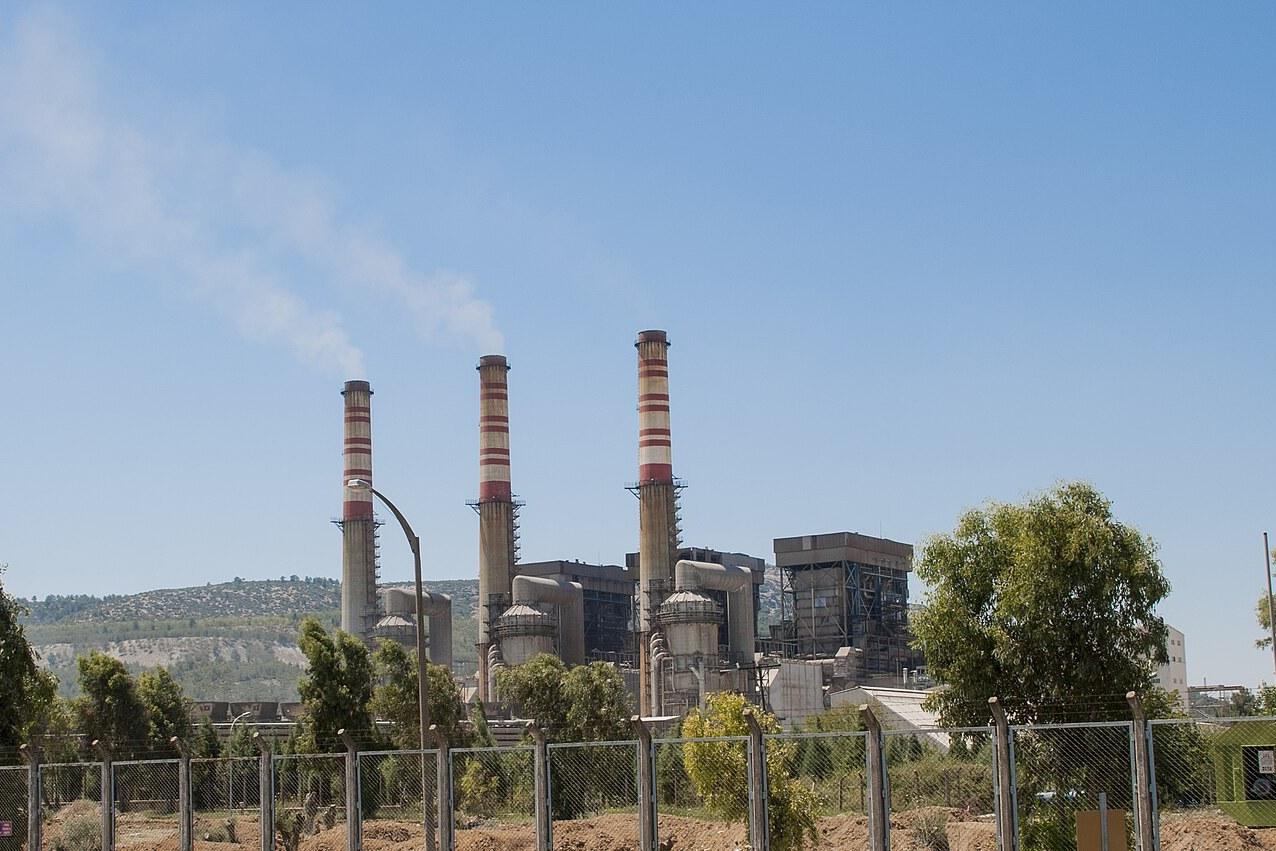
Image: Acar54, CC BY-SA 4.0 (https://creativecommons.org/licenses/by-sa/4.0/), via Wikimedia Commons (https://commons.wikimedia.org/wiki/File:Yatağan_Termik_Santrali.jpg) — July 2018 file photo of the Yatağan lignite power station in Muğla province, Türkiye; not connected to the COP31 talks; cropped and resized
About this article: prepared by The Daily Context editorial desk using automated, source-based reporting from the publications linked below. No reporter was on the ground.
Sources
- AFP: COP31 draft deal calls for 'accelerated action' to exit fossil fuels (16 November 2026) https://www.afp.com/en/cop31-draft-deal-calls-accelerated-action-exit-fossil-fuels
- Australian Associated Press: 'Strong language': Bowen launches bold climate agenda (17 November 2026, Australian time) https://aapnews.aap.com.au/news/strong-language-bowen-launches-bold-climate-agenda
- Carbon Brief (Carbon Brief Connect): First draft cover decision lands at COP31 (16 November 2026) https://connect.carbonbrief.org/t/first-draft-cover-decision-lands-at-cop31/167
- The Guardian: Cop31 as it happened: draft climate deal calls for faster shift away from fossil fuels (16 November 2026) https://www.theguardian.com/environment/live/2026/nov/16/cop31-climate-crisis-talks-turkey-latest-news-updates
- UN News: COP31 enters decisive week as climate talks face political test (16 November 2026) https://news.un.org/en/story/2026/11/1168812
- UNFCCC: COP 31 Presidency note on the draft text prepared under Presidency consultations on cover decision (version of 16 November 2026) https://unfccc.int/sites/default/files/resource/Cover%20decision_COP%2031%20Presidency%20note%20on%20draft%20text_16%20Nov%202026.pdf
- The Economic Times: COP31 talks enter political phase as ministers step in (16 November 2026) https://economictimes.indiatimes.com/news/international/world-news/cop31-talks-enter-political-phase-as-ministers-step-in/articleshow/135864772.cms
Kabeer Ahmad
Kabeer Ahmad is the founder and editor of The Daily Context. He oversees the site's source-based coverage of world affairs, technology, business, entertainment, lifestyle and sports, and is responsible for its editorial standards, sourcing and corrections.