Canada concludes Philippines trade deal talks, nears ASEAN pact
Canada and the Philippines concluded negotiations on a bilateral free trade agreement in Manila on Saturday, 14 November 2026, and Canada said talks on a wider ASEAN-Canada deal are substantially concluded. Both agreements still have to be finalised and signed, with signature targeted for 2027, so no tariffs change yet.
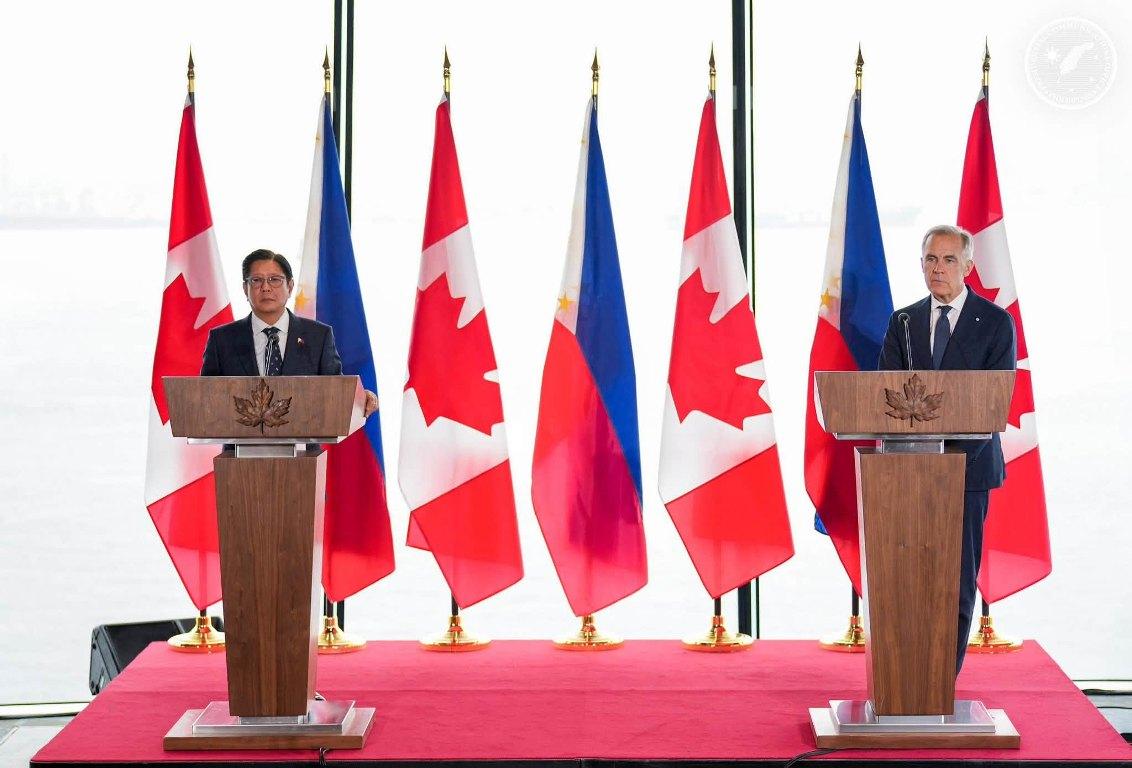
Canada and the Philippines have concluded negotiations on a bilateral free trade agreement, the two governments announced in Manila on Saturday, 14 November 2026, during a meeting between Philippine President Ferdinand Marcos Jr. and Canadian Prime Minister Mark Carney on the sidelines of the 49th ASEAN Summit. On the same day Canada said negotiations on a separate, region-wide ASEAN-Canada Free Trade Agreement (ACAFTA) had been "substantially" concluded.
Neither deal is in force. Both governments say they are aiming to sign in 2027, and the detailed legal text, tariff schedules and rules have not been published. For businesses, consumers and workers, nothing changes at the border yet.
What was agreed in Manila on 14 November?
The Philippine trade secretary, Ma. Cristina Roque, and Canada's international trade minister, Maninder Sidhu, signed and exchanged a joint statement declaring the end of bilateral negotiations, with Marcos and Carney witnessing the exchange, according to Rappler and The Philippine Star. Roque said the statement represents both countries' commitment to "expeditiously facilitate the implementation of the agreement."
The Philippine Star reported that the joint statement does not itself set out specific rules, provisions or commitments. That detail will appear only when the finished agreement is released.
Talks moved quickly by trade-deal standards. Canada and the Philippines had discussed a bilateral agreement on and off since 2015, according to The Canadian Press, but the current round began after Carney and Marcos agreed at the October 2025 ASEAN Summit in Kuala Lumpur to launch negotiations. Carney told reporters in Manila it took "nine months of negotiations to get here." During Marcos's visit to Canada in July 2026 the two leaders set up a Canada-Philippines Strategic Partnership and committed to finishing talks by the end of the year.
What does the Canada-Philippines agreement cover?
According to the Philippine Presidential Communications Office (PCO), as reported by Rappler and The Philippine Star, the agreement covers trade in goods, services, investment, digital trade, and small and medium-sized enterprises.
Each government has emphasised different winners:
- Canada highlighted agriculture and forest products, and Carney also named aerospace, artificial intelligence, mining and energy services. Ottawa says the deal "could increase exports up to three times by 2035."
- The Philippines highlighted wider access to Canadian buyers for local businesses, and opportunities for Filipino freelancers and online service workers in fields such as graphic design, software development and writing, through the digital trade provisions.
- Smaller firms: Roque told an ASEAN business summit on Saturday that micro, small and medium enterprises could benefit by supplying larger exporters, according to the Philippine News Agency.
These are government projections and talking points, not independent estimates. No published economic impact study for the bilateral deal was cited in the announcements.
How much trade is at stake?
The current flows are modest. Canadian government figures put two-way merchandise trade between Canada and the Philippines at C$3.4 billion in 2025, up 7.4% from 2024. Canada's stock of direct investment in the Philippines was about C$1.7 billion in 2025, up 44%.
The Canadian Press reported that Canada mainly exports mineral ores, meat, cereals, fertilisers and aircraft to the Philippines, while importing cooking oils, leather and rubber products. The Canadian government describes the Philippines as a market of more than 110 million people with an economy of about $680 billion.
There are also strong personal ties: Marcos cited nearly one million Filipinos living in Canada as a foundation of the relationship, according to the Philippine News Agency.
What is the ASEAN-Canada free trade agreement?
ASEAN, the Association of Southeast Asian Nations, is a regional bloc whose members include the Philippines, Indonesia, Thailand, Vietnam, Malaysia and Singapore. Canada and ASEAN began negotiating a bloc-wide free trade agreement in 2021.
Canada says ACAFTA negotiations are now "substantially concluded", meaning the main issues are settled but several steps remain before talks formally end. The Philippine Daily Inquirer noted the same caveat and reported that ASEAN had not yet disclosed its own projected gains from the agreement.
Canada's figures for the regional deal:
- ASEAN was Canada's fifth-largest merchandise trading partner in 2025, with two-way trade of C$52.5 billion, up 22.7% on 2024.
- Once in force, ACAFTA is expected to add nearly C$2 billion to Canada's GDP and support nearly 14,000 Canadian jobs, particularly in agriculture and manufacturing.
- Canada announced C$5 million in technical assistance to help ASEAN economies ratify and use the agreement, part of more than C$15.9 million in summit announcements.
Carney described ACAFTA as ASEAN's first trade agreement outside its own region; the Philippine Daily Inquirer more narrowly described it as the bloc's first such agreement with a North American country. ASEAN already has trade agreements with partners such as Australia, New Zealand, China, Japan, South Korea and India, so the North American framing is the more precise one.
Why is Canada pursuing these deals now?
Diversifying trade away from the United States is the central motive. Canada's announcement framed the agreements as part of making the economy "less reliant on a single trading partner," and The Canadian Press reported that the ASEAN bloc is key to Carney's goal of doubling exports to countries other than the US by 2035. Rappler noted that US tariffs have hit both Canada and the Philippines. Canada already signed a trade agreement with Indonesia, an ASEAN member, in autumn 2025.
Vina Nadjibulla, co-founder of the Centre for Strategic Statecraft, told The Canadian Press that Canada wants to offer ASEAN countries an alternative partner "so that they're not stuck between these two superpowers," referring to the United States and China.
For the Philippines, the agreement adds a G7 partner as the Philippines chairs ASEAN this year. The PCO said it would expand opportunities for Philippine products and services in the Canadian market.
What else did Canada and the Philippines announce?
Alongside the trade news, Canada's prime minister's office listed:
- Closer cooperation between the two countries' armed forces, a new cyber-security dialogue, and steps towards agreements on customs cooperation and protecting sensitive information.
- An extension of Canada's Dark Vessel Detection programme, which uses satellites to spot fishing vessels that switch off their location transponders, until 2033.
- C$26 million for cooperation on nuclear security, climate-resilient agriculture, community resilience, food security and infrastructure, including the G7-backed Luzon Economic Corridor.
- Commercial memoranda of understanding involving Draganfly and the Razon Group on drones, JCM Power and the Aurora Pacific Economic Zone Authority on renewable energy, and Canada's Ocean Supercluster on ocean technology.
What are the open questions?
Several important points remain unknown:
- The text. No tariff schedules, rules of origin or sector carve-outs have been published for either agreement, so the actual market access for specific products cannot yet be assessed.
- Ratification. Both deals must be signed and then approved under each country's domestic procedures; ACAFTA also requires agreement from every ASEAN member.
- Labour, environment and human rights. The Canadian Press reported that during Canada's consultations, businesses were broadly supportive, but civil society groups raised concerns about the Philippines' record on the environment, labour and human rights. How the final text addresses those concerns is not yet public.
- Projections. Export and job figures come from the Canadian government and have not been independently modelled in public.
What happens next?
Negotiators will finalise and legally review the texts, with both governments targeting signature in 2027 and entry into force "as soon as possible" afterwards. Carney is due to continue his trip to Cambodia and China, according to his office. Meanwhile the ASEAN summit week in Manila continues, with a Quad leaders' meeting there reported for 17 November.
Image: Photo: Presidential Communications Office (Philippines), public domain, via Wikimedia Commons (https://commons.wikimedia.org/wiki/File:2026-07-03_–_President_Marcos,_Canadian_PM_Carney_reaffirm_commitment_to_conclude_free_trade_talks_(01).jpg) — file photo from Marcos's visit to Canada on 3 July 2026, not from the 14 November 2026 Manila meeting
About this article: prepared by The Daily Context editorial desk using automated, source-based reporting from the publications linked below. No reporter was on the ground.
Sources
- Prime Minister of Canada: Canada concludes negotiations for two new free trade agreements with the Philippines and ASEAN (14 November 2026): https://www.pm.gc.ca/en/news/news-releases/2026/11/14/canada-concludes-negotiations-two-new-free-trade-agreements
- Prime Minister of Canada: Remarks to media at the ASEAN Summit (14 November 2026): https://www.pm.gc.ca/en/news/speeches/2026/11/14/prime-minister-carney-delivers-remarks-media-during-his-participation
- Prime Minister of Canada: Readout, meeting with President Marcos Jr. (14 November 2026): https://www.pm.gc.ca/en/news/readouts/2026/11/14/prime-minister-carney-meets-president-philippines-ferdinand-marcos-jr
- Philippine News Agency: PH, Canada conclude negotiations for free-trade agreement: https://www.pna.gov.ph/article/ph-canada-conclude-negotiations-for-free-trade-agreement
- Philippine News Agency: MSMEs may supply to big-time exporters under PH-Canada FTA: https://www.pna.gov.ph/article/msmes-may-supply-to-big-time-exporters-under-ph-canada-fta
- Rappler: Philippines, Canada wrap up talks for free trade deal: https://www.rappler.com/business/philippines-canada-end-free-trade-agreement-negotiations/
- The Philippine Star: Philippines, Canada conclude free trade negotiations: https://www.philstar.com/headlines/2026/11/15/2570278/philippines-canada-conclude-free-trade-negotiations
- The Canadian Press via Global News: Canada, Philippines conclude negotiations for free-trade agreement: https://globalnews.ca/news/12150796/canada-philippines-trade-deal/
- Philippine Daily Inquirer: Asean, Canada hit breakthrough on free trade talks: https://globalnation.inquirer.net/347542/asean-canada-hit-breakthrough-on-free-trade-talks
Kabeer Ahmad
Kabeer Ahmad is the founder and editor of The Daily Context. He oversees the site's source-based coverage of world affairs, technology, business, entertainment, lifestyle and sports, and is responsible for its editorial standards, sourcing and corrections.