Anthropic's record IPO: shares jump 17% on debut, then slide 8.5% as tech sell-off deepens
Anthropic raised $81.3 billion in the largest IPO on record, selling 980 million shares at $83 each. The stock opened at $111.50 on Nasdaq on 19 November 2026 and closed its first day at $97.17, up 17%. On Friday it fell 8.5% to $88.91 as a broad sell-off in AI-linked stocks pushed the Nasdaq into the red for 2026.
Anthropic, the company behind the Claude AI models, has completed the largest initial public offering on record. It sold 980 million shares at $83 each on Wednesday, 18 November 2026, raising about $81.3 billion. The stock began trading on the Nasdaq the next day under the ticker ANT. It opened at $111.50 and closed its first session at $97.17, a 17% gain on the offer price.
The celebration was short. On Friday, 20 November, the shares fell 8.5% to $88.91 as a heavy sell-off in AI and chip stocks knocked the Nasdaq Composite down 5.28% and wiped out the index's gains for the year. Anthropic still closed the week about 7% above its IPO price.
How was the IPO priced?
Anthropic first set out a price range of $70 to $78 a share and planned to sell 825 million shares, as we reported when its roadshow began. Demand allowed it to raise both the price and the size. According to the company's pricing announcement, 956,351,354 of the 980 million shares were sold by Anthropic itself and 23,648,646 by existing shareholders, whose proceeds go to them rather than the company. Underwriters also have a 30-day option to buy up to 147 million more shares. The offering was due to close on 20 November.
At $81.3 billion, the deal tops SpaceX's June listing, which initially raised $75 billion, CNBC reported. Goldman Sachs and Morgan Stanley led the offering, with about 20 other banks named in the prospectus. CNBC said a group of tech companies including Google, Microsoft, Nvidia and AMD agreed to invest a combined $26 billion at the IPO price, and that each of Anthropic's seven co-founders sold 3.38 million shares.
What happened on the first two trading days?
Thursday's opening price of $111.50, confirmed by Nasdaq, was 34% above the offer price. The stock reached about $115.10 at its high before drifting lower through the day, according to market data summarised by The Desk. By the close it had settled at $97.17. More than 846 million shares changed hands, compared with 522 million on SpaceX's first day, CNBC reported. At the close, CNBC put Anthropic's fully diluted market value at about $1.8 trillion, behind only Apple, Microsoft, Nvidia, Alphabet, Amazon and SpaceX among US companies.
The wider market did not join the party. The BBC noted that the Nasdaq Composite fell nearly 2.3% on Thursday as large tech shares slipped.
On Friday, Anthropic opened at $89.86, already below Thursday's close, and traded as low as $83.05, five cents above the IPO price, before closing at $88.91, according to Yahoo Finance data. Not every outlet used the same figure: the Associated Press reported a 9.1% drop to $88.30. We use the exchange closing price shown by Yahoo Finance and MarketBeat.
The broader market had one of its worst days in years. The Nasdaq Composite fell 1,261.47 points to 22,617.73. The S&P 500 fell 3.7% to 6,910.39, its seventh straight loss, and the Dow Jones Industrial Average fell 949.73 points, or 1.93%, to 48,147.33. UPI and CNBC reported that the S&P 500 and the Dow both closed in correction territory, at least 10% below their recent peaks. AP said the AI trade has been losing steam over doubts about whether huge valuations and spending are justified.
What are investors buying?
Anthropic was founded in 2021 by a group of former OpenAI researchers led by Dario Amodei, now its chief executive, and his sister Daniela Amodei, its president. It sells mostly to businesses, and its growth this year has been driven largely by its coding tool, Claude Code, according to CNBC.
The numbers in its prospectus, as reported by CNBC, show both the scale and the cost:
- Revenue of $33.24 billion for the nine months to 30 September 2026, up about 1,200% on the same period a year earlier.
- A net loss of $104 billion over the same nine months, compared with $25.1 billion a year earlier. Anthropic said about $94.3 billion of the loss came from changes in the fair value of convertible notes, derivative liabilities and SAFEs (simple agreements for future equity), accounting items rather than cash spending.
- Run-rate revenue of roughly $81 billion at the end of October, up about $10 billion from a month earlier.
- Amazon owns about 14.7% of the company after the offering and Google about 13.7%. Both are also major suppliers of the computing power Anthropic uses.
Control stays firmly with the founders. A new entity, Founder LLC, whose only members are the seven co-founders, holds 50.1% of the voting power, and their combined voting power is expected to be 61.3%, according to the filing as summarised by CNBC. The prospectus contains more than 90 pages of risk factors.
Why has the listing drawn criticism?
Not everyone welcomed the debut. More than 100 protesters gathered outside Anthropic's San Francisco offices on Thursday calling for a ban on AI systems that can build their successors, a concept known as recursive self-improvement, CNBC reported. Senator Mark Warner, a Democrat, wrote on X that there was "still NO action on AI regulation" despite the record-breaking listing, and promoted a bill requiring publicly traded companies to disclose AI-related financing.
Anthropic has also clashed with the Trump administration this year over safety, regulation and national security, CNBC noted. In its roadshow video, Dario Amodei said the company had to make sure "all the risks, all the ways that things can go wrong with this technology" are carefully addressed while building a viable business.
Why does it matter beyond Wall Street?
Anthropic is the first major standalone AI developer to go public, so its share price is now a daily, public gauge of how investors value frontier AI. As the BBC pointed out, it has no direct listed peer. OpenAI has filed confidentially for an IPO and has said a debut is likely in 2027, CNBC reported, and Anthropic's trading may influence how that listing is priced.
The money also matters. The proceeds give Anthropic a large cushion to pay for the chips and data centres that training new models requires, at a time when worries about rising interest rates and debt-funded data-centre projects are weighing on the sector.
What happens next?
Big IPOs often swing sharply in their first weeks, and Anthropic's first two sessions covered a range of more than $30 a share. Watch for whether the underwriters exercise the 147 million-share option, for the company's first earnings report as a listed company, and for how the wider AI sell-off develops. This article is for information only and is not investment advice.
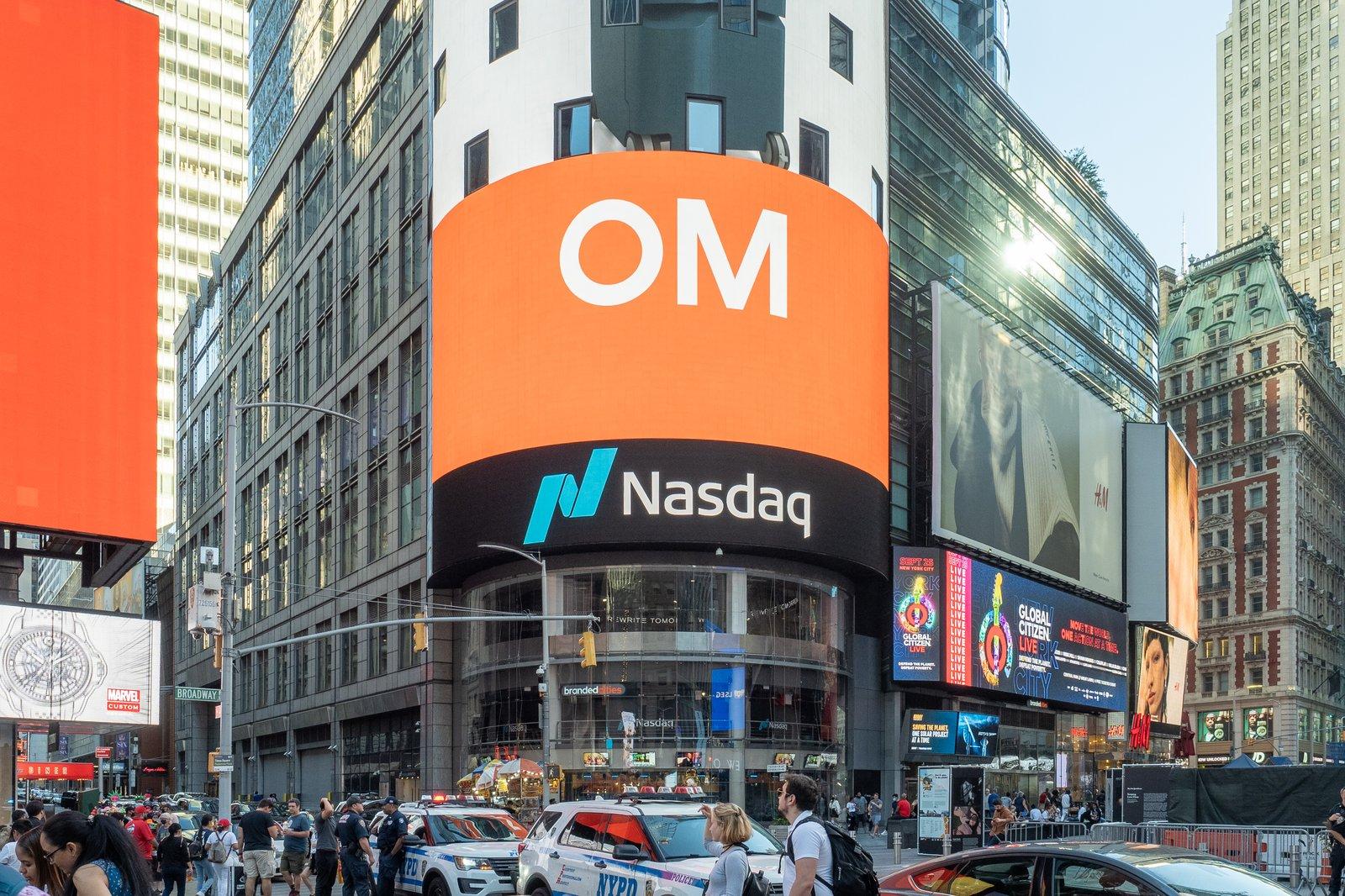
Image: File photo: Nasdaq MarketSite in Times Square, New York (September 2021), not taken during Anthropic's listing. Photo by ajay_suresh, CC BY 2.0 (https://creativecommons.org/licenses/by/2.0/), via Wikimedia Commons (https://commons.wikimedia.org/wiki/File:Nasdaq_MarketSite_(51494550508).jpg); cropped and resized
About this article: prepared by The Daily Context editorial desk using automated, source-based reporting from the publications linked below. No reporter was on the ground.
Sources
- Anthropic: Anthropic prices initial public offering (18 November 2026): https://www.anthropic.com/news/anthropic-prices-initial-public-offering
- Nasdaq: Anthropic marks its IPO at Nasdaq (19 November 2026): https://www.nasdaq.com/newsroom/anthropic-marks-ipo-at-nasdaq
- CNBC: Anthropic IPO raises over $81 billion in largest offering on record: https://www.cnbc.com/2026/11/18/anthropic-ipo-ai-offering-price.html
- CNBC: Anthropic IPO live updates and takeaways (19 November 2026): https://www.cnbc.com/2026/11/19/anthropic-ipo-ant-live-updates.html
- BBC News: Anthropic shares close up 17% after record-breaking stock market debut: https://www.bbc.com/news/live/c933xxm82mr8t
- TechCrunch: Anthropic hits Nasdaq exchanges at $111, 33% above IPO price: https://techcrunch.com/2026/11/19/anthropic-hits-nasdaq-exchanges-at-110-27-above-ipo-price/
- Yahoo Finance: Anthropic, PBC (ANT) historical prices: https://finance.yahoo.com/quote/ANT/history/
- MarketBeat: Anthropic (ANT) price history: https://www.marketbeat.com/stocks/NASDAQ/ANT/chart/
- The Desk: Anthropic falls 8.5% to $88.91 on its second trading day: https://www.thedeskresearch.com/publications/anthropic-falls-8-5-to-88-91-on-fe51f0e5
- UPI: Dow, S&P 500 enter correction as Nasdaq plunges in AI stock sell-off (20 November 2026): https://www.upi.com/Top_News/US/2026/11/20/stocks-dow-jones-nasdaq-correction-territory/1061795214998/
- Associated Press: S&P 500 sinks 3.7% and the Nasdaq composite goes negative for the year: https://apnews.com/article/stock-markets-anthropic-ai-chips-boom-c4c3f4878b12989347f8a930ed813dad
- The Daily Context: Anthropic IPO roadshow sets $70–$78 price range: https://www.thedailycontext.com/article/anthropic-ipo-roadshow-price-range-70-78-nasdaq-ant-november-2026
Kabeer Ahmad
Kabeer Ahmad is the founder and editor of The Daily Context. He oversees the site's source-based coverage of world affairs, technology, business, entertainment, lifestyle and sports, and is responsible for its editorial standards, sourcing and corrections.