UK unemployment falls to 4.6% but vacancies hit 12-year low and payrolls shrink
The UK unemployment rate fell to 4.6% in the three months to September, but official figures also showed job vacancies at their lowest level outside the pandemic since 2014, a 34,000 drop in payrolled employees in October and regular pay growth slowing to 3.5%. The ONS called it a mixed picture, and warned that part of the fall in unemployment reflects changes in its survey sample.
The UK unemployment rate fell to 4.6% in the three months to September 2026, its lowest level since early 2025, but other official figures published on Tuesday 17 November pointed to a jobs market that is still cooling.
The Office for National Statistics (ONS) said job vacancies fell to 690,000, the lowest level outside the pandemic since 2014, while the number of people on company payrolls dropped by 34,000 in October, according to an early estimate. Regular pay growth slowed to 3.5%.
"The latest figures provide a mixed picture overall," said Liz McKeown, the ONS director of economic statistics.
What do the headline figures show?
According to the ONS, for July to September 2026:
- Unemployment was 4.6%, down 0.3 percentage points on both the previous quarter and the year. The Independent described the fall from 4.7% as unexpected.
- Employment among 16 to 64-year-olds was 75.4%, up 0.3 points on the quarter.
- Economic inactivity, people neither working nor looking for work, was 20.8%, down 0.1 points.
- Youth unemployment among 16 to 24-year-olds fell to 15.1%, from 16.2% in April to June, according to ONS figures reported by The Guardian.
The ONS cautioned that the improvement in employment and unemployment "partly reflect[s]" the rotation of its Labour Force Survey sample. The group of households leaving the survey had lower employment and higher unemployment than the group joining it, which flattered the headline numbers.
The Claimant Count, a separate measure of people claiming unemployment-related benefits, rose on both the month and the year to an estimated 1.714 million in October.
Why are vacancies and payrolls falling?
Vacancies fell by 22,000, or 3%, to 690,000 in August to October, the largest quarterly fall since May to July 2025. The last time vacancies were this low outside the pandemic was July to September 2014, when there were 686,000.
The decline was concentrated in the smallest firms. Vacancies at businesses with one to nine employees fell by 22,000 to 73,000, the lowest for that group since 2012 outside the pandemic. "Feedback from our Vacancy Survey suggests that smaller firms may not be recruiting because of labour costs and other economic conditions," the ONS said.
The tax-office payroll data, which counts employees rather than surveying households, was weaker than the survey. The early estimate showed payrolled employees fell by 34,000 between September and October to 30.2 million, and were 95,000 lower than a year earlier. The ONS said the October figure is provisional and likely to be revised. September was revised to show a rise of 20,000.
The Independent reported that retail, hospitality, leisure and construction have pulled back on hiring after last year's increase in employers' national insurance contributions and the higher minimum wage. "The problem isn't that businesses are firing workers. It's that they're increasingly reluctant to hire them," Martin Beck, chief economist at WPI Strategy, told the newspaper.
What is happening to pay?
Annual growth in regular pay, excluding bonuses, slowed to 3.5% in July to September from 3.7% in the previous three months. Total pay growth, including bonuses, slowed to 3.6%, the lowest since August to October 2020.
Public sector regular pay grew 5.4% and private sector pay 3.1%. The ONS said public sector growth was being distorted by the timing of this year's pay awards, an effect that is now fading.
After inflation, pay is barely rising. Adjusted for CPI inflation, regular pay grew by 0.4% a year, and by just 0.2% using the CPIH measure, which includes owner-occupiers' housing costs.
Andrew Hunter, senior economist at Moody's Analytics, said in comments reported by The Guardian that "falling real wages are likely to weigh on consumer spending over the winter".
What does it mean for interest rates?
The Bank of England raised interest rates from 3.75% to 4% earlier this month. According to The Guardian, money markets on Tuesday morning put the chance of a further rise to 4.25% at the Bank's December meeting at about 90%.
Economists quoted by The Guardian and The Independent said the figures show little sign of the wage pressures the Bank worries about. "With bargaining power firmly tilted towards employers, not workers, there is little kindling for wage pressures to catch alight," said Zara Nokes, global market analyst at J.P. Morgan Asset Management.
Martin Beck warned that a further rise could turn "a prolonged jobs market slowdown into something altogether more serious".
Sanjay Raja, chief UK economist at Deutsche Bank, called the report "a tale of two halves", with stronger backward-looking survey data but weaker recent payroll figures. He said rising costs and tighter financial conditions could push the unemployment rate back up over the coming quarters.
What about young people out of work?
The figures came on the same day as a government-commissioned review by former Labour health secretary Alan Milburn into youth unemployment. According to the BBC, almost one million people aged 16 to 24 are not in education, employment or training, a rate of 13%, which Milburn wants to cut to 5% within a decade.
His proposals reported by the BBC include stopping under-25s from claiming the health element of universal credit, lower national insurance for employers who hire young people and more apprenticeships. Milburn told Sky News, as reported by The Guardian, that small businesses should be paid £5,000 for taking on a young person who is not in education, employment or training.
What happens next?
The ONS will publish its next labour market figures on 15 December 2026, shortly before the Bank of England's December interest rate decision.
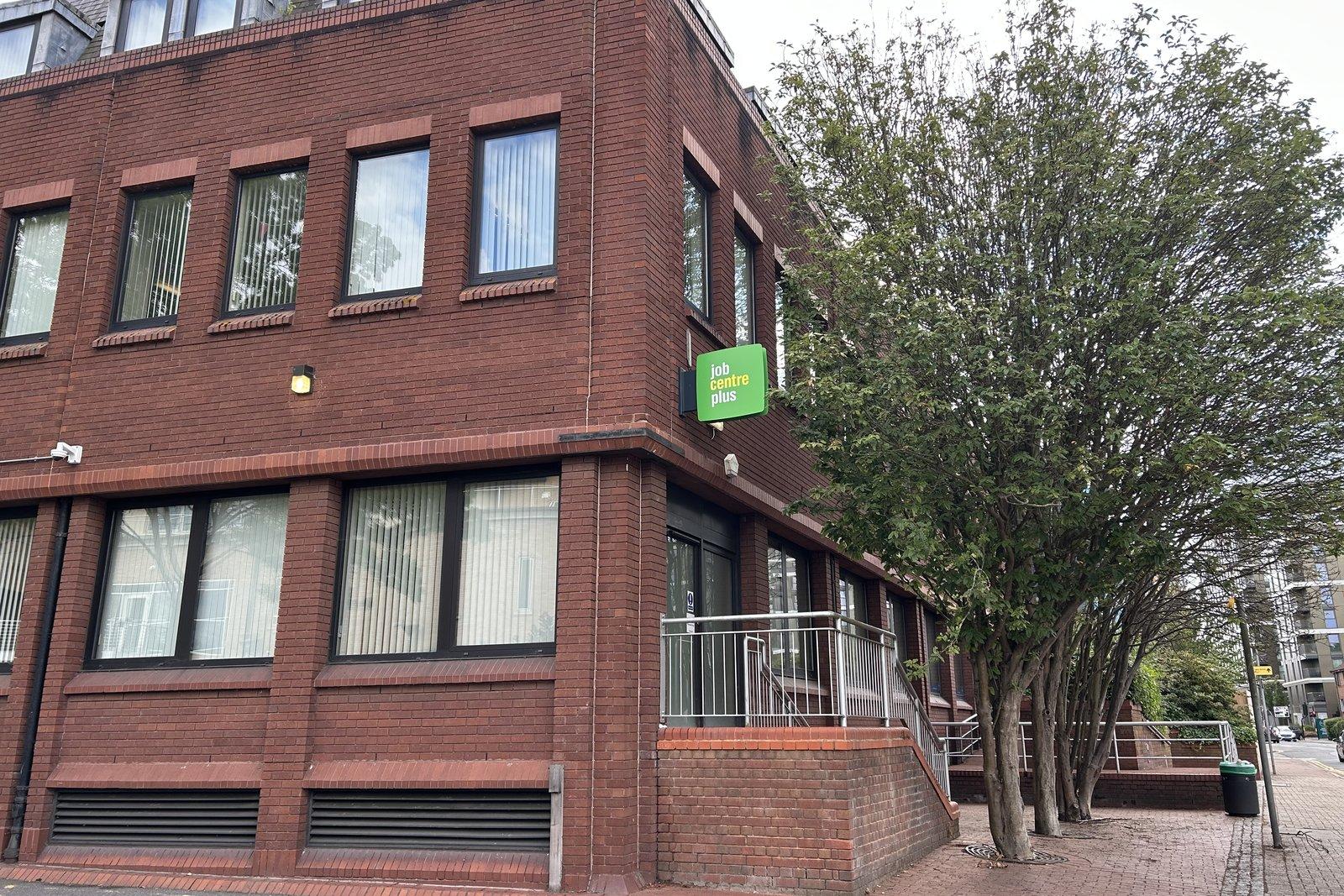
Image: DanielMichaelPerry, CC0 1.0 (https://creativecommons.org/publicdomain/zero/1.0/), via Wikimedia Commons (https://commons.wikimedia.org/wiki/File:Job_Centre_Plus,_Staines.jpg) — Jobcentre Plus office in Staines, July 2025 file photo; cropped and resized
About this article: prepared by The Daily Context editorial desk using automated, source-based reporting from the publications linked below. No reporter was on the ground.
Sources
- Office for National Statistics: Labour market overview, UK: November 2026 (17 November 2026) https://www.ons.gov.uk/employmentandlabourmarket/peopleinwork/employmentandemployeetypes/bulletins/uklabourmarket/november2026
- Office for National Statistics: Average weekly earnings in Great Britain: November 2026 (17 November 2026) https://www.ons.gov.uk/employmentandlabourmarket/peopleinwork/employmentandemployeetypes/bulletins/averageweeklyearningsingreatbritain/november2026
- The Guardian: UK jobs market is a 'mixed picture' as wage growth slows and unemployment falls – business live (17 November 2026) https://www.theguardian.com/business/live/2026/nov/17/uk-jobs-market-wage-growth-payrolls-unemployment-milburn-china-us-chips-latest-news-updates
- The Independent: Job vacancies fall to lowest level outside Covid era for 12 years, figures show (17 November 2026) https://www.independent.co.uk/news/business/ons-covid-alan-milburn-labour-bank-of-england-b3086231.html
- BBC News: Milburn review to propose tax, welfare, and education changes to get young people into work (17 November 2026) https://www.bbc.com/news/live/cq20xlrd044lt
- The Guardian: Youth unemployment plan could cut welfare bill before election, says Milburn – UK politics live (17 November 2026) https://www.theguardian.com/politics/live/2026/nov/17/alan-milburn-youth-unempolyment-neets-economy-welfare-brexit-latest-news-updates
Kabeer Ahmad
Kabeer Ahmad is the founder and editor of The Daily Context. He oversees the site's source-based coverage of world affairs, technology, business, entertainment, lifestyle and sports, and is responsible for its editorial standards, sourcing and corrections.