Houthis free 600 detainees as Yemeni forces pull back from Bab el-Mandeb
Yemen's Houthi authorities in Sanaa unilaterally released 600 conflict-related detainees on 15 November 2026, a release the International Committee of the Red Cross (ICRC) supported but did not negotiate. The same day, government-aligned southern forces said they were redeploying away from Dhubab and the Bab el-Mandeb area, leaving the Houthis closer to one of the world's busiest shipping chokepoints.
Yemen's Houthi movement released 600 people detained in connection with the country's war on Sunday, 15 November 2026, in what its prisoner-affairs chief called the largest unilateral release of the conflict. The International Committee of the Red Cross (ICRC) confirmed the release in Sanaa and said it had interviewed each detainee beforehand, but stressed that it had no role in deciding who was freed or how many.
The release came on the same day that forces aligned with Yemen's internationally recognised government said they were redeploying away from Dhubab airport and the Bab el-Mandeb area on the Red Sea coast. That move, which government officials describe as a tactical repositioning rather than a retreat, leaves the Houthis with greater leverage over a maritime chokepoint at a time when shipping through the Strait of Hormuz is already disrupted.
What happened in Sanaa on Sunday?
In a short statement, the ICRC said 600 conflict-related detainees "were unilaterally released today by authorities in Sana'a, with support from the International Committee of the Red Cross." Its delegates held private interviews with each person before release, its medical staff checked their health and arranged further help where needed, and it provided assistance "to support their dignified return home."
The ICRC was careful to set limits on its role. It said the release was initiated by the Houthis' National Committee for Prisoners' Affairs, "does not fall under the Stockholm Agreement," and that the organisation "did not play any role in determining who or how many people would be released."
Abdul Qader al-Murtada, who heads that Houthi committee, told a press conference in Sanaa broadcast by the group's Al-Masirah TV that it was the largest unilateral release since the war began, according to Xinhua and Anadolu Agency. He said earlier unilateral initiatives had freed 2,612 detainees. "We do not approach this issue with a spirit of revenge, but as a humanitarian matter," he said, as quoted by Xinhua.
AFP, as reported by Dawn, said those freed were members of government forces held since hostilities resumed in July. The Daily Context could not independently verify the identities or affiliations of the 600 people released. Anadolu reported no immediate comment from the Yemeni government.
Who are the detainees, and is this part of a prisoner swap?
It is not a swap. A unilateral release means one side frees people without a matching release by the other. That distinguishes Sunday's move from the larger negotiated exchange that has been stuck for months.
On 14 May 2026, after 14 weeks of direct talks in Amman, the UN special envoy for Yemen, Hans Grundberg, announced that the parties had agreed to release more than 1,600 conflict-related detainees. He called it "the largest agreed release of conflict-related detainees in any round of negotiations between the parties since the outbreak of the current conflict," and said talks in Oman in December 2025 had paved the way. Anadolu has reported that the deal covered around 1,700 detainees on both sides, including seven Saudi nationals and 20 Sudanese members of the Saudi-led coalition.
That exchange was scheduled to take place on 11 July but was postponed, with each side blaming the other. Grundberg said the same weekend that both had renewed their commitment to carry it out. It has not been implemented since.
On Sunday al-Murtada said the Houthis remained ready to implement the agreement despite the renewed fighting, arguing that prisoners are "a separate humanitarian file." He blamed the other side for reneging on its obligations and the UN envoy for suspending consultations on the issue, according to Xinhua and Al Mayadeen. Those are the Houthis' claims; the government had not publicly responded by the time of publication.
What is happening at Bab el-Mandeb?
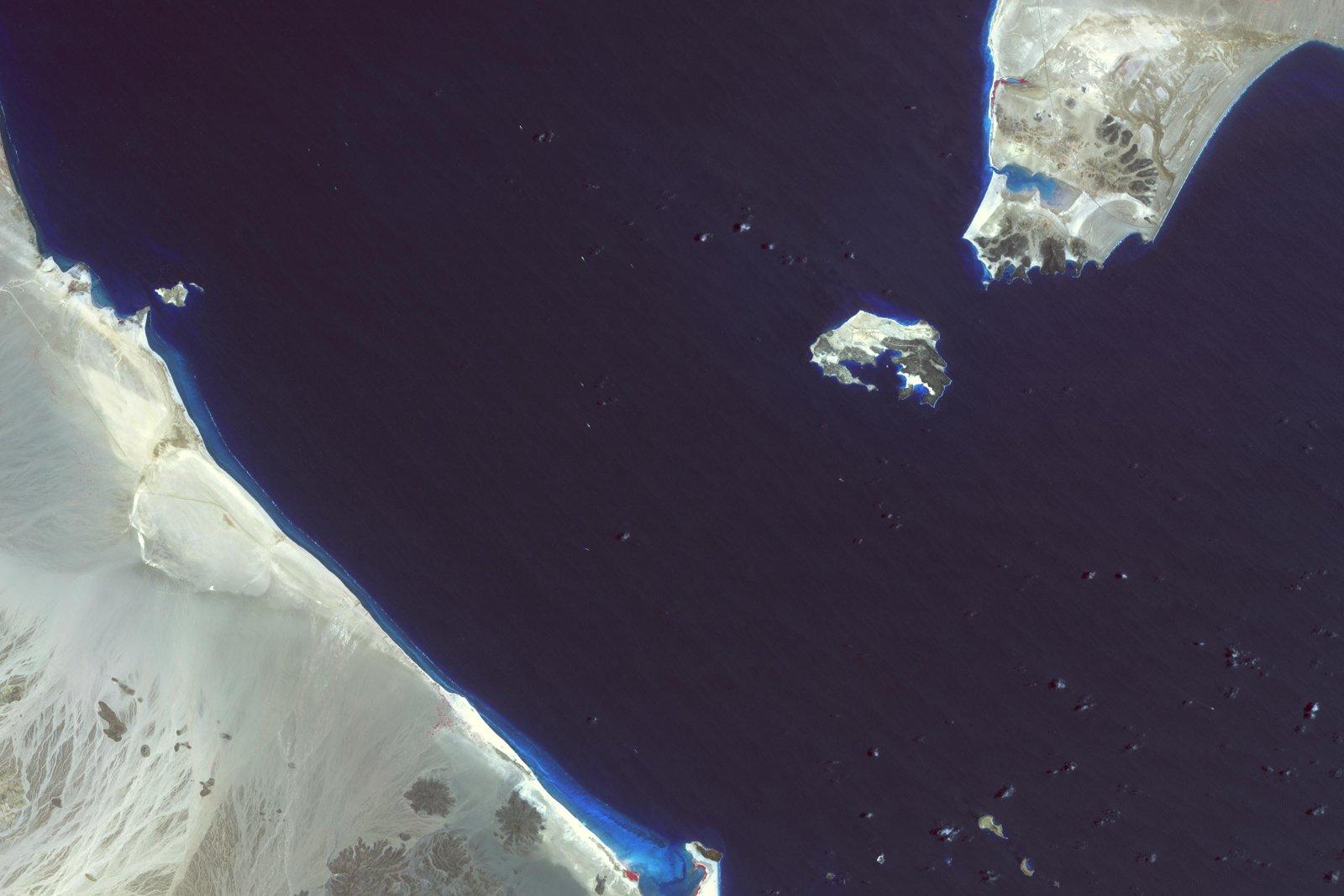
Bab el-Mandeb is the narrow strait between south-western Yemen and Djibouti and Eritrea in the Horn of Africa. It connects the Red Sea to the Gulf of Aden and is a key link on the route between Asia and Europe via Egypt's Suez Canal.
On Sunday the Southern Armed Forces, which fight on the government side, announced "a redeployment operation for its forces from Dhubab airport and the Bab al-Mandeb area, west of Taiz governorate." The statement, quoted by Reuters and The National, said the step was "based on the priority of securing the capital, Aden, and the neighbouring governorates, as well as strengthening the front lines and addressing existing threats," and would support efforts to break the Houthi siege of Taiz city.
Reuters reported that the pullback leaves the Houthis in control of territory overlooking the strait. Government troops had said only last month that they had recaptured the Dhubab area and the port city of Mokha, during a campaign launched in October to push back a Houthi offensive that began in September.
Government officials dispute that this amounts to a loss. A presidency media adviser, Jaber Mohammed, told Asharq Al-Awsat, as reported by Arab News, that the move "should not be interpreted as a withdrawal in the military sense" and that southern forces had repositioned in the al-Suqyah area, roughly six to eight kilometres from Bab el-Mandeb. He argued that troops strung along the exposed coast were vulnerable and that the hills overlooking Bab el-Mandeb, Dhubab and Mayyun (Perim) island mattered more.
Xinhua reported that a Houthi missile later struck vehicles in the Khor Umairah area of Lahj province, about 90 km west of Aden. A government military source said at least 17 people fleeing the fighting were killed or wounded; a Houthi source said the group had targeted government troops, not displaced families. The exact toll was unclear.
Why does the strait matter beyond Yemen?
Any increase in Houthi control near Bab el-Mandeb matters to shipping because the strait is one of two narrow exits from the Arabian Peninsula's main oil-producing region. Reuters noted that the pullback creates a potential "dual squeeze" while Iran continues to disrupt traffic through the Strait of Hormuz on the other side of the peninsula.
Yemen's war has also widened. Reuters and The National report that Houthi strikes on Saudi Arabia have hit ports, airports and Saudi Aramco facilities, including the Red Sea export hub of Yanbu, and that Saudi Arabia has struck Houthi targets in response. The renewed fighting broke a UN-brokered truce agreed in 2022.
Who is affected?
The most immediate effects are on civilians. Reuters and The National report that about 300,000 people have been displaced across Yemen by the latest fighting, around half of them in Taiz, which remains besieged; aid supplies cannot get in and civilians cannot get out.
For the families of the 600 released, Sunday may bring reunions after months of uncertainty. For the families of people still held, including those named in the stalled Amman agreement, little has changed. The 2018 Stockholm Agreement originally envisaged an "all-for-all" exchange when the number of detainees on both sides was estimated at more than 15,000, according to Anadolu.
What happens next?
Three things are worth watching. First, whether the government responds with releases of its own or a return to UN-facilitated talks on the Amman deal; the ICRC says it remains ready to act as a neutral intermediary. Second, whether the redeployment near Bab el-Mandeb holds or turns into a wider Houthi advance towards Lahj and Aden, a risk a southern commander raised in comments reported by Arab News. Third, whether shipping companies and insurers change their assessment of Red Sea routes as control of the coast shifts.
Battlefield claims from both sides are hard to verify independently, and the situation along the coast is changing quickly.
Image: Image: NASA/METI/AIST/Japan Space Systems and U.S./Japan ASTER Science Team, public domain, via Wikimedia Commons (https://commons.wikimedia.org/wiki/File:Bab-el-Mandeb_Strait,_Africa-Arabia_(ASTER).jpg) — satellite image acquired 10 April 2017, not taken during the current fighting; cropped and resized
About this article: prepared by The Daily Context editorial desk using automated, source-based reporting from the publications linked below. No reporter was on the ground.
Sources
- International Committee of the Red Cross: Yemen: 600 conflict-related detainees released in Sana'a (15 November 2026) https://www.icrc.org/en/news-release/yemen-600-conflict-related-detainees-released-sanaa
- Anadolu Agency: Yemen's Houthis unilaterally release 600 detainees: Red Cross (15 November 2026) https://www.aa.com.tr/en/middle-east/yemen-s-houthis-unilaterally-release-600-detainees-red-cross/4125877
- Xinhua: Houthis release 600 detainees as 17 fleeing fighting killed, injured in missile strike (15 November 2026) https://english.news.cn/20261115/606a5611995846c39ec32f47f8300dc5/c.html
- Dawn (AFP): Yemen's Houthis free 600 pro-government fighters: ICRC (15 November 2026) https://www.dawn.com/news/2044727
- Al Mayadeen English: 'Largest unilateral release': Sanaa frees 600 prisoners (15 November 2026) https://english.almayadeen.net/news/politics/largest-unilateral-release-sanaa-frees-600-prisoners
- The National (Reuters): Yemen government forces' pullback hands Houthis greater leverage over Bab Al Mandeb (15 November 2026) https://www.thenationalnews.com/news/mena/2026/11/15/southern-yemeni-forces-withdraw-from-area-near-bab-al-mandab/
- Arab News / Asharq Al-Awsat: Yemeni presidency: redeployment of forces near Bab Al-Mandab a 'calculated military move' (15 November 2026) https://www.arabnews.com/middle-east/yemeni-presidency-redeployment-of-forces-near-bab-al-mandab-a-calculated-military-move-3012081
- Office of the UN Special Envoy for Yemen: Remarks by Hans Grundberg on the agreement to release over 1,600 detainees (14 May 2026) https://osesgy.unmissions.org/en/news/remarks-to-the-press-by-the-un-special-envoy-for-yemen-hans-grundberg-on-the-agreement
- Anadolu Agency: UN envoy says Yemen parties renew commitment to delayed prisoner exchange (11 July 2026) https://www.aa.com.tr/en/middle-east/un-envoy-says-yemen-parties-renew-commitment-to-delayed-prisoner-exchange/3995214
Kabeer Ahmad
Kabeer Ahmad is the founder and editor of The Daily Context. He oversees the site's source-based coverage of world affairs, technology, business, entertainment, lifestyle and sports, and is responsible for its editorial standards, sourcing and corrections.