Türkiye and Qatar sign mutual defence pact: what it says and why now
Türkiye and Qatar signed a mutual defence agreement in Istanbul on Friday, 13 November 2026, pledging a unified stance against any external armed attack on either country. The full text has not been published, so it is not yet clear what would trigger the pact or what a joint response would involve.

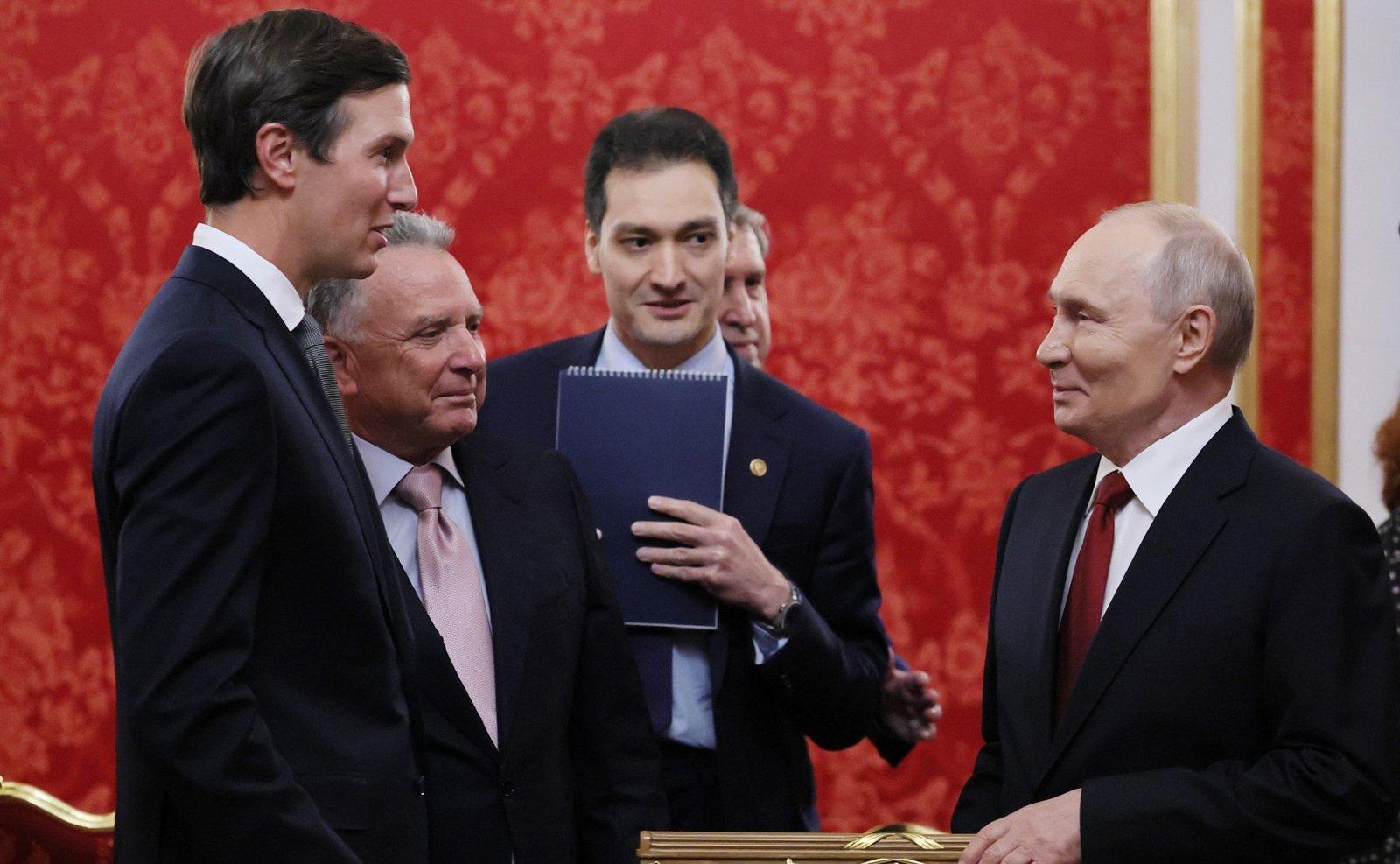
Türkiye and Qatar signed a mutual defence agreement in Istanbul on Friday, 13 November 2026, committing the two countries to "a unified stance in confronting any external armed attack targeting either party or both of them", according to the joint communiqué published by both foreign ministries. President Recep Tayyip Erdoğan and Qatar's Emir, Sheikh Tamim bin Hamad Al Thani, signed the pact themselves at the Turkish presidency's Dolmabahçe working office during the 12th meeting of the countries' Supreme Strategic Committee.
The text of the agreement itself has not been released. The communiqué describes its aims, but neither government has said what kind of attack would activate it, whether either side is obliged to respond militarily, or when it enters into force. Those gaps matter, because they decide whether this is a formal security guarantee or a stronger political framework for an already close military partnership.
What did Türkiye and Qatar agree on 13 November?
The defence pact was one of five documents signed after bilateral and delegation-level talks, Anadolu Agency reported. Alongside it:
- Trade Minister Ömer Bolat and Qatar's Commerce and Industry Minister, Sheikh Faisal bin Thani bin Faisal Al Thani, signed a memorandum on consumer protection, market surveillance and inspection.
- Education Minister Yusuf Tekin and Qatari Minister of State Mohammed bin Abdulaziz Al-Khulaifi signed an education cooperation agreement.
- Foreign Minister Hakan Fidan and Qatar's Prime Minister and Foreign Minister, Sheikh Mohammed bin Abdulrahman Al Thani, signed a memorandum on peace, reconciliation and conflict resolution, as well as the committee's joint communiqué.
The Qatar News Agency said Qatar's Deputy Prime Minister and Minister of State for Defence Affairs, Sheikh Saoud bin Abdulrahman Al Thani, attended the ceremony, and that Turkish ministers including Defence Minister Yaşar Güler were present.
What does the mutual defence agreement actually say?
Everything publicly known comes from the communiqué. It says the agreement aims at "strengthening collective defense and promoting regional security and stability", and that it reflects both countries' commitment to "safeguarding their sovereignty and territorial integrity" and a "shared vision of contributing to a more secure and stable regional order".
In practical terms, the two sides agreed to:
- consult each other on threats to their security, on regional and global security issues and on defence policy;
- expand joint military exercises;
- deepen defence-industry cooperation; and
- increase personnel training exchanges.
A "mutual defence" agreement generally means that each party treats an attack on the other as a matter requiring its own response. The best-known model, Article 5 of NATO's founding treaty, says an armed attack on one member is an attack on all, though even that leaves each member to decide what action it considers necessary. The Türkiye–Qatar communiqué uses the softer language of a "unified stance". As Al Jazeera noted, it does not set out what could trigger the agreement or what form a joint response would take. Until the text is published, readers should treat claims that Türkiye is now bound to fight for Qatar, or the reverse, as interpretation rather than established fact.
Why are Türkiye and Qatar doing this now?
The pact arrives as Gulf states deal with the fallout of the war involving the United States, Israel and Iran, and continuing disruption to shipping through the Strait of Hormuz, the narrow waterway at the mouth of the Gulf through which much of the region's oil and liquefied natural gas (LNG) exports pass.
The communiqué devotes a section to that conflict. Ankara and Doha said it "must be resolved through dialogue and diplomacy", pointed to the understandings reached under a memorandum between Washington and Tehran "or a new agreement that could ensure de-escalation and a lasting peace", and called for "the swift and full resumption of safe, secure and unimpeded passage through the Strait of Hormuz". They also said no country should be exposed to attacks "as a consequence of wider regional tensions", particularly states involved in mediation — a description that fits Qatar, which has long hosted diplomatic talks.
According to a Turkish presidency statement on X quoted by Reuters, Erdoğan said the two countries would "continue working together to prevent the resurgence of war in the Gulf region and establish a basis for dialogue and achieve peace".
Abdulla Banndar Al-Etaibi, an assistant professor of international affairs at Qatar University, told Al Jazeera the aim was not an alliance against any particular country but to raise the cost of potential aggression so that others are deterred. He linked the timing to fears of renewed escalation and to questions in the region about the long-term reliability of the US security umbrella. That is analysis, not a stated government position; Qatar also hosts a major US military presence, and the communiqué does not mention the United States in the defence section.
How close is the Türkiye–Qatar military relationship already?
Very close, and the new pact builds on more than a decade of arrangements:
- 2014: the two countries set up the Supreme Strategic Committee, under an accord dated 19 December 2014, and signed a military cooperation and defence-industry agreement. Türkiye Today reported that this deal entered into force in 2017 after approval by Türkiye's parliament, and covers military expertise, defence-industry development and access to facilities including ports and airspace.
- Turkish presence in Qatar: Türkiye maintains a military presence in Qatar under a separate deployment arrangement.
- 2025: Turkish defence firms ASFAT and MKE reached cooperation agreements with Qatar's Barzan Holding in February, and the two governments signed a defence-industry memorandum in October, according to Türkiye Today.
- October 2026: Türkiye, Qatar, Pakistan and Indonesia signed the Badr Memorandum in Doha on joint defence production, technology development and supply chains. The communiqué praised it as a step towards "the development of indigenous capabilities". Türkiye Today noted that the Badr framework is about industrial cooperation, not a mutual defence commitment.
The economic relationship is substantial too. The communiqué says Turkish contractors have undertaken 206 projects in Qatar worth $20.8 billion, and both sides restated a goal of $5 billion in annual trade. Türkiye Today put bilateral trade at $1.3 billion in 2025. A trade and economic partnership agreement took effect on 1 August 2025, and the leaders also discussed expanding energy cooperation, particularly in LNG.
How does this fit with other regional defence deals?
It is the second notable defence commitment involving Türkiye this year. In August, Türkiye, Saudi Arabia and Pakistan signed the Makkah Joint Defense Agreement, under which an attack on one party constitutes an attack on all, Reuters reported. Türkiye's parliament ratified that agreement last week, clearing the way for Ankara to send military support to Saudi Arabia, which has faced attacks from Yemen's Iran-backed Houthi movement.
Pakistan's involvement in both the Makkah agreement and the Badr Memorandum means Islamabad is increasingly linked to this web of defence-industrial and security arrangements, though it is not party to the new Türkiye–Qatar pact.
Ozcan Tikit, a foreign affairs analyst quoted by Al Jazeera, said he expects Türkiye–Qatar cooperation could extend to missile defence, drones and armoured vehicles, with Qatar possibly joining Turkish air defence projects. He stressed that these were future possibilities, not projects announced in the agreement.
What happens next?
Several questions remain open:
- Publication of the text. The legal wording will show whether there is a binding obligation to assist and how disputes or decisions on deployment would be handled.
- Ratification. Neither government has said when the agreement takes effect. Türkiye's earlier defence accords, including the 2014 agreement with Qatar and the Makkah pact, went to parliament for approval, but no timetable has been announced for this one.
- Implementation. Watch for announcements of new joint exercises, training programmes or procurement deals, which would show how the consultation and industry commitments are being put into practice.
The committee agreed to hold its 13th meeting in Qatar in 2027, on a date to be set through diplomatic channels.
Image: Photo: Diego Delso, CC BY-SA 4.0 (https://creativecommons.org/licenses/by-sa/4.0/), via Wikimedia Commons (https://commons.wikimedia.org/wiki/File:Palacio_de_Dolmabah%C3%A7e,_Estambul,_Turqu%C3%ADa,_2024-09-28,_DD_110.jpg) — file photo of Dolmabahçe Palace, September 2024, resized; the presidency's Istanbul working office, where the pact was signed, is in the Dolmabahçe complex. Not taken during the 13 November meeting
About this article: prepared by The Daily Context editorial desk using automated, source-based reporting from the publications linked below. No reporter was on the ground.
Sources
- Republic of Türkiye Ministry of Foreign Affairs: Joint Communiqué of the Twelfth Session of the Supreme Strategic Committee, 13 November 2026 — https://www.mfa.gov.tr/turkiye-cumhuriyeti-ile-katar-devleti-arasinda-yuksek-stratejik-komite-on-ikinci-toplantisi-ortak-bildirisi--13-kasim-2026.en.mfa
- Qatar Ministry of Foreign Affairs: Joint Communiqué of the Twelfth Session of the Supreme Strategic Committee — https://mofa.gov.qa/en/latest-articles/statements/joint-communiqu%C3%A9-of-the-twelfth-session-of-the-supreme-strategic-committee-between-the-state-of-qatar-the-and-republic-of-t%C3%BCrkiye
- Qatar News Agency: HH the Amir, Turkish President sign joint defense agreement — https://qna.org.qa/en/news/news-details?date=13%2F11%2F2026&id=hh-the-amir-turkish-president-sign-joint-defense-agreement
- Anadolu Agency: Türkiye, Qatar sign 5 agreements, including mutual defense pact — https://www.aa.com.tr/en/politics/turkiye-qatar-sign-5-agreements-including-mutual-defense-pact/4124634
- Reuters via Arab News: Turkiye, Qatar sign mutual defense agreement, pledge unified stance against attack — https://www.arabnews.com/middle-east/turkiye-qatar-sign-mutual-defense-agreement-pledge-unified-stance-against-attack-3011680
- Al Jazeera: Qatar and Turkiye sign a mutual defence pact: What do we know? — https://www.aljazeera.com/news/2026/11/14/qatar-and-turkiye-sign-a-mutual-defence-pact-what-do-we-know
- Türkiye Today: Türkiye, Qatar sign mutual defense pact at 12th strategic committee meeting — https://www.turkiyetoday.com/nation/turkiye-qatar-sign-mutual-defense-pact-at-12th-strategic-committee-meeting-3232337
- Hürriyet Daily News: Türkiye, Qatar sign mutual defense pact — https://www.hurriyetdailynews.com/turkiye-qatar-sign-mutual-defense-pact-229376
Kabeer Ahmad
Kabeer Ahmad is the founder and editor of The Daily Context. He oversees the site's source-based coverage of world affairs, technology, business, entertainment, lifestyle and sports, and is responsible for its editorial standards, sourcing and corrections.