Wolbachia mosquitoes cut dengue and chikungunya infections by about 69% in Brazilian children, trial finds
A four-year randomised trial in Belo Horizonte, Brazil, found about 69% fewer dengue and chikungunya infections among schoolchildren living where Wolbachia-carrying mosquitoes were released. The results were presented at a scientific meeting and are not yet peer reviewed.
Children living in Brazilian neighbourhoods where scientists released mosquitoes carrying a bacterium called Wolbachia were about 69% less likely to be infected with dengue or chikungunya than children in comparable neighbourhoods without the releases, according to results from a large randomised trial presented on Saturday 21 November.
The EVITA Dengue trial followed 5,757 schoolchildren aged six to 11 in Belo Horizonte, a city of more than two million people in south-east Brazil, from 2020 to 2024. The researchers reported an overall efficacy of 68.6% in reducing arboviral infections, with 68.5% for dengue and 73.3% for chikungunya. The protection held during 2024, when Brazil suffered the largest dengue outbreak in its recorded history.
The findings were presented at the annual meeting of the American Society of Tropical Medicine and Hygiene (ASTMH) in National Harbor, Maryland. They have not yet been published in a peer-reviewed journal; the research team says the results will be submitted for peer review.
What did the EVITA Dengue trial find?
The headline result is a 68.6% reduction in infections caused by viruses spread by the Aedes aegypti mosquito, measured by comparing children in areas that received Wolbachia mosquitoes with children in areas that did not.
"Our findings in the EVITA trial show a 68.6% overall efficacy in reducing arboviral infection from this intervention," said Dr Sri Edupuganti, a co-principal investigator and professor of infectious diseases at Emory University School of Medicine in Atlanta. "This means that children living in communities where Wolbachia-infected Aedes aegypti mosquitoes were established had substantially lower arboviral infection."
The study was also designed to look at Zika, the third major virus carried by Aedes aegypti. But there were too few Zika infections during the study period for researchers to say whether the mosquitoes had any effect on it, according to the Associated Press.
Derek Cummings, a co-principal investigator and Bloomberg Distinguished Professor at Johns Hopkins University, said the intervention "substantially reduced dengue infections during Brazil's largest recorded outbreak, demonstrating its potential to protect communities even under conditions of intense transmission."
Dr David Hamer, a global health specialist at Boston University who was not involved in the study, told the AP the results were "really exciting". He predicted that wider use of Wolbachia mosquitoes, alongside existing control measures, could push dengue down to much lower levels in many places, though that is a projection rather than something the trial measured.
How do Wolbachia mosquitoes stop dengue?
Wolbachia is a common bacterium found naturally in many insect species, but not normally in Aedes aegypti, the mosquito that spreads dengue, Zika and chikungunya. When scientists introduce it into Aedes aegypti, the bacterium sharply reduces the mosquito's ability to transmit those viruses to people.
Crucially, female mosquitoes pass Wolbachia on to their offspring. If enough male and female carriers are released into an area, the bacterium spreads through the local mosquito population and can become established for years without further releases. This approach, known as population replacement, was pioneered by the non-profit World Mosquito Program. The mosquitoes carry a bacterium; they are not genetically engineered.
In Belo Horizonte, releases ran from January 2021 to May 2022, using a locally adapted mosquito strain. "We are pleased to have developed this locally adapted strain from Belo Horizonte for the EVITA dengue trial and to achieve successful sustained establishment of the Wolbachia-infected mosquitoes for over three years," said Luciano Moreira of the Brazilian research institute Fiocruz and the World Mosquito Program in Brazil.
The World Mosquito Program has said that blocking is not complete, so some virus transmission can still occur, and that very high temperatures can reduce the bacterium's density inside mosquitoes.
How was the study designed, and why does it matter?
EVITA Dengue was a cluster-randomised controlled trial. Instead of assigning individual people to groups, researchers divided the city into 58 areas, each defined by the catchment of a municipal primary school, and randomly assigned half of them to receive Wolbachia mosquitoes. All 58 areas continued to receive the city's standard mosquito control, including insecticide spraying and the removal of breeding sites. That means the result reflects what Wolbachia added on top of existing measures.
The trial's published protocol, which appeared in the journal Trials in 2022, planned for about 3,480 children; the final enrolment of 5,757 was considerably larger. Children gave a blood sample at the start of the study in 2020 and once a year afterwards until 2024. Those samples were tested for antibodies to dengue, Zika and chikungunya.
Testing blood rather than counting clinic diagnoses is significant. Many dengue infections cause mild symptoms or none at all, so case reports miss a large share of them. By looking for antibodies, the trial captured infections that never reached a doctor.
That design also means the 69% figure is not directly comparable to earlier studies. A randomised trial in Yogyakarta, Indonesia, published in 2021, reported a 77% reduction in laboratory-confirmed symptomatic dengue and 86% fewer dengue hospitalisations. A city-wide programme in Niterói, Brazil, reported an 89% fall in notified dengue cases compared with the decade before releases, though that was an observational comparison rather than a randomised trial.
"Conducting this study during the COVID-19 pandemic was an extraordinary challenge, particularly as schools closed just as we were beginning enrollment," said Mauro Teixeira of the Federal University of Minas Gerais, another co-principal investigator. Tens of thousands of blood samples were processed at the laboratory of Mauricio Nogueira at the São José do Rio Preto Medical School (FAMERP).
What are the limitations of the results?
Several caveats apply. The findings come from a conference presentation, not a peer-reviewed paper, and the public summaries released so far do not include confidence intervals or the full statistical analysis. Peer review may refine the numbers.
The trial covered one city. Belo Horizonte's climate, housing and mosquito ecology may differ from other dengue-affected regions, so the effect elsewhere could be larger or smaller. And the study cannot speak to Zika.
The approach also takes time. Fiocruz researcher Julio Croda, who was not part of EVITA, told Brazil's Folha de S.Paulo earlier this month that the method becomes self-sustaining after about two years, so releases need to start well ahead of the season in which protection is wanted.
Who funded the trial and what happens next?
The research was led by Brazilian institutions including the Federal University of Minas Gerais, Fiocruz, FAMERP and the World Mosquito Program, together with US partners at Emory, Yale, Johns Hopkins and the University of Florida. According to the Emory release, the US National Institutes of Health provided about $8 million, or 83% of the funding, and Brazil's Ministry of Health contributed 8 million reais (about $1.4 million).
Brazil is already expanding the approach. According to its Ministry of Health, as reported by Folha, Wolbachia mosquitoes are being released in 16 municipalities covering about 16 million people, with plans to add 54 more from next year.
The results also land as dengue spreads in new places. In the United States, Florida has recorded more than 650 locally acquired dengue cases this year, around three-quarters of them in Hillsborough County, which includes Tampa. The AP reported that this appears to be the largest outbreak in any US state since at least the 1940s.
"The EVITA trial findings represent an important step forward in the search for sustainable, scalable approaches to protect 4 billion of the world's population that live in regions, including parts of the US, where dengue, Zika and other Aedes aegypti mosquito-borne diseases occur," said Albert Ko, a co-principal investigator and professor of public health at Yale University.
This article reports research findings and is not medical advice. Anyone concerned about dengue should follow guidance from local health authorities.
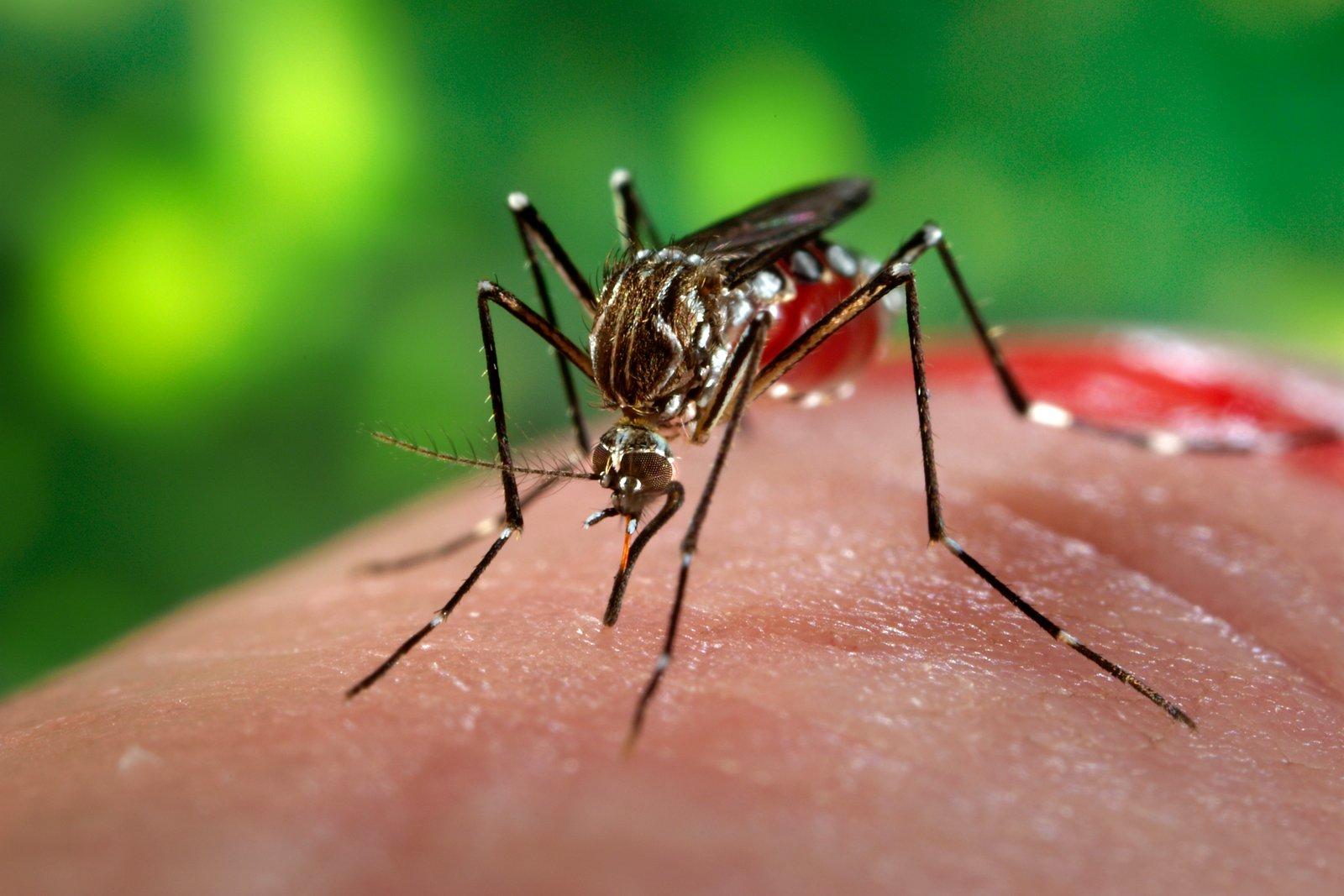
Image: File photo (2006) of a female Aedes aegypti mosquito, the species that spreads dengue; an illustrative image, not a Wolbachia-carrying mosquito from the Brazilian trial. Photo by James Gathany, US Centers for Disease Control and Prevention (Public Health Image Library 9256), public domain, via Wikimedia Commons (https://commons.wikimedia.org/wiki/File:Aedes_aegypti_CDC9256.tif); cropped and resized
About this article: prepared by The Daily Context editorial desk using automated, source-based reporting from the publications linked below. No reporter was on the ground.
Sources
- Emory Health Sciences via EurekAlert! (21 Nov 2026): https://www.eurekalert.org/news-releases/1152851
- Associated Press (21 Nov 2026): https://apnews.com/article/dengue-mosquitoes-brazil-wolbachia-f76cedcdcdf10c8834ab828d3e12ab13
- G1 / Globo (21 Nov 2026): https://g1.globo.com/saude/noticia/2026/11/21/cientistas-apresentam-evidencias-de-que-mosquitos-geneticamente-modificados-podem-combater-a-dengue.ghtml
- Tech Times (21 Nov 2026): https://www.techtimes.com/articles/331235/20261121/wolbachia-mosquitoes-cut-dengue-chikungunya-infections-about-69-randomized-blood-test-trial.htm
- Fato em Dia (21 Nov 2026): https://www.fatoemdia.com.br/noticia/wolbachia-bh-criancas-dengue-69/
- Folha de S.Paulo (8 Nov 2026): https://www1.folha.uol.com.br/ciencia/2026/11/mosquito-com-bacteria-se-consolida-no-combate-a-dengue-no-brasil-mas-ainda-esbarra-em-gargalos.shtml
- Trials, EVITA Dengue study protocol (2 Mar 2022): https://link.springer.com/article/10.1186/s13063-022-05997-4
Kabeer Ahmad
Kabeer Ahmad is the founder and editor of The Daily Context. He oversees the site's source-based coverage of world affairs, technology, business, entertainment, lifestyle and sports, and is responsible for its editorial standards, sourcing and corrections.