California bars Waymo robotaxis from freeways as an 'imminent hazard'; Waymo halts freeway rides everywhere
California's Department of Motor Vehicles has barred Waymo's driverless cars from the state's freeways, calling them an 'imminent hazard to public safety' after robotaxis drove into active construction zones. The order took effect on 11 November and became public on 17 November. Waymo has paused commercial freeway rides in every market while it works to win back approval.
California has banned Waymo's driverless cars from its freeways. The state Department of Motor Vehicles (DMV) says the Alphabet-owned company's freeway operations pose "an imminent hazard to public safety" after its robotaxis repeatedly drove into active highway construction zones. The restriction took effect on 11 November 2026 but only became public on Tuesday, 17 November.
Waymo has responded by pausing commercial freeway rides in all of its markets, not just California. Its robotaxis are still carrying passengers on ordinary city streets. The ban will stay in place until Waymo can show the DMV that it has fixed the problems that led to it.
What did California's DMV decide?
The DMV, which regulates the testing and deployment of self-driving vehicles in California, imposed an operating restriction that stops Waymo's driverless vehicles using the state's freeways. KQED and the Los Angeles Times reported that the order covers both operating and testing on freeways.
In a statement sent to several news outlets, DMV spokesperson Jonathan Groveman said: "The Department determined that Waymo's driverless freeway operations pose an imminent hazard to public safety due to recurring incursions by its vehicles into active construction zones where construction workers, vehicles and equipment are present, despite a prior restriction and corrective actions implemented following similar incidents that occurred on May 18, 2026."
TechCrunch reported that the restriction was issued on 11 November but was not made public until Tuesday, when the San Francisco Business Times first reported it.
What incidents led to the ban?
The DMV pointed to two incidents in the San Francisco Bay Area last week:
- US Route 101 near Burlingame: three Waymo vehicles entered an active construction closure on the freeway south of San Francisco.
- Interstate 280 in San Francisco: a Waymo vehicle appeared to try to get past California Highway Patrol cars that were carrying out a "traffic break", in which officers slow traffic behind them so workers can work safely. Wired reported that the incident was captured in a widely shared video, and that the officers were slowing traffic while debris from a crash was cleared.
Waymo said in its statement that the US 101 encounters "did not involve any injuries or collisions".
The DMV's statement makes clear it sees a pattern rather than a one-off. It refers to similar construction-zone incidents on 18 May 2026, which led to an earlier restriction and corrective action. Waymo paused freeway service in May and returned to freeways in July, after it said it had updated its self-driving software to cope better with construction zones, according to TechCrunch. Wired and Engadget reported that in June the company issued a software recall, covering about 3,800 vehicles according to Engadget, after federal regulators at the National Highway Traffic Safety Administration (NHTSA) found the system was failing to recognise highway construction zones.
How has Waymo responded?
Waymo has complied with the order and says it has gone further. "Following recent freeway construction zone encounters on U.S. 101 in California that did not involve any injuries or collisions, the California DMV has implemented an operating restriction on freeway operations in the state," spokesperson Dana Gallagher said. "In alignment with our safety-first principles, we have also temporarily restricted freeway operations across our other operating markets to evaluate our performance."
The company says its ride-hailing service continues on surface streets, "serving over half a million trips each week", and that it is "working with the California DMV and other state officials diligently and responsibly to resume freeway operations", according to statements quoted by TechCrunch and Wired. Another spokesperson, Chris Pappas, told The Verge: "Safety is at the foundation of everything we do."
According to the Associated Press, Waymo had offered freeway rides in the San Francisco Bay Area, Los Angeles, Phoenix, Miami and Austin. A Waymo spokesperson told AP that the company is continuing freeway testing "with trained autonomous specialists behind the wheel". Engadget reported that such testing with human safety drivers may take place outside California, which fits with the DMV's order covering testing as well as driverless operation in the state.
Why do freeways matter so much to Waymo?
Freeway driving was a major milestone for Waymo. It began offering fully driverless trips on some freeways in the Bay Area, Phoenix and Los Angeles in November 2025, KQED reported. Freeway access lets robotaxis reach airports and cross large service areas far more quickly. TechCrunch noted that in the Bay Area, where Waymo's service now stretches from San Francisco south to San José, freeway routes had cut Peninsula trips that used to take 45 minutes to over an hour.
Without freeways, cars must take slower surface-street routes, which can mean longer journeys and higher fares. The Verge noted that Waymo trips already tend to cost more than human-driven Uber or Lyft rides. Waymo has commercial service in 15 US metro areas, according to Wired and TechCrunch. It operates more than 1,000 robotaxis in Los Angeles alone, the Los Angeles Times reported, and has announced plans to expand to cities including London and Tokyo.
Why are construction zones so hard for self-driving cars?
Construction zones are a long-standing weakness for automated driving systems. Wired noted that the layout of cones, barriers, signs and flashing arrows varies widely from site to site. Human drivers interpret these cues easily, but they are hard to turn into reliable rules for software. The risk is greatest at freeway speeds, where road workers stand close to fast-moving traffic.
Emergency vehicles and police instructions pose similar problems. Waymo's dealings with emergency services in San Francisco have already prompted calls for tighter regulation, KQED reported. Separately, Wired reported that NHTSA said last week it was examining whether a December 2025 Waymo software recall, linked to cars driving past stopped school buses, had actually fixed that problem.
What happens next?
The DMV says the restriction will stay in place until "Waymo demonstrates to the Department that it has taken effective corrective actions to address the deficiencies that precipitated the restrictions". That includes evidence that its vehicles can detect and respond safely to construction zones and emergency vehicles, KQED reported. The Verge reported that Waymo will need to submit that evidence for review before regulators decide whether it can return to freeways.
Neither the DMV nor Waymo has given a timeline. In the meantime, Waymo's surface-street service in California, including Los Angeles, San Diego and the Bay Area, is unaffected. Whether and when it restores freeway rides in Arizona, Florida and Texas, where the pause is voluntary, will be watched closely as competitors such as Tesla and Amazon's Zoox expand their own robotaxi services.
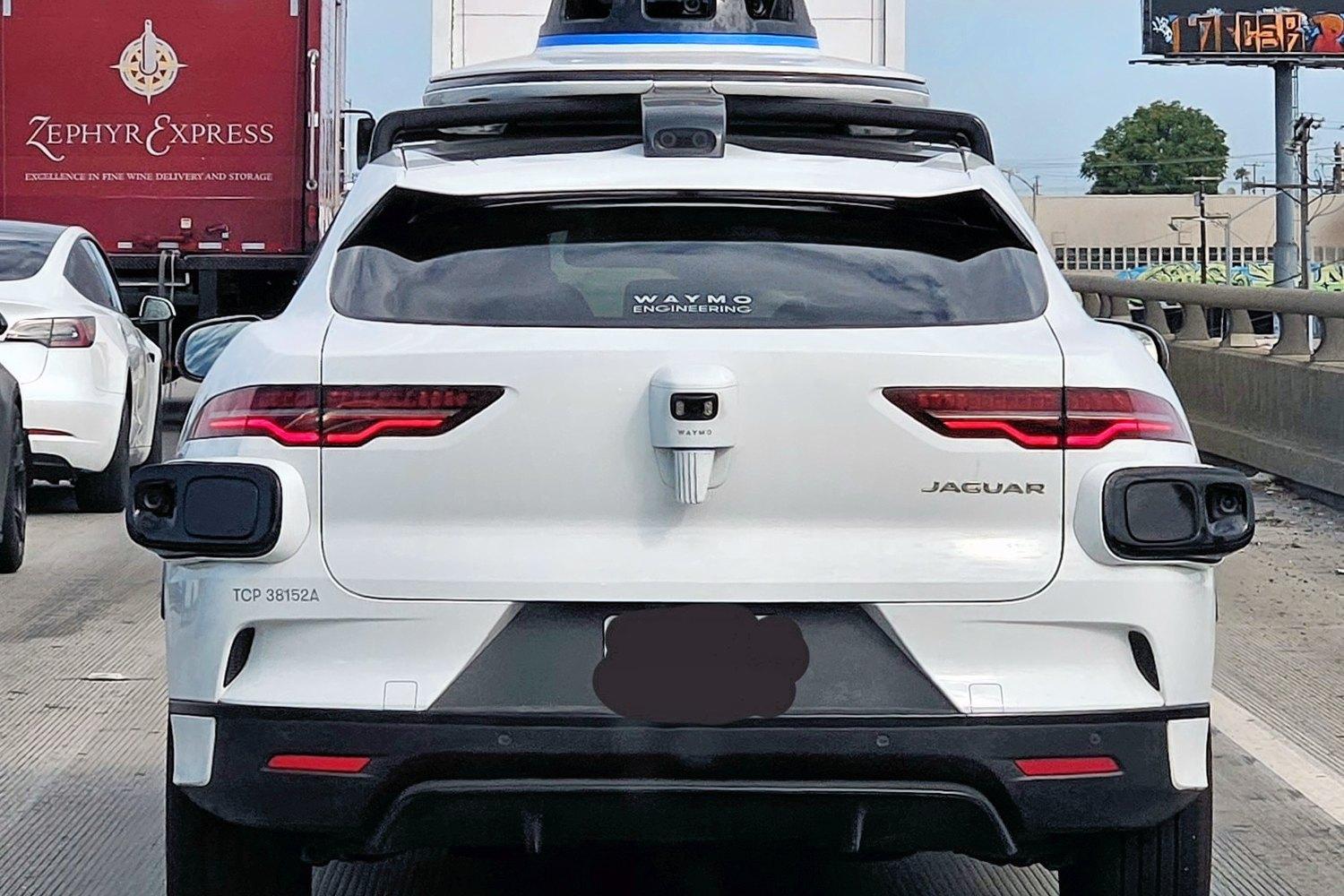
Image: Photo: Eric Polk, CC BY-SA 4.0, via Wikimedia Commons (https://commons.wikimedia.org/wiki/File:Waymo_car_on_a_freeway.jpg) — August 2023 file photo of a Waymo test vehicle on Interstate 10 in Los Angeles; not related to the incidents described; cropped and resized
About this article: prepared by The Daily Context editorial desk using automated, source-based reporting from the publications linked below. No reporter was on the ground.
Sources
- TechCrunch (17 Nov 2026): https://techcrunch.com/2026/11/17/waymo-suspends-freeway-rides-nationwide-after-california-dmv-order/
- KQED (17 Nov 2026): https://www.kqed.org/news/12110123/hazard-to-public-safety-california-dmv-restricts-waymo-freeway-operations
- Wired (17 Nov 2026): https://www.wired.com/story/waymo-pulls-its-robotaxis-from-highways-after-california-incidents/
- The Verge (17 Nov 2026): https://www.theverge.com/transportation/1035789/california-dmv-bans-waymo-freeways-construction-zone-safety
- Los Angeles Times (17 Nov 2026): https://www.latimes.com/business/story/2026-11-17/california-dmv-bars-waymo-from-driving-on-freeways
- Engadget (17 Nov 2026): https://www.engadget.com/2319947/waymo-is-pausing-all-freeway-rides-after-california-dmv-says-the-robotaxis-are-imminent-hazard-to-public-safety/
- Associated Press (17 Nov 2026): https://apnews.com/article/waymo-driverless-vehicle-california-freeway-ban-37bcd5371a4699a1850b7666b271946b
Kabeer Ahmad
Kabeer Ahmad is the founder and editor of The Daily Context. He oversees the site's source-based coverage of world affairs, technology, business, entertainment, lifestyle and sports, and is responsible for its editorial standards, sourcing and corrections.