Vulcan rocket fails 10 minutes into flight, destroying 40 Amazon Leo satellites
A United Launch Alliance Vulcan rocket failed about 10 minutes after lifting off from Cape Canaveral on 15 November 2026, and the 40 Amazon Leo internet satellites it carried did not reach orbit. It is the first outright mission failure in ULA's 20-year history, and the cause has not yet been identified.
A United Launch Alliance (ULA) Vulcan rocket failed about 10 minutes into flight on Sunday, 15 November 2026, and the 40 Amazon Leo broadband satellites it was carrying did not reach orbit. ULA, the Boeing–Lockheed Martin joint venture, confirmed the loss roughly 50 minutes after liftoff and said it did not yet know what went wrong.
According to Spaceflight Now, it is the first outright mission failure by a ULA rocket since the company was formed in 2006. It is also a significant setback for Amazon, which is relying on Vulcan as the main launcher for its planned rival to SpaceX's Starlink satellite internet service.
What happened during the launch?
The rocket lifted off from Space Launch Complex 41 at Cape Canaveral Space Force Station, Florida, at 12:40 p.m. Eastern time (17:40 GMT; 10:40 p.m. in Pakistan), according to Space.com and Spaceflight Now. The mission, which Amazon calls LV-01 and ULA called Vulcan Leo 1, followed two days of delays: a power interruption at a nitrogen plant that serves several launch providers scrubbed Friday's attempt, and a ground-to-rocket network communication problem halted Saturday's.
On Sunday the countdown was held at T-minus 20 seconds for a technical issue with the rocket. Spaceflight Now reported that the issue was resolved and the rocket launched at the end of its window; it is not known whether that problem had anything to do with what followed.
The six Northrop Grumman solid rocket boosters, whose nozzles had malfunctioned on two earlier Vulcan flights, appeared to work normally and fell away less than two minutes after liftoff. The two methane-fuelled BE-4 engines on the first stage, built by Blue Origin, then continued the climb.
Spaceflight Now reported that the first stage appeared to burn longer than ULA's pre-launch timeline indicated and to separate later than expected, and that a telemetry-driven animation showed the Centaur upper stage making unusual orientation adjustments early in its planned 12-minute, 15-second burn. ULA's broadcast ended without confirming whether that burn was completed.
ULA then said: "Based on data received by our Launch Director, we confirm that the Vulcan vehicle launched from Space Launch Complex 41 suffered an anomaly 10 minutes into the flight and failed to deliver the Amazon mission to orbit." The company added that because the anomaly had only just occurred, "we don't have any specific data yet to understand what occurred today."
What caused the failure?
That is not yet known. ULA has not published a cause, and the observations about the first-stage burn and the Centaur's behaviour come from analysis of the public broadcast and telemetry display, not from an official finding.
ULA said it would work with its customer "and other appropriate organizations to find the cause, determine the appropriate corrective action and return to flight as quickly as possible," and that Amazon would have visibility into the investigation. NASA Administrator Jared Isaacman wrote on X that NASA's team was "available to assist in all matters related to the investigation and remediation effort."
Two background points will feature in any review. First, Sunday's flight was the first to use a redesigned booster nozzle, after nozzle burn-throughs on Vulcan's second flight in October 2024 and its fourth in February 2026. Second, the BE-4 engine family was linked to a separate failure: Spaceflight Now reports that a catastrophic on-pad explosion of Blue Origin's New Glenn rocket last May was traced to an oxygen valve in one of its BE-4 engines. ULA chief executive Mark Peller told Aviation Week before the flight that Blue Origin had retrofitted a design improvement on the engines used for this mission. There is no evidence so far that either issue caused Sunday's failure, and the anomaly was reported during the upper-stage burn, which uses different engines (two L3Harris RL10s).
What does this mean for Amazon Leo?
Amazon Leo, formerly known as Project Kuiper, is Amazon's planned network of more than 3,200 low Earth orbit satellites for broadband internet. Before Sunday, Amazon had launched 396 satellites on 14 missions since April 2025, according to GeekWire; Space.com put the figure at about 400. Sunday's batch would have brought the total to 436.
Vulcan is central to Amazon's plan. Sunday's mission was the first of 38 Vulcan launches Amazon has bought, and GeekWire reports the rocket is slated to carry more than 1,500 of Amazon's first-generation satellites, more than any other launcher in the programme. Melissa Wuerl, Amazon Leo's director of launch systems, had described Vulcan as the programme's "primary workhorse over the next several years." Amazon had said a second Vulcan mission could follow within weeks; that now depends on the investigation.
The setback comes as Amazon's other heavy-lift option is also unavailable. Amazon has 24 launches reserved on Blue Origin's New Glenn, which has been grounded since the May explosion, and has booked additional flights on Arianespace's Ariane 6 and SpaceX's Falcon 9.
In a post on X, Amazon Leo said: "There is risk with any launch, and that's especially true for inaugural missions like LV-01. ULA has been a trusted partner for Amazon, and we believe they'll learn from this mission and deliver on their long-term plans for Vulcan."
Does Amazon face a regulatory deadline?
Amazon's US licence originally required it to put about half the first-generation constellation, 1,616 satellites, into service by 30 July 2026, a target it did not reach. GeekWire reports that in June the Federal Communications Commission allowed Amazon to keep deploying, although satellites not operational by that date temporarily lose priority in key spectrum bands. Amazon has until 30 July 2029 to deploy all 3,232 first-generation satellites.
The loss of 40 satellites and an unknown pause in Vulcan flights make that schedule harder, but it is too early to say by how much. Amazon has said it plans an initial rollout of commercial service this year; it has not said whether Sunday's failure changes that.
Why does it matter beyond Amazon?
ULA and SpaceX are the only two companies with rockets currently certified for the most sensitive US national security launches, according to Air & Space Forces Magazine. The US Space Force paused national security missions on Vulcan after the February booster anomaly and, as Spaceflight Now reported before launch, wanted to review data from this commercial flight before deciding whether to resume.
That pause had already pushed several missions on to SpaceX rockets. Air & Space Forces Magazine lists four, including the final GPS III satellite and a Next-Generation Overhead Persistent Infrared missile-warning satellite. A new failure, in a different part of the rocket, is likely to extend Vulcan's absence from that manifest and leave the US government more reliant on a single provider for the time being.
What happens next?
ULA, Amazon and other organisations will analyse telemetry to identify the failure, and Vulcan is expected to remain grounded until a cause is found and corrective action agreed. ULA has not given a timetable. The Space Force has not yet said how the result affects its own Vulcan plans. The Daily Context will update this article when an official cause or a revised launch schedule is announced.
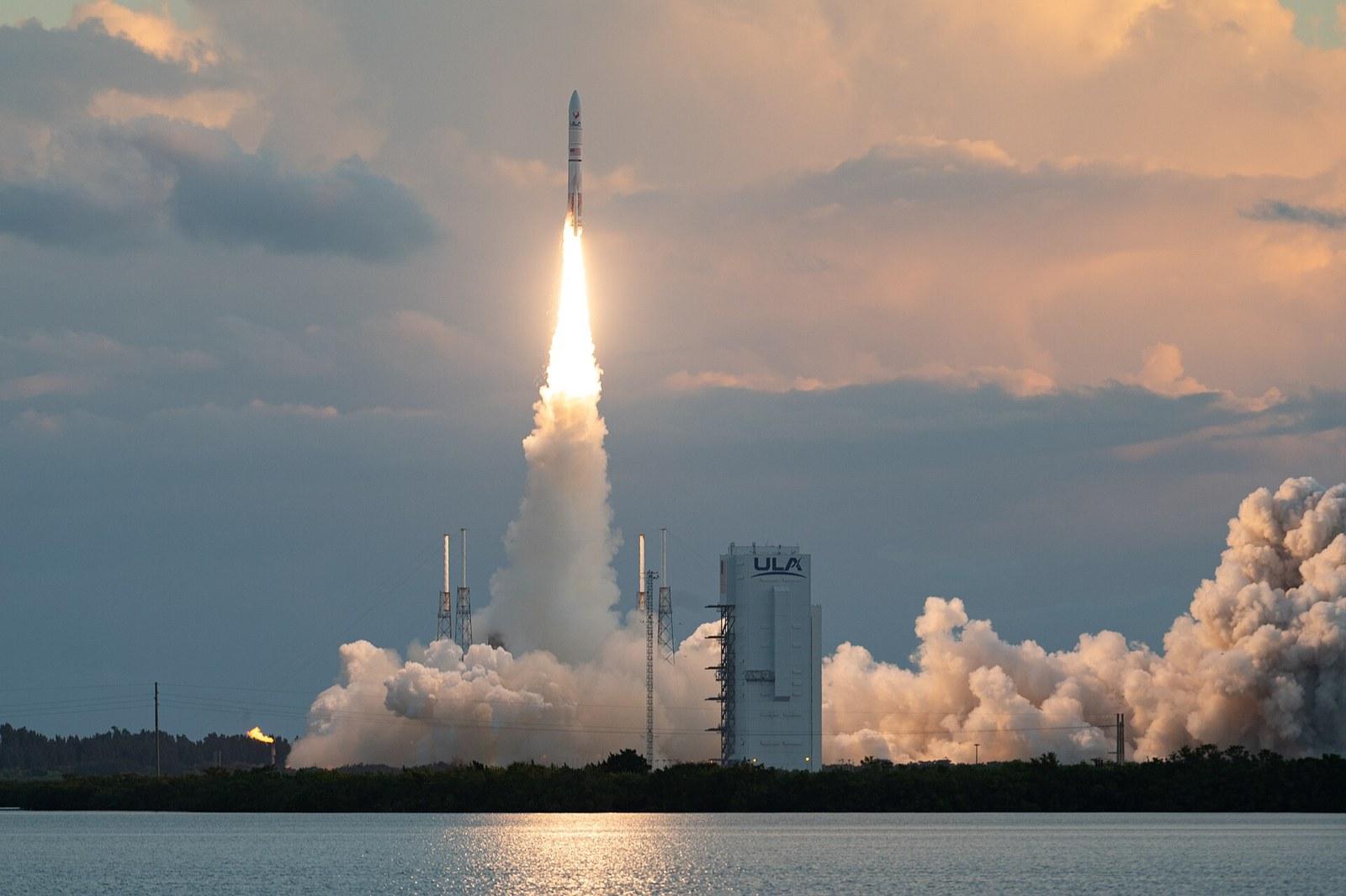
Image: Image: U.S. Space Force photo by Airman 1st Class Collin Wesson, public domain, via Wikimedia Commons (https://commons.wikimedia.org/wiki/File:Vulcan_Cert_2_Launch_(8699035).jpg) — file photo of an earlier Vulcan launch on 4 October 2024, not the 15 November 2026 flight; resized
About this article: prepared by The Daily Context editorial desk using automated, source-based reporting from the publications linked below. No reporter was on the ground.
Sources
- United Launch Alliance statements, as quoted by Spaceflight Now: https://spaceflightnow.com/2026/11/15/ula-suffers-first-total-mission-failure-with-loss-of-vulcan-rocket-carrying-40-amazon-leo-satellites/
- Space.com, "Vulcan Centaur rocket fails during return-to-flight launch, 40 Amazon satellites lost" (15 November 2026): https://www.space.com/space-exploration/launches-spacecraft/ula-vulcan-centaur-return-to-flight-amazon-leo-internet-satellite-launch
- GeekWire, "Amazon loses 40 Leo satellites as ULA Vulcan launch failure deals setback" (15 November 2026): https://www.geekwire.com/2026/amazon-loses-40-leo-satellites-as-ula-vulcan-launch-failure-deals-setback-to-tech-giants-starlink-rival/
- The Verge, "Vulcan rocket fails, destroying 40 Amazon Leo satellites" (15 November 2026): https://www.theverge.com/science/1034006/vulcan-rocket-fails-destroying-40-amazon-leo-satellites
- SpaceNews, "Vulcan launch of Amazon Leo satellites fails" (15 November 2026): https://spacenews.com/vulcan-launch-of-amazon-leo-satellites-fails/
- Spaceflight Now, pre-launch delays and Space Force review (13–14 November 2026): https://spaceflightnow.com/2026/11/13/ulas-vulcan-rocket-plans-return-to-flight-with-launch-of-40-leo-satellites-for-amazon/
- Air & Space Forces Magazine, "ULA says Vulcan rocket will launch again in November": https://www.airandspaceforces.com/united-launch-alliance-vulcan-rocket-launch-again-november/
Kabeer Ahmad
Kabeer Ahmad is the founder and editor of The Daily Context. He oversees the site's source-based coverage of world affairs, technology, business, entertainment, lifestyle and sports, and is responsible for its editorial standards, sourcing and corrections.