Japan-led probe finds about 1,000 servers tied to AI-driven cyberattacks
A Japan-led investigation coordinated by JPCERT/CC has found about 1,000 servers, online since October, that appear to have used AI tools to hunt for weaknesses in websites and apps worldwide, Kyodo News reported on 14 November 2026. The finding follows a wave of large personal-data leaks in Japan that the agency linked to API abuse, known-flaw scanning and AI penetration-testing platforms.
About 1,000 servers that appear to have been used as bases for artificial-intelligence-driven cyberattacks have been online since October, according to an international investigation led by Japan's national computer emergency response team, JPCERT/CC. The findings, reported by Kyodo News on Saturday, 14 November 2026, suggest the servers ran AI tools to search for vulnerabilities and target websites and services around the world, not only in Japan.
JPCERT/CC (the Japan Computer Emergency Response Team Coordination Center) said it is actively tracking 600 to 700 of the servers. No attacker has been publicly identified, and the agency has not said how many organisations were successfully breached from this infrastructure.
What did the investigation find?
According to Kyodo, JPCERT/CC began investigating in early October together with overseas cybersecurity companies. It identified roughly 1,000 suspicious servers and analysed the files and AI tools it could capture from them. Kyodo reported that most of the servers hosted AI-powered platforms such as the penetration-testing tool Artex, and appeared to be searching for system weaknesses and trying to steal configuration files.
Kyodo also reported that one server contained traces of an AI programming-assistance tool made by the US company Anthropic, which the agency took as a sign that attackers had turned general-purpose AI tools to offensive use. Some publicly reachable servers held tools for taking apart smartphone apps and programs for testing system vulnerabilities. Investigators believe the attackers analysed apps and then tried to break in through the interfaces those apps use to exchange data with back-end systems.
"More sophisticated attacks will increase in the future," JPCERT/CC analyst Ken Sajo told Kyodo, noting that AI is still at an early stage of use in cyberattacks.
The servers can sit in physical facilities or run as virtual machines rented from hosting providers, Kyodo noted, which makes them relatively cheap to stand up and replace.
What is a "penetration-testing" platform, and why does it matter here?
Penetration testing is the legitimate practice of attacking your own systems, with permission, to find holes before criminals do. A growing number of tools automate parts of that work with AI agents that can plan scans, read responses and try follow-up attacks with little human input.
JPCERT/CC had already warned about this. In an update to its advisory on 23 October, it said it had confirmed attack attempts using AI-based penetration-testing platforms, naming Cairn, CyberStrikeAI and ARTEX, according to a summary of the advisory by Japan Cyber Watch. Those tools mainly targeted internet-facing web applications, probing for known flaws and for management mistakes such as downloadable configuration or backup files. The update also mentioned attempts against internet-facing Windows Server Update Services (WSUS) servers.
The significance is speed and scale. Finding and exploiting basic misconfigurations across thousands of websites used to take skilled people considerable time. Automating it lowers the skill and cost barrier for attackers.
How does this connect to Japan's wave of data leaks?
The investigation grew out of a run of large personal-data leaks at Japanese organisations since around September 2026. On 8 October JPCERT/CC issued a public alert describing the attacks, while calling its information "limited and fragmentary" and stressing that not every incident used the same method, The Hacker News reported. The alert named no attacker and no victim.
The alert described attackers:
- analysing publicly released smartphone apps to find their API endpoints and keys, then sending unauthorised requests to internal or administrative APIs, in some cases changing user privileges or creating rogue accounts;
- scanning each target for whatever known vulnerability or exposed file worked, rather than relying on one shared flaw;
- exploiting CVE-2026-72898, a critical SQL injection flaw in the business-intelligence tool Metabase that the company said had been exploited as a zero-day in August.
Later updates added web shells hidden on Java application servers (9 October) and the AI penetration-testing platforms (23 October).
On 21 October JPCERT/CC published a technical blog post on servers it had examined. One held downloaded Android app packages and a script apparently used to test for server-side request forgery, a flaw that tricks a server into fetching data from places it should not. Another held Blutter and jadx, two open-source tools for reverse-engineering Android and Flutter apps. A third, which the agency said was not directly linked to the same attacks, contained material for attacking web applications, MySQL databases, Jenkins servers and email gateways, plus signs of attempts to evade endpoint detection software. The agency said attackers had also targeted web services aimed at users outside Japan.
How big is the problem?
JPCERT/CC has not published a count of victims. The Japanese security firm Macnica, whose analysis the alert cites, counted 119 publicly disclosed incidents in 2026 up to 6 October in which personal data was stolen or leaked through web systems run by organisations in Japan, compared with 84 in all of 2025 and 62 in 2024, The Hacker News reported. Eighty-one of this year's cases were disclosed from July onward.
Two disclosed cases show the scale, although neither company linked its breach to a specific method at the time. Park24 said a third party obtained data on about 6.6 million accounts from its Times Car car-sharing service, and later that driver's licence images and other identity documents from about 1.6 million accounts had leaked. Monogatari Corporation said 10,788,963 records leaked from the member system of its Yakiniku King restaurant app.
Macnica also counted 99 similar cases in 13 other countries and regions, mostly between July and September, including 30 in South Korea, 11 in France and eight in Poland. Disclosure rules differ between countries, so those figures are not directly comparable.
Is AI definitely behind the breaches?
Not proven for every case, and the picture is still developing. Macnica's October analysis said it had found no confirmed use of AI-discovered "zero-day" flaws, meaning previously unknown vulnerabilities. Instead it described broad probing for basic weaknesses in access permissions, configuration and authentication, plus known flaws. It said no logs proved AI was used, though its author considered AI use hard to rule out given how many sites were being checked.
The new Kyodo report goes further, saying investigators found AI tools on the servers themselves. Even so, the attacks described so far mostly exploit ordinary security gaps. AI appears to be making those gaps faster and cheaper to find, rather than creating entirely new kinds of attack.
What should organisations and users do?
JPCERT/CC's published guidance is aimed at organisations that run websites, apps and APIs. Its recommendations include:
- rate-limiting API requests, with separate limits on functions that are easy to abuse such as login, password reset, SMS sending and search;
- enforcing access control on every API endpoint, including ones not exposed through the app's screens;
- giving API tokens only the privileges they need, setting expiry dates and being able to revoke them quickly;
- not embedding private keys or long-lived credentials inside shipped apps, since reverse-engineering tools can extract them;
- patching known vulnerabilities, including Metabase, and taking unnecessary admin functions off the public internet.
The agency has asked security researchers to help hunt for attack servers and to share information about attacks on Japanese organisations at info@jpcert.or.jp so it can notify victims.
For ordinary users, there is no single action that protects against a breach at a company that holds your data. Japan Cyber Watch noted that customers of breached Japanese services should expect more phishing and fraud attempts that use their real details.
What happens next?
JPCERT/CC said it will keep working with partner organisations and update its advisory as it learns more about causes and methods. Key open questions include who operates the servers, whether one group or several are involved, how many organisations outside Japan were breached, and whether hosting providers will take the tracked servers offline. The Daily Context will update this article if JPCERT/CC publishes a fuller report.
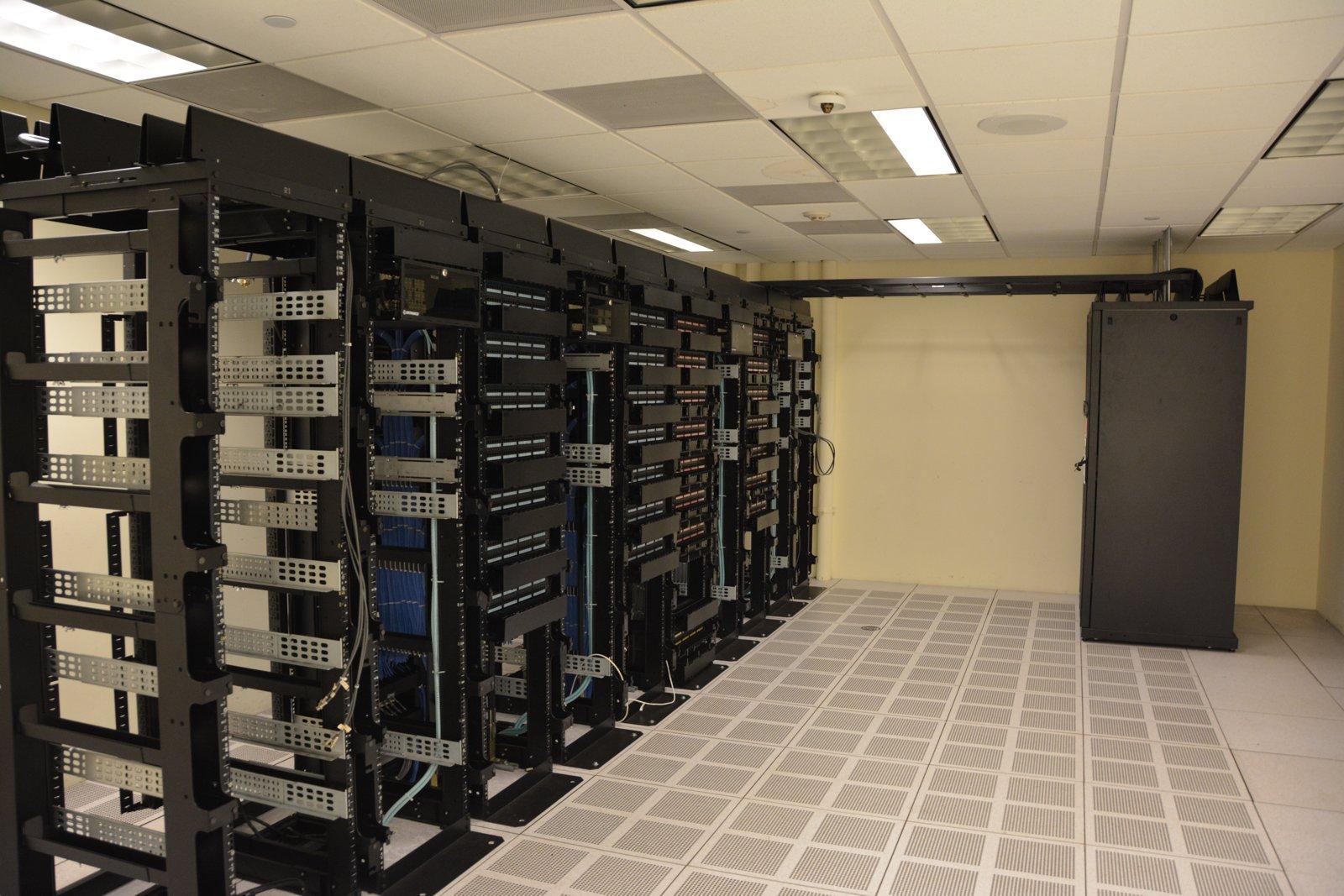
Image: Photo: Carl Lender, CC BY 2.0 (https://creativecommons.org/licenses/by/2.0), via Wikimedia Commons (https://commons.wikimedia.org/wiki/File:Datacenter_Server_Racks_(22370909788).jpg) — illustrative 2015 file photo of a data centre; it does not show any server involved in the attacks
About this article: prepared by The Daily Context editorial desk using automated, source-based reporting from the publications linked below. No reporter was on the ground.
Sources
- Kyodo News (14 Nov 2026): https://english.kyodonews.net/articles/-/91455
- JPCERT/CC Eyes blog, "Recent AI-Assisted Cyber Attacks in Japan" (21 Oct 2026): https://blogs.jpcert.or.jp/en/2026/10/web_api_attacks.html
- The Mainichi / Kyodo (15 Nov 2026): https://mainichi.jp/english/articles/20261115/p2g/00m/0na/008000c
- The Straits Times / Kyodo (15 Nov 2026): https://www.straitstimes.com/asia/east-asia/japan-led-probe-finds-1000-servers-likely-used-for-ai-driven-cyberattacks
- Tokyo Shimbun / Kyodo, Japanese (14 Nov 2026): https://www.tokyo-np.co.jp/article/528200
- The Hacker News (8 Oct 2026): https://thehackernews.com/2026/10/japan-sees-sharp-rise-in-web-data-leaks.html
- Japan Cyber Watch, summary of JPCERT/CC alert (updated 23 Oct 2026): https://japancyberwatch.com/articles/jpcert-warning-api-abuse-japan-breach-wave-2026
- Impress Watch, Japanese (8 Oct 2026): https://www.watch.impress.co.jp/docs/news/2146812.html
Kabeer Ahmad
Kabeer Ahmad is the founder and editor of The Daily Context. He oversees the site's source-based coverage of world affairs, technology, business, entertainment, lifestyle and sports, and is responsible for its editorial standards, sourcing and corrections.