Turkey steel plant explosion in Aliağa kills 17 workers; six detained
An explosion at the HABAŞ iron and steel plant in Aliağa, north of Izmir in western Turkey, killed 17 workers on Monday 9 November 2026 after an overhead crane collapsed into an electric arc furnace during maintenance, officials said. Prosecutors have detained six suspects, and labour groups say the blast followed other recent deaths at the same plant.
Seventeen workers were killed and at least a dozen injured when an explosion tore through the HABAŞ iron and steel plant in Aliağa, about 60 kilometres north of Izmir in western Turkey, on Monday 9 November 2026. Officials said an overhead crane collapsed into an electric arc furnace during maintenance work shortly after midday local time.
The chief public prosecutor's office in Menemen said six suspects judged to bear fault had been detained by Monday evening. President Recep Tayyip Erdoğan said the investigation would establish "whether there was any negligence and who bears responsibility". Labour groups and opposition parties said the disaster followed other deaths at the same site in recent weeks.
What happened at the Aliağa steel plant?
The blast happened at around 12:00 local time (09:00 GMT) in the steelmaking section of the HABAŞ Demir Çelik plant in Aliağa's Bozköy neighbourhood, according to the Menemen prosecutor's statement carried by Anadolu Agency and Ihlas News Agency. All of those killed and injured were workers at the plant, BBC News reported.
Izmir Governor Süleyman Elban said the explosion occurred during "a boiler replacement operation", when an overhead crane collapsed into a large furnace used in the liquid steel casting process, AFP reported. Turkish agencies quoted the governor's office as saying the crane broke loose and fell into the arc furnace. Ihlas News Agency also reported Mr Elban saying no production was taking place in the area and that falling materials struck a natural gas line, causing the explosion. Those official accounts were given within hours of the blast and may be refined by the investigation.
HABAŞ said in a statement that the accident happened "during scheduled maintenance work on one of the plant's electric arc furnaces", according to BBC News and BBC Türkçe. AFP said the company declined to answer its questions.
Witnesses described a blast that shook the ground. One told AFP it felt like an "earthquake", and footage showed a tall column of thick smoke and flames engulfing part of the plant. TASS reported that the building collapsed almost completely.
How many people were killed and injured?
After a cabinet meeting on Monday, Mr Erdoğan said 16 people had died and 13 were being treated, two of them in critical condition. Health Minister Kemal Memişoğlu later said one of the critically injured workers had died, raising the toll to 17.
Injury figures have varied as the day went on. BBC News reported 12 injured after the toll rose to 17, while Ihlas News Agency's earlier report gave 10 dead and 15 injured, with four people believed to be under rubble. BBC News said the governor had reported that some people were thought to still be trapped while search and rescue work continued. The figures above are those officials gave on Monday and could change.
What could cause an explosion like this?
An electric arc furnace melts scrap steel using powerful electric arcs, and modern furnaces use water-cooled panels in their walls and roof. Molten steel is at temperatures of around 1,500°C or more, and if it comes into sudden contact with water it can flash water into steam and trigger a violent explosion.
A 52-year-old worker at the plant, Yasin Çetiner, gave AFP his own account: he said the crane's rope broke and "about 120 tonnes of liquid steel fell onto the furnace", and that contact with water in the furnace's cooling panels caused "a hydrogen explosion". That is one worker's explanation, and it differs in detail from the governor's reference to a natural gas line. Investigators have not published a cause.
Who has been detained and what investigations are under way?
The Menemen chief public prosecutor's office said it opened an investigation immediately and assigned four prosecutors, and that expert witnesses examined the site under a prosecutor's supervision. "As a result of the examinations, six suspects found to be at fault in the incident were detained," the office said, according to Anadolu Agency as published by TRT Haber. Earlier agency reports had put the number at five. The suspects have not been publicly identified, and detention in Turkey is not a charge.
Justice Minister Akın Gürlek announced the criminal investigation, and Labour and Social Security Minister Vedat Işıkhan said the Social Security Institution had assigned a chief inspector to examine the accident, BBC Türkçe reported. Mr Erdoğan said both judicial and administrative investigations had begun.
Why are workers and opposition groups angry?
HABAŞ is a privately owned conglomerate and one of Turkey's leading steel producers. AFP reported that workers' groups say it has a chequered safety record.
The independent Health and Safety Labour Watch (İSİG Meclisi) said two other workers, Hakan Doğan and Eyüp Eğinli, had died in separate workplace accidents at the same plant in the previous two weeks, according to BBC Türkçe. The left-wing Evrensel newspaper said at least 11 workers had died at the site over the past decade, and the small Labour Party said Monday was the third time in three weeks that workers had lost their lives at HABAŞ, AFP reported. These figures come from labour groups and media and have not been independently confirmed by authorities.
The pro-Kurdish DEM Party called the deaths a "workers' massacre" and said "not a single responsible party must go unpunished". AFP reported that two representatives of the Aegean Workers' Collective were detained outside Aliağa hospital while trying to make a statement, and that Evrensel said riot police were deployed outside the hospital. Evrensel also reported that the brother of one of the dead set himself alight outside the factory in protest before onlookers intervened and took him to hospital; his condition was not clear.
Workers called a protest in Aliağa for Tuesday evening under the slogan "Enough is enough, we do not want to die!", according to AFP.
How common are workplace deaths in Turkey?
Turkey has long faced criticism over workplace safety. İSİG Meclisi, which compiles its figures mainly from national media and reports from colleagues, families and unions, said in January 2026 that at least 2,105 workers died at work in Turkey in 2025, an average of at least six a day and the highest annual figure it had recorded since the pandemic. It counted 81 deaths from explosions or burns and 108 deaths in the metal sector that year. Its latest monthly report, published on 7 October 2026, said at least 1,736 workers died in the first nine months of this year.
Those are civil-society counts rather than official statistics, and the group describes them as minimums.
What happens next?
The six detained suspects can be held for questioning before prosecutors decide whether to seek formal arrest or release them under judicial control. Expert reports on the crane, the furnace and the plant's maintenance procedures are likely to be central to establishing responsibility.
DEM Party co-chair Tülay Hatimoğulları was due to visit the site on Tuesday morning and hold a news conference, AFP reported, and the workers' protest is planned for Tuesday evening. The final death toll may also change, as some of the injured were in critical condition on Monday.
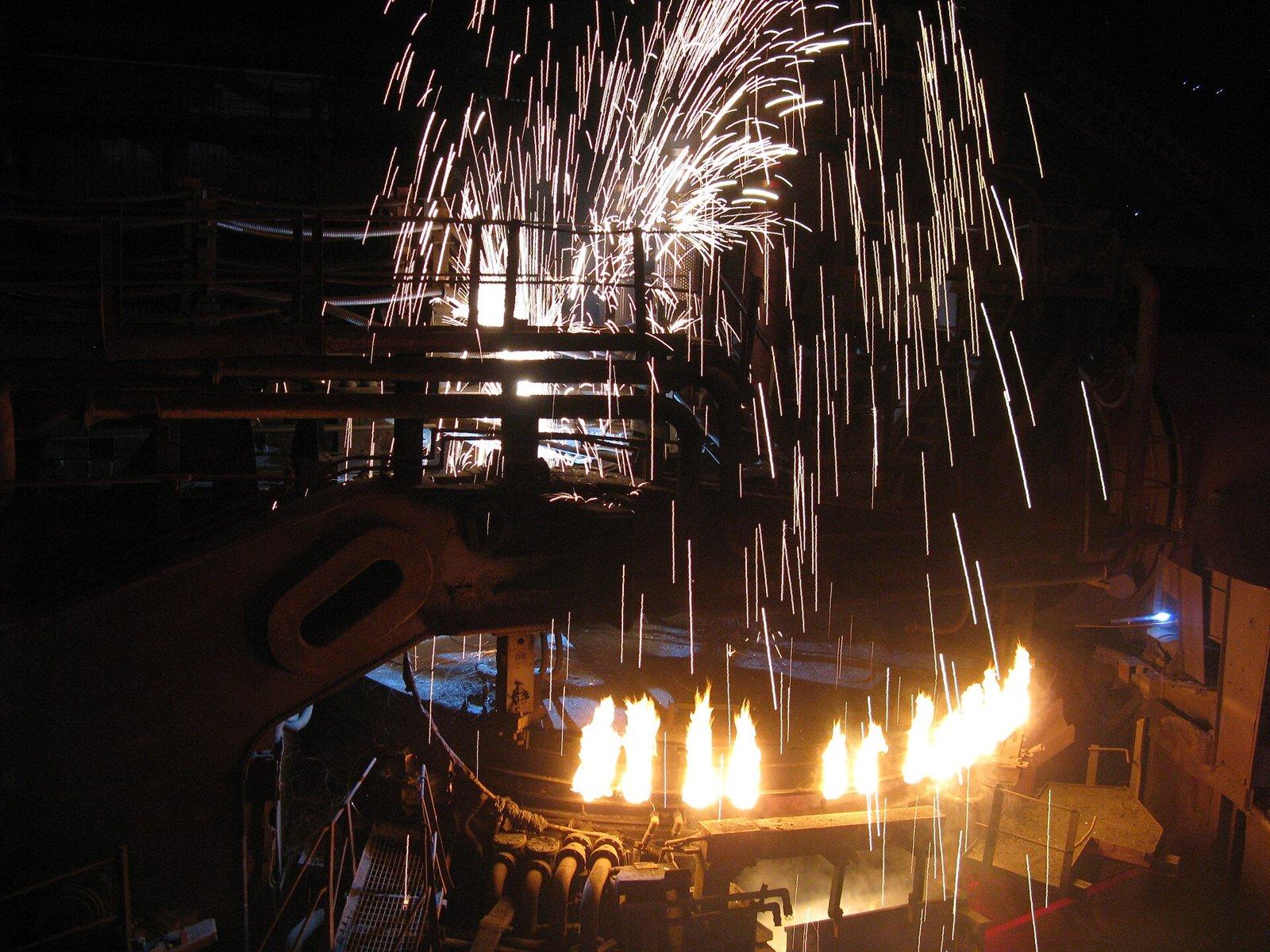
Image: Photo: M J Richardson, CC BY-SA 2.0, via Wikimedia Commons (https://commons.wikimedia.org/wiki/File:Electric_arc_furnace_at_Magna_-_The_Big_Melt_-_geograph.org.uk_-_2649408.jpg) — October 2011 file photo of a decommissioned electric arc furnace during the 'Big Melt' display at the Magna science centre, Rotherham, England; not the Aliağa plant
About this article: prepared by The Daily Context editorial desk using automated, source-based reporting from the publications linked below. No reporter was on the ground.
Sources
- AFP via France 24: Anger as 17 killed in Turkey steel factory blast, 9 November 2026 https://www.france24.com/en/live-news/20261109-turkey-steel-factory-blast-kills-16-probe-launched
- BBC News: Turkey steel factory blast kills at least 17 people, 9 November 2026 https://www.bbc.com/news/articles/cq2d6d5z9y5jo
- BBC News Türkçe: İzmir'deki demir çelik fabrikasındaki patlamada can kaybı 17'ye çıktı, 9 November 2026 https://www.bbc.com/turkce/articles/crx2d2p8yjjvo
- TRT Haber (Anadolu Agency): Aliağa'daki fabrika patlamasına ilişkin 6 şüpheli gözaltında, 9 November 2026 https://www.trthaber.com/haber/gundem/aliagadaki-fabrika-patlamasina-iliskin-6-supheli-gozaltinda-962715.html
- Ihlas News Agency: HABAŞ'taki patlamayla ilgili 5 kişi gözaltına alındı, 9 November 2026 https://www.iha.com.tr/izmir-haberleri/habastaki-patlamayla-ilgili-5-kisi-gozaltina-alindi-513537791
- TASS: Death toll from blast at Turkey plant rises to 17, health minister says, 9 November 2026 https://tass.com/emergencies/2215065
- İSİG Meclisi: Work-related death reports (İş Cinayetleri Raporları) https://www.isigmeclisi.org/is-cinayetleri-raporlari
- Karar: İSİG Meclisi 2025 work-related deaths report coverage, 9 January 2026 https://www.karar.com/guncel-haberler/isig-meclisi-is-cinayeti-raporunu-paylasti-2025te-en-az-2105-isci-2020272
Kabeer Ahmad
Kabeer Ahmad is the founder and editor of The Daily Context. He oversees the site's source-based coverage of world affairs, technology, business, entertainment, lifestyle and sports, and is responsible for its editorial standards, sourcing and corrections.