Trump threatens 'tremendous tax' on US companies that build data centres abroad
President Donald Trump said on Friday 20 November that the US would not allow American companies to build data centres in other countries and would put a 'tremendous tax' on those that do. He gave no details, said his own officials had not yet been told, and did not say what legal authority he would use.
President Donald Trump has threatened to put a "tremendous tax" on American companies that build data centres outside the United States. Speaking at a White House press conference on Friday 20 November 2026, he said: "We're not allowing data centres to go into other countries."
He gave no details of how such a tax would work, what it would apply to or when it might start. He also said he had not discussed the idea with his own officials before announcing it. "I haven't even said that to my people," he told reporters, according to Politico. "But I'm telling them now."
The remarks matter because the biggest US technology companies, including Amazon, Microsoft, Alphabet's Google, Meta and Oracle, already run data centres around the world and have committed tens of billions of dollars to new ones in countries from Europe to Australia.
What exactly did Trump say?
Trump framed the threat as part of the race with China over artificial intelligence. "We're not allowing datacenters to go into other countries, because China will take all of them, and we're not allowing that to happen. And we're going to put tremendous penalties on companies that try to do it," he said, as quoted by The Guardian.
He also appeared to allow that companies could still build abroad, but at a cost. If US firms want to build data centres in other countries, "they can," he said, according to Bloomberg News. "But we're going to put a tremendous tax on them. If they do it, we want them to build it here."
"Whoever wins SI wins," Trump said, using the White House's preferred term "super intelligence" for advanced AI, Politico reported.
Representatives of Amazon, Google, Microsoft and Oracle did not immediately respond to CNBC's requests for comment.
Can the president actually impose such a tax?
That is unclear. Under the US Constitution, Congress has the power to impose federal taxes, Axios noted, and Trump did not say whether he would seek legislation or try to use existing executive powers. Bloomberg News also reported that he did not explain what legal authority the government might use.
The political arithmetic in Washington is also changing. Republicans lost their majorities in both the House of Representatives and the Senate in this month's midterm elections, ABC News (Australia) reported, which could make any new tax law harder to pass once the new Congress sits in January.
Why are data centres so controversial in the US?
Data centres provide the computing power needed to train and run AI systems, and the administration sees them as central to US competitiveness. But many Americans have turned against them over electricity bills, water use and local environmental impacts.
A CNBC survey found that 64% of registered voters opposed an AI data centre within 10 miles of their home, while 13% supported one. Axios, citing Ballotpedia, reported that voters favoured limiting data centre development in 52 of 53 ballot measures across 13 states through November 2026. Politico reported that opposition to data centres helped Democrats in the midterms, including Gina Hinojosa, who won the Texas governor's race after promising a moratorium on new construction.
Trump urged communities to accept data centres but bargain hard. "You ought to take advantage of the datacenters. Make them pay you, make them pay your community, but don't shut them off," he said. He suggested that if projects are blocked in some states, they could go to others: "If they won't go in Texas or if they won't go in California, they're going to go in West Virginia," he said, according to Politico.
According to Axios, about 4,000 data centres were operating in the US as of December 2025, with almost 3,000 more under construction or planned.
Which countries and companies could be affected?
The impact could be felt well beyond the US. ABC News in Australia reported that Microsoft announced a $25 billion investment in data centre infrastructure in that country in April and that Amazon announced a $20 billion plan in June. Australia's Treasury and its Department of Industry, Science and Resources had been asked for comment.
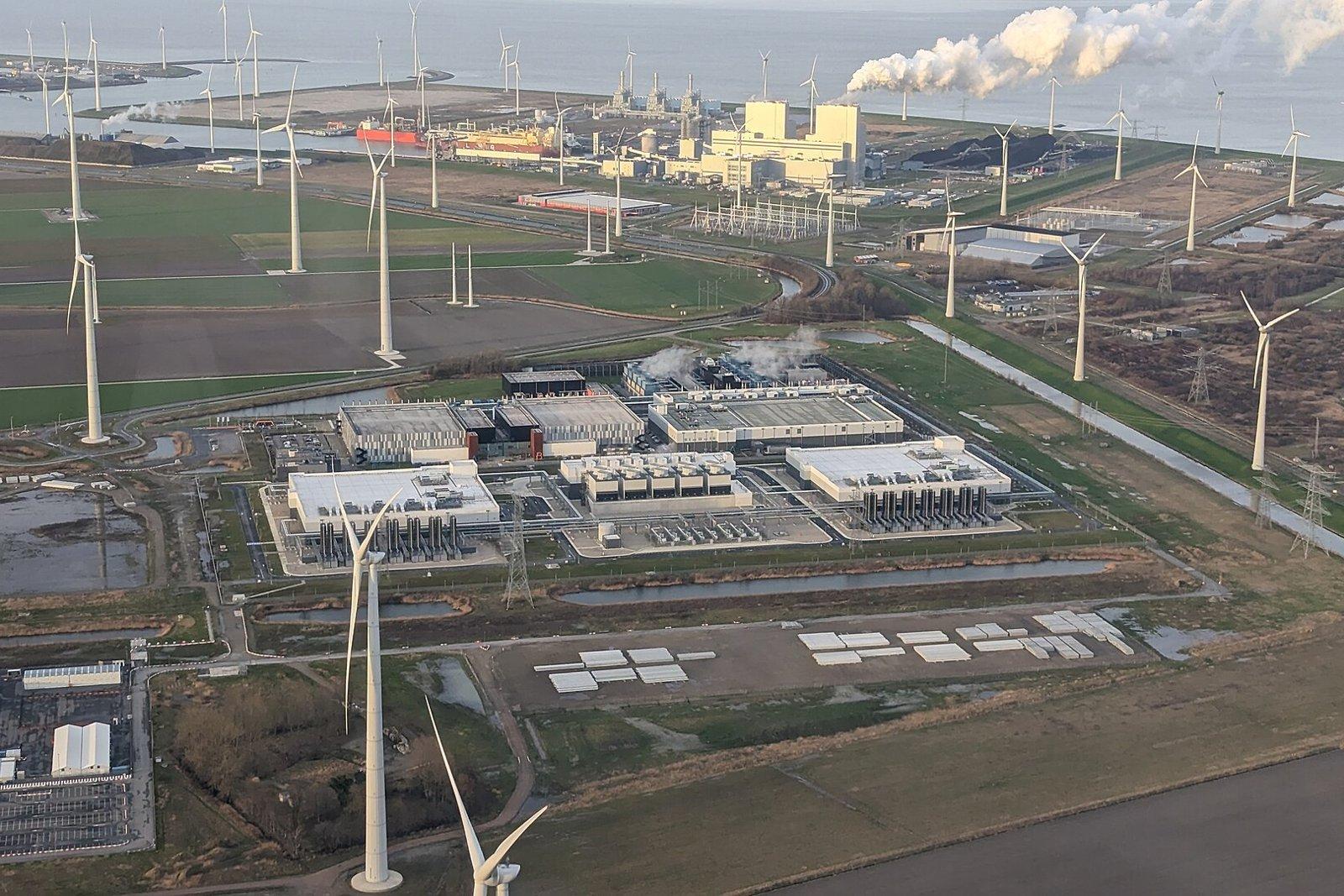
US companies also operate large sites across Europe and Asia, such as Google's data centre at Eemshaven in the Netherlands, pictured above. Cloud providers build near their customers partly to reduce delays and partly because some countries require certain data to be stored or processed locally, CNBC and Axios noted. A penalty on building abroad could leave companies caught between Washington and countries whose laws require data to stay inside their borders.
The threat follows other recent US moves on AI infrastructure. On Monday 16 November the administration issued rules restricting remote access to advanced US chips and servers, aimed at limiting China's ability to train AI models, The Guardian reported. Earlier in the same week, during an Asia trip, Trump launched a "super intelligence accelerator" with Indo-Pacific allies in the Philippines, according to Politico.
What happens next?
For now, the statement is a threat rather than a policy. None of the coverage reviewed for this article, up to Sunday 22 November, reported an executive order, draft legislation or official guidance putting it into effect, or a public response from the major cloud companies.
Key questions remain open. It is not clear whether a tax would cover projects already under way, data centres that serve only foreign customers, or partnerships with foreign governments. It is also unclear how it would fit with existing US trade and tax treaties.
Governments that have courted US tech investment, from Australia to the Gulf and Europe, are likely to seek clarification from Washington. Companies with large overseas projects in progress will be watching for any formal proposal.
Image: File photo (January 2023) of Google's data centre at Eemshaven in the Netherlands, an example of a US company's overseas data centre; not connected to the president's remarks. Photo by Wvdp, CC0 (public domain dedication), via Wikimedia Commons (https://commons.wikimedia.org/wiki/File:Google_data_center_and_wind_turbines_in_Eemshaven.jpg); cropped and resized
About this article: prepared by The Daily Context editorial desk using automated, source-based reporting from the publications linked below. No reporter was on the ground.
Sources
- Politico (20 Nov 2026): https://www.politico.com/news/2026/11/20/trump-overseas-data-center-tax-01178999
- CNBC (20 Nov 2026): https://www.cnbc.com/2026/11/20/trump-data-centers-ai-companies-tax.html
- Axios (20 Nov 2026): https://www.axios.com/2026/11/20/us-ai-trump-data-centers-overseas
- Bloomberg News via Bloomberg Law (20 Nov 2026): https://news.bloomberglaw.com/artificial-intelligence/trump-threatens-to-tax-companies-building-data-centers-abroad
- The Guardian (20 Nov 2026): https://www.theguardian.com/us-news/2026/nov/20/trump-datacenters-white-house
- ABC News Australia (21 Nov 2026): https://www.abc.net.au/news/2026-11-21/trump-vows-tax-companies-building-data-centres-overseas/107412162
- Associated Press (20 Nov 2026): https://apnews.com/article/trump-artificial-intelligence-data-centers-f1ac03b73d13445400eeed8631d9d879
Kabeer Ahmad
Kabeer Ahmad is the founder and editor of The Daily Context. He oversees the site's source-based coverage of world affairs, technology, business, entertainment, lifestyle and sports, and is responsible for its editorial standards, sourcing and corrections.