Manipur suspected spurious liquor deaths rise to 16, with about 600 in hospital and six arrested
At least 16 people have died and about 600 have been taken to hospital in India's north-eastern state of Manipur after drinking suspected spurious liquor, most of them from Chandel district. Police have arrested six people from neighbouring Kakching district, and the state has ordered a high-level inquiry.
At least 16 people have died and about 600 have been admitted to hospital in Manipur, in north-east India, after drinking suspected spurious liquor, state officials said on Saturday, 21 November. Twelve patients are in intensive care at three hospitals in the state capital, Imphal, and officials expect the toll may rise.
Most of the dead came from Chandel district, near Manipur's border with Myanmar. Police have arrested six people from neighbouring Kakching district on suspicion of stocking, buying and selling the liquor, and the state government has set up a high-level committee to investigate.
"Spurious" liquor in India usually means illegally made or adulterated alcohol sold as drinkable. Authorities stress that the exact cause of the deaths has not yet been confirmed by medical or laboratory tests.
What has happened in Chandel?
The first deaths were reported in Chakpikarong subdivision of Chandel district, where two people died on 18 November after allegedly drinking the liquor, the Indian Express reported. The Hindu, citing a government statement, put the first death a day earlier, on 17 November. The toll rose to 11 by Friday and to 16 on Saturday, with five deaths in the 24 hours to Saturday.
Most victims were from Nungpan, a village dominated by the Anal Naga community, about 72 km south of Imphal, The Hindu reported. Similar cases have emerged in Sugnu, across the district boundary in Kakching.
"The cumulative death from Chandel District is 16. There are 12 patients admitted in ICU ward at Shija Hospital, Babina Hospital and JNIMS Hospital," Inspector General of Police Themthing Ngashangva said in a statement quoted by the Indian Express. He said about 600 people had been admitted to government and private hospitals, including Shija, Babina, Chandel District Hospital, the community health centre in Chakpikarong, JNIMS and RIMS. At the sub-district hospital in Sugnu, 121 people were screened. Forty had mild symptoms and three serious symptoms, and all 43 were referred to RIMS in Imphal.
Is the death toll higher than 16?
Possibly. News18 reported a toll of 21, based on a list it said was kept by local health authorities. That list records deaths between 10 November and 21 November, a wider window than the official count, and includes men and women aged 30 to 72. Some died at the Chakpikarong health centre, some on the way to hospital and some at home.
According to News18, victims reported blurred vision, convulsions, shortness of breath, chest pain, abdominal pain and vomiting before they died. Blurred vision is a classic sign of methanol poisoning, the most common cause of mass deaths from illicit alcohol in India. But officials have not said what, if anything, was in the liquor. Samples have been sent to the state Forensic Science Laboratory for chemical analysis.
The official figure on Saturday evening remained 16, reported by the police, the state's excise commissioner and public broadcaster Akashvani.
Who has been arrested, and what is the inquiry?
The six people arrested are all from Kakching district. The Chandel police chief said the liquor was not made in Chandel but bought in Kakching. The Kakching police chief said the six had been arrested in suo motu action, meaning the police acted on their own initiative without a formal complaint. They were held under three sections of India's new criminal code, the Bharatiya Nyaya Sanhita: causing death by negligence, adulterating food or drink intended for sale, and selling noxious food or drink.
The high-level committee has a month to report. A government statement quoted by The Hindu said it will establish the sequence of events and the source, composition and nature of the liquor. It will also review the response of the district administration, police, health and excise departments, and identify "administrative, regulatory or enforcement lapses".
Police and excise teams across the state have been put on high alert to seize illegal liquor, remove unauthorised vendors and take samples from shops and production units. The government said 46 cases had been registered and 2,419 litres of locally distilled country liquor seized since 17 November.
What should people in the area do?
Manipur's Director of Health Services, Dr N. Hemantakumar, issued a public health advisory. He urged anyone who had drunk liquor from suspected sources in the previous 48 to 72 hours to seek medical evaluation immediately, even without symptoms, Akashvani reported. Residents have been asked to keep any suspect bottles or containers and report illegal sales to police or excise officials. Chandel's district administration has told people to avoid locally brewed liquor and drinks from doubtful sources for now.
Why does this matter?
Manipur banned alcohol for about three decades under a 1991 prohibition law. In December 2023 the state cabinet ended the ban, allowing regulated sales in Greater Imphal, district headquarters, tourist locations and larger hotels through a state-owned beverages corporation, The Hindu reported at the time. Traditional home brewing remains widespread, especially in rural and hill communities.
The tragedy also comes as Manipur is still recovering from ethnic violence that began in May 2023. That has strained policing and public services, particularly in border districts such as Chandel.
India has a long history of deaths from illicit liquor. Most cases involve cheap, unlicensed spirits contaminated with methanol, which is sometimes added to raise strength or cut costs. Large outbreaks in recent years have led to inquiries and tougher penalties, but bootlegging continues where legal alcohol is costly, scarce or banned.
The next official updates are expected to cover the forensic results on the seized samples and the condition of the 12 patients in intensive care.
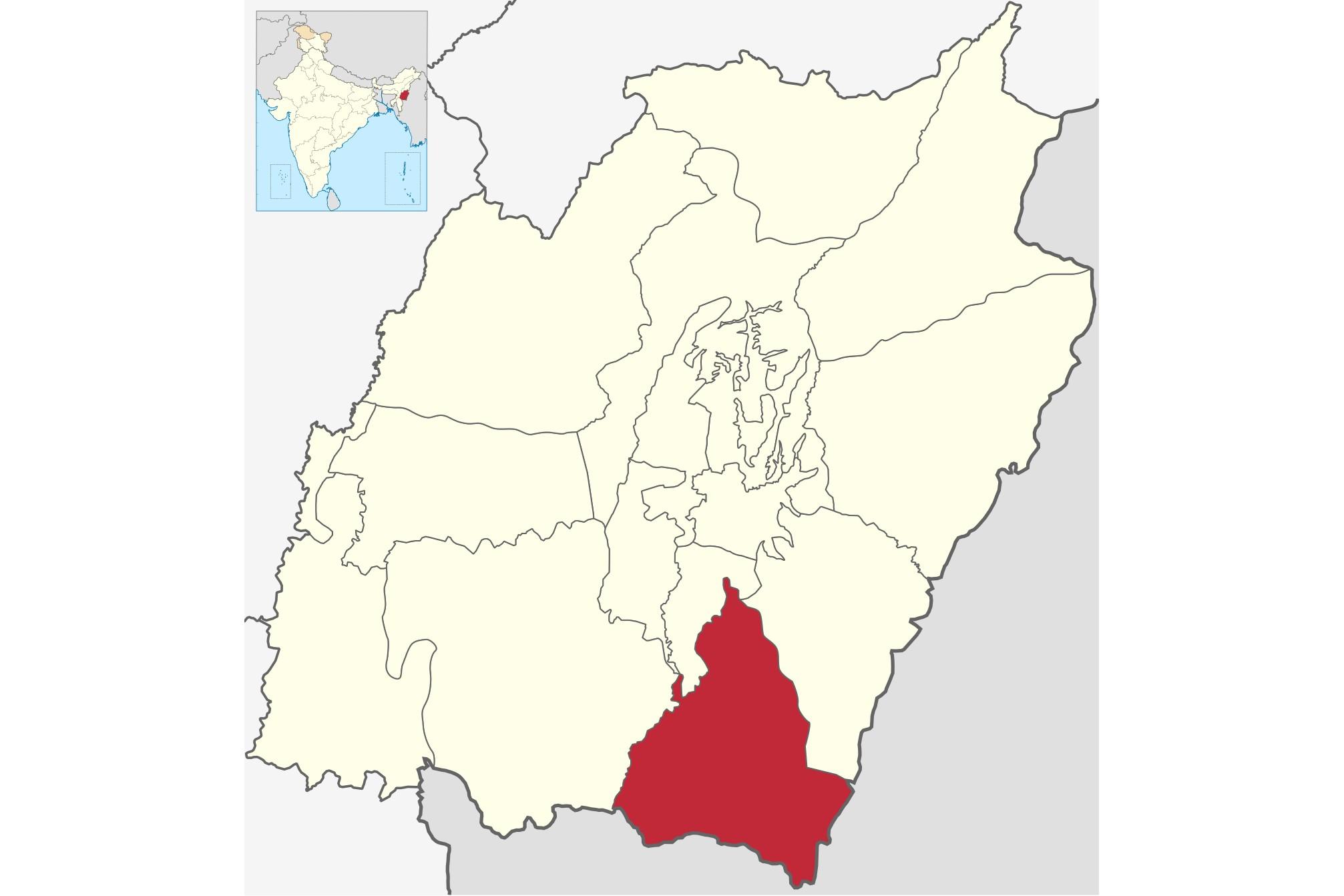
Image: Locator map of Chandel district (red) in Manipur, India, for context; district boundaries may not reflect the most recent reorganisation. Map by Milenioscuro (derivative work), CC BY-SA 3.0 (https://creativecommons.org/licenses/by-sa/3.0), via Wikimedia Commons (https://commons.wikimedia.org/wiki/File:Chandel_in_Manipur_(India).svg); padded to fit
About this article: prepared by The Daily Context editorial desk using automated, source-based reporting from the publications linked below. No reporter was on the ground.
Sources
- The Hindu: Manipur hooch death toll rises to 16, six held: https://www.thehindu.com/news/national/manipur-hooch-death-toll-rises-to-16-six-held/article71728655.ece
- The Indian Express: Manipur hooch tragedy toll rises to 16, hospitalizations reach 600: https://indianexpress.com/article/india/manipur-hooch-tragedy-death-toll-16-600-hospitalised-10973024/
- Akashvani (News On AIR): Manipur spurious liquor incident: death toll rises to 16: https://newsonair.gov.in/manipur-spurious-liquor-incident-death-toll-rises-to-16/
- UNI: Manipur govt constitutes high-level panel to probe spurious liquor deaths: https://www.uniindia.com/east-india/crime-manipur-probe-spurious-liquor-deaths/253209
- News18: Manipur hooch tragedy: death toll rises to 21, nearly 600 hospitalised: https://www.news18.com/india/manipur-hooch-tragedy-death-toll-rises-to-21-nearly-600-hospitalised-after-consuming-spurious-liquor-10435716.html
- The Hindu (December 2023): State-owned beverages corporation to oversee regulated sale of alcohol in Manipur: https://www.thehindu.com/news/national/other-states/state-owned-beverages-corporation-to-oversee-regulated-sale-of-alcohol-in-manipur/article67644969.ece
Kabeer Ahmad
Kabeer Ahmad is the founder and editor of The Daily Context. He oversees the site's source-based coverage of world affairs, technology, business, entertainment, lifestyle and sports, and is responsible for its editorial standards, sourcing and corrections.