La Poste's Maileva breach exposes names and addresses of 22 million people in France
La Poste has confirmed that Maileva, its business-mail subsidiary, was hacked in September and that the names and postal addresses of 22 million people who received letters through the platform were stolen. Bank details were not part of the confirmed theft, but some client organisations, including a hospital, say the contents of some letters may have been read.
The personal details of 22 million people in France were stolen in a cyberattack on Maileva, a business-mail platform owned by the La Poste group, the company confirmed on Saturday, 14 November 2026. The intrusion took place in mid-September. La Poste told AFP that the attack "led to the exposure of the contact details (first name, surname, postal address) of 22 million people, recipients of Maileva's client companies."
Most of those affected have never dealt with Maileva directly. They are people who received payslips, invoices, payment reminders, registered letters or other mail that companies, social landlords and health providers sent through the platform. La Poste says bank details were not part of the confirmed theft, but several client organisations have told their own customers that the contents of some letters may have been read.
What is Maileva and what happened?
Maileva is a French online service that prints, sends and tracks professional mail for businesses and public bodies. It is a subsidiary of Docaposte, the digital arm of La Poste. According to figures it publishes, cited by franceinfo and France 24, it has more than 70,000 users and sent 180 million documents in 2024.
La Poste has not publicly described how attackers got in. The French IT publication InformatiqueNews, citing an internal Docaposte document dated 5 October that the specialist site FrenchBreaches says it consulted, reports that the first suspicious activity dates to 9 September and that an outside attacker allegedly exploited an application flaw to reach Maileva's production environment. That account has not been confirmed by La Poste.
The chronology reported so far:
- 9 September: first suspicious activity, according to the internal document reported by FrenchBreaches.
- 23 September: Maileva suspends its services, citing attempts at unauthorised access to customer accounts, apparently intended to send fraudulent mail. Services resume on 29 September.
- October to early November: client organisations begin notifying people, including an occupational health service in Cornouaille, medical laboratories in the Inovie group, the social landlords Flandre Opale Habitat and Altéal, and Foch Hospital in Suresnes.
- 13–14 November: Maileva confirms the 22 million figure to the site Cyberattaque.org; La Poste confirms it to AFP the next day.
What information was stolen?
The confirmed theft covers first names, surnames and postal addresses. La Poste has not said that bank details were taken, and SecurityAffairs reports the company confirmed they were not.
Notices from client organisations suggest that some people's exposure goes further. Flandre Opale Habitat said information in letters sent over the past ten years may have been accessed, including housing references, customer numbers and "administrative or financial information, such as an invoice amount". Foch Hospital warned patients that some payment reminders sent between 9 and 23 September "may have been read by a hacker". The hospital said those letters did not mention the nature of treatment or bank details, though InformatiqueNews reports they contained treatment dates, invoice numbers and amounts owed. The hospital's reminders were sent by Kiwee.care, a medical billing company that used Maileva for printing and posting.
According to internal figures reported by Cyberattaque.org, the incident involved about 39 million mail references, reduced to 22 million individuals after removing duplicates. A mail reference is not necessarily the full content of a letter, so it would be wrong to read that figure as 39 million stolen documents.
Why does a stolen name and address matter?
On its own, a postal address has limited value. Linked to a real hospital bill, a landlord or an employer, it becomes a template for convincing fraud. Antoine Hautin, secretary-general of the French cybersecurity firm Almond, told franceinfo the main risk is fraudulent letters that look legitimate, and that AI makes such campaigns easy to automate. He advised that anyone receiving an unusual request should contact the sender through a different, known channel.
Hautin also called Maileva "a supplier that presents a systemic risk, because it is used by tens of thousands of organisations." The case shows how data can pile up at a single subcontractor: a person may receive mail from several unrelated organisations through the same platform without ever knowing it exists.
Who is investigating, and what are the legal duties?
Maileva says it has notified France's data protection authority, the CNIL, filed a criminal complaint and informed every affected client company. The Paris prosecutor's cybercrime section has opened an investigation for "attacks on an automated data processing system", and the case has been assigned to the Brigade de lutte contre la cybercriminalité, the Paris police cybercrime unit, franceinfo reported on 15 November.
Under the EU's General Data Protection Regulation (GDPR), a processor such as Maileva must alert the organisations it works for without undue delay. Those organisations, as data controllers, must notify the regulator within 72 hours of becoming aware of a breach that poses a risk, and must inform individuals directly where the risk is high. That means people should hear from the company or body that sent them mail, not from Maileva. It is not yet known how many of the 22 million have been told individually.
None of the reports cited here attribute the attack to a named group.
How does this compare with other French breaches?
France has suffered a run of large breaches. Viamedis and Almerys, which process third-party health insurance payments, exposed data on more than 33 million people in 2024. At France Travail, the public employment service, the attack was first estimated to affect 43 million people; InformatiqueNews reports that the CNIL later put the number at 36.82 million, and fined France Travail €5 million in January 2026. La Poste itself was hit by a disruptive attack on its online services in December 2025, claimed by the pro-Russian group NoName057. Earlier this month, Crédit Mutuel Arkéa said a cyberattack had cost it about €100 million.
Public accounts minister David Amiel told franceinfo on 15 November: "We are living through a moment of multiplying cyberattacks," adding that cybersecurity had been neglected for too long.
What happens next?
Key open questions include how the attackers got in, why records stretching back years were reachable in one place, whether data was separated between clients, and why it took about two months to publish a consolidated figure. The criminal investigation and any CNIL review may answer some of these. Client organisations are still sending their own notices, so more details about what was in individual letters may emerge.
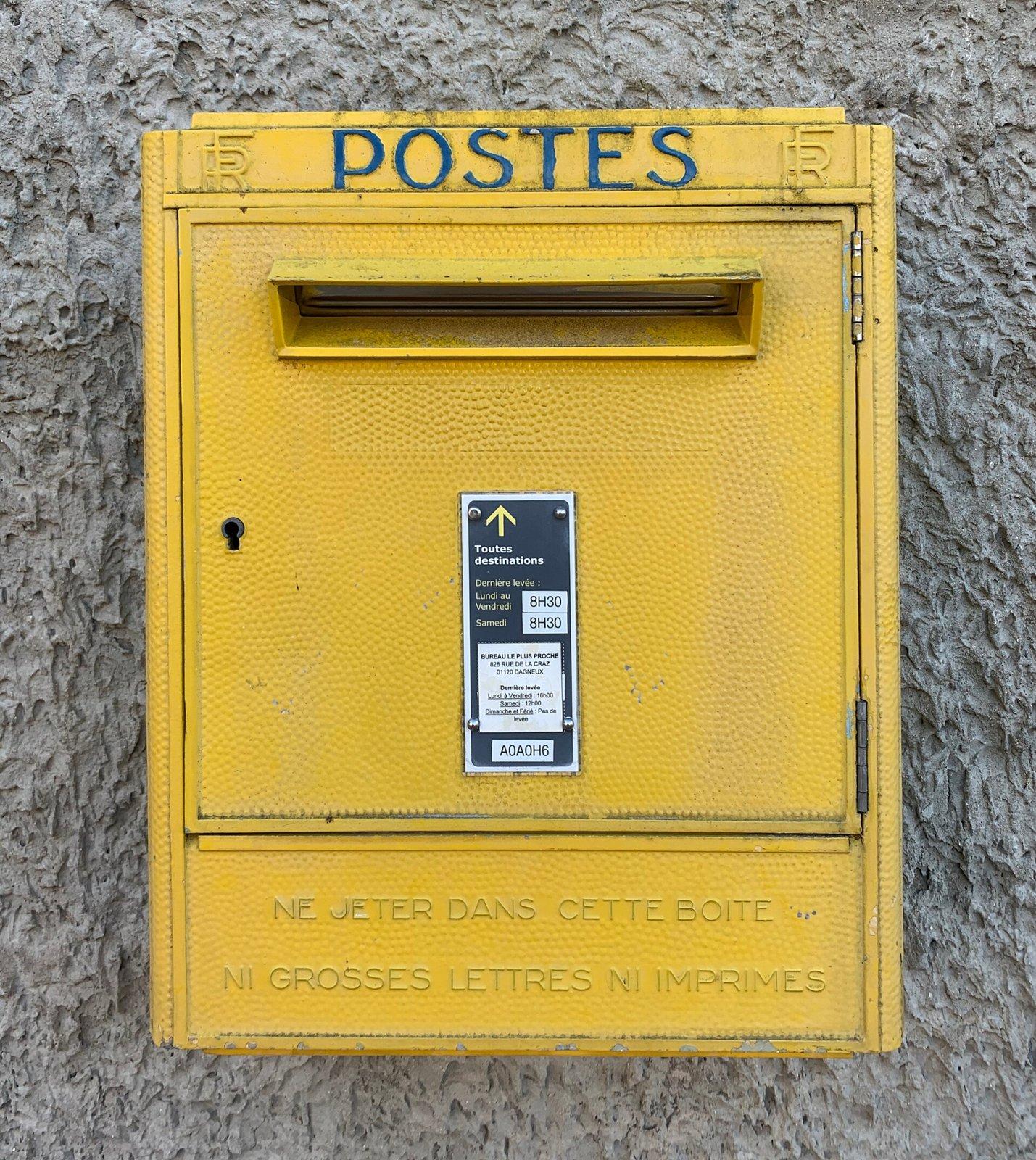
Image: Image: Benoît Prieur, CC0 1.0 (https://creativecommons.org/publicdomain/zero/1.0/), via Wikimedia Commons (https://commons.wikimedia.org/wiki/File:Bo%C3%AEte_aux_lettres_de_La_Poste_dans_la_rue_Beno%C3%AEt_Bressat_%C3%A0_Ni%C3%A9vroz_%28mai_2020%29.jpg) — May 2020 file photo of a La Poste letterbox in Niévroz, France; illustrative, not related to the breach; resized
About this article: prepared by The Daily Context editorial desk using automated, source-based reporting from the publications linked below. No reporter was on the ground.
Sources
- France 24 / AFP, "La cyberattaque d'une filiale de La Poste entraîne un vol de données touchant 22 millions de personnes" (14 November 2026): https://www.france24.com/fr/france/20261114-la-cyberattaque-d-une-filiale-de-la-poste-entra%C3%AEne-un-vol-de-donn%C3%A9es-touchant-22-millions-de-personnes
- franceinfo, "Ce que l'on sait de la cyberattaque contre Maileva, filiale de La Poste" (15 November 2026): https://www.franceinfo.fr/internet/securite-sur-internet/cyberattaques/des-courriers-ont-pu-etre-lus-ce-que-l-on-sait-de-la-cyberattaque-contre-maileva-filiale-de-la-poste-qui-a-conduit-au-vol-de-donnees-de-22-millions-de-personnes_8283266.html
- InformatiqueNews, "Maileva : comment un prestataire de courrier a exposé les données de 22 millions de personnes" (16 November 2026): https://www.informatiquenews.fr/fuite-maileva-la-poste-22-millions-donnees-personnelles-251721
- SecurityAffairs, "Data Breach at La Poste Subsidiary Maileva Affects 22 Million People in France" (15 November 2026): https://securityaffairs.com/203126/data-breach/data-breach-at-la-poste-subsidiary-maileva-affects-22-million-people-in-france.html
- CNIL, notifying a personal data breach (GDPR guidance): https://www.cnil.fr/fr/notifier-une-violation-de-donnees-personnelles
Kabeer Ahmad
Kabeer Ahmad is the founder and editor of The Daily Context. He oversees the site's source-based coverage of world affairs, technology, business, entertainment, lifestyle and sports, and is responsible for its editorial standards, sourcing and corrections.