UN sea tribunal rejects Argentina's bid to halt Falklands Sea Lion oil project
The International Tribunal for the Law of the Sea voted 18 to 3 on 28 November to reject Argentina's request to halt the Sea Lion oil project off the Falkland Islands, saying the dispute appeared to turn on sovereignty, which it cannot decide. The UK told the court drilling will not start before 21 March 2027.
Argentina has failed to win an emergency order halting the Sea Lion oil project in waters off the Falkland Islands. On Saturday 28 November 2026, the International Tribunal for the Law of the Sea (ITLOS) in Hamburg voted 18 to 3 to reject Buenos Aires' request for provisional measures. The court said Argentina's claims appeared to depend on deciding who holds sovereignty over the islands, which is outside the law of the sea treaty.
The ruling removes a legal obstacle for Navitas Petroleum and Rockhopper Exploration, the two companies behind the field, which plan to start drilling in 2027. It does not end the dispute. A separate arbitral tribunal will hear the full case, and Argentina's government said the decision "is not the last word".
What did the tribunal decide?
Argentina began arbitration against the UK on 28 September under Annex VII of the UN Convention on the Law of the Sea (UNCLOS). On 13 October it asked ITLOS, which can order interim steps while an arbitral panel is being set up, to require the UK to stop any new production drilling or installation of production infrastructure for Sea Lion in the North Falklands Basin. It also asked the court to stop Britain using exploration data against Argentine interests and to stop it granting new licences.
ITLOS can only grant such measures if the future arbitral tribunal appears, at first sight, to have jurisdiction. Considering Argentina's four claims one by one, the 21 judges concluded that none met that test. On the main claim, that Britain had breached Argentina's sovereign rights over the seabed and waters, the order said deciding it would require "the identification of the coastal State that has sovereignty over the Falkland Islands (Malvinas)", a question of territorial sovereignty that cannot be treated as a dispute about interpreting or applying UNCLOS. Having reached that conclusion, the court did not consider whether the request was urgent or whether there was a risk of irreparable harm.
The vote was 18 to 3. Judges Horinouchi and Patel and Argentina's judge ad hoc, Raúl Vinuesa, dissented. The UK's judge ad hoc, Vaughan Lowe, was in the majority. ITLOS president Maurice Kamga stressed that the order "in no way prejudges" whether the arbitral tribunal has jurisdiction over the merits.
What did the UK promise the court?
The order formally records assurances the UK gave at hearings on 10 and 11 November. The UK agent told the judges that "extraction will not commence before March 2028; and indeed drilling will not commence before 21 March 2027", and that "no further licenses will be granted as the licensing regime is suspended". The tribunal said it "places these assurances on record".
The judges also urged both governments to cooperate on setting up the arbitral tribunal quickly. The UK has said it expects that tribunal to be formed by the end of 2026 or by January 2027 at the latest. The order added that UNCLOS applies in the disputed waters and that the court "expects that the Parties will act accordingly".
What is the Sea Lion project?
Sea Lion is an oilfield in the North Falklands Basin, within 200 nautical miles north of the islands. According to the UK, it lies about 500km east of the South American mainland. Navitas, listed in Tel Aviv, is the operator with a 65% stake. London-listed Rockhopper holds the other 35%.
The partners took a final investment decision in December 2025, after the Falkland Islands Government approved development of phases 1 and 2 of the field's northern area. In August 2026 they said drilling was due to start in early 2027, with first oil from phase 1 on track for the first quarter of 2028. The BBC puts the field's estimated resources at 1.7 billion barrels. The Buenos Aires Times reports projected initial output of 55,000 barrels a day, potentially rising to around 125,000 in later phases. For the islands' roughly 3,500 residents, the project could mean a large new source of revenue.
The project has already met commercial friction. Reuters reported that US oil services company Halliburton said last month it would not work on Sea Lion, and that Argentina has proposed legislation to penalise companies involved in exploration around the islands.
This article is for information only and is not investment advice.
How did London and Buenos Aires respond?
Foreign Secretary Ed Miliband and Attorney General Ellie Reeves called the decision "a vindication of the UK's robust legal defence and strategy" in a joint statement. "Argentina sought to stop the Falkland Islanders making their own sovereign decisions and failed in this attempt," they said, urging Argentina to "end its wider economic pressure against the Falkland Islands".
The office of President Javier Milei responded with a statement that welcomed what it described as the tribunal's acknowledgement of a sovereignty dispute but disagreed that this meant there was no jurisdiction to order interim measures. "Argentina did not ask the Tribunal to rule on sovereignty," the statement said, in our translation. It said Argentina respected the decision but that it "is not the last word" and "in no way legitimises the unilateral exploitation of our natural resources". The government said it had opened new sanctions proceedings against five parties on Friday, would ask the arbitral tribunal for protective measures, and urged the lower house of Congress to pass a National Sovereignty Defence Law next week.
What happens next?
The case now moves to the Annex VII arbitral tribunal once it is formed, where Argentina says it will renew its request to protect the disputed resources. That tribunal will have to decide for itself whether it has jurisdiction, and Saturday's order suggests Argentina faces a high hurdle in framing the dispute as one about the law of the sea rather than sovereignty.
In the meantime, the companies' timetable stands, subject to the UK's commitments not to drill before 21 March 2027 or produce before March 2028. Argentina's domestic sanctions and the pending sovereignty law are likely to be the main pressure points for contractors and investors. The UK and Argentina fought a 74-day war over the islands in 1982. In a 2013 referendum, 99.8% of islanders voted to remain a British overseas territory.
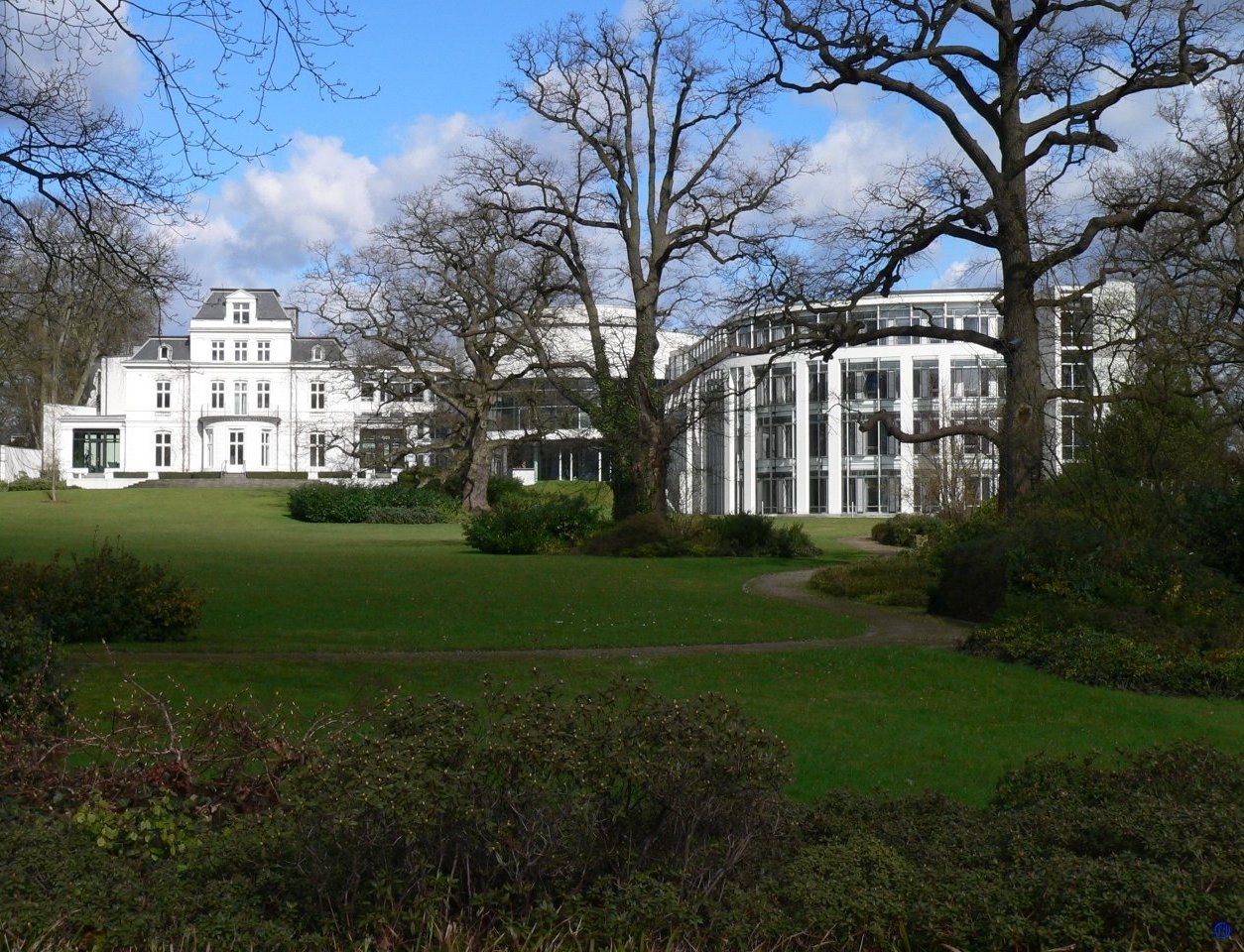
Image: File photo: headquarters of the International Tribunal for the Law of the Sea in Hamburg, Germany, March 2008. Photo: Wmeinhart, CC BY-SA 3.0 (https://creativecommons.org/licenses/by-sa/3.0/), via Wikimedia Commons (https://commons.wikimedia.org/wiki/File:Hamburg.IntSeegerichtshof.Elbseite.wmt.jpg); shared under the same licence
About this article: prepared by The Daily Context editorial desk using automated, source-based reporting from the publications linked below. No reporter was on the ground.
Sources
- International Tribunal for the Law of the Sea: Order, Case No. 37, Hydrocarbon exploitation in the South-West Atlantic Ocean (Argentina v. United Kingdom), Request for provisional measures (28 November 2026) https://www.itlos.org/fileadmin/itlos/documents/cases/37/Order_281126/C37_Order_28.11.2026_orig.pdf
- GOV.UK: Joint statement on the Falkland Islands from the Foreign Secretary and Attorney General (28 November 2026) https://www.gov.uk/government/news/joint-statement-on-the-falkland-islands-from-the-foreign-secretary-and-attorney-general
- TN (Argentina): Government statement after the Law of the Sea tribunal ruling, full text in Spanish (28 November 2026) https://tn.com.ar/politica/2026/11/28/el-mensaje-del-gobierno-tras-el-fallo-adverso-en-el-tribunal-del-mar-por-malvinas-esta-decision-no-es-la-ultima-palabra/
- Reuters via Internazionale: Argentina's bid to stop UK oil activity near Falklands rejected by international court (28 November 2026) https://www.internazionale.it/ultime-notizie-reuters/2026/11/28/international-court-rejects-argentina-s-request-to-stop-uk-oil-activity-near-falklands
- BBC News: Argentina's bid to stop Falklands oil drilling rejected (28 November 2026) https://www.bbc.com/news/articles/c84gnq3qq9rno
- Buenos Aires Times: International Tribunal for the Law of the Sea rejects Argentina's bid to halt Malvinas oil project (28 November 2026) https://www.batimes.com.ar/news/world/international-tribunal-for-the-law-of-the-sea-ruling-on-malvinas-oil-case.phtml
- The Guardian: Argentina fails to block oil drilling off Falkland Islands (28 November 2026) https://www.theguardian.com/uk-news/2026/nov/28/argentina-oil-drilling-falkland-islands-international-tribunal
Kabeer Ahmad
Kabeer Ahmad is the founder and editor of The Daily Context. He oversees the site's source-based coverage of world affairs, technology, business, entertainment, lifestyle and sports, and is responsible for its editorial standards, sourcing and corrections.