Ilse Aigner nominated to be Germany's first female president: what happens next
German Chancellor Friedrich Merz has put forward Bavarian parliament speaker Ilse Aigner of the CSU as the governing coalition's candidate to succeed President Frank-Walter Steinmeier. If the Federal Convention elects her on 30 January 2027, she will be Germany's first female head of state and the first from the CSU.
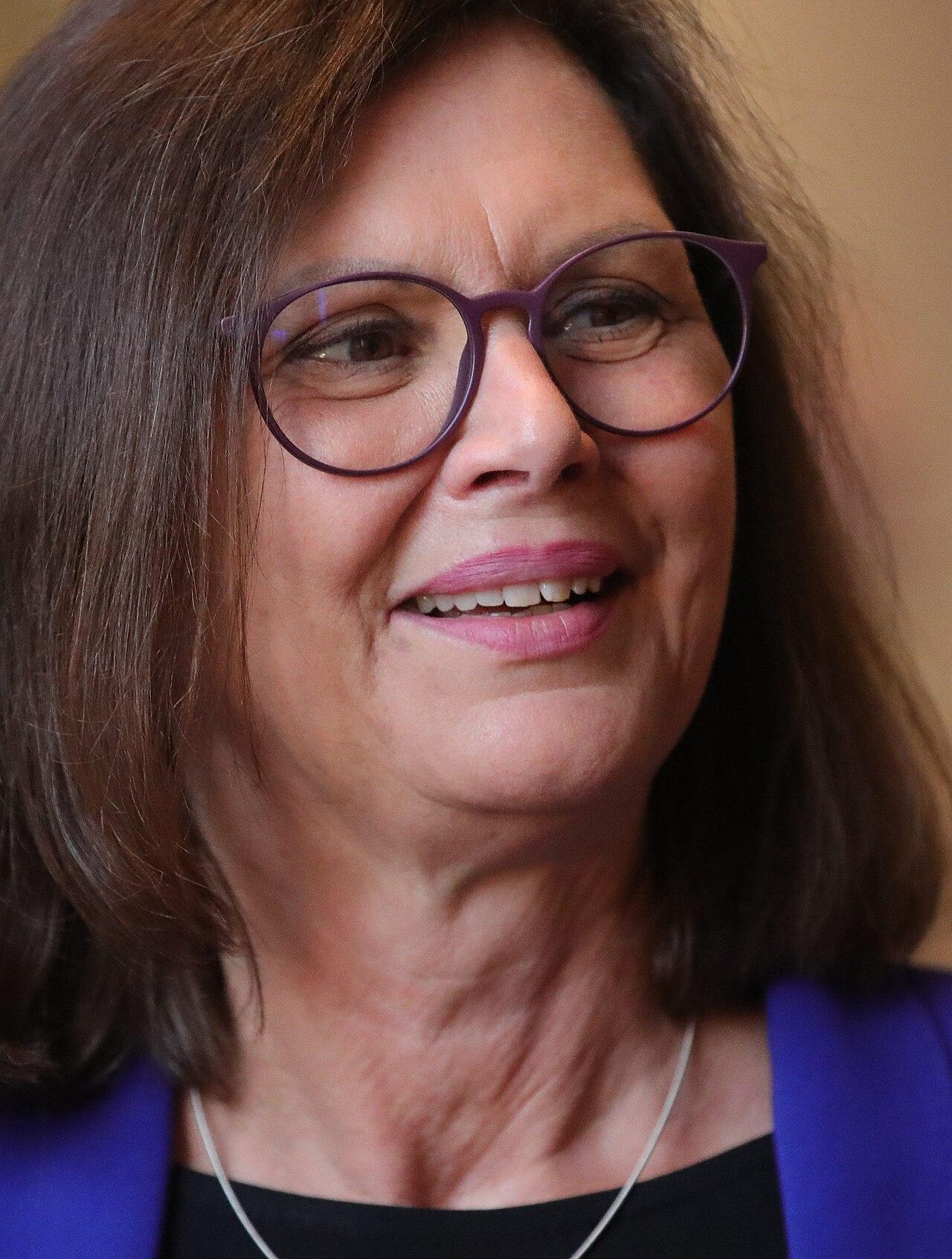
Ilse Aigner, the 61-year-old president of the Bavarian state parliament, is on course to become Germany's first female head of state after Chancellor Friedrich Merz chose her as the governing coalition's candidate to succeed President Frank-Walter Steinmeier. Merz told the leadership of his Christian Democratic Union (CDU) of his decision at a dinner in Berlin on Sunday evening, 8 November, according to ARD's tagesschau and Deutschlandfunk, and was due to present her formally to the party's presidium and federal executive on Monday morning, 9 November.
The president is chosen not by voters but by the Federal Convention (Bundesversammlung), which meets on Saturday 30 January 2027. The CDU, its Bavarian sister party the Christian Social Union (CSU) and the Social Democrats (SPD), which govern together, hold a majority there of roughly 50 seats, so Aigner's election is widely regarded as very likely. She would also be the first CSU politician to hold the office.
What happened over the weekend?
Aigner's name had circulated for months. Bavarian premier and CSU leader Markus Söder publicly floated her as a candidate in April and repeated his support at the CSU party conference in October, Deutsche Welle (DW) and tagesschau reported. Merz, however, declined to confirm a choice. As recently as Friday evening, when asked about Aigner at a reception, he said he was sticking to the agreed procedures, tagesschau reported. Other CDU names were discussed in the meantime, including Annegret Kramp-Karrenbauer, Karin Prien, Julia Klöckner and Ines Claus.
On Sunday evening Merz confirmed his choice to the CDU presidium. According to Politico Europe's Berlin Playbook, the plan for Monday was for Merz to bring Aigner into the presidium at 9am, then the federal executive, followed by a short joint statement to the cameras at around 1pm Berlin time. Merz and Aigner were then due to fly to Munich to attend, with Söder, a ceremony marking the 20th anniversary of the city's main synagogue, Ohel Jakob. On Tuesday Aigner is expected to meet the SPD and Green parliamentary groups, Politico reported.
The SPD's party leadership also decided on Monday to back Aigner, Der Tagesspiegel reported. SPD co-leader Lars Klingbeil had signalled support on Friday, according to Politico, and DW reported that SPD and Green politicians had already voiced support. Deutschlandfunk said Aigner could also count on votes from the Greens.
Who is Ilse Aigner?
Aigner's path to politics is unusual for a German head-of-state candidate. She did not take the Abitur, the university-entrance exam, or attend university. The youngest of four sisters in a family that ran an electrical trades business, she trained as a radio and television technician and qualified as a state-certified electrical engineering technician, DW reported. She later worked at Eurocopter, now part of Airbus, developing electrical components for helicopters.
She entered the Bavarian state parliament in 1994, at the same time as Söder; the two were then its youngest members. She sat in the federal parliament, the Bundestag, from 1998 to 2013 and served as federal minister for food, agriculture and consumer protection under Chancellor Angela Merkel from 2008 to 2013. In 2013 she returned to Munich as Bavaria's economy minister, and she has been president of the Bavarian state parliament for eight years.
Aigner has spoken out against extremism and political polarisation. In remarks quoted by tagesschau, she once described polarisation as a business model that digs deep trenches in order to create a different country, adding: "And to say it clearly: I do not want this other country." According to Politico, she intends to remain speaker of the Bavarian parliament until the vote and to keep public appearances to a minimum before then.
How does Germany elect its president?
Article 54 of Germany's constitution, the Basic Law, sets out the rules. The president is elected "without debate" by the Federal Convention, which consists of all members of the Bundestag plus an equal number of delegates chosen by the 16 state parliaments on a proportional basis. Any German entitled to vote in Bundestag elections who has reached the age of 40 can be elected. A term lasts five years, and a president may be re-elected consecutively only once.
The 2027 convention will have 1,260 members: the 630 members of the Bundestag and 630 state delegates, according to Der Tagesspiegel. State delegates are usually state legislators but can include local politicians or public figures. The session will be chaired by Bundestag President Julia Klöckner.
A candidate needs an absolute majority of the convention's members, 631 votes, in the first or second round. If no one reaches that, a third round is decided by whoever wins the most votes. Third rounds are rare but not unknown: Christian Wulff was elected only in the third round in 2010, and Gustav Heinemann in 1969.
How big is the coalition's majority?
Projections by the website wahlrecht.de, cited by Der Tagesspiegel, put the CDU/CSU on 431 or 432 seats in the convention and the SPD on 251 to 253, giving the coalition 682 to 685 of 1,260, or around 50 more than the absolute majority. These are projections based on the current makeup of the federal and state parliaments, not final delegate lists.
The same projections show the far-right Alternative for Germany (AfD) as the second-largest group in the convention for the first time, with 260 to 262 seats, ahead of the SPD. The Greens are projected at 193 to 197, the Left party at 78 to 80, the Free Voters at 18, the Free Democrats at 11 and the BSW at 7, with a handful of other delegates. It is not yet known whether the AfD or the Left will put up their own candidates. AfD leader Alice Weidel signalled in the spring that her party might, Der Tagesspiegel reported.
Why does her nomination matter?
Germany's presidency is mostly representative, but the office holder signs federal laws into force, formally appoints the chancellor and ministers, and is expected to speak for the country on moments of national significance. Since the Federal Republic was founded in 1949, every president has been a man. Women have stood in nearly every presidential election since 1999, including the physicist Dagmar Schipanski for the CDU/CSU and the theologian Uta Ranke-Heinemann for the PDS that year, but always as candidates of the minority camp without a realistic chance, DW noted.
The choice also matters inside the conservative camp. No CSU politician has ever been federal president or chancellor. The only CSU politician to have served as president of the Bundestag, formally the second-highest office of state, was Richard Stücklen, for four years from 1979, DW noted. DW's analysis argued that a CSU president would make a CSU chancellor politically unlikely in the near term, which observers read as closing the door on any federal ambitions Söder might have. That is analysis, not a stated position of either party.
What are the criticisms?
Opposition leaders were critical. AfD co-leader Alice Weidel said Aigner had shown several times as president of the Bavarian parliament that she could not shed the role of a party politician, Deutschlandfunk reported. Left party co-leader Schwerdtner said she would have wished the coalition had looked beyond its own ranks for a candidate who could bring the country together. According to Politico, neither the Left nor the AfD parliamentary group has invited Aigner to meet them.
What happens next?
Aigner remains the coalition's nominee until the Federal Convention meets in the Bundestag's plenary chamber on 30 January 2027. If elected, she would not take office immediately. Steinmeier's second term ends on 18 March 2027, and the new president's term begins with the oath of office, usually taken before a joint sitting of the Bundestag and the Bundesrat, the chamber representing the states. Der Tagesspiegel said that could happen on around 19 March.
Until then, the main questions are whether the AfD and the Left field rival candidates, how many Green delegates back Aigner, and whether she wins in the first round, as Der Tagesspiegel expects.
Image: Photo: Sandro Halank, CC BY-SA 4.0 (https://creativecommons.org/licenses/by-sa/4.0/), via Wikimedia Commons (https://commons.wikimedia.org/wiki/File:2023-10-08_Wahlabend_Bayern_by_Sandro_Halank%E2%80%93007.jpg) — October 2023 file photo of Ilse Aigner on Bavarian election night in Munich, not from this week's nomination
About this article: prepared by The Daily Context editorial desk using automated, source-based reporting from the publications linked below. No reporter was on the ground.
Sources
- tagesschau (ARD): Merz breaks his silence on the presidency and proposes Aigner (Sabine Henkel, in German, 9 November 2026): https://www.tagesschau.de/inland/innenpolitik/aigner-bundespraesidentin-100.html
- tagesschau (ARD): Chancellor Merz wants to propose Aigner as federal president (in German): https://www.tagesschau.de/inland/innenpolitik/aigner-bundespraesidentin-merz-100.html
- Der Tagesspiegel: How the election of the federal president works (Daniel Friedrich Sturm, in German, 9 November 2026): https://www.tagesspiegel.de/politik/wie-funktioniert-die-wahl-der-bundesprasidentin-so-kann-ilse-aigner-erste-frau-im-staate-werden-16255722.html
- Deutschlandfunk: Merz presents Aigner as candidate for federal president (in German, 9 November 2026): https://www.deutschlandfunk.de/merz-stellt-aigner-als-kandidatin-fuer-das-amt-der-bundespraesidentin-vor-100.html
- DW: CSU politician Aigner is favourite to become federal president (Christoph Strack, in German, 8 November 2026): https://www.dw.com/de/die-csu-politikerin-ilse-aigner-ist-als-erste-bundespr%C3%A4sidentin-nun-favoritin/a-79873744
- DW: Germany news, Merz to nominate Aigner for president (8 November 2026): https://www.dw.com/en/germany-news-merz-to-nominate-aigner-for-president/live-79883533
- Politico Europe Berlin Playbook: Aigner's big day (Rasmus Buchsteiner, in German, 9 November 2026): https://www.politico.eu/newsletter/berlin-playbook/aigners-grosser-tag/
- Basic Law for the Federal Republic of Germany, Article 54 (Federal Ministry of Justice, in German): https://www.gesetze-im-internet.de/gg/art_54.html
Kabeer Ahmad
Kabeer Ahmad is the founder and editor of The Daily Context. He oversees the site's source-based coverage of world affairs, technology, business, entertainment, lifestyle and sports, and is responsible for its editorial standards, sourcing and corrections.