ICJ rules Myanmar committed genocide against the Rohingya, a first against any state
The International Court of Justice ruled on 19 November 2026 that Myanmar committed genocide against the Rohingya during the 2017 military clearance operations in northern Rakhine State. The vote was nine to six. It is the first time the UN's top court has found a state responsible for committing genocide itself. Myanmar must report back within two years on restitution and compensation.
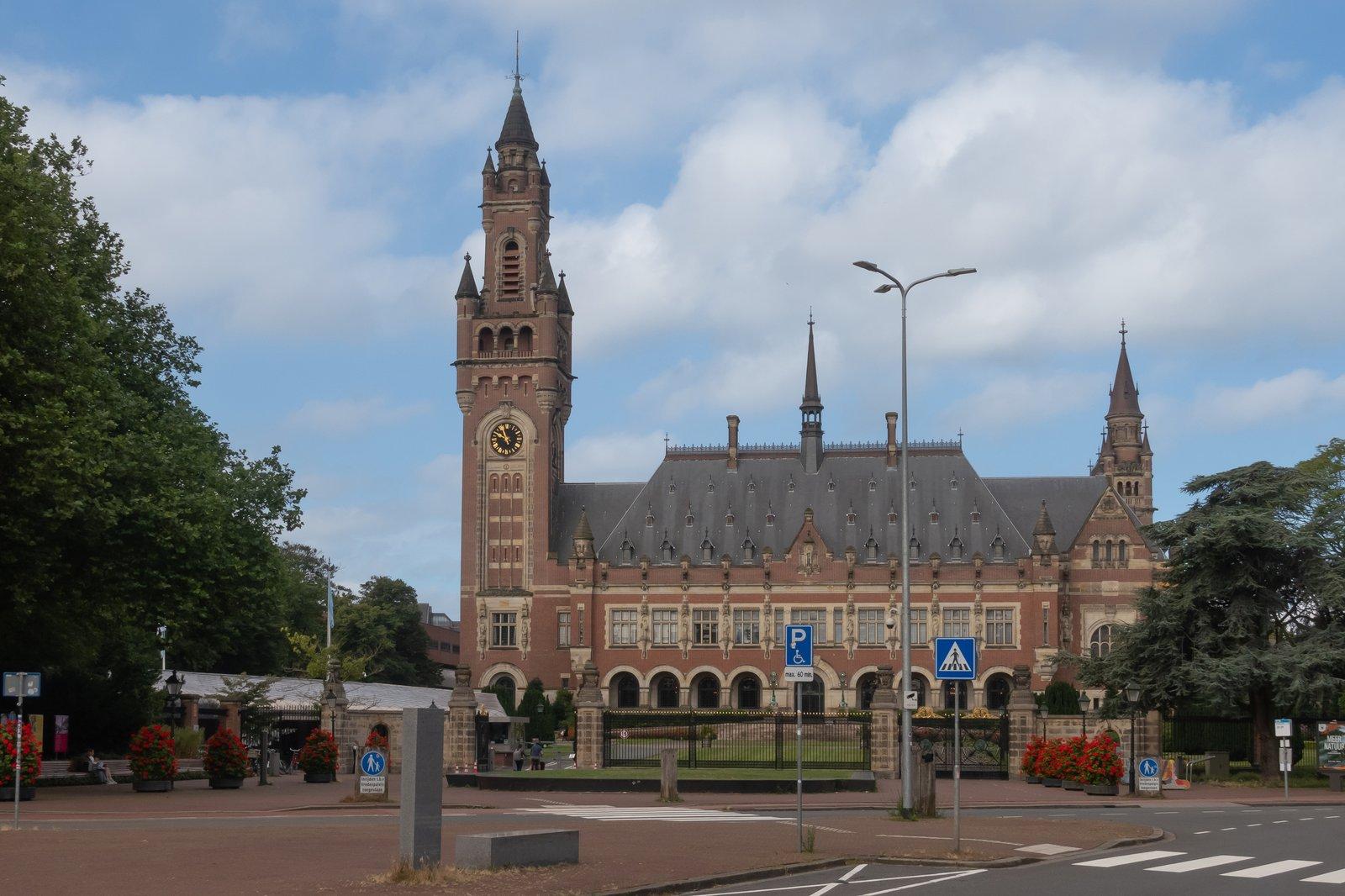
The International Court of Justice (ICJ) has ruled that Myanmar committed genocide against its Rohingya minority. The judgment, read out in The Hague on Thursday, 19 November 2026, is the first time the UN's highest court has found a state responsible for committing genocide itself. Judges voted nine to six on the central finding.
The court said Myanmar's security forces and other state organs killed Rohingya people, caused them serious bodily or mental harm, and imposed measures intended to prevent births, all with the intent to destroy a substantial part of the group. Those acts fall under Article II(a), (b) and (d) of the 1948 Genocide Convention. The ruling covers the military's "clearance operations" in northern Rakhine State in 2017, which drove about 700,000 Rohingya across the border into Bangladesh.
The judgment is final and binding on the parties, and there is no appeal. But the ICJ has no police force of its own, so whether Myanmar complies is a separate question.
What did the court decide?
Court President Yuji Iwasawa read the operative part of the judgment at the end of a hearing that lasted several hours. According to the UN's official record of the reading, the court found, point by point:
- By nine votes to six, that Myanmar committed genocide against the Rohingya group in northern Rakhine State.
- By nine votes to six, that Myanmar failed in its duty to prevent genocide by individuals acting alongside its security forces.
- By 14 votes to one, that Myanmar had not itself directly and publicly incited private persons to commit genocide. This was the one major claim the court did not uphold.
- By 11 votes to four, that Myanmar failed in its duty to punish genocide and related acts.
- By 14 votes to one, that Myanmar failed to pass the laws needed to give effect to the convention, and must now do so.
- By 13 votes to two, that Myanmar must promptly investigate everyone reasonably suspected of genocide-related acts during the 2017 operations and, where warranted, prosecute and punish them.
The six judges who voted against the main finding were Vice-President Julia Sebutinde, Judges Peter Tomka, Ronny Abraham, Xue Hanqin and Georg Nolte, and judge ad hoc Claus Kress. The majority was President Iwasawa, Judges Hilary Charlesworth, Leonardo Brant, Juan Manuel Gómez Robledo, Sarah Cleveland, Bogdan Aurescu, Dire Tladi and Mahmoud Hmoud, and judge ad hoc Navi Pillay.
The court also ordered Myanmar to give guarantees that the violations will not be repeated, to allow displaced Rohingya to return home safely, voluntarily and with dignity, and to compensate the group and its members. The amount and form of compensation will be decided in a later phase. Myanmar must send the court a report on its restitution measures and compensation plans within two years.
How did the court reach its finding on intent?
Genocide is harder to prove than other atrocity crimes because it requires a specific intent to destroy a protected group, in whole or in part. Under the ICJ's earlier case law, where intent is inferred from conduct it has to be the only reasonable inference from the evidence.
The court kept that standard, according to an analysis by the international law firm Akin. But it looked at a wide range of factors together rather than searching for a single, uniform pattern of conduct. These included long-standing discrimination against the Rohingya, military-sponsored hate speech, earlier military operations, forced displacement, the selective targeting of Rohingya villages, sexual violence and attacks on children.
Myanmar had argued that its forces were fighting insurgents from the Arakan Rohingya Salvation Army (ARSA), which attacked police posts in 2016 and 2017. The court rejected that explanation as an account of the evidence as a whole. It said a military objective can exist alongside genocidal intent, as long as the intent to destroy the group remains the only reasonable inference, Akin's summary says.
The court cited an estimate that about 10,000 Rohingya were killed during the operations, UN News reported. It also found that nearly 400 villages, roughly 40% of the almost 1,000 villages in three townships of northern Rakhine, were partly or fully destroyed during and after the operations, and that cleared land was often built over with security installations and new settlements. On the prevention of births, Judge Iwasawa said the killing of infants supported the inference that the security forces intended to prevent births within the group.
The dissenting judges said the majority had not ruled out other reasonable explanations and had lowered the evidentiary bar by relying on contextual material, according to the Akin analysis. Their joint dissent is published alongside the judgment on the ICJ website.
How has Myanmar responded?
Myanmar's foreign ministry called the finding "a great disappointment". In a written statement, it stressed that the judgment was reached by a majority of nine to six and pointed to the joint dissent, which it said found the court had departed from its long-standing standard of proof. The ministry repeated Myanmar's position that its 2016–2018 operations in northern Rakhine were limited counter-terrorism actions taken in response to ARSA attacks, not acts of genocide.
The statement said Myanmar would continue humanitarian assistance in northern Rakhine and the verification and repatriation of people in Bangladesh "as and when situations permit". On Friday, Khine Khine Soe, a spokesperson for President Min Aung Hlaing, described the judgment as "unfair" and noted that it was not unanimous, the Associated Press reported.
Min Aung Hlaing led the military during the 2017 operations, seized power in a 2021 coup and became president this year. In 2024 the prosecutor of the separate International Criminal Court, which tries individuals rather than states, applied for a warrant for his arrest over alleged crimes against humanity against the Rohingya; the Guardian describes that warrant as pending.
Who welcomed the ruling?
UN Secretary-General António Guterres called the judgment "a powerful recognition of the Rohingya victims of genocide" and said impunity for such acts "must not stand". Bangladesh, which hosts more than a million Rohingya refugees around Cox's Bazar, called it "historic" and said Myanmar was now legally bound to comply. Its foreign ministry said safe, voluntary and dignified return remained the only viable solution, and that it hoped the ruling would help bring that about.
In the camps, crowds watched the reading on big screens, according to the Guardian and AP. Refugees told AP the verdict was a small victory but that they would only be satisfied when they could go home. Rohingya survivor Yousuf Ali, who travelled to The Hague, told the Guardian: "Today, we have finally been heard."
The US State Department said it would study the decision "to fully assess its implications", the Guardian reported.
Why does this case matter beyond Myanmar?
The Gambia, a Muslim-majority West African state, brought the case in November 2019, even though it was not directly affected. It relied on the idea that every party to the Genocide Convention has an interest in seeing it obeyed. Eleven other states later intervened. The court's acceptance that a non-injured state can seek restitution and compensation on behalf of the victims is one of the judgment's main legal developments, according to Akin.
The ICJ has ruled on the merits of two earlier genocide cases between states, both arising from the Balkan wars of the 1990s. In 2007 it found that Serbia had not committed genocide but had failed to prevent the 1995 Srebrenica massacre and to punish those responsible. In 2015 it dismissed both Croatia's claim against Serbia and Serbia's counter-claim.
Lawyers and governments will also read the reasoning for what it may mean in other pending cases, including South Africa's genocide case against Israel over Gaza. Each case will be decided on its own evidence, and the court has said nothing about how that case will end.
What happens next?
Myanmar has two years to report on restitution and compensation, after which the court will decide the reparations. If a state ignores an ICJ judgment, the other party can go to the UN Security Council, which can decide on measures to enforce it. Any such move could be vetoed by one of the council's five permanent members.
Inside Myanmar, the civil war that followed the 2021 coup continues, and much of northern Rakhine State is contested. That makes any safe return of Rohingya refugees, which the court ordered, difficult to achieve soon.
Image: File photo: the Peace Palace in The Hague, seat of the International Court of Justice (August 2024), not taken on the day of the judgment. Photo by Michielverbeek, CC BY 4.0 (https://creativecommons.org/licenses/by/4.0/), via Wikimedia Commons (https://commons.wikimedia.org/wiki/File:Den_Haag,_het_Vredespaleis_RM333074_IMG_4317_2024-08-05_10.02.jpg); cropped and resized
About this article: prepared by The Daily Context editorial desk using automated, source-based reporting from the publications linked below. No reporter was on the ground.
Sources
- UN News: World's top court finds Myanmar guilty of genocide against Rohingya (19 November 2026): https://news.un.org/en/story/2026/11/1168836
- UNifeed: ICJ / Myanmar Rohingya genocide judgment, operative paragraph and votes (19 November 2026): https://media.un.org/unifeed/en/asset/d369/d3691296
- International Court of Justice: case page, judgment of 19 November 2026 and opinions: https://www.icj-cij.org/case/178
- Ministry of Foreign Affairs of Myanmar: press statement on the ICJ judgment: https://www.mofa.gov.mm/en/press-statement-by-the-ministry-of-foreign-affairs-of-the-republic-of-the-union-of-myanmar-on-the-judgment-of-the-international-court-of-justice-delivered-on-19-november-2026/
- The Guardian: Myanmar committed genocide against Rohingya minority, world's top court rules: https://www.theguardian.com/world/2026/nov/19/genocide-rohingya-international-court-of-justice-ruling-myanmar
- Akin: ICJ renders historic judgment in the Myanmar genocide case (20 November 2026): https://www.akingump.com/en/insights/alerts/icj-renders-historic-judgment-in-the-myanmar-genocide-case
- Associated Press: Myanmar dismisses the UN court's ruling as 'unfair': https://apnews.com/article/bangladesh-rohingya-myanmar-un-world-court-ruling-c76dcb3f97c1077262f87e0cba01bb78
- Associated Press: Rohingya in Bangladesh welcome UN court's genocide verdict: https://apnews.com/article/bangladesh-rohingya-myanmar-995389b9d83d9c7813dcfd269f054e39
- Bangla Mirror: Bangladesh welcomes 'historic' ICJ judgment (foreign ministry statement): https://banglamirrornews.com/2026/11/19/214828/
Kabeer Ahmad
Kabeer Ahmad is the founder and editor of The Daily Context. He oversees the site's source-based coverage of world affairs, technology, business, entertainment, lifestyle and sports, and is responsible for its editorial standards, sourcing and corrections.