Eisenkot gets 28 days to form Israel's next government: what happens now
Israeli President Isaac Herzog on Sunday, 8 November 2026, gave Yashar party leader Gadi Eisenkot 28 days to form a government after 67 lawmakers recommended him, against 46 for Benjamin Netanyahu. Neither bloc holds a 61-seat majority, so Eisenkot must find extra partners.
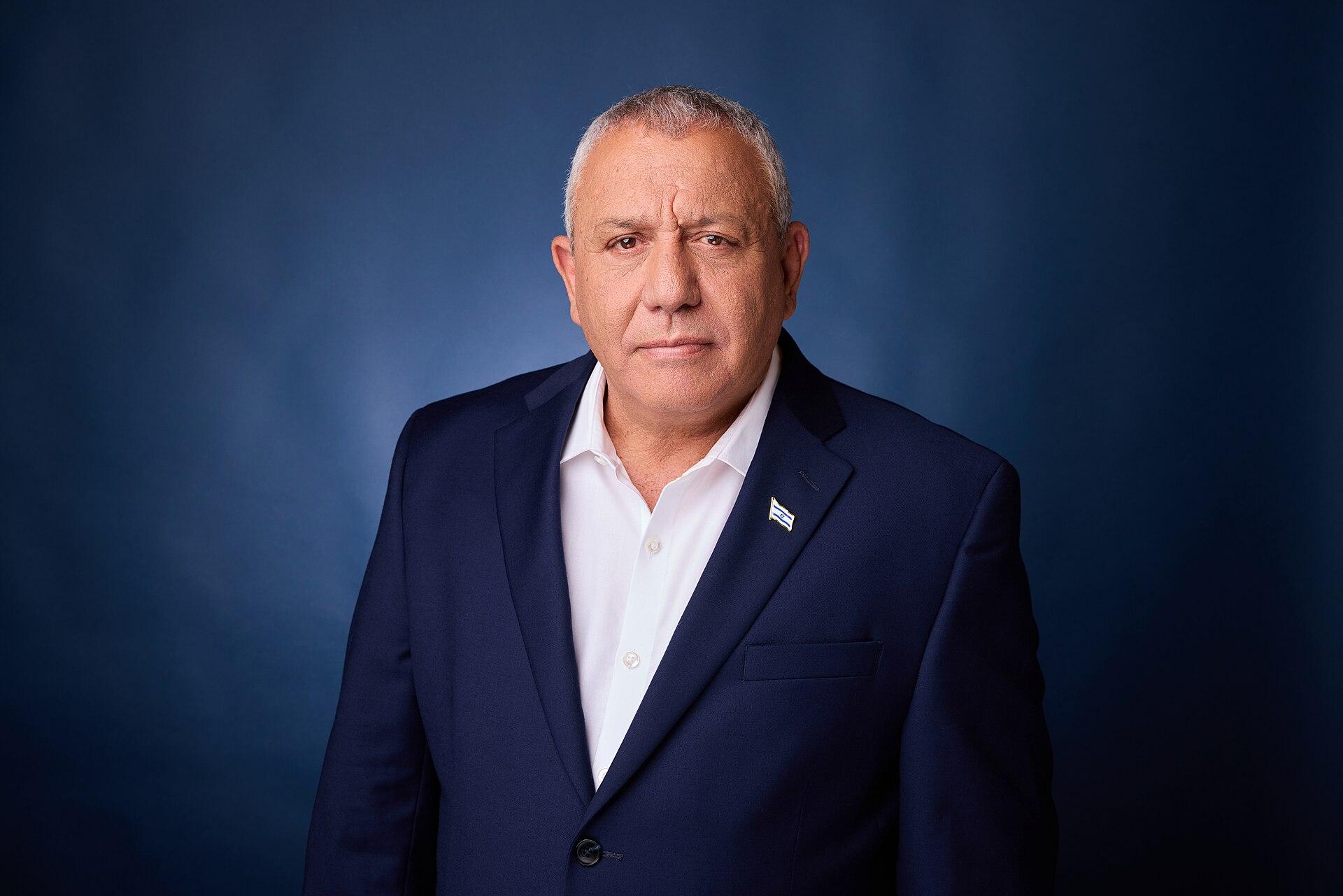
Gadi Eisenkot, the former Israeli military chief who leads the Yashar party, formally received the mandate to form Israel's next government on Sunday, 8 November 2026. President Isaac Herzog handed it to him at a ceremony at the President's Residence in Jerusalem. Eisenkot now has 28 days to put together a coalition that can win a confidence vote in the 120-seat Knesset. Herzog can extend that by up to 14 days. The Jerusalem Post, Ynet, NPR and The Guardian all reported the ceremony.
If Eisenkot succeeds, he would replace Benjamin Netanyahu, Israel's longest-serving prime minister. But the arithmetic is difficult. Neither political bloc won a majority in last month's election.
Why did Herzog choose Eisenkot over Netanyahu?
The decision followed a week of consultations in which Herzog met representatives of every party in the incoming Knesset. According to Herzog's remarks, reported by Ynet and The Jerusalem Post, representatives of 67 incoming lawmakers recommended Eisenkot for prime minister. Netanyahu received 46 recommendations.
Herzog acknowledged that Netanyahu's Likud is still the largest single party, with 27 seats. "The fact that the Likud faction is the largest faction in the incoming Knesset has not escaped my attention," he said, according to Ynet. He noted that previous presidents had, on several occasions, given the mandate to a leader whose party was not the largest. The deciding question, Herzog said, was who had the better chance of forming a government that could win the Knesset's confidence.
Ynet reported that Herzog met Eisenkot and Netanyahu separately over the weekend before telling them his decision. The announcement came on Saturday and the formal handover on Sunday.
Who backed Eisenkot, and who backed Netanyahu?
According to The Jerusalem Post, all the parties in the opposition bloc recommended Eisenkot: his own Yashar party, Yair Golan's Democrats, Naftali Bennett's B'Yachad and Avigdor Liberman's Yisrael Beytenu. Both Arab-led lists, Ra'am and the Joint List, also recommended him. The Post noted that their recommendations do not commit them to joining his coalition.
Netanyahu was recommended by Likud and four allied parties. These were Itamar Ben-Gvir's Otzma Yehudit, Bezalel Smotrich's Religious Zionist Party, Moshe Feiglin's Zehut and Arye Deri's Shas. United Torah Judaism, an ultra-Orthodox party and longtime Netanyahu partner, declined to recommend anyone. The Post said this came amid reported tensions with Netanyahu and benefits the opposition.
Why is forming a government so hard?
Recommendations are not the same as a governing majority. According to figures reported by The Jerusalem Post and The Guardian, Netanyahu's bloc won 53 seats in the October election and Eisenkot's opposition bloc won 48. Ra'am and the Joint List together won a record 19 seats. A government needs 61 votes.
The Guardian described three broad routes open to Eisenkot:
- A power-sharing deal with Netanyahu. Netanyahu called for a "national unity" government in a recorded address on Saturday night. Yashar called the speech "hysterical" and said Likud and its allies would first have to drop their alliance with "the extremists" and accept Eisenkot's four principles, Ynet reported.
- Support from Arab-led parties. Several members of Eisenkot's own bloc oppose this. The Guardian reported that Eisenkot has set conditions for any Arab party joining him. These include recognising Israel as a Jewish state and declaring Hamas a terrorist organisation.
- A deal with the ultra-Orthodox parties. These parties want military-service exemptions for their community, but Eisenkot and his partners campaigned on equal military service.
Liberman has already narrowed the options. On Sunday he said he would not support a minority government that depends on Ra'am and the Joint List. "I want to make it unequivocally clear: That will not happen," he wrote, according to Ynet. Ynet reported that Eisenkot planned to meet Bennett on Sunday evening and Liberman on Monday.
What did Eisenkot and Herzog say?
Eisenkot repeated his call for a "national emergency government." According to The Jerusalem Post and The Guardian, he said Israel was "in a state of emergency, approaching a point of no return," and that "creative and unconventional political steps" would be needed. He appealed directly to Likud and the Religious Zionist Party to join a government under his leadership. "My door is open and my hand is extended," he said.
He also warned about the state of Israeli democracy. "We are at one of the most vulnerable moments Israeli democracy has ever known," he said, according to Ynet's translation.
Herzog urged unity and stability. "I expect you to do everything in your power to establish a government that will serve the entire people," he told Eisenkot. He listed security and diplomatic challenges facing the next government, including Iran, the US-backed 20-point Gaza plan and possible negotiations with Lebanon, Ynet reported.
Ynet also reported that, even if Eisenkot reaches a coalition agreement quickly, he does not intend to swear in a government this week.
What happens if Eisenkot fails?
Under Israeli law, as summarised by The Jerusalem Post, the process has several stages:
- If Eisenkot cannot form a government within the allotted time, tells Herzog he has failed, or loses a confidence vote, the president has three days to decide whether to give the task to another lawmaker.
- A second candidate would get 28 days, with no extension.
- If that also fails, a majority of at least 61 lawmakers can jointly ask the president to give the mandate to a specific member, who would then have 14 days.
- If every attempt fails, the Knesset is dissolved and a new election is held.
Until a new government wins a confidence vote, Netanyahu's outgoing government stays in office in a caretaker role. Israel held five elections between 2019 and 2022 because of repeated deadlocks, The Guardian noted. NPR reported that a failed process could again lead to repeat elections in the coming months.
Who is Gadi Eisenkot?
Eisenkot, 66, was chief of staff of the Israel Defense Forces from 2015 to 2019, according to The Guardian. He has pledged to bridge Israel's deep political divisions. The Guardian reported that he has vowed to crack down on violent West Bank settlers, opposes the creation of a Palestinian state and has promised to end Hamas rule in Gaza.
As a commander during the 2006 war with Hezbollah, he devised what became known as the "Dahiya doctrine", The Guardian noted. The approach involves the use of massive force against civilian infrastructure in areas controlled by Hezbollah.
What to watch next
The key signals in the coming days will be Eisenkot's meetings with Bennett and Liberman, any shift by United Torah Judaism or Shas, and whether Likud engages with his offer on his terms. The 28-day clock started on Sunday, 8 November.
Image: Photo: Yahav Trudler (Yahav Studio), via Gadi Eisenkot's office / Wikimedia Commons, CC BY-SA 3.0 (https://commons.wikimedia.org/wiki/File:Gadi_Eisenkot_2.jpg) — June 2026 file photo
About this article: prepared by The Daily Context editorial desk using automated, source-based reporting from the publications linked below. No reporter was on the ground.
Sources
- The Jerusalem Post, Eisenkot vows to form emergency gov't as Herzog bestows mandate (8 Nov 2026): https://www.jpost.com/israel-election-2026/article-914236
- Ynetnews, 'Democracy is at a dangerous crossroads': Eisenkot formally tasked with forming government (8 Nov 2026): https://www.ynetnews.com/article/sjygemraml
- The Guardian, Gadi Eisenkot reaches out to Netanyahu allies as he strives to form government (8 Nov 2026): https://www.theguardian.com/world/2026/nov/08/gadi-eisenkot-netanyahu-allies-form-israel-government
- NPR, Israel's President taps Netanyahu rival Gadi Eisenkot to form the new government (8 Nov 2026): https://www.npr.org/2026/11/08/nx-s1-6032627/israels-president-taps-netanyahu-rival-gadi-eisenkot-to-form-the-new-government
Kabeer Ahmad
Kabeer Ahmad is the founder and editor of The Daily Context. He oversees the site's source-based coverage of world affairs, technology, business, entertainment, lifestyle and sports, and is responsible for its editorial standards, sourcing and corrections.