Egypt train collision at al-Ayyat kills seven, injures more than 100: what we know
Two passenger trains collided at al-Ayyat in Egypt's Giza governorate on Sunday 8 November 2026, killing at least seven people, including a train driver, and injuring more than 100, according to Egyptian authorities. Prosecutors have opened an investigation and the cause has not yet been officially determined.
At least seven people were killed and more than 100 injured when two passenger trains collided on Sunday 8 November 2026 in al-Ayyat, in Egypt's Giza governorate south of Cairo, according to Egypt's health ministry. The driver of one of the trains is among the dead. Egypt's Public Prosecution Office has opened an investigation, and no official cause has yet been announced.
The Egyptian National Railways Authority said a train travelling from Giza to Fayoum struck the rear of another service running from Cairo to Aswan, between Kafr Ammar and al-Raqqa stations. Several carriages left the tracks.
What happened in the al-Ayyat collision?
According to the railway authority's statement, as reported by Egypt Daily News and AIJES, train No. 134, a "Tahya Misr" service from Giza to Fayoum, collided with the rear of train No. 2010, which was heading from Cairo to Aswan in southern Egypt. Both trains were travelling in the same direction.
The Public Prosecution Office said, after inspecting the scene and speaking to witnesses, that the Cairo-Aswan train had stopped on the tracks when the Fayoum-bound train hit it, according to the BBC's coverage of the prosecutors' statement. A witness who spoke to AFP gave the same account and said the crash happened at about 1:30 pm local time, adding that six carriages overturned. That carriage count comes from a single witness and has not been confirmed officially.
AFP journalists at the site described passenger carriages strewn across the tracks and nearby farmland, one lying on its side beside the embankment and another torn open by the impact. Rescue workers used cranes and heavy machinery to right overturned carriages, while villagers, first responders and railway workers tried to reach trapped passengers.
How many people were killed and injured?
The figures changed through Sunday as information came in, and official bodies have not given identical numbers.
- Early on Sunday the health ministry reported 64 injured, according to Egypt Daily News.
- It later reported four deaths, including a train driver, and 88 injuries, according to the BBC.
- By about 16:30 GMT, the ministry said seven people had died and 112 had been injured, the toll also reported by AFP and Xinhua.
- The Public Prosecution Office gave an initial estimate of seven dead, including the driver of the Giza-Fayoum train, and 114 injured, according to the BBC.
- The Associated Press reported seven deaths and at least 125 injuries, citing authorities.
The ministry said injuries ranged from bruises and abrasions to fractures of the limbs, pelvis and spine, head and facial wounds and chest injuries, AFP reported. Forty-five patients had been discharged by Sunday evening and seven more were expected to leave hospital soon, with the rest under observation, according to the ministry statement reported by Xinhua.
The ministry said 72 ambulances took part in the rescue and that the injured were taken to hospitals in Giza and neighbouring Beni Suef governorate. Health Minister Khaled Abdel Ghaffar ordered health facilities in both governorates to raise their readiness, Xinhua reported.
What has the government said?
President Abdel Fattah al-Sisi said on X that he was following the aftermath "with great concern". He said he had directed state agencies to provide medical care, investigate quickly and "hold accountable anyone found to have been negligent", as AFP translated his statement.
The Public Prosecution Office said investigators would examine the damaged carriages, the track and the surrounding area, and look for shortcomings in operating procedures and safety measures, according to the BBC.
Political pressure has also started. Egypt Daily News reported that nine members of parliament called for Transport Minister Kamel el-Wazir to be removed. One of them proposed an independent technical committee to examine the crash and railway safety more broadly. Those are calls from individual lawmakers, not a government decision.
Why does al-Ayyat matter in Egypt's rail history?
Al-Ayyat is the site of Egypt's deadliest rail disaster. In February 2002, more than 370 people were killed when fire swept through a crowded train carrying holiday travellers south of Cairo, AFP noted. AFP also reported that several train crashes in the same area in 2009 killed dozens of people.
Rail is central to daily life in Egypt, a country of about 110 million people. The national network is one of the largest in Africa and links Cairo with the cities of the Nile Valley and Upper Egypt. It has suffered repeated deadly accidents. AFP noted that over the past decade Egypt has spent billions of dollars on transport infrastructure, including new highways and high-speed rail lines, but much of the older conventional network has yet to be overhauled.
What do we not know yet?
Several important questions remain open:
- Why the trains were on the same stretch of track. A rear-end collision of this kind usually raises questions about signalling, communication between control staff and drivers, and speed. Investigators have not said which, if any, of these factors played a part. Any explanation before the prosecution reports would be speculation.
- Why the Cairo-Aswan train had stopped. The prosecution said it was stationary but has not explained why, according to the coverage available.
- How many passengers were on board. Authorities have not published passenger numbers for either train.
- The final toll. The prosecution said its count was still being finalised, and the different injury figures from different official bodies have not been reconciled.
What happens next?
The prosecution's investigation is the main process to watch. Its findings would normally determine whether railway staff or officials face charges, and Sisi's statement explicitly referred to accountability for negligence. The railway authority said it had sent emergency teams and cranes to clear the wreckage and move the remaining carriages so that services between Cairo and Upper Egypt could resume in both directions as quickly as possible. It did not give a timetable.
Debate in parliament over the transport minister's position, and over rail safety spending, is also likely to continue. The Daily Context will update this article if officials publish a cause, a revised toll or significant service information.
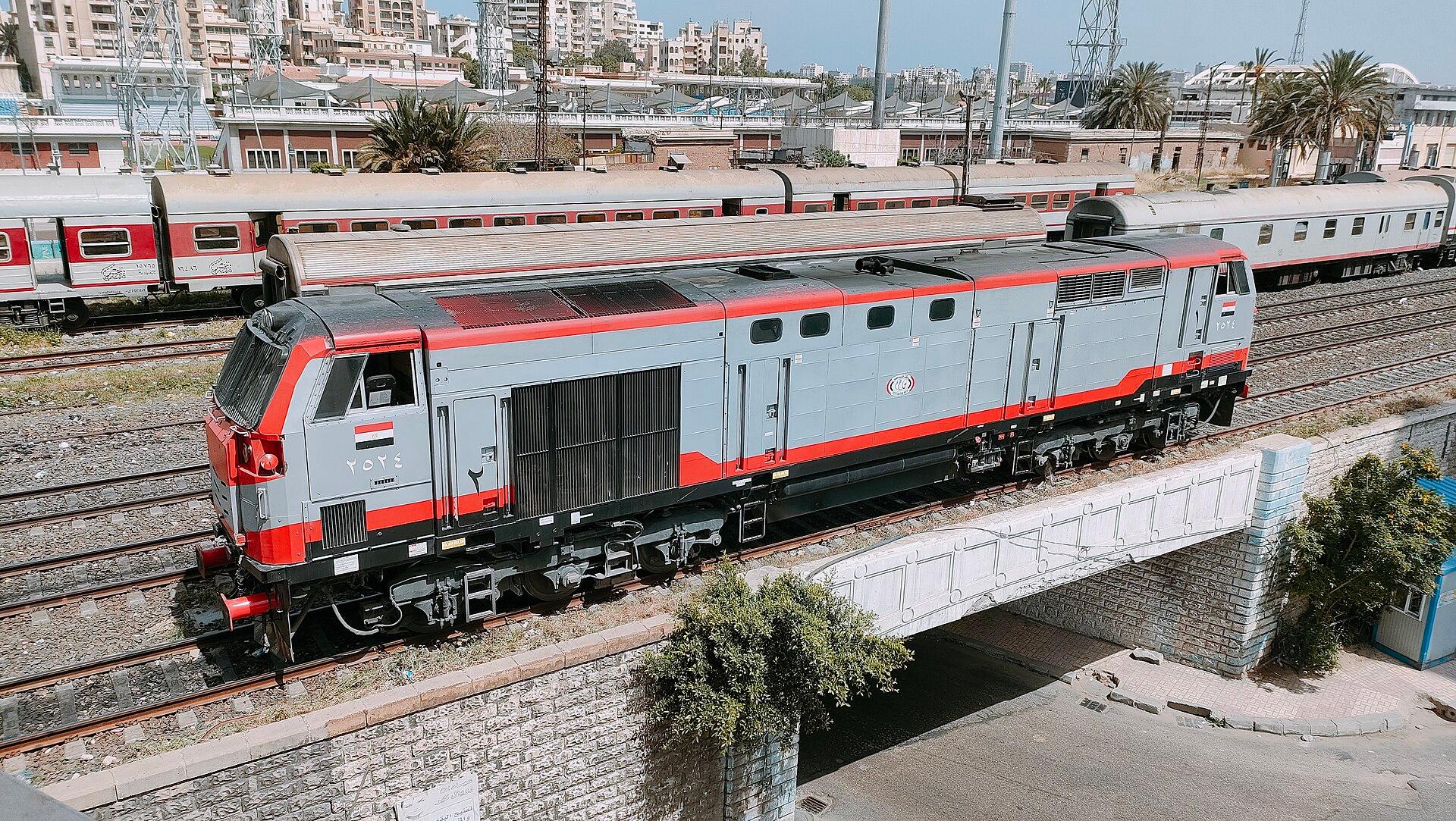
Image: Photo: Abdelrhman 1990 / Wikimedia Commons, CC BY-SA 4.0 (https://commons.wikimedia.org/wiki/File:Egyptian_Railways_(ENR)_GE_ES30ACi.jpg) — April 2023 file photo of an Egyptian National Railways locomotive in Alexandria, not of Sunday's crash
About this article: prepared by The Daily Context editorial desk using automated, source-based reporting from the publications linked below. No reporter was on the ground.
Sources
- AFP: Egypt train collision kills 7, injures 112: health ministry (8 November 2026): https://www.afp.com/en/egypt-train-collision-kills-7-injures-112-health-ministry
- Xinhua: Death toll from Egypt's train collision rises to 7, with 112 injured (8 November 2026): https://english.news.cn/africa/20261109/4cf1174557c0490fb915beb0875567aa/c.html
- BBC News live coverage: Egypt train crash (8 November 2026): https://www.bbc.com/news/live/c6reyn7zl8rdt
- Associated Press: Collision between 2 trains in Egypt kills 7 and injures at least 125 (8 November 2026): https://apnews.com/article/egypt-train-crash-giza-collision-cairo-injuries-4ad591268ce015d85ae302e22185b235
- Egypt Daily News: Seven Dead in Al-Ayyat Train Collision as Nine Lawmakers Call for El-Wazir's Removal (8 November 2026): https://egyptdailynews.com/giza-train-collision-injures-64-train-driver/
- AIJES: Statement from Egyptian National Railways regarding train collision in Al-Ayyat (8 November 2026): https://aijesnews.com/en/middle-east/news40543.html
Kabeer Ahmad
Kabeer Ahmad is the founder and editor of The Daily Context. He oversees the site's source-based coverage of world affairs, technology, business, entertainment, lifestyle and sports, and is responsible for its editorial standards, sourcing and corrections.