Congo's Ebola outbreak passes 10,000 cases: what the latest WHO figures show
The Bundibugyo Ebola outbreak in the Democratic Republic of the Congo had reached 10,668 confirmed cases and 5,198 deaths by 3 November 2026, the WHO says, making it the largest Ebola outbreak ever recorded in the country. Two Bundibugyo-specific vaccines are being added to a trial.
The Ebola outbreak in the Democratic Republic of the Congo has grown into the largest Ebola epidemic ever recorded in the country. The World Health Organization (WHO) said in its latest Disease Outbreak News, published on 6 November 2026, that 10,668 confirmed cases and 5,198 deaths had been reported as of 3 November. That is a crude case fatality ratio of 48.7%, meaning almost half of confirmed patients have died.
The outbreak is caused by Bundibugyo virus, one of several viruses that cause Ebola disease. There are no approved vaccines or specific treatments for it, the WHO says. Two vaccine candidates designed specifically against Bundibugyo are now being added to a clinical trial in Congo.
How big is the outbreak now?
According to the WHO, cases have been confirmed in 67 health zones across eight provinces. Active transmission was continuing in 51 of them in the 21 days to 3 November. In those three weeks, 1,463 new confirmed cases were reported:
- Ituri: 710 new cases. Ituri remains the worst-hit province overall, with 7,485 cumulative confirmed cases and 3,532 deaths.
- Nord-Kivu: 640 new cases. It has 2,593 cumulative cases and 1,422 deaths, and the highest provincial fatality ratio, at 54.8%.
- Haut-Uélé: 77 new cases (470 cumulative, 208 deaths).
- Tshopo: 31 new cases (94 cumulative, 29 deaths).
- Nord-Ubangi: 5 new cases. Yakoma health zone in Nord-Ubangi is the most recently affected area.
The European Centre for Disease Prevention and Control (ECDC) published slightly later figures on 6 November. Citing data up to 4 November, it reported 10,741 confirmed cases and 5,230 deaths, with 2,888 recoveries. ECDC noted that Congo's data are under continuous review. A data harmonisation in the 31 October situation report added 314 deaths from Ituri to the cumulative totals.
Since the WHO's previous update on 23 October, 964 more confirmed cases and 511 more confirmed deaths have been reported in Congo, the agency said.
Why are so many people dying outside hospitals?
The WHO highlighted a worrying pattern. Of the 512 deaths reported since 21 October, 335 occurred in communities and only 177 in treatment centres. The agency said the high share of community deaths, "especially among young children," points to problems with early detection and timely access to care.
Tracing the contacts of infected people is also falling short. Across Congo, an average of 86% of contacts were seen each day over the 14 days to 3 November, below the 95% target. Tshopo (71%) and Nord-Kivu (82%) were furthest behind, the WHO said.
WHO Director-General Tedros Adhanom Ghebreyesus said on 4 November that displacement, rainy weather, attacks on health care and difficulty reaching remote areas were complicating the response. He added that Congo is also facing its worst cholera outbreak in decades, with more than 60,000 cases and 1,800 deaths reported this year.
Has Ebola spread outside Congo?
Since the outbreak was declared on 15 May 2026, cases have been reported in five countries: Congo, France, Kenya, Nigeria and Uganda, according to the WHO. The outbreaks in France and Uganda have been under control since August.
- Kenya has reported nine confirmed cases, including two deaths, all linked to one imported case. Eight secondary cases were four family members and four health workers. There have been no new cases since 19 October, and the remaining contacts' follow-up is expected to end on 11 November, the WHO said.
- Nigeria reported one imported case in Abuja on 20 October. The patient, who had travelled from Uganda, was medically evacuated to Geneva, Switzerland, on 26 October. As of 3 November, 62 contacts had been identified in Nigeria, the WHO said.
- The United Kingdom said on 5 November that it had medically evacuated a health and care worker with a confirmed infection from Congo. The patient is being treated in London.
No new country has reported a case since the WHO's 23 October update.
What about vaccines and treatments?
On 23 October, the Tumaini trial began enrolling participants in Bunia, Ituri. It is a Phase 2/3 trial led by Congo's National Institute for Biomedical Research with support from the WHO and partners. It uses ring vaccination, which means vaccinating the contacts of confirmed patients. The first vaccine tested was Ervebo. That vaccine is approved against a different Ebola species (Zaire) but not against Bundibugyo.
On 4 November, WHO-convened expert groups recommended adding two vaccines designed specifically against Bundibugyo virus. They are ChAdOx1 BDBV, developed by the University of Oxford with the Serum Institute of India, and Moderna's mRNA-1469. The WHO said it is the first time vaccines built for Bundibugyo will be evaluated during an outbreak of the disease. They will join the trial once national approvals are in place.
Treatment research is also under way. The WHO-sponsored PARTNERS trial is testing whether the monoclonal antibody MBP134, the antiviral remdesivir, or both together improve survival. Another antibody, maftivimab, is due to be added.
What is the risk to travellers?
The WHO last formally assessed the risk on 14 August. It rated the risk as very high in Congo, high for countries bordering Congo, and low for the rest of Africa and globally. It said that assessment is now being revised.
The WHO advises against restrictions on travel or trade with affected countries. ECDC said the likelihood of infection for people from the EU/EEA living in or travelling to affected areas is low, and very low for people living in Europe.
According to the WHO, Bundibugyo virus spreads through direct contact with the blood or other body fluids of infected people, or with contaminated surfaces and materials. People are not infectious before symptoms start. The incubation period is two to 21 days. Early symptoms, such as fever, tiredness, muscle pain, headache and sore throat, are easy to confuse with malaria and other common illnesses.
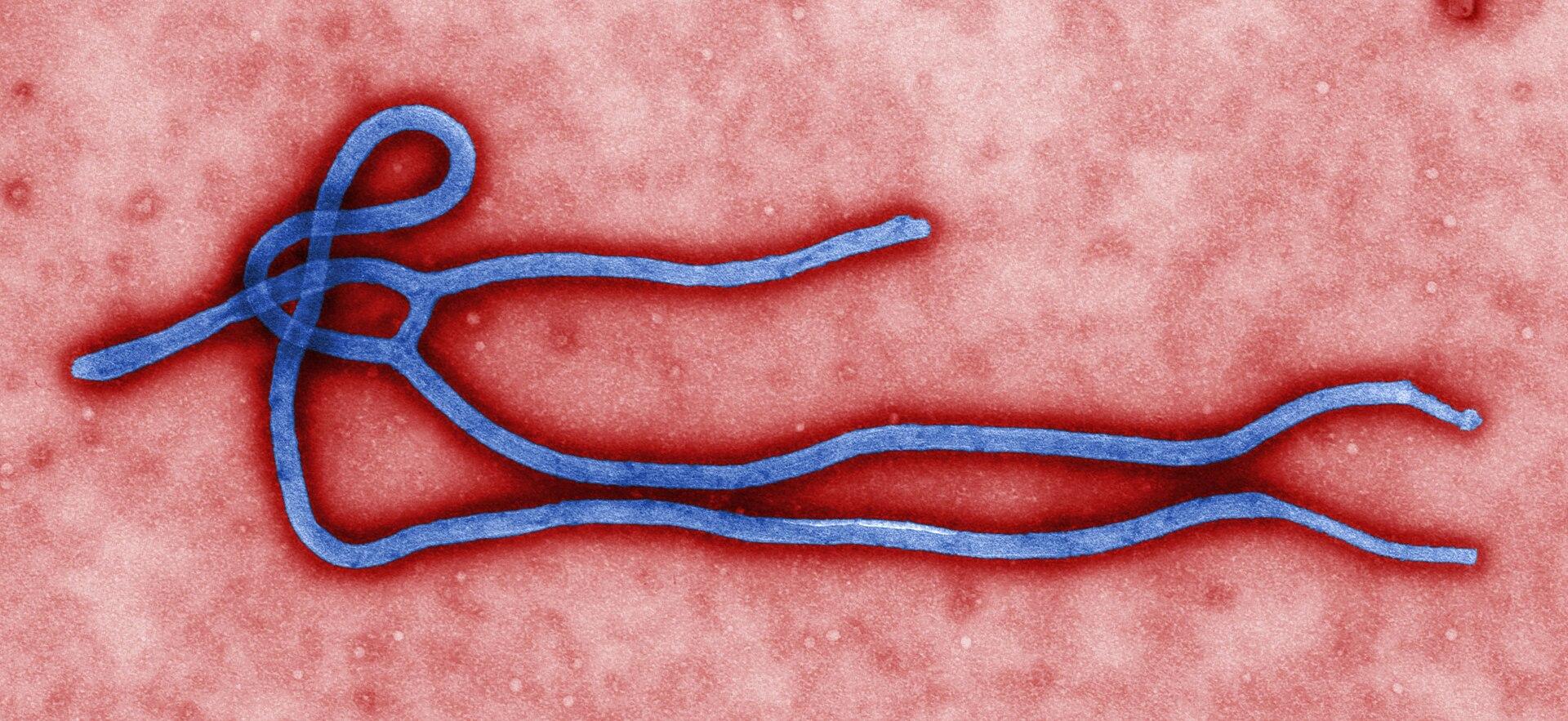
Image: Image: CDC / Cynthia Goldsmith, Public Health Image Library #10816, public domain, via Wikimedia Commons (https://commons.wikimedia.org/wiki/File:Ebola_virus_virion.jpg) — file image of Ebola virus (Zaire species), not Bundibugyo virus
About this article: prepared by The Daily Context editorial desk using automated, source-based reporting from the publications linked below. No reporter was on the ground.
Sources
- World Health Organization, Disease Outbreak News: Ebola disease caused by Bundibugyo virus, DRC, Kenya and Nigeria (6 Nov 2026): https://www.who.int/emergencies/disease-outbreak-news/item/2026-DON625
- European Centre for Disease Prevention and Control, Ebola disease outbreak caused by Bundibugyo virus, multi-country (6 Nov 2026): https://www.ecdc.europa.eu/en/public-health-events/2026-eip-00026/2026-11-06
- World Health Organization, Two new candidate vaccines to join Ebola trial as treatment research advances (4 Nov 2026): https://www.who.int/news/item/04-11-2026-two-new-candidate-vaccines-to-join-ebola-trial-as-treatment-research-advances
- World Health Organization, Director-General's opening remarks at the media briefing (4 Nov 2026): https://www.who.int/news-room/speeches/item/who-director-general-s-opening-remarks-at-the-media-briefing---4-november-2026
Kabeer Ahmad
Kabeer Ahmad is the founder and editor of The Daily Context. He oversees the site's source-based coverage of world affairs, technology, business, entertainment, lifestyle and sports, and is responsible for its editorial standards, sourcing and corrections.