Russell Brand jailed for 10 and a half years for rape and three sexual assaults
Russell Brand was sentenced at Southwark Crown Court on Monday 9 November 2026 to 10 years and six months in prison for one rape and three sexual assaults against four women between 2004 and 2009. Mr Justice Bennathan said Brand will serve two-thirds of the term before release on licence and will be indefinitely subject to sex offender notification requirements.
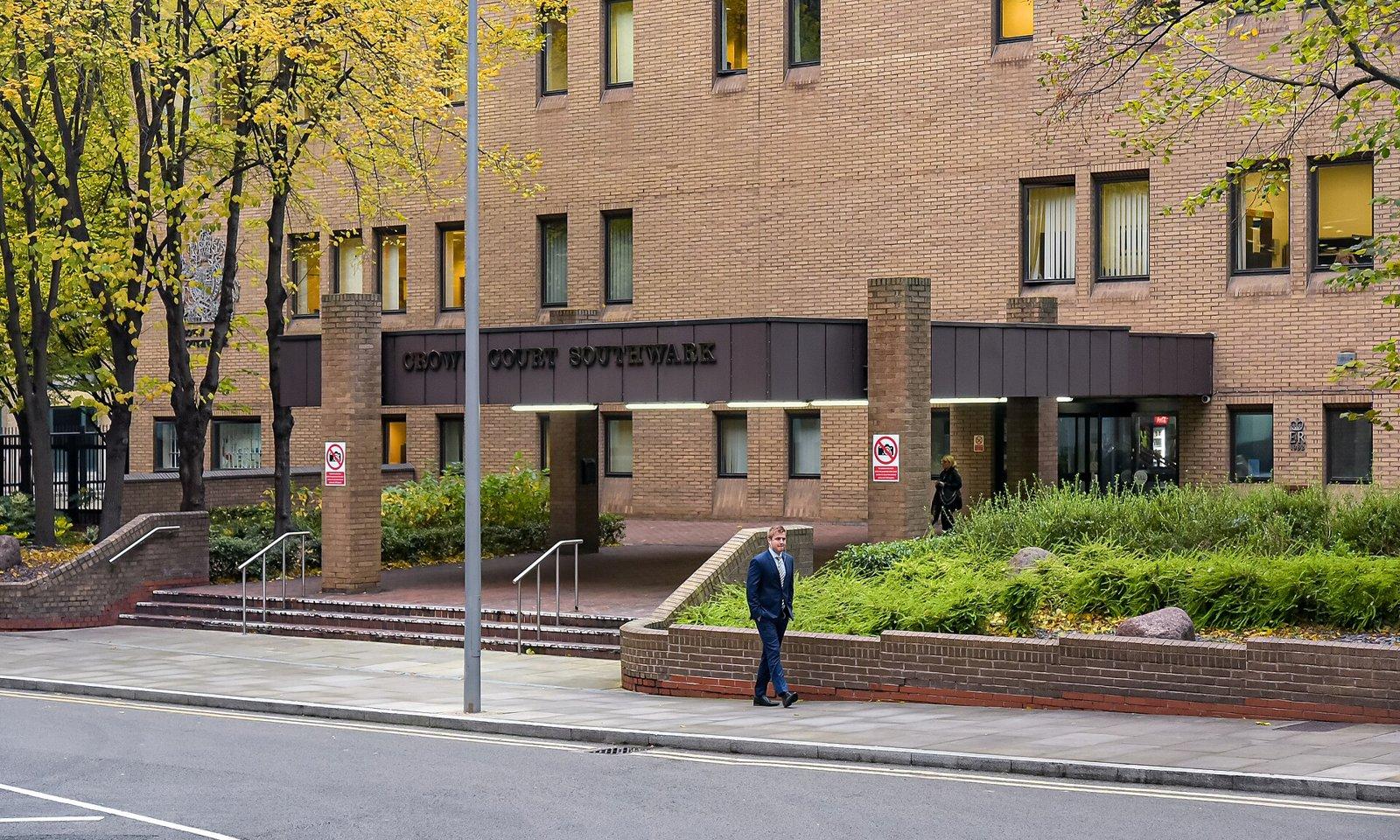
Russell Brand has been sentenced to 10 years and six months in prison for raping one woman and sexually assaulting three others between 2004 and 2009. Mr Justice Bennathan passed the sentence at Southwark Crown Court in London on Monday 9 November 2026, four days after a jury convicted the 51-year-old comedian and actor.
The judge imposed nine years for the rape, committed in 2009, and shorter terms for the three sexual assaults that run alongside each other but on top of the rape sentence. According to the published sentencing remarks, Brand will serve two-thirds of the total in custody before being released on licence, and he will be subject to sex offender notification requirements indefinitely after release.
This article contains references to sexual violence. The women in the case have lifelong anonymity under UK law, and nothing here should be read as identifying them.
What was Russell Brand convicted of?
Brand stood trial on seven charges: three of rape, three of sexual assault and one of attempted indecent assault, according to BBC News. A jury of eight men and four women found him guilty on Thursday 5 November of one count of rape and three counts of sexual assault, involving four different women. He was found not guilty of two counts of rape and the attempted indecent assault.
The Crown Prosecution Service (CPS) said the four women did not know each other. The offences, as described in the judge's remarks and in reporting by the BBC and The Guardian, were:
- A sexual assault in July 2004, when Brand grabbed the breasts of a woman at a party in London (count 3)
- A sexual assault in 2004 or 2005 on a newsreader at a London radio station, whom he pinned against a wall, kissed and groped in front of his entourage (count 5); the BBC identified the station as Choice FM
- The rape of a 21-year-old woman at his home in spring 2009 (count 6)
- A sexual assault in late 2009 on a woman working on a television advertisement for a DVD of his work, when he placed his face in her lap without her consent (count 7)
Brand was remanded in custody after the verdicts. The Guardian reported that the trial judge refused bail because he considered Brand a flight risk.
How did the judge reach 10 years and six months?
Judges in England and Wales must follow Sentencing Council guidelines unless doing so would be contrary to the interests of justice. Mr Justice Bennathan said the relevant guidelines were those for rape, sexual assault, historical sexual offences and "totality", the principle that an overall sentence for several crimes should be just and proportionate rather than a simple sum of the parts.
For the rape, the judge placed the offence in category 2B of the guideline. He said two "serious further aggravating factors" raised the sentence two years above the starting point: Brand removed a condom without the woman's agreement and ejaculated inside her, which left her fearing for months that she might have contracted HIV. He also described ordering her to clean the bedsheets afterwards as "an additional, even if brief, humiliation". He then reduced the term by one year for mitigation, reaching nine years.
For the sexual assaults, he imposed nine months on count 3, 18 months on count 5 (reduced from two years to allow for totality) and eight months on count 7. Those three terms run concurrently with each other but consecutively to the rape sentence, which produces the total of 10 years and six months. The judge said the few days Brand had already spent in custody would count towards it.
On count 3, the judge said the distress caused was "significantly above" what would normally follow from an offence in that category, and he went above the usual range. On count 5, he cited the sustained nature of the assault, the humiliation of it happening in front of an audience and the force used to pin the woman to the wall.
According to The Guardian's live coverage, the prosecution, led by Reil Karmy-Jones KC, had argued for a higher category of harm for the rape, with a range of 10 to 15 years. The judge did not accept every aggravating factor the prosecution proposed. He rejected the argument that Brand's celebrity amounted to an "abuse of trust", saying that term has a defined meaning in the guidelines, and said he had to be careful "I am not punishing you more because you are famous."
What did the judge say about Brand?
Mr Justice Bennathan opened his remarks by saying that about 20 years ago Brand was becoming famous, was seen by many as "funny and charismatic", and "had also become a sexual predator". He said Brand's status protected him until 2023, when allegations were published by The Times, The Sunday Times and Channel 4's Dispatches, which "empowered a number of women to come forward".
He said Brand's evidence that he had never touched a woman sexually without consent was, in light of the verdicts, "one of a series of lies". On the 2009 assault, he said it showed Brand's "staggering arrogance" and his "belief that fame meant you could act how you liked, when you liked, unhindered by the rules by which decent people live."
Addressing prosecution arguments that two of the women were "particularly vulnerable" because one had been drinking and the other admired him, the judge said both were "accomplished women" who had made "perfectly reasonable decisions". He added: "Whatever women wear, wherever they go, indeed whatever they drink, they retain the right to say no and to demand justice from the criminal courts when sexual predators like you, Russell Brand, act without their consent."
What mitigation did the court accept?
The judge said the mitigation was Brand's lack of significant previous convictions, the 17 years since the last offence and his life since then, "doing good work and especially in assisting those wrestling with addictions, often by funding treatment". He singled out a supporting statement from Dean Osgood. He also acknowledged that prison would deprive Brand's children of their father, but said "that sad loss to them, however, is caused by your serious offending."
Sentencing guidelines say good character should not normally carry significant weight in rape cases. The judge said it would nonetheless be wrong to disregard Brand's mitigation entirely, and he took a year off the rape sentence.
Defence barrister Ian Winter KC had asked for mercy, telling the court Brand was "a fundamentally different person today", according to BBC News. The Guardian reported that Mr Winter described the offences as "isolated incidents" and the rape as "a short and momentary failure".
The judge did not order a pre-sentence report. He said the crimes were too serious for anything other than immediate custody and that, given how long ago they were committed and evidence from Brand's wife, there was "no sound evidential basis" to conclude he posed a future risk.
What did the victims tell the court?
All four women submitted victim impact statements, which were read in court on Monday; The Guardian reported that one woman delivered hers in person from behind screens. The judge summarised their contents in his remarks.
The woman assaulted at the 2004 party described feeling vulnerable whenever she went out and feeling sick when she saw Brand in the media. The radio newsreader wrote of being startled by his voice on television and of damage to her working relationships. The woman raped in 2009 described struggling to eat and sleep, taking months off work and abandoning the career she had begun; the judge said she also developed an alcohol problem partly as a result. The woman assaulted on the advertisement shoot described losing trust in people and no longer feeling safe at work.
How long will Brand actually spend in prison?
Under the release rules described in the judge's remarks and by BBC News, Brand will serve two-thirds of the sentence, which is seven years, before release on licence. He can be recalled to prison if he breaches licence conditions during the remaining third. BBC News reported that sex offenders are excluded from the government's newer early release scheme.
After release he will be indefinitely subject to the notification requirements of the Sexual Offences Act 2003, which require registered offenders to give police details such as their address. BBC News reported that a prison van believed to be carrying Brand arrived at HMP Wandsworth in south London after the hearing.
There was no public statement from Brand's legal team about an appeal in the reporting reviewed for this article.
What happens next?
The case may not be over. BBC News and The Guardian reported that the Metropolitan Police is investigating rape allegations from two further women, has questioned Brand about them and has passed the cases to prosecutors. The Guardian reported that, according to legal documents from a pre-trial hearing, one of the women was 16 at the time. No charging decision on those allegations has been reported, and they remain allegations.
Detective Superintendent Andy Furphy of the Metropolitan Police said the sentence "means Russell Brand has been held accountable for his crimes" and appealed to anyone who has experienced sexual violence to come forward, saying they would be "listened to, supported, and treated with care and compassion". David Roberts of the CPS said the case showed that "fame, status and the passage of time do not change the fundamental issue of consent."
Channel 4's director of news, Louisa Compton, said the sentencing was "a powerful demonstration of why investigative journalism matters", according to BBC News.
In the UK, anyone affected by sexual violence can find support through the NHS and organisations such as Rape Crisis England & Wales.
Image: Photo: Jorge Franganillo, CC BY 2.0, via Wikimedia Commons (https://commons.wikimedia.org/wiki/File:London_Southwark_Crown_Court_(50604622932).jpg) — November 2017 file photo of Southwark Crown Court, not taken on the day of sentencing
About this article: prepared by The Daily Context editorial desk using automated, source-based reporting from the publications linked below. No reporter was on the ground.
Sources
- Judiciary of England and Wales: R v Russell Brand sentencing remarks, Mr Justice Bennathan, 9 November 2026 https://www.judiciary.uk/wp-content/uploads/2026/11/R-v-Russell-Brand-Sentencing-Remarks-9.11.26.pdf
- Crown Prosecution Service: Statement following the sentencing of Russell Brand, 9 November 2026 https://www.cps.gov.uk/national-news-london-south/news/statement-following-sentencing-russell-brand
- BBC News: Russell Brand sentenced to 10 years and six months for rape and sexual assault (live coverage), 9 November 2026 https://www.bbc.com/news/live/c670ppzjwxpnt
- The Guardian: Russell Brand sentenced to more than 10 years for rape and sexual assault offences, as it happened, 9 November 2026 https://www.theguardian.com/uk-news/live/2026/nov/09/russell-brand-sentencing-rape-sexual-assault-live-news-updates
Kabeer Ahmad
Kabeer Ahmad is the founder and editor of The Daily Context. He oversees the site's source-based coverage of world affairs, technology, business, entertainment, lifestyle and sports, and is responsible for its editorial standards, sourcing and corrections.