Oura to buy AI primary care firm Counsel Health for $625 million
Smart ring maker Oura has agreed to buy Counsel Health, a start-up that pairs medical AI chat with on-demand doctors, for $625 million in cash. The deal, announced on 10 November alongside record quarterly revenue, moves Oura from tracking health data towards delivering care, weeks after it postponed its IPO.
Oura, the Finnish-founded maker of the Oura smart ring, has agreed to buy Counsel Health, a US start-up that combines a medical AI chatbot with on-call doctors, for $625 million in cash. The companies announced the definitive agreement on Tuesday 10 November. The price is subject to purchase price adjustments, and the deal is expected to close before the end of the calendar year, subject to customary conditions, according to the official announcement.
The acquisition is Oura's clearest move yet from measuring the body to helping people get medical care. It comes alongside preliminary results showing quarterly revenue up 153%, and about six weeks after Oura called off a planned stock market listing that could have raised up to $2.2 billion.
What exactly is Oura buying?
Counsel Health describes itself as an "AI-native primary care company". It was founded in 2023 by physicians and AI researchers and is led by founder and chief executive Muthu Alagappan, a medical doctor. Users start by chatting with Counsel's medical AI, which draws on connected medical records, previous conversations, clinical guidelines and, for Oura users, data from the ring. At any point they can bring in a board-certified Counsel physician, who can make a diagnosis, prescribe medication or refer them elsewhere where appropriate.
Behind the scenes, the company says, an AI "harness" runs specialised agents for tasks such as taking a medical history, retrieving guidelines, reviewing records and detecting emergencies. Its doctors use a proprietary interface it calls the Clinician Cockpit, which summarises a patient's record and health trends and offers suggestions to support the physician's decision.
Counsel sells mainly through partners, including health plans, health systems, employers and consumer health companies. In a blog post, it said its service is available to more than 8 million Americans through those partnerships, that doctors reply in two minutes on average and that 96% of medical concerns are addressed without escalation. These are company figures and have not been independently verified.
The start-up is small. TechCrunch reported that Counsel raised a $25 million Series A round about a year ago, led by Andreessen Horowitz and GV, and PitchBook estimates it has raised about $36 million in total. Bloomberg reported that Alagappan will join Oura as chief clinical AI officer, along with Counsel's roughly 70 employees, according to TechCrunch.
How did the two companies come together?
The deal formalises an existing partnership. Counsel's service was built into the Oura app in June 2026, letting ring wearers move from an insight about their sleep, heart rate or other readings to a conversation with Counsel's AI and, if needed, a doctor. In September the companies announced a closer collaboration around the US Centers for Medicare and Medicaid Services' ACCESS model, a 10-year programme for chronic care due to start early next year, Fierce Healthcare reported.
According to the companies, more than 90% of surveyed Oura members using Counsel said their Oura data helped them get better care, and members who saw a Counsel physician rated the experience 4.6 out of 5 on average. Fierce Healthcare also reported 70% satisfaction with onboarding to Counsel's service. Those are self-reported survey results from the companies.
"Oura helps members understand their physiology and, with Counsel, they can take action on their health across a range of needs, from quick questions and prescriptions to lab results, chronic care, and referrals," Oura chief executive Tom Hale said in the announcement. Alagappan said the teams had "bonded over a joint vision" while negotiating the deal "over the past few months".
What do Oura's numbers show?
Oura released preliminary, unaudited results with the deal. For the quarter ended 30 September 2026, its fiscal fourth quarter, revenue rose 153% year on year to $533 million, and the company reported adjusted earnings before interest, tax, depreciation and amortisation (EBITDA) of $87 million, a 16% margin. Revenue for fiscal 2026 was about $1.75 billion, up 92%. The company said the figures may change as it completes its year-end close and audit.
Executive chairman David Shuman tied the purchase directly to those results. "Oura's record growth of 153 percent this quarter and our over six million members provides us the confidence to invest $625 million cash to acquire Counsel Health," he said. Fierce Healthcare put Oura's paid membership at 5.7 million.
Oura was founded in Finland in 2013. It is now headquartered in San Francisco, with its EU headquarters in Oulu, Finland. TechCrunch reported that it reached an $11 billion valuation after a $900 million funding round in October 2025.
Why does the IPO delay matter?
On 29 September, hours before it was expected to price its shares, Oura postponed its planned Nasdaq listing, citing "uncertainty in the IPO market". Fortune reported that the company had proposed selling 50 million shares at $40 to $44 each, which at the top of the range implied a fully diluted valuation of about $15.6 billion. Only 13.5 million of those shares were to be new; the rest were to be sold by existing shareholders.
Analysts quoted by Fortune suggested that concerns over valuation and competition, rather than market conditions alone, may have played a role, and that investors were weighing whether Oura is a hardware maker or a broader health platform. Oura said at the time that it was profitable and that its business had strengthened during the IPO process. The Counsel purchase, paid in cash, supports the platform argument: Shuman said it "expands our addressable market" and opens the door to "millions of people beyond our existing member base" through Counsel's enterprise partners.
Competition is intense. TechCrunch noted that smart ring rivals such as RingConn and Ultrahuman are challenging Oura, while Apple, Google, Garmin and Whoop compete for the same health-tracking customers with watches and bands.
What changes for users and partners?
For now, not much. Counsel says its existing app will keep working as before for new symptoms, everyday medical questions and ongoing primary and chronic care, and that it will share more about changes for its own members "in the coming weeks". Counsel's enterprise partners will not be required to buy or use Oura rings. Within the Oura app, the companies plan to expand care in three areas: preventive care based on continuous monitoring, acute care for episodic problems, and ongoing support for conditions such as reproductive health, ageing and cardiometabolic health.
Oura notes in its announcement that the Oura Ring is not a medical device and is not intended to diagnose, treat or prevent illness. Diagnosis and prescriptions in the combined service come from Counsel's physicians, not from the ring. Readers with health concerns should continue to consult a qualified clinician.
What remains uncertain?
The deal has not yet closed. The official announcement says completion is expected before the end of the calendar year, though TechCrunch's report gave a later date, end of 2027; this article relies on the companies' own statement. The announcement did not say whether the acquisition will need regulatory clearance, how Counsel's service will be priced for Oura members or when it might expand beyond the United States. It also gave no new timeline for an Oura IPO.
The broader questions are about trust in medical AI. Counsel says it keeps physicians "in the loop for clinical decisions" and evaluates each AI agent for safety and quality. Regulators in several countries are still working out how AI tools that give health guidance should be overseen. How Oura combines continuous biometric data with medical records and AI advice, and how it explains that to members, is likely to draw close attention.
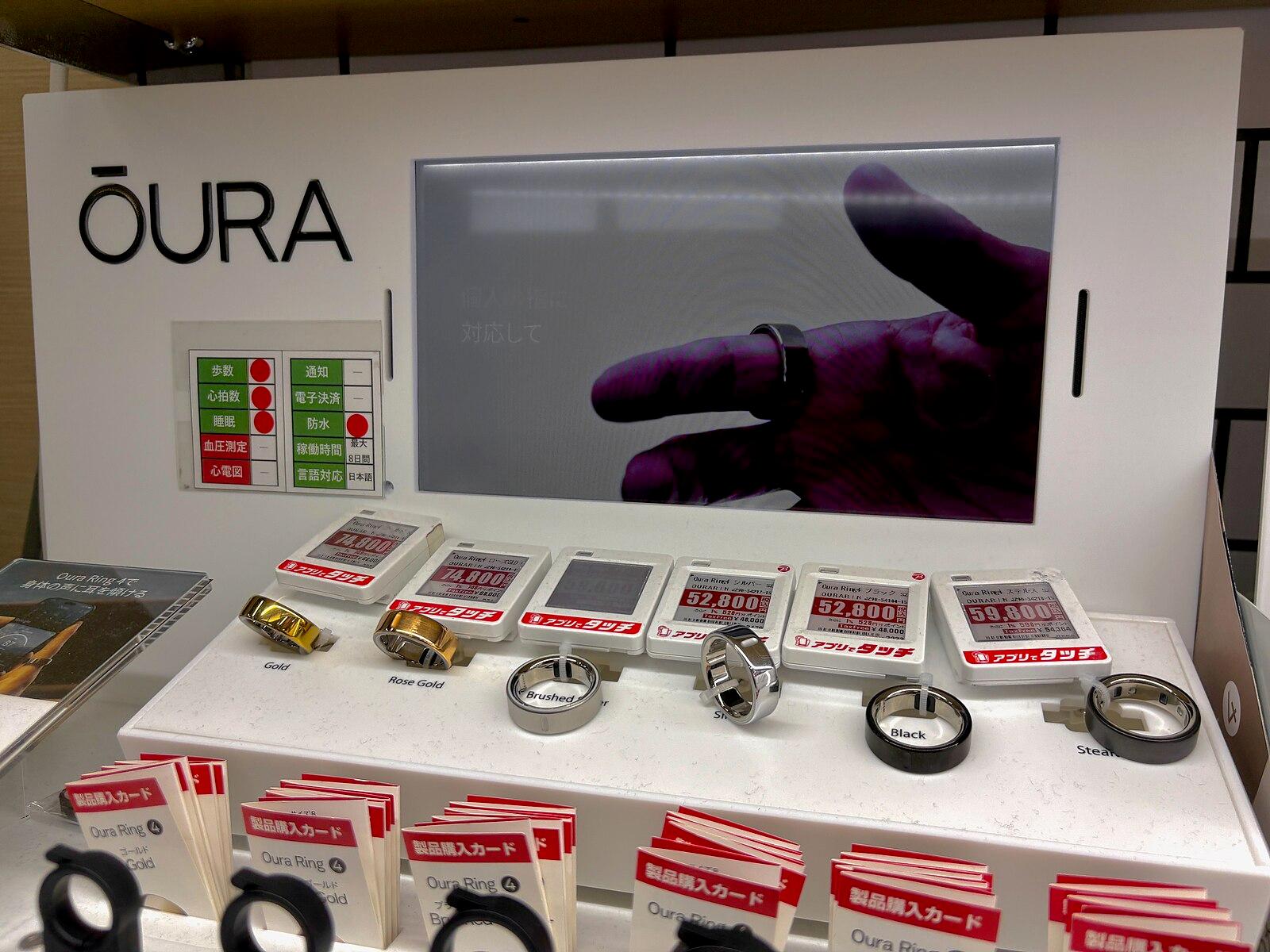
Image: Photo: Kyu3a, CC BY-SA 4.0 (https://creativecommons.org/licenses/by-sa/4.0/), via Wikimedia Commons (https://commons.wikimedia.org/wiki/File:OURA_Ring_-_1.jpg) — November 2025 file photo of an Oura Ring display in a Nagoya electronics store; not related to the deal announcement
About this article: prepared by The Daily Context editorial desk using automated, source-based reporting from the publications linked below. No reporter was on the ground.
Sources
- Counsel Health (joint announcement): Oura to acquire Counsel Health, advancing vision for more connected, personalized healthcare https://www.counselhealth.com/newsroom/oura-to-acquire-counsel-health-advancing-vision-for-more-connected-personalized-healthcare
- Counsel Health: Counsel Is Being Acquired by Oura to Advance the Future of Care https://www.counselhealth.com/resources/reimagining-primary-care-with-oura
- TechCrunch: Oura to acquire AI-native primary care startup Counsel Health for $625M https://techcrunch.com/2026/11/10/oura-to-acquire-ai-native-primary-care-startup-counsel-health-for-625m/
- Fierce Healthcare: Oura to acquire AI virtual primary care partner Counsel Health for $625M https://www.fiercehealthcare.com/digital-health/oura-acquire-ai-virtual-primary-care-partner-counsel-health-625m
- Latham & Watkins: Latham & Watkins Advises ŌURA in US$625 Million Acquisition of Counsel Health https://www.lw.com/en/news/2026/11/latham-advises-oura-in-acquisition-of-counsel-health
- Fortune: Why Oura really pulled its IPO https://fortune.com/2026/10/06/why-did-oura-pull-its-ipo/
Kabeer Ahmad
Kabeer Ahmad is the founder and editor of The Daily Context. He oversees the site's source-based coverage of world affairs, technology, business, entertainment, lifestyle and sports, and is responsible for its editorial standards, sourcing and corrections.