EU says TikTok's For You feed breaches the Digital Services Act over 'rabbit hole' effect
The European Commission has preliminarily found that TikTok's 'For You' feed breaches the EU Digital Services Act because its recommender system can pull users into repeated streams of content about sadness, isolation or body image. TikTok rejects the findings; if they are confirmed, the company faces a fine of up to 6% of global annual turnover.
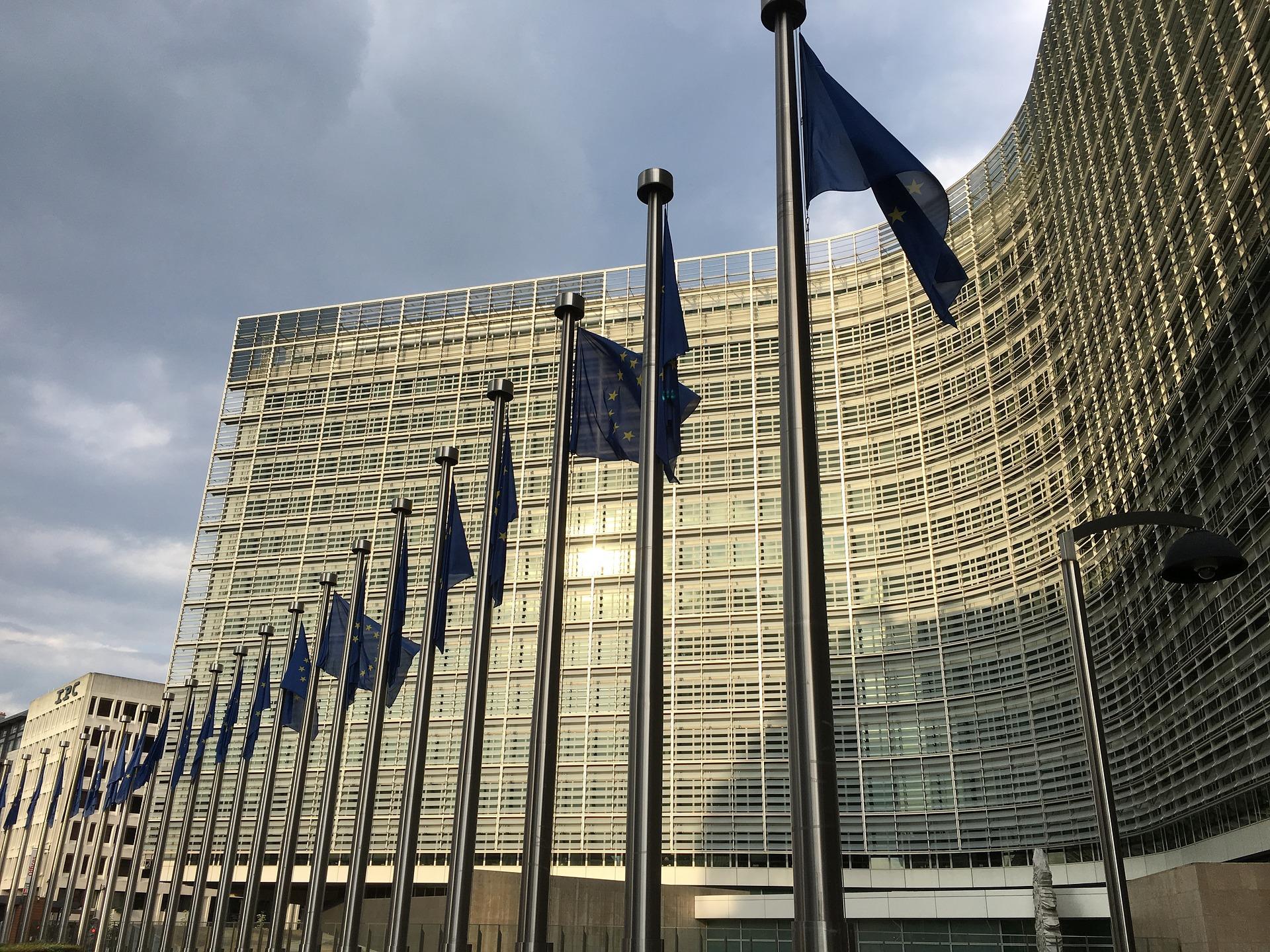
The European Commission has told TikTok that its main "For You" video feed appears to breach the EU's Digital Services Act (DSA), because the way the recommendation algorithm works can draw users into so-called "rabbit holes" of similar content about sadness, isolation or body image. The preliminary findings, announced in Brussels on Friday 6 November 2026, say TikTok did not properly assess that risk and that the safeguards it introduced have not worked well enough.
The Commission says the feed's design needs to change. TikTok, which is owned by China's ByteDance, has rejected the findings. Nothing is final yet: the company can now reply, and only a later non-compliance decision could lead to a fine, which under the DSA can reach up to 6% of a company's total worldwide annual turnover.
What did the European Commission find?
The Commission's press release (IP/26/2361) describes the mechanism in plain terms: "The more a user interacts with a certain type of content, the more TikTok's 'For You' feed algorithm recommends similar content." It says this "can be harmful when such endless and repeated exposure involves, for example, content about sadness, isolation or body image," and that the resulting rabbit holes can harm mental health, "especially that of vulnerable adults and minors."
The findings come in two parts, matching two core duties that the DSA places on the largest platforms.
On risk assessment, the Commission preliminarily found that TikTok "did not adequately assess" how its recommendation algorithm may lead users into rabbit holes. It explains that the algorithm uses engagement signals such as watching and liking videos to personalise recommendations. If a user repeatedly watches or likes content that may be triggering, such as videos about weight loss or body image, the system reads that as interest and recommends more of the same. According to the Commission, repeated exposure of this kind may contribute to sadness or anxiety, body dissatisfaction, lower self-esteem, or the worsening of existing eating disorders and other mental health conditions.
On risk mitigation, the Commission acknowledged that TikTok has already put some measures in place but found them "not effective". Features meant to diversify the feed do not sufficiently reduce how often similar content appears, it said, and the control tools do not let users effectively shape what they are shown. Its example is the "not interested" button, which "may not be enough to change the content feed" because the algorithm prioritises viewing time over a user's stated choice to see less of something.
The Commission said its view rests on an in-depth investigation, including TikTok's own risk assessment reports, internal data and documents, the company's answers to multiple information requests, a review of scientific research, and interviews with experts in recommender systems, psychology and psychiatry. Ireland's media regulator, Coimisiún na Meán, supported the investigation; TikTok's European headquarters is in Dublin, RTÉ noted.
What does Brussels want TikTok to change?
At this stage, the Commission "considers that TikTok needs to change the design of the 'For You' feed." It listed examples of what that could involve:
- relying more on users' explicit preferences rather than inferred interest;
- disabling viewing time as a signal for recommending content;
- making user controls easier to find and use;
- regularly testing the algorithm.
The second point is notable. Viewing time, how long someone lingers on a video, is one of the signals short-video apps commonly use to decide what to show next. A policy analysis published by Tech Policy Observer on 8 November pointed out that this goes further than general calls to "adapt the design" of a service, because it targets a specific ranking parameter. That analysis also noted that the preliminary findings themselves are not public; outside observers are working from the press release and the text of the regulation.
Henna Virkkunen, the Commission's Executive Vice-President for Tech Sovereignty, Security and Democracy, said: "Every time a user scrolls or likes a video on TikTok, the algorithm serves more of the same leading users down rabbit holes they cannot easily escape from." She added that the DSA "makes platforms responsible for addressing the negative effects related to their recommender system."
How has TikTok responded?
TikTok disputes the Commission's account. "The Commission has made a series of statements that are fundamentally inaccurate and distort our platform's architecture and our commitment to user safety," a spokesperson said in a statement reported by Euronews and RTÉ. "We have a strong record of protecting our community while giving users direct and intuitive control over their content experience."
The company has pushed back on earlier findings in the same case too. Reuters reported that when the Commission charged TikTok in February over what it called addictive design, TikTok described those findings as "categorically false" and said it would challenge them.
What is the Digital Services Act and why does it apply here?
The Digital Services Act (Regulation (EU) 2022/2065) is the EU's rulebook for online platforms. Services designated as "very large online platforms", those with more than 45 million monthly users in the EU, carry the heaviest obligations, and TikTok is one of them.
Two articles are central to this case. Article 34 requires very large platforms to identify, analyse and assess "systemic risks" stemming from the design or functioning of their services, explicitly including algorithmic systems. Those risks include "serious negative consequences to the person's physical and mental well-being" and effects on the protection of minors, and the assessment must consider how the design of recommender systems influences them. Article 35 then requires "reasonable, proportionate and effective" mitigation measures, which may include adapting a service's design and testing and adapting its recommender systems.
The significance is that the alleged breach is not about any single illegal video. It concerns the feedback loop of the feed itself: more engagement leading to more of the same recommendations.
Is this part of a wider investigation into TikTok?
Yes. The Commission opened formal DSA proceedings against TikTok more than two years ago, Euronews reported, and Friday's findings are the latest strand of that single case. According to the Commission:
- preliminary findings on researchers' access to public data were adopted in October 2025;
- the advertising transparency strand was closed with binding commitments from TikTok in December 2025;
- preliminary findings on addictive design followed in February 2026;
- preliminary findings on the protection of minors followed in July 2026.
Similar questions are being asked of other platforms. Reuters reported that the Commission is separately investigating rabbit-hole effects from Meta's Facebook and Instagram recommendation systems, and Euronews noted that the EU called on Meta in July to change the "addictive design" of those apps.
Campaigners welcomed the step. Amnesty International, which documented in a 2025 report how TikTok's feed pushed some young French users engaging with mental health content towards depressive and self-harm material, called the findings "a welcome and urgently needed step" and said they "must trigger design changes."
What happens next?
TikTok can now exercise its right of defence: it may examine the documents in the Commission's investigation file and reply in writing. Under Article 79 of the DSA, the Commission sets the reply period in its preliminary findings, and it cannot be shorter than 14 days. The European Board for Digital Services, which brings together national regulators, will be consulted in parallel.
If the Commission's view is ultimately confirmed, it can adopt a non-compliance decision. Any fine must be proportionate to "the nature, gravity, recurrence and duration of the infringement" and cannot exceed 6% of the provider's total worldwide annual turnover. Reuters said ByteDance risks such a fine next year unless the issue is resolved. The Commission stressed that the preliminary findings "do not prejudge the outcome of the investigation."
What does this mean for TikTok users?
For now, nothing changes automatically. The feed people see in the EU, or anywhere else, is not altered by preliminary findings alone. Any changes would come either from TikTok voluntarily adjusting its systems, from commitments it offers the Commission, or from a final decision that orders remedies.
The case matters beyond Europe, though. Platforms often apply design changes made for EU regulators more widely, and Reuters noted that governments around the world are under growing pressure over social media's effect on children, with some imposing or considering bans for underage users. How far the Commission goes, particularly on whether a ranking signal like viewing time can be switched off by regulatory demand, could shape how recommendation feeds are designed for years.
Image: Photo: almathias, CC0 1.0 public domain dedication, via Wikimedia Commons (https://commons.wikimedia.org/wiki/File:Berlaymont_building_in_Brussels.jpg) — May 2016 file photo of the European Commission headquarters
About this article: prepared by The Daily Context editorial desk using automated, source-based reporting from the publications linked below. No reporter was on the ground.
Sources
- European Commission press release IP/26/2361, 6 November 2026: https://ec.europa.eu/commission/presscorner/api/files/document/print/en/ip_26_2361/IP_26_2361_EN.pdf
- European Commission, Shaping Europe's digital future (news item), 6 November 2026: https://digital-strategy.ec.europa.eu/en/news/commission-preliminarily-finds-tiktoks-you-feed-breach-digital-services-act-harmful-rabbit-holes
- Reuters (Foo Yun Chee and Inti Landauro), via PiQ Markets, 6 November 2026: https://piqmarkets.com/reuters/eu-charges-tiktok-over-harmful-algorithmic-rabbit-hole-effects-2026-11-06-11-02-34
- Euronews (Greta Ruffino), 6 November 2026: https://www.euronews.com/2026/11/06/eu-tells-tiktok-to-change-harmful-for-you-feed-over-rabbit-hole-effect
- RTÉ News (Brian O'Donovan), 6 November 2026: https://www.rte.ie/news/europe/2026/1106/1598263-eu-tiktok-videos/
- Amnesty International statement, November 2026: https://www.amnesty.org/en/latest/news/2026/11/tiktok/
- Tech Policy Observer analysis (Yunping Liu), 8 November 2026: https://techpolicyobserver.com/en/observe/analysis-eu-dsa-tiktok-rabbit-hole-2026-11/
- Digital Services Act, Regulation (EU) 2022/2065 (EUR-Lex): https://eur-lex.europa.eu/eli/reg/2022/2065/oj
Kabeer Ahmad
Kabeer Ahmad is the founder and editor of The Daily Context. He oversees the site's source-based coverage of world affairs, technology, business, entertainment, lifestyle and sports, and is responsible for its editorial standards, sourcing and corrections.